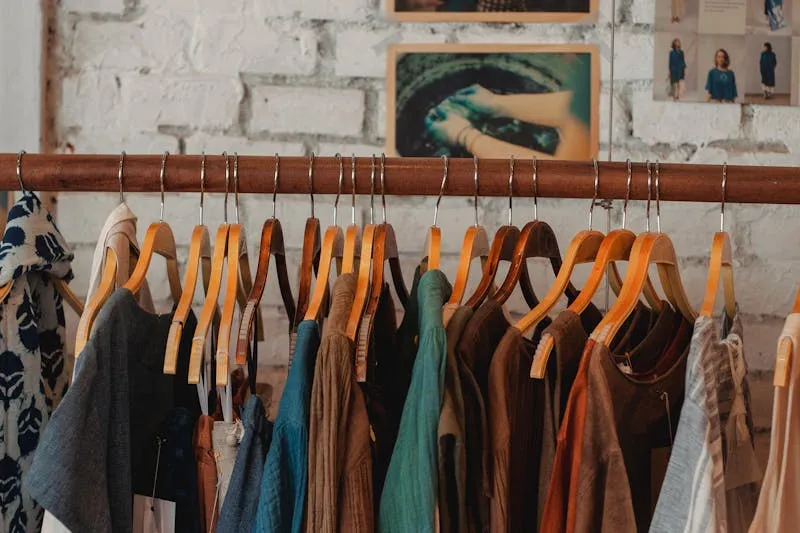
You ordered a Shein haul. 14 pieces for £32. The parcel arrived in 9 days. Opening the individual plastic bags, you felt that little thrill of excitement — before something else crept in. A question most of us would rather not ask too loudly: how is this price even possible?
The short answer: it isn't. Not really. Someone pays the difference — and it's neither Shein nor you. In this article, we're going to look squarely at what fast fashion really hides, then I'll give you concrete alternatives, by budget, without lecturing you.
The fast fashion business model
The term "fast fashion" emerged in the 1990s to describe Zara's ability to move from catwalk to shop floor in two weeks. That was already revolutionary. Today, Shein offers 52 micro-seasons per year — averaging 6,000 new styles per day. That's not a typo. Six thousand. Per day.
This model rests on three mutually reinforcing pillars:
1. Compressing production costs
To sell a t-shirt for £3, you need to produce where labour is cheapest. Bangladesh, Cambodia, Myanmar, Pakistan. Countries where the legal minimum wage for textile workers hovers around £80 to £95 per month according to Fashion Revolution — and where even this minimum is rarely respected.
2. Externalising real costs
The sticker price doesn't reflect the true cost of production. Environmental costs (wastewater treatment, carbon, textile waste) are externalised onto local populations and future generations. Social costs (worker health, infrastructure) are absorbed by host countries. The Boohoo-Leicester scandal of 2020 showed this happens closer to home too — workers in a UK city paid as little as £3.50 per hour.

3. Accelerating obsolescence
Fast fashion doesn't sell clothes. It sells the feeling of being on trend — a feeling it engineers to become obsolete as quickly as possible. The cycle is self-sustaining: the more you buy, the more out of touch you feel, the more you buy.
The number that reframes everything: In 2000, the average Western consumer bought around 26 garments per year. By 2014, that had doubled to 52. And we keep them half as long as we did fifteen years ago. Source: McKinsey Global Fashion Index.
Environmental impact: water, CO₂, microplastics
The textile industry is often cited as the world's second most polluting industry — this claim is contested (the reality is more nuanced depending on methodology), but the scale of impact remains staggering.
The water crisis
Making one pair of jeans and a cotton t-shirt consumes around 10,000 litres of water. For the t-shirt alone: 2,700 litres. That's equivalent to 2.5 years of drinking water for one adult. The Aral Sea, once the world's fourth-largest lake, has lost 90% of its surface area, partly due to intensive irrigation for cotton crops in the region.
Worth knowing: Organic cotton uses fewer pesticides but doesn't solve the water problem. Synthetic fibres (polyester, nylon) consume less water in production but create the microplastics problem — detailed below.
Fashion's carbon footprint
According to the Environmental Audit Committee's Fixing Fashion report, the UK alone sends £140 million worth of clothing to landfill every year. Globally, the fashion industry accounts for around 10% of annual carbon emissions — more than international aviation and maritime shipping combined. Production is energy-intensive (often fossil-fuel-powered in producing countries), and the global supply chain multiplies transport impacts.
The slow-motion disaster of microplastics
This is perhaps the most invisible and most troubling impact. Every wash of synthetic clothing (polyester, acrylic, nylon) releases hundreds of thousands of plastic microfibres. These fibres pass through wastewater treatment filters and end up in rivers, oceans, and the food chain.
According to the IUCN, textile microfibres account for 35% of primary plastic ocean pollution. They've now been found in human blood, lungs, and placenta.

Partial solution: A microfibre filter (Guppyfriend bag, Planetcare filter) significantly reduces emissions during washing. Not perfect, but immediately actionable. From around £20.
The textile waste problem
The Ellen MacArthur Foundation estimates that one rubbish truck of clothing is burnt or sent to landfill every second worldwide. In the UK, WRAP estimates we send around 300,000 tonnes of clothing to landfill annually. Of what's collected for recycling, only 1% is actually recycled into new garments. The rest becomes industrial rags, insulation, or is exported to overwhelmed second-hand markets like Kantamanto in Ghana.
Social impact: behind the seams
On 24 April 2013, the Rana Plaza building collapsed in Dhaka, Bangladesh. 1,134 dead. Thousands injured. Workers who had reported cracks in the walls that very morning and had been forced back to their posts regardless. In the rubble: labels from Western brands.

Fashion Revolution — a campaign founded in the UK in the aftermath of Rana Plaza — asks major brands every year to publish their supplier lists. In the Fashion Transparency Index 2024, the majority of 250 brands analysed still score below 50% transparency on their supply chains.
The reality of wages: For a garment worker in Bangladesh to cover basic needs (housing, food, healthcare, children's education), they'd need roughly 4 times the current legal minimum wage according to living wage studies. In 2023, after worker mobilisations, the minimum wage was increased by 56% — to reach... £93 per month.
Working conditions in practice
Beyond wages, NGO reports regularly document: unpaid or coerced overtime, factory premises failing fire safety standards, widespread harassment (including sexual harassment), and the practical impossibility of unionising even where the right nominally exists. The Boohoo scandal showed the UK is not immune — a 2020 investigation found Leicester garment workers paid well below minimum wage in unsafe conditions supplying a major British brand.
Simple action: Participate in Fashion Revolution Week (each April, around the anniversary of Rana Plaza) by posting a photo of a clothing label with #WhoMadeMyClothes. Collective pressure has measurable effects on brand policies — Fashion Revolution was founded in the UK and this campaign has genuine impact.
Alternatives by budget
Right. We've looked the problem in the face. Now the real question: what do we actually do about it? Especially when our budget isn't unlimited.
The good news: there are alternatives at every budget level. The less good news: they all require a bit more time and thought than clicking "add to basket".
Tight budget (under £25 per item)
At this level, second-hand is your number one friend (detailed in the next section). But if you want new:
- Thought Clothing — affordable ethical basics, GOTS certified, available at ASOS and their own site.
- Seasalt Cornwall — mid-range but often on sale, good transparency, made in sustainable materials, UK-based.
- Uniqlo for basics — not perfect (mass brand), but significantly better on durability and transparency than Shein or Boohoo.
Budget hack: Ethical brand sales and outlets allow access to their reduced prices. Sign up to newsletters from People Tree, Thought, Patagonia for sale periods. End-of-season Patagonia remains ethical, even at 40% off.
Mid-range budget (£25–£80 per item)
- People Tree — UK pioneer of fair trade fashion, GOTS and Fair Trade certified, good range of styles.
- Rapanui — Isle of Wight brand, wind-powered factory, closed-loop recycling, very transparent.
- Armedangels — German brand, GOTS certified, good price range, widely available online in the UK.
- Finisterre — Cornwall-based, B Corp certified, excellent quality, focused on outdoor and lifestyle.
Investment pieces (over £80 per item)
- Patagonia — lifetime repair guarantee, take-back programme, recycled materials. The gold standard for transparency.
- Veja — the benchmark for sustainable trainers. Available at many UK stockists.
- Stella McCartney — high-end, but genuinely committed: no leather, no fur, pioneering sustainable material innovation.

Second-hand as your first reflex
It's the most ecological alternative that exists. A garment already produced has no further production impact. Every second-hand piece bought is a new piece that wasn't made.
The platforms by use case
- Vinted — the largest community, ideal for everyday pieces and high street brands. Low prices, high volume.
- Depop — more creative community, vintage, streetwear. Great for original 90s-2000s pieces. Very popular in the UK.
- eBay — still excellent for branded pieces and vintage finds, especially for menswear.
- Vestiaire Collective — for designer and luxury brands with authentication. Higher prices but guaranteed genuine.
- Charity shops — the treasure hunt experience. Less convenient but often cheapest. And the thrill of a real find remains unbeatable.

Tip for buying second-hand wisely: Search by fabric, not just brand. A wool jumper from an unknown brand will always outlast an acrylic jumper from a famous one. Check labels: wool, cotton, linen, silk, cashmere — these are what will last.
The second-hand trap: It can become a new form of overconsumption. Buying 30 items at £3 each on Depop is still 30 items. The goal isn't to consume more for less, but to consume better and less.
Building a capsule wardrobe
A capsule wardrobe is a small curated wardrobe (30–40 items maximum, clothing + shoes + accessories) where every piece is chosen to be versatile, durable, and genuinely loved.
The idea comes from Susie Faux, a London-based style consultant, in the 1970s. It was popularised in the 1980s by Donna Karan with her "7 Easy Pieces" collection.
The fundamentals of a capsule that works
- A coherent palette — 2 to 3 neutral colours that all mix together + 1 accent colour. This principle alone multiplies possible outfits by 5.
- The versatility rule — each piece must work with at least 3 other pieces in your wardrobe before you buy it.
- Quality over quantity — one great coat that lasts 10 years beats three cheap ones replaced every 3 years, every time.

Where to start: Do a wardrobe audit first. Pull everything out. Keep only what you actually wear, what fits well, and what you genuinely love. What remains — that's the foundation of your capsule. Fill the gaps with second-hand pieces first.
Care and repair
Garment care is the most underestimated part of sustainable fashion. A well-maintained piece of clothing can last two to three times longer — which proportionally cuts its impact per wear.
The most common care mistakes
- Washing too often and too hot: most clothes don't need washing after every wear. Airing usually suffices. Washing at 30°C preserves fibres and uses 3 times less energy than 60°C.
- The tumble dryer: it wears fibres out rapidly. Keep it for emergencies, not daily use.
- Storage: wool jumpers on hangers stretch out of shape. Fold them. Fine fabric garments crease on shelves. Hang them.

Learning to repair
You don't need to be a seamstress. The most common repairs — sewing on a button, darning a small hole, resoling shoes — can be learnt in an hour. YouTube, your local repair café, beginner sewing classes. In the UK, the Restart Project runs repair events across the country.
Repair cafés: Community repair events exist in most UK cities, run by volunteers who'll help you fix clothing, electronics, bikes — often free or low cost. Search "repair café" + your town. Some also run beginner sewing workshops.
The 30-wears test
Before buying a garment, ask yourself one question: will I wear this at least 30 times? This test, popularised by stylist Erin Ropple, has become a devastatingly effective impulse-purchase filter.
If the answer is no — or hesitant — put it back. If the answer is yes, ask yourself one more: would I buy it at full price from an ethical brand? If not, perhaps it's a momentary want rather than a genuine need.
The sale and discount trap: A 70% reduction on something you wouldn't have bought at full price is still expenditure — not a saving. Fast fashion sales are engineered to trigger impulse purchases. The 30-wears test cuts through this mechanism.
Useful variation: For online purchases (where impulse is even stronger), wait 48 hours before confirming the order. In the majority of cases, the urge fades. What remains after 48 hours is probably a genuine need.
Frequently asked questions
What exactly is fast fashion? Where's the line?
There's no precise legal definition. We talk about fast fashion when a business model is built on producing very large quantities at very low cost, with very rapid collection turnover. Shein, Boohoo, Fashion Nova, Primark are emblematic examples of ultra-fast fashion. H&M, Zara, ASOS are "classic" fast fashion. The line is blurry, but the central criterion is the speed of collection turnover combined with production cost compression. The Boohoo-Leicester scandal brought this home — ultra-fast fashion's race to the bottom isn't just an overseas problem.
Does boycotting Shein actually change anything?
One individual boycott: near-zero impact. But large-scale behaviour change has measurable effects. Brands respond to demand. The rise of ethical fashion over the past decade pushed H&M and Zara to develop sustainable lines (imperfect, but real). The real power isn't in boycotting but in positive purchasing choices that send a market signal. And in political pressure — the Environmental Audit Committee's Fixing Fashion report led to real policy discussions in the UK.
I genuinely can't afford ethical fashion. What do I do?
Second-hand is the most ecological AND cheapest alternative. On Depop, Vinted or eBay, quality pieces regularly appear for £3–£15. The second lever: buy less, but better. A £20 t-shirt worn 60 times costs £0.33 per wear. A Shein t-shirt at £3 worn 8 times (the real lifespan of ultra-cheap fast fashion) costs £0.38 per wear — with far greater environmental impact. Fast fashion isn't an economic solution. It's an economic illusion.
Can we believe big brands when they claim to be sustainable?
With considerable scepticism. Greenwashing is rampant across the industry. Signals to look for: certifications verifiable by third parties (GOTS, Fair Trade, B Corp, Oeko-Tex) rather than in-house labels. Publication of supplier lists. Impact reports with precise figures. A brand that talks about sustainability without verifiable data is doing marketing. Good On You rates hundreds of brands on their ethics — a solid starting point.
Is organic cotton actually better?
Better in some ways, not all. Organic cotton uses no synthetic pesticides, which is genuinely positive for soils and farmer health. But it typically uses more water than conventional cotton and requires more land for the same yield. Tencel/Lyocell (from certified wood) or European linen often have a better overall footprint. There's no perfect solution — you need to look at the whole lifecycle.
How do I spot greenwashing in five minutes?
Three simple questions: Does the brand publish its supplier list? Does it have third-party verifiable certifications (not self-awarded labels)? Does it publish an impact report with precise, measurable data? If the answer is no to two of these three, be sceptical. Good On You (app and website) does this evaluation work for hundreds of brands — it's a good first stop.