For years, my "toolkit" consisted of a flat-head screwdriver found in a kitchen drawer and a hammer borrowed from my upstairs neighbour — which I never returned (sorry, James). Every time I needed to hang a frame, assemble furniture, or tighten a door handle, the same story played out: 20 minutes hunting for an approximate tool, 5 minutes improvising, and a wobbly result I'd stare at with chronic dissatisfaction.
The day I invested £100 in a proper set of basic tools, my domestic life changed. Not because the tools were magic — but because having the right tool for the right job transforms a chore into a quick, satisfying action. This guide ranks every tool by absolute priority: if you only buy the first 3, you're already equipped for 70% of situations. All 7, and you're 95% self-sufficient.
No. 1 — The cordless drill-driver: the game changer

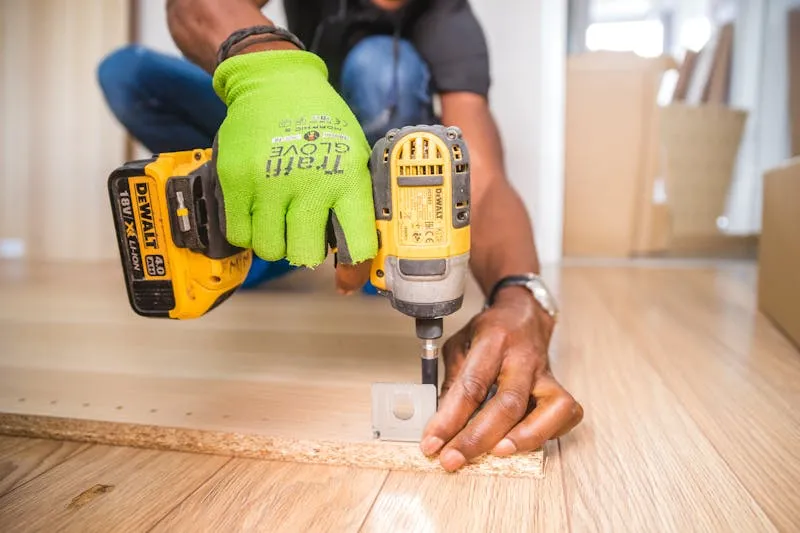
If you could only buy ONE tool, this is it. The drill-driver does two things: drives screws (assembling furniture, fixing hooks, tightening handles) and drills holes (hanging frames, mounting shelves, installing curtain poles). These two actions cover a solid 80% of household DIY.
How to choose:
- Cordless, non-negotiable — freedom of movement is essential. Corded drills are more powerful but you don't need that for home use
- Voltage — 12V handles 95% of domestic tasks (screws, plasterboard, softwood). 18V if you plan to drill brick or concrete. Don't go higher: heavier, pricier, unnecessary
- Lithium-ion battery — imperative. Old NiCd batteries have memory effect and self-discharge. Lithium holds its charge for months
- Torque — 30 Nm minimum. Below that, you'll struggle with long screws in hardwood
- Keyless chuck — to change bits without a tool. All modern models have one
- 2 batteries included — essential. While you use one, the other charges. Nothing worse than stopping mid-project to wait 2 hours for a recharge
Price ranges and recommendations:
- Entry level (£35–50) — Parkside (Lidl) 12V or Black+Decker BDCDD12. Perfect for beginners. Decent quality, modest battery life
- Mid-range (£70–100) — Bosch EasyDrill 1200 or Makita DF331D. The sweet spot for value. I've used mine for 3 years without a single issue
- High-end (£120–170) — Bosch Professional GSR 12V or DeWalt DCD701. Unnecessary for home DIY — unless you plan to tackle masonry regularly
No. 2 — The screwdriver set: because the drill doesn't go everywhere
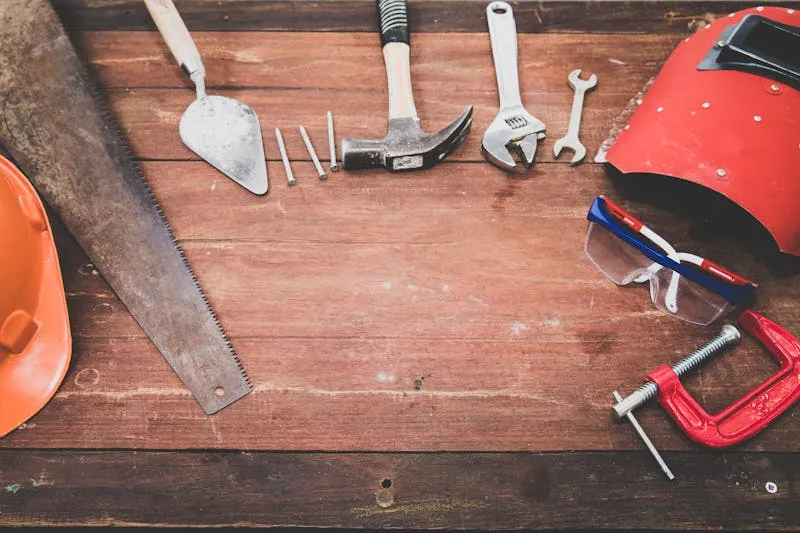
The drill-driver is fantastic, but it doesn't fit everywhere. Screws in tight spaces (under a sink, inside narrow furniture, behind appliances), delicate screws (electronics, eyewear), and screws that need precise torque — all of these need a manual screwdriver.
The 4 drive types to know:
- Phillips (PH) — the most common. PH2 covers 80% of household screws
- Flat/slotted — less common now but still found on older installations, electrical sockets, and locks
- Torx (star) — increasingly used in modern furniture (IKEA loves it). T20 and T25 are the most common sizes
- Pozidriv (PZ) — looks like Phillips but with extra notches between the cross arms. Common in European wood screws
My pick: a multi-bit screwdriver with interchangeable tips (Wera Kraftform Kompakt, Stanley FatMax, or even Silverline for budget). One handle, 10–15 bits stored in the cap. Takes less space than 8 individual screwdrivers and is more versatile.
No. 3 — The measuring trio: tape, level, and carpenter's pencil

The most underrated tool in DIY is the pencil. More specifically, it's the preparation — measuring, marking, checking — that makes the difference between professional and wonky results. The three musketeers of precision:
Tape measure (5m is enough) — £4–10. The basic model works perfectly, but make sure it has a magnetic hook (for gripping metal surfaces when you're measuring alone) and a blade lock.
Spirit level (40–60 cm) — £6–12. The tool that ensures your shelves, frames, and curtain poles are perfectly horizontal. The smartphone app works in a pinch, but a real level is more accurate and more practical.
Carpenter's pencil — £0.40. The flat cross-section stops it rolling off surfaces. The thicker lead (HB) marks wood, plaster, and tile without slipping. A small detail that makes a big difference.
No. 4 — The hammer: simpler than you think
Budget: £6–12
A hammer is a hammer — but there are a few rules for choosing well:
- Weight: 300–400g (10–14 oz) — the ideal range. A 200g hammer lacks the inertia to drive wall plugs properly. A 500g hammer tires your wrist after 10 nails. 300g is the sweet spot
- Built-in claw — the split peen (fork at the back) lets you pull out misplaced nails. Essential
- Ergonomic handle — fibreglass or treated wood with grip. Avoid smooth raw wood handles — the hammer slips when your palms are sweaty
No. 5 — Adjustable pliers: the Swiss Army knife of home plumbing
Budget: £8–18
Adjustable water pump pliers are the tool you didn't think you needed — until the fitting under the sink leaks, the bath drain won't unscrew, or a stubborn nut blocks your furniture assembly. The adjustable jaw adapts to virtually every diameter you'll encounter at home.
My pick: Knipex Cobra 250mm. The Rolls-Royce of adjustable pliers — self-locking jaws, 0–46mm opening, grip on smooth and serrated surfaces. £22–28 but a lifetime purchase. Budget alternative: Bahco 250mm at £12 does the job well.
No. 6 — Utility knife and scissors: precision cutting tools
Budget: £4–8 for both
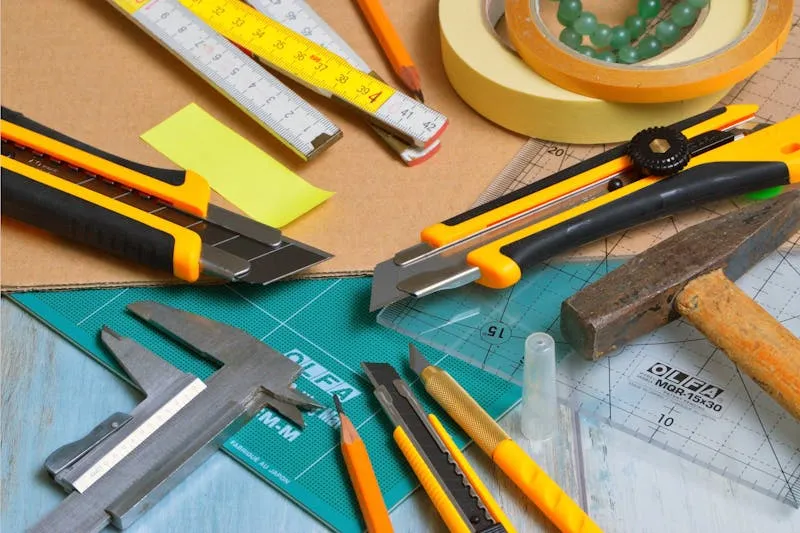
A retractable utility knife and a pair of sturdy scissors (not stationery scissors — proper multi-purpose ones). The knife opens parcels (you build IKEA furniture, you receive Amazon deliveries — the knife is daily), cuts masking tape cleanly, and trims silicone sealant. Technical scissors cut fabric, thin wire, and flexible plastic.
Tip: buy a knife with a blade reservoir in the handle (5 spare blades). Nothing worse than a dull blade — it's more dangerous than a sharp one because you have to force it.
No. 7 — Allen keys and adjustable spanner: the assembly kit
Budget: £6–12 for both
Allen keys — IKEA supplies one with every piece of furniture, and you end up with 15 identical ones in a drawer. Buy a folding set (penknife-style) of 8 sizes (1.5–10mm) instead. Costs £4–6, fits in your palm, and replaces all the loose keys. Most common sizes: 4mm (IKEA, most flat-pack furniture) and 5mm (standard hardware).
Adjustable spanner (200mm/8") — a universal tool that replaces an entire set of open-ended spanners. Jaw adjusts from 0 to 24mm. It tightens and loosens nuts, bolts, and plumbing fittings. The 200mm size is ideal for home use — compact but powerful enough.
Essential consumables: what everyone forgets to buy

Tools are useless without "consumables" — those small items you always forget and end up rushing to buy mid-project. Stock these basics (£15–25 total) and you'll never be stuck:
- Universal wall plugs (Fischer Duopower) — box of 50 in sizes 5, 6, and 8mm. Work in all wall types
- Assorted screws — a multi-size box (3×20, 3.5×30, 4×40, 5×50mm) covers 90% of needs. Countersunk wood screws, Phillips or Torx
- Nails — panel pins 25mm and 40mm for frames and small jobs
- Masking tape — green (for paint) and blue (for delicate surfaces). £1.50 per roll
- Mounting adhesive — one tube of No More Nails for light fixings without drilling
- Sandpaper — 3 sheets in 80 grit (rough), 120 grit (medium), and 240 grit (fine). £0.40 each
- Electrical tape — black, for insulating wires, marking drill bits (depth guide), and a thousand other uses
Organising your toolkit: the secret of efficient DIYers

Having tools isn't enough — you need to know where they are. The golden rule: every tool has a home, and every tool goes back after use. Three storage options:
- Classic toolbox (£12–25) — a plastic case with a compartmented top tray (for hardware and small accessories) and a deep base (for tools). The cantilever style with 3 trays is ideal if you have all 7 tools plus consumables
- Canvas tool bag (£15–30) — more practical than a box: lightweight, flexible, with external pockets for long tools. Ideal if you store tools in a narrow cupboard
- Wall-mounted pegboard (£8–15) — the solution for those with a garage, utility room, or cellar. Tools are visible, accessible, and organised. It works because you can see immediately when a tool is missing
Frequently asked questions about basic tools
What's the total budget to equip myself from scratch?
Roughly £100–150 for the complete kit (7 tools + consumables + storage). The drill-driver represents 50–60% of the budget. The rest — screwdrivers, tape measure, level, hammer, pliers, knife, wrenches — costs £30–50 total. Consumables add £15–20. It's a one-time investment that lasts 10+ years. Divided by the number of times you won't need to call a tradesperson at £40–60/hour, the payback is fast.
Should I buy an all-in-one kit or tools separately?
All-in-one kits ("108-piece toolkit") are tempting but typically contain mediocre quality tools and useless sizes (who needs a 0.7mm Allen key?). My advice: buy the drill alone (or as a drill + bit set), and hand tools separately choosing for quality. Better to have 7 good tools than 108 mediocre ones.
Parkside (Lidl) or Bosch: which drill should I choose?
For occasional use (2–5 times per year), Parkside is excellent value at £35–45. For regular use (monthly or more), invest in a Bosch "green" (consumer range) or entry-level Makita. The difference shows in battery longevity, chuck precision, and overall robustness. I started with a Parkside — it held up well for 2 years. Then I upgraded to a Bosch when I increased my DIY frequency.
Do I need a hammer drill in addition to a drill-driver?
Only if you have concrete or solid brick walls. Standard drill-drivers (without hammer mode) drill plasterboard, wood, and thin metal perfectly — covering 90% of modern walls. If you have a concrete wall, hammer mode is necessary for the bit to bite. Some drill-drivers have integrated hammer mode (Bosch EasyImpact, Makita HP332D) — the best compromise if you want one tool to do everything.
Which tools should a beginner absolutely avoid?
Circular saws (dangerous without experience), routers (advanced woodworking tool), and air compressor nailers (unnecessary at home). Also be wary of oscillating multi-tools — they promise to do everything (cut, sand, scrape) but do nothing really well. For beginners, simple specialised tools beat a versatile gadget. The one exception: the multi-bit screwdriver, which is a genuine space saver.
Sources and references
- Which? — Best Buy Cordless Drills and Power Tool Testing, 2023
- B&Q — Tool Buying Guides by Project Type and Skill Level
- This Old House — Essential Tools Every Homeowner Needs
- IET Wiring Regulations (BS 7671) — Electrical installation safety standards