Leah is 28. She's a freelance graphic designer, she's just learned she's six weeks pregnant, and she's crying in front of her fridge. Not tears of joy — tears of confusion. Her mother-in-law has sent her a list of 47 banned foods. Her best friend told her smoked salmon was "maybe OK, maybe not." Her pregnancy app recommends eating 300 extra calories a day, but her midwife said "eating for two is a myth." And Google, faithful to form, gave her 14 contradictory answers in 3 minutes.
If this sounds familiar, you're not alone. Pregnancy nutrition has become one of the most anxiety-inducing subjects for expectant mothers — not because the rules are complicated, but because they're poorly communicated. Between real risks (listeriosis, toxoplasmosis), reasonable precautions, and myths with no scientific basis, there's a chasm this guide will bridge.
Let us be clear: every recommendation presented here comes from official NHS, NICE, and BNF guidelines. No personal opinions, no fashionable nutritional trends. Facts, data, and practical advice so you can eat well — without unnecessary stress.
What you'll learn
- Your nutritional needs trimester by trimester
- The 6 essential nutrients of pregnancy
- Foods that are genuinely off-limits (and why)
- Foods to limit (but not ban)
- Pregnancy food myths debunked
- Sample daily menus by trimester
- Nausea and food aversions: solutions that work
- Vegetarian or vegan pregnancy: it's possible
- Frequently asked questions
Your nutritional needs: no, you're not "eating for two"
"Eating for two" is one of pregnancy's most persistent — and most harmful — myths. Your body doesn't need double the calories. It needs more of specific nutrients, not more food by volume.
How many extra calories?
According to NHS and NICE guidelines, additional calorie requirements during pregnancy are modest:
First trimester: no additional calories needed. Zero. Your body doesn't yet have significant extra energy requirements. The embryo is tiny and draws from your existing reserves.
Second trimester: no additional calories are recommended by the NHS (this differs from some other countries' guidelines). Focus on nutrient density rather than quantity.
Third trimester: approximately 200 extra calories per day. That's roughly a slice of wholemeal toast with peanut butter, or a banana with a handful of almonds. Not a second meal.
Recommended weight gain NICE doesn't set specific weight gain targets (unlike US guidelines), but general guidance suggests 10-12.5kg total for women starting at a healthy BMI. Your midwife will monitor your bump growth at each appointment rather than focusing on the scales. The key message: eat well, stay active, and trust your body's signals. If you're concerned about weight gain, speak to your midwife rather than restricting food.
The 6 essential nutrients of pregnancy
1. Folic acid (vitamin B9) — the number one nutrient
Folate is involved in the closure of the neural tube — the embryonic structure that becomes the brain and spinal cord. Folate deficiency increases the risk of spina bifida and anencephaly. This risk peaks between days 21 and 28 after conception — often before the woman even knows she's pregnant.
Recommendation: 400 micrograms daily as a supplement, ideally started before conception and continued until week 12. In addition to dietary sources.
Foods rich in folate: spinach, broccoli, asparagus, lentils, chickpeas, white beans, avocado, beetroot, fortified breakfast cereals.
2. Iron — preventing anaemia
During pregnancy, your blood volume increases by 40-50%. To produce all those extra red blood cells, your body needs iron. Iron-deficiency anaemia affects about 25% of pregnant women in the UK and can cause fatigue, dizziness, and in severe cases, increased risk of premature birth and low birth weight.
Recommendation: 14.8mg/day (the NHS doesn't routinely supplement — your midwife will prescribe iron if blood tests show a deficiency).
Iron-rich foods: red meat (well-cooked), lentils, chickpeas, tofu, quinoa, spinach, fortified cereals. To improve absorption of plant-based iron, pair it with vitamin C (a squeeze of lemon on lentils, for example).
3. Calcium — building the skeleton
Your baby's skeleton is built from the calcium in your diet — and if you don't consume enough, your body will draw from your own bone reserves. This doesn't endanger your baby (it takes what it needs), but it can weaken your bones.
Recommendation: 700mg/day (equivalent to 3 portions of dairy).
Calcium-rich foods: yoghurt, hard cheese (Cheddar, Parmesan, Edam — all safe because they're pasteurised or long-aged), milk, sardines with bones, broccoli, almonds, calcium-fortified plant milks.
4. Omega-3 DHA — for the brain
DHA (docosahexaenoic acid) is an omega-3 fatty acid essential for the development of the baby's brain and retina. The third trimester is the period of maximum accumulation — the baby's brain triples in size between weeks 28 and 40.
Recommendation: eat 2 portions of fish per week, including 1 of oily fish.
DHA-rich foods: oily fish (salmon, sardines, mackerel, herring). Rapeseed oil, walnuts, and flaxseeds provide ALA (a precursor to DHA, but conversion is poor).
Which fish to choose? Favour small oily fish (sardines, mackerel, herring) which accumulate fewer heavy metals than large predators. Salmon (fresh, well-cooked) is excellent. Avoid: shark, swordfish, marlin (too much mercury). Tuna should be limited to no more than 2 fresh steaks or 4 medium tins per week (NHS guidance). Oily fish should be limited to 2 portions per week due to pollutant accumulation.
5. Vitamin D — calcium's partner
Vitamin D is essential for calcium absorption. In the UK, vitamin D deficiency is widespread — particularly during autumn and winter months when sunlight is insufficient for skin synthesis.
Recommendation: the NHS recommends 10 micrograms (400 IU) of vitamin D daily throughout pregnancy and while breastfeeding. This is available free through the Healthy Start scheme if you qualify.
Sources: sunlight exposure (difficult in UK winters), oily fish, egg yolks, fortified foods, supplements.
6. Iodine — for baby's thyroid
Iodine is essential for foetal neurological development. The baby's brain needs maternal thyroid hormones during the first trimester (its own thyroid doesn't function until week 12). Even mild iodine deficiency can affect the child's IQ.
Recommendation: 140 micrograms/day.
Sources: dairy products (milk, yoghurt, cheese are the main UK sources), fish, eggs. Seaweed can be very high in iodine — use sparingly. Many plant milks are not fortified with iodine, so check labels carefully.
Foods that are genuinely off-limits: the clear list

Foods are restricted during pregnancy for two main reasons: the risk of listeriosis and the risk of toxoplasmosis. These aren't excessive precautions — they're real infectious risks with potentially serious consequences for the baby.
Listeriosis: foods to avoid
Listeriosis (infection by Listeria monocytogenes) can cause miscarriage, premature birth, severe neonatal infection, or stillbirth. The bacterium grows even at fridge temperatures — which makes it particularly dangerous.
Foods to avoid:
- Mould-ripened soft cheese: brie, camembert, chèvre (soft goat's cheese), Danish blue, gorgonzola, Roquefort
- Any soft cheese with a white rind, even if pasteurised
- Blue-veined cheeses (unless cooked until steaming hot throughout)
- Pâté (including vegetable pâté — all types carry listeria risk)
- Cold cured meats: salami, chorizo, prosciutto, Parma ham (unless cooked — on a pizza, for instance)
- Smoked fish (cold-smoked): smoked salmon, smoked trout, smoked mackerel
- Raw shellfish: oysters, raw mussels
- Pre-prepared salads from deli counters
Cheeses that ARE safe: hard cheeses (Cheddar, Parmesan, Stilton — yes, Stilton, despite being blue, because it's made with pasteurised milk and is too acidic for Listeria), pasteurised cottage cheese, mozzarella, cream cheese, processed cheese, halloumi, paneer. Any cheese cooked until piping hot throughout is safe.
Toxoplasmosis: precautions if you're not immune
Toxoplasmosis is a parasitic infection (Toxoplasma gondii) that can cause severe brain and eye damage in the foetus. Unlike in France, routine toxoplasmosis screening is not standard in UK antenatal care — the NHS relies on dietary precautions instead.
Precautions:
- Meat: always thoroughly cooked (no rare steak, no steak tartare, no carpaccio). Freezing at -18°C for at least 3 days kills the parasite.
- Fruit and vegetables: washed thoroughly under running water. Pre-packaged "ready to eat" salads should be rewashed.
- Gardening: wear gloves (soil may contain oocysts).
- Cat litter: have someone else change it, or wear gloves and wash hands immediately after.
Alcohol: zero tolerance Alcohol crosses the placenta and reaches the foetus within minutes. There is no level of alcohol consumption during pregnancy that has been proven safe — this is the official position of the NHS, NICE, RCOG, and all global health authorities. Foetal alcohol spectrum disorder (FASD) is the leading cause of non-genetic learning disability in children. The UK Chief Medical Officers' guideline is clear: the safest approach is to drink no alcohol at all during pregnancy.
Foods to limit (but not ban)
Some foods aren't banned but should be consumed in moderation during pregnancy.
Liver and liver products: liver is very rich in retinol (preformed vitamin A). Excess retinol is teratogenic — it can cause birth defects. Avoid liver, liver pâté, and supplements containing retinol. Beta-carotene (plant-based vitamin A, in carrots and sweet potatoes) is perfectly safe.
Caffeine: the NHS recommends no more than 200mg of caffeine per day during pregnancy. That's roughly 2 mugs of instant coffee, or 1 mug of filter coffee, or 2-3 cups of tea. Excess caffeine is associated with low birth weight and, at very high doses, miscarriage. Watch for hidden sources: chocolate, cola, energy drinks, some cold remedies.
Tuna: limit to no more than 2 fresh tuna steaks or 4 medium tins per week (mercury accumulation).
What about herbal teas? Peppermint, chamomile, and rooibos teas are generally considered safe during pregnancy. However, some herbs should be avoided: liquorice root (may raise blood pressure), sage in large quantities, and any "detox" or "slimming" tea with unclear ingredients. The NHS advises limiting herbal teas to around 4 cups per day and sticking to well-known varieties. When in doubt, ask your midwife or pharmacist.
Pregnancy food myths: thoroughly debunked
Myth 1: "You need to eat for two." False. You need more nutrients, not more volume. Eating for two is the surest way to gain excessive weight — which increases risks of gestational diabetes, pre-eclampsia, and caesarean section.
Myth 2: "Pregnancy cravings reflect a nutritional need." Mostly false. Your midnight craving for pickles isn't a coded message from your baby. Cravings are primarily hormonal and psychological. That said, a persistent craving for ice, clay, or chalk (pica) can signal iron deficiency — mention it to your midwife.
Myth 3: "Fish is dangerous during pregnancy." False. Fish is one of the best sources of DHA, essential for baby's brain development. What to avoid is high-mercury fish (shark, swordfish, marlin) and raw fish (sushi with raw fish, sashimi, ceviche). Cooked fish, twice a week, is not only permitted but actively recommended by the NHS.
Myth 4: "All cheese is banned." False. Hard cheeses (Cheddar, Parmesan, Edam, Gruyère) are perfectly safe. Pasteurised cottage cheese, cream cheese, mozzarella, and processed cheese are all fine. What's restricted is mould-ripened soft cheese with a white rind and blue-veined cheese — and even these are safe if cooked until steaming hot.
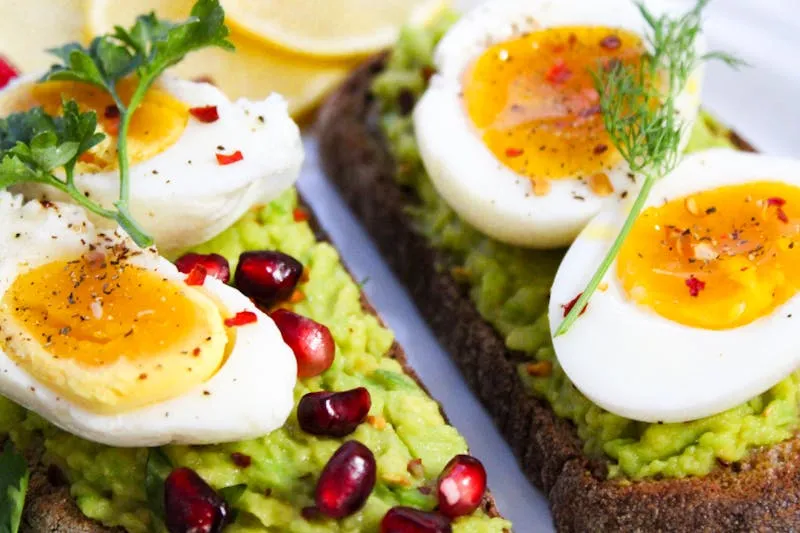
Myth 5: "You can't eat eggs." False. Eggs with the British Lion stamp can be eaten runny or raw (the hens are vaccinated against salmonella). This includes soft-boiled eggs, poached eggs with runny yolks, and homemade mousse or mayonnaise — provided the eggs carry the Lion mark. Non-Lion eggs should be cooked until both white and yolk are solid.
Myth 6: "Coffee is completely forbidden." False. Up to 200mg of caffeine per day (about 2 mugs of instant coffee) is perfectly compatible with pregnancy. It's the excess that causes problems.
Sample daily menus by trimester
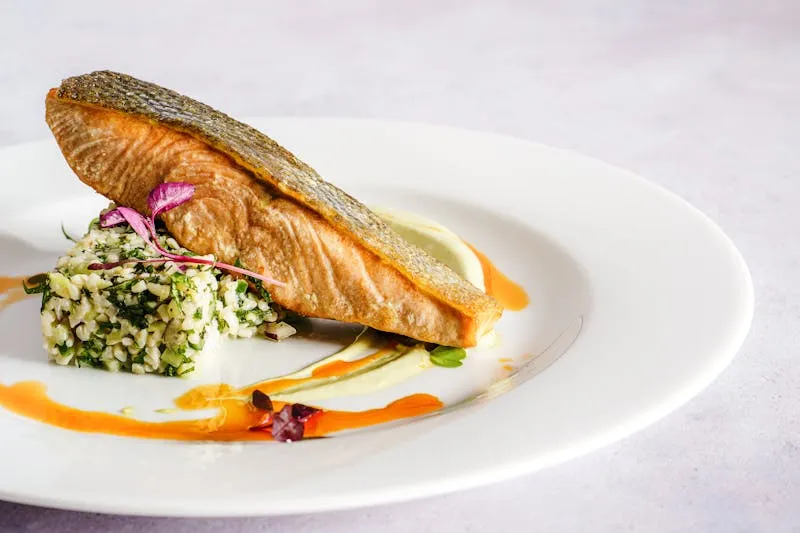
First trimester: nausea-friendly and foundational
Breakfast: wholemeal toast + butter + stewed apple + natural yoghurt + weak tea (or lemon water if coffee triggers nausea).
Mid-morning snack: banana + handful of almonds (dried fruit and nuts are well-tolerated even with nausea).
Lunch: lentil salad with lemon dressing + grilled chicken + brown rice + seasonal fruit.
Afternoon snack: oatcake + Cheddar cheese + apple.
Dinner: homemade vegetable soup + well-cooked herb omelette + green salad + yoghurt.
Second trimester: building and energy
Breakfast: porridge with milk + drizzle of honey + mixed berries + handful of walnuts.
Snack: wholemeal pitta + hummus + raw veg sticks (carrots, cucumber, pepper).
Lunch: baked salmon fillet + steamed broccoli + quinoa + rapeseed oil dressing.
Afternoon: banana-spinach-milk smoothie (rich in iron, calcium, and folate).
Dinner: sweet potato soup + grilled sardines on toast + mixed leaf salad + fruit salad.
Third trimester: nutrient density and digestive comfort
Breakfast: 2 well-scrambled eggs (Lion-stamped) + rye bread + avocado + glass of orange juice (vitamin C for iron absorption).
Snack: Greek yoghurt + chia seeds + stewed fruit.
Lunch: chicken casserole (thoroughly cooked) + roasted root vegetables + new potatoes + fruit.
Afternoon: oat biscuits + glass of milk (or calcium-fortified alternative).
Dinner (light, to manage heartburn): cold courgette soup + toast with cream cheese and fresh herbs. Eat early (2 hours before bed) and prop up the head of your bed slightly.
The heartburn hack In the third trimester, heartburn affects 40-80% of pregnant women (the uterus compresses the stomach and progesterone relaxes the sphincter). What helps: eating little and often, avoiding acidic and fatty foods in the evening, not lying down immediately after eating, and propping up the head of your bed by 10-15cm. Cold milk and raw almonds often soothe the burning sensation. If it's severe, speak to your midwife — antacids containing calcium carbonate are safe in pregnancy.
Nausea and food aversions: solutions that actually work
Pregnancy nausea (primarily first trimester) makes eating difficult — and sometimes the most recommended foods are precisely the ones that make you retch. Here are evidence-based strategies.
Eat before you're hungry. An empty stomach worsens nausea. Keep plain biscuits, crackers, or dried fruit within reach — including on your bedside table for nibbling before you get up.
Favour cold foods. Hot foods release more aromas, and first-trimester hypersensitivity to smells turns every cooking aroma into an assault. Sandwiches, salads, fresh fruit, yoghurt — anything that doesn't perfume the kitchen.
Ginger. Its effectiveness against pregnancy nausea is documented by several clinical trials (Cochrane review, 2015). Fresh grated ginger in hot water, ginger biscuits, ginger sweets. Avoid ginger supplements in capsule form without medical advice (non-standardised dosages).
Acupressure. The P6 (Neiguan) point, located on the inner wrist three finger-widths below the crease, is used in traditional Chinese medicine for nausea. Sea-Bands apply constant pressure to this point. The evidence is mixed, but with zero side effects, it's a risk-free option.
When nausea becomes a medical problem If you're vomiting more than 3 times a day, losing weight, unable to keep anything down (including water), or showing signs of dehydration (dark urine, dizziness on standing): seek help. Hyperemesis gravidarum affects 1-2% of pregnant women and sometimes requires hospital admission for IV rehydration. It's not "being dramatic" — it's a real condition that responds to treatment. Safe anti-sickness medications exist for pregnancy (your GP can prescribe them). The Pregnancy Sickness Support helpline (0800 803 0048) offers confidential advice.
Vegetarian or vegan pregnancy: a practical guide
A vegetarian pregnancy is perfectly compatible with adequate nutrition when well-planned. A vegan pregnancy is too, but with essential supplements.
Vegetarian (with eggs and dairy)
Key areas to monitor are iron (prioritise lentils, chickpeas, tofu, quinoa + vitamin C at every meal for absorption) and omega-3 (flaxseed oil, walnuts, or an algae-based DHA supplement). Calcium and protein are easily covered by dairy and eggs.
Vegan (no animal products)
The following supplements are essential — not optional — during a vegan pregnancy:
- Vitamin B12: 10 micrograms/day or 2,000 micrograms/week. No reliable plant source exists.
- DHA: algae oil supplement (250mg DHA/day). Flaxseeds provide ALA, but conversion to DHA is too low.
- Iodine: most plant milks are NOT fortified with iodine (check labels). Consider a supplement.
- Calcium: fortified plant milk, calcium-set tofu, kale, broccoli, fortified orange juice.
- Iron: needs are harder to meet (plant iron is less bioavailable). Supplementation often needed — guided by blood tests.
Essential advice If you're vegan and pregnant, ask your midwife for a referral to an NHS dietitian. This isn't distrust — it's because the margins are smaller and professional guidance ensures both your health and your baby's. NHS dietitian referrals are free on the NHS. The Vegan Society also provides a detailed pregnancy nutrition guide on their website.
Food safety: the habits that protect you
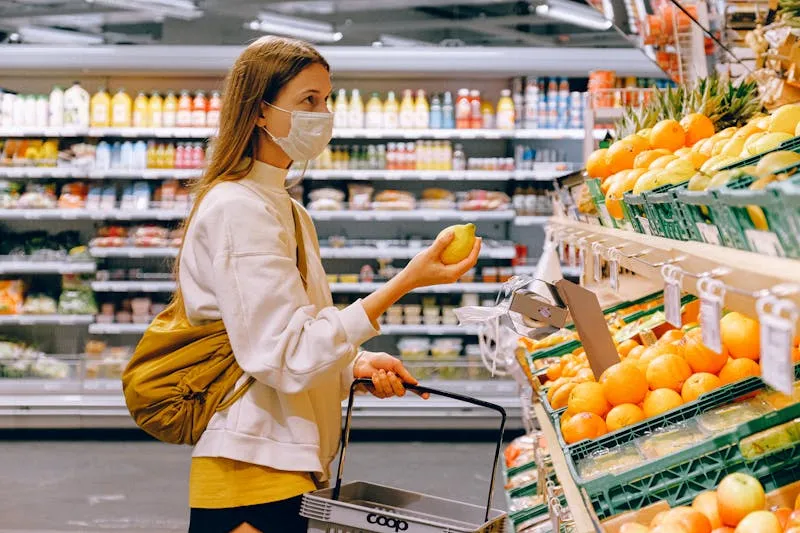
Beyond the list of restricted foods, certain food safety practices significantly reduce the risks of listeriosis and toxoplasmosis:
Fridge: set to 5°C or below. Clean regularly. Keep raw and cooked foods separate. Use leftovers within 24-48 hours. Check use-by dates religiously.
Hand washing: before cooking, after handling raw meat, after gardening, after touching animals.
Cooking: all meat should be thoroughly cooked with no pink visible. Eggs: Lion-stamped can be runny; others should have firm white and yolk. Fish: opaque and flakes easily with a fork.
Fruit and vegetables: wash thoroughly under running water, even "ready to eat" varieties. If eating out, be cautious with pre-prepared salads you haven't washed yourself.
Eating out: ask for meat well-done, avoid buffets where food may have been sitting out, choose hard cheeses, and don't hesitate to ask your server about ingredients. No decent restaurant will judge you.
Frequently asked questions about eating during pregnancy
Can I eat sushi during pregnancy?
Sushi made with raw fish is not recommended by the NHS due to the risk of parasitic infection (though freezing fish at -20°C for at least 24 hours before serving raw does kill parasites — most reputable sushi restaurants do this). Cooked sushi (prawn tempura, cooked crab, omelette) and vegetarian rolls (avocado, cucumber) are perfectly safe. If you choose to eat raw fish sushi, ensure it's from a reputable restaurant that follows FSA freezing guidelines.
Is honey safe during pregnancy?
Yes, honey is perfectly safe for pregnant women. The concern about honey relates to infant botulism — a risk that only exists for babies under 12 months (their gut flora can't neutralise the botulinum toxin). Your adult digestive system handles Clostridium botulinum spores without any difficulty.
How much water should I drink daily?
The NHS recommends 6-8 glasses of fluid per day (about 1.5-2 litres), and more in hot weather or if you're experiencing vomiting. Water is the best choice. Herbal teas (peppermint, chamomile, rooibos) count. Fruit juice is high in sugar — limit to one small glass daily. Sparkling water is fine but may worsen bloating in the third trimester.
Can I eat cooked ham and deli meats?
Pre-packed cooked meats like ham, corned beef, and turkey breast are safe to eat in pregnancy. However, be cautious with deli counter meats (sliced to order), as the slicing process can introduce contamination. Consume opened packets within 48 hours. What to avoid entirely: cured or raw meats like salami, chorizo, prosciutto, and Parma ham — unless thoroughly cooked (on a pizza straight from the oven, for example).
Are supplements necessary?
The NHS recommends two specific supplements: folic acid (400 micrograms/day from pre-conception to week 12) and vitamin D (10 micrograms/day throughout pregnancy and breastfeeding). Iron is only prescribed if blood tests show deficiency. All other supplements (omega-3, multivitamins, probiotics) are optional and should be discussed with your midwife or GP. Avoid any supplement containing retinol (preformed vitamin A). The Healthy Start scheme provides free vitamins for eligible women.
Can I eat spicy food during pregnancy?
Yes, spices pose no risk to the baby. Chilli, curry, ginger, turmeric — all are safe. The only caveat is digestive: in the third trimester, very spicy foods can worsen heartburn. If you tolerate spices well, there's no reason to avoid them. Some studies even suggest that flavours from your diet pass into the amniotic fluid, potentially influencing your baby's future food preferences.
Can I eat runny eggs?
Yes — provided the eggs carry the British Lion stamp (which over 90% of UK eggs do). Lion-stamped hens are vaccinated against salmonella, making the eggs safe to eat raw or runny. This means soft-boiled eggs, poached eggs with runny yolks, homemade mayonnaise, and mousse are all fine with Lion eggs. Non-Lion eggs (including duck, goose, or quail eggs) should be cooked until both white and yolk are solid.