
Ellie had it all planned. The paperback in her tote bag — reread on the train down from Leeds, spine cracked in three places. A yellow sticky note on the cover with her name in capitals (two Ls, an IE at the end, nothing left to chance). Twenty-eight, a primary school teacher, she had traded a weekend of marking for a Saturday at Hay. It was 4.10pm, rain was drumming on the canvas, and after fifty minutes in the signing queue there were only two people left in front of her. The tent smelled of wet grass, coffee — and brand-new paper.
Then it was her turn. The author looked up, smiled and asked: "Who's it for?" And Ellie's mind went completely blank. She said her name. She said "thank you for — everything". She walked off with a signature, and remembered halfway back along the footpath into town the one thing she'd wanted to say for six years: that this novel had got her through her finals.
I know because I was right behind her, clutching my own sticky note — we'd shared a bag of crisps for most of that queue. Ellie didn't lack nerve or patience (fifty minutes in a damp queue, respect). She lacked one thing — a plan. That's the paradox of book festivals: getting in is easy, but the thirty seconds at the signing table are the bit nobody prepares you for.
Festival season is close. Hay tickets have been on general sale since mid-March, Edinburgh follows in August, and across the Channel the Festival du Livre de Paris opens its doors today at the Grand Palais. My book club — born during lockdown — is a small circle of readers, a book and a teapot (our whole method is in my practical guide to starting and running a book club). A festival is the opposite: you go out and meet the people who write them. Here's the plan Ellie didn't have — calendar, tickets, queues, what to bring and what to say in thirty seconds flat.
Hay Festival 2025: dates, tickets and what to expect
Hay Festival 2025 runs from 22 May to 1 June in Hay-on-Wye, Powys — more than 600 events over eleven days. According to the Guardian's report on the 2025 Hay programme, the lineup includes Michael Sheen, Hanif Kureishi, Nobel laureate Abdulrazak Gurnah and Elif Shafak — plus Jacqueline Wilson, Julia Donaldson and Katherine Rundell for younger readers. Members got first pick; general sale opened at noon on 14 March. The paper calls it the "UK’s most famous literary festival". Expect queues.
Hay's ticketing is simple once you know the rule. Hay Festival's own FAQ explains that you don't need a ticket to get onto the festival site — but every event you want to attend has to be booked individually. Most sessions last around an hour and "are followed by book signings". In other words, the talk is your way in, and the signing is the encore.
For a first festival, Hay has one huge advantage — the venues sit together on one site, a ten-minute walk from the centre of town. The catch is the same thing: hundreds of events, one field, and everyone heading for the same tent at the same time.
The UK book festival calendar, from spring to autumn
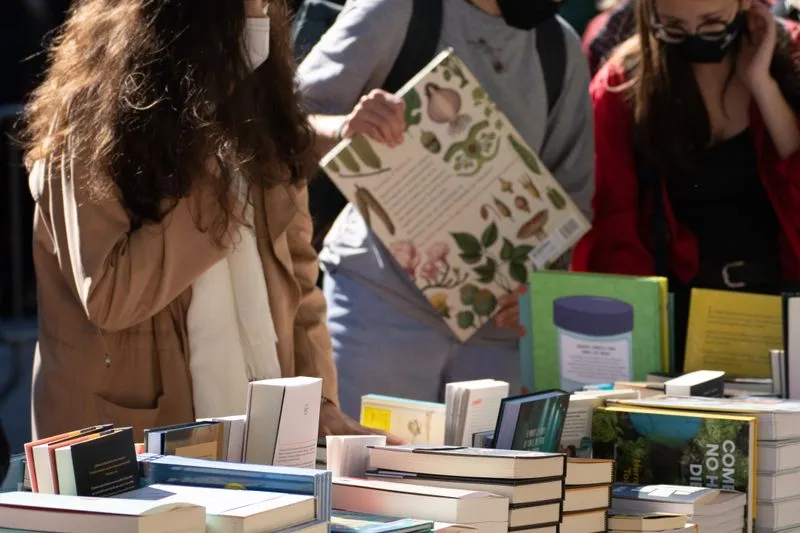
UK book festivals follow a fairly steady rhythm — Hay at the end of May, Edinburgh in August, Cheltenham in October. Here are the ones I'd suggest for a first go, with when each one usually falls.
| When | Festival | Where | Best for |
|---|---|---|---|
| Late May to early June | Hay Festival (22 May to 1 June 2025) | Hay-on-Wye, Powys | big names, ideas, fiction |
| July | Theakston Old Peculier Crime Writing Festival (17 to 20 July 2025) | Harrogate, Old Swan Hotel | crime fiction |
| August | Edinburgh International Book Festival (9 to 24 August 2025) | Edinburgh | fiction, politics, livestreamed talks |
| September | Bloody Scotland (12 to 14 September 2025) | Stirling | crime fiction |
| October | Cheltenham Literature Festival | Cheltenham | a long autumn programme |
| October | Black British Book Festival | London (the Barbican in 2024) | Black British authors, new voices |
These festivals don't share a size or a mood — and that's a good thing. The Edinburgh International Book Festival's visitor guide describes its usual format as an author and a chair "sitting on comfy chairs", with most events in its largest venues livestreamed and an on-site bookshop, run by Waterstones, that stocks titles by all the visiting authors. The Black British Book Festival is much younger: founded in 2021 by the children's author Selina Brown, it was expected to draw about 4,000 people to the Barbican last October, according to the Guardian's piece on the festival and diversity in publishing (tickets sold out, but there were free workshops for everyone else).
My advice for a first time? A genre festival — rather than a general one. If you read crime, Harrogate's Theakston Old Peculier Crime Writing Festival or Bloody Scotland. You'll meet people who love exactly what you love, and the conversation in the queue starts by itself (and it usually ends with a stranger's recommendations saved in your notes app).
How a festival book signing works
At a UK festival, the signing usually comes straight after the talk. The author walks off stage, sits at a table near the festival bookshop — and the queue forms. Edinburgh's visitor guide for 2025 spells it out: "Most authors in our programme sign copies of their books immediately after their event. No need to book, simply turn up and join the queue." At Hay, most sessions are followed by signings too.
In practice, you'll come across two formats:
- The post-event signing. The UK classic — you see the talk, then join the queue. No extra booking.
- The drop-in signing. An author sits at the festival bookshop or a local bookshop's table for an hour, and whoever passes joins the line.
Rules change from one festival to the next — and from one year to the next. Check the festival's FAQ and the author's publisher on social media, which sometimes posts signing times a few days ahead.
Planning your festival visit: the night before and the morning of
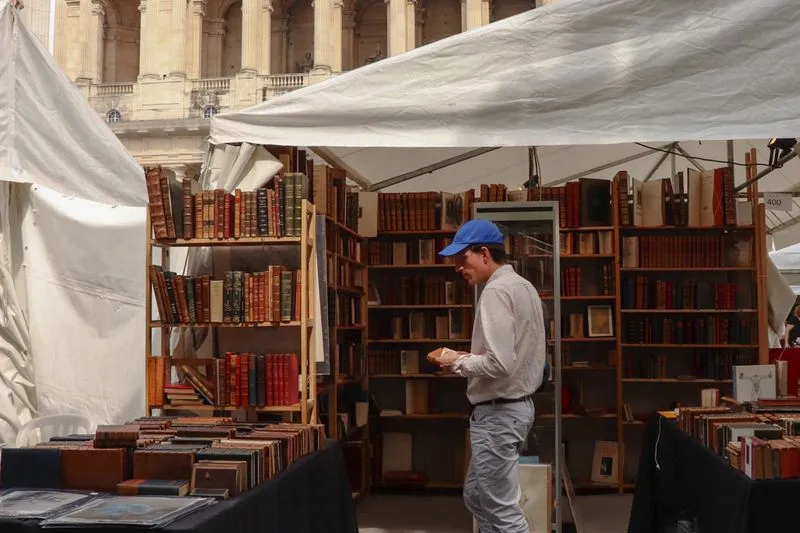
A good signing is planned the evening before — twenty minutes, programme open on your laptop. Here's the order I do things in:
- List your authors. Three at most — ranked. Number one is the person you're prepared to queue for (in the rain, if it comes to that).
- Note the times and venues. Day, time, venue name. Write them down or screenshot them (in a crowd, signal dies at the worst moment — for me, at every big festival).
- Book your events. Then check the listing for any separate signing arrangement (at Edinburgh there's none: you just join the queue).
- Choose the book to get signed. One per author, ideally — the one that matters most.
- Block out the afternoon. An hour-long talk plus a signing queue easily eats two hours — and you'll want a margin.
On the day, eat before you leave. It sounds silly. And yet, both times I've seen a reader wobble in a queue, she'd skipped breakfast to "get there for opening". Having done more than thirty music festivals (my favourites are in my pick of the must-attend summer music festivals), I found exactly the same survival reflexes at book festivals: water, a charged phone, a plan — and shoes you can stand in for two hours.
The signing queue: how long, and how to survive it
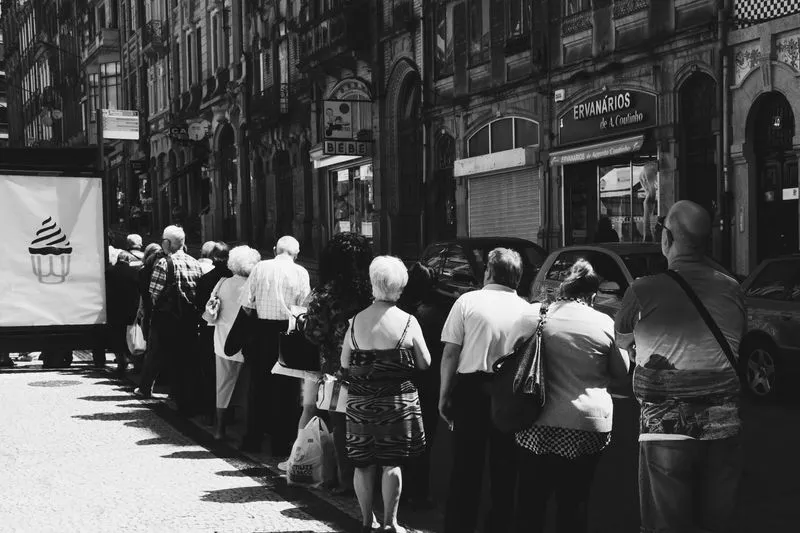
The wait depends on the author — not the festival. A few minutes for a debut novelist (who'll be thrilled to see you), well over an hour for a headliner — sometimes more. One simple rule: the longer the queue at the start, the more likely it is to be cut before the end. Because authors sign within a time slot. When the slot ends, the queue closes (I've often seen a steward stand at the back to tell newcomers it's over).
Three things help. First, ask where the queue ends and whether it's still open — before you join it, not forty minutes in. Second, don't save places for four friends who are "just five minutes away": in a signing queue, it's the quickest way to get thirty people glaring at you. Third — and this is the best part of any festival — talk to your neighbours. Honestly, my best reading recommendations have come from queues, not from bookshops.
What to bring to a book signing (and what to leave at home)
The book, obviously. But which one — your own copy or a new one? At a UK festival, the simplest answer is the festival bookshop: Edinburgh's stocks titles by all its visiting authors, so you can buy after the talk and walk straight into the signing queue. Rules on bringing your own books vary, so check the FAQ before you go.
My personal rule: when the author is signing next to the festival bookshop, I buy the book there. It's a sale that counts for them — and the simplest way to say thank you. My battered old copy, the one I've reread three times, I keep for a quieter bookshop event. If you can't decide on the title, pick the one that changed something for you: for me, that's often one from my selection of books that change your life.
Everything else fits in a sturdy tote:
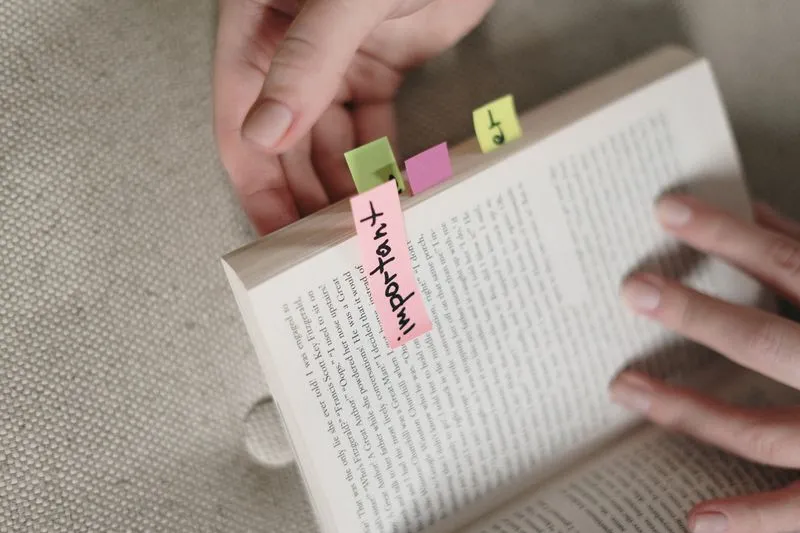
- A sticky note with your name in capitals — the author just copies it.
- Water and a snack that won't leave your fingers sticky — you'll be handling new books.
- A power bank. Your tickets, the site map and the programme all live on your phone.
- A small bag. Hay checks bags at the gate and asks visitors not to bring large bags or rucksacks.
- A waterproof. Hay takes place in a field (the FAQ says so itself). It's Wales, in May.
What to say to an author in thirty seconds
You have roughly thirty seconds — the time it takes the author to read your sticky note, open the book and write three lines. That sounds short. It's plenty for one sentence. Just one, but a specific one. Authors hear "I love your work" all afternoon. They remember the reader who mentions a scene.
A few lines that work, to adapt:
- "The lighthouse chapter made me miss my stop on the Tube."
- "It's the first novel I've finished in one night since sixth form."
- "I gave it to my best friend, and she's the one who told me to come."
- "My book club read it — we argued about the ending for an hour."
What to avoid? Saying the ending out loud (people behind you haven't all finished it). Slating the previous book — even nicely. Telling your life story while forty people wait (save the long version for a bookshop evening). And whipping out your phone for a selfie without asking: one question is enough (and if the author would rather not, that's their call).
What if you freeze? It happens. The first time — I was 25 — I rehearsed my sentence all the way down the queue… and wished a novelist "enjoy your lunch" at four in the afternoon. She laughed. So did I — later, on the Tube. "Thank you, I loved it" is more than enough. Authors know exactly what it costs to talk to someone you admire.
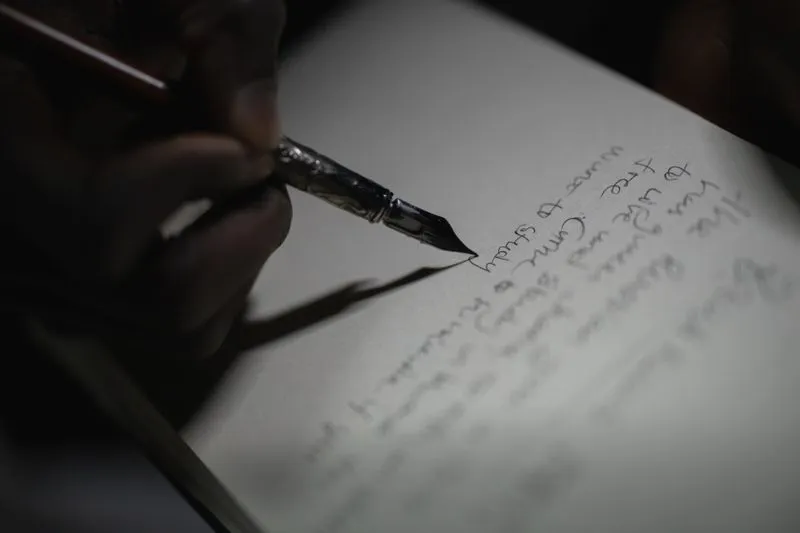
Do authors get paid for festival signings?
Not necessarily — and some haven't even been paid for the talk. When there is a fee, it covers the appearance; the books sold earn the author a royalty on top. In January 2016, Philip Pullman resigned as patron of the Oxford Literary Festival because, as the Guardian reported at the time, authors appearing there "are expected to work for nothing". A Society of Authors survey quoted in the same piece found that, of the 17 festivals that replied, 12 paid all their authors — with fees mostly between £150 and £200. Edinburgh was one of the festivals named as paying.
The Society of Authors' guidance on rates and fees is blunt: authors should be paid for their appearances, and a common misunderstanding is that they live on royalties — many earn little from book sales, and talks can be their main income.
For you, it changes how you turn up at their table. The author across the table isn't an extra — they're working, often unpaid, for hours. Buy the book at the festival bookshop when you can, don't turn up with twelve volumes, and say thank you. And if they were brilliant on stage, tell them that too.
Talks and panels: the best way in to an author
A talk is the easiest way to get close to an author at a festival: you listen for nearly an hour, then join the signing queue with something real to say. It's how I've done every festival since my first. At Hay, with more than 600 events this year, you'll never run short of options.
A talk is also a way to discover. Sit in on a panel about a subject that intrigues you, with three authors you've never heard of. Worst case, you rest your feet — which, after two hours on a festival site, is no small thing. Best case, you leave with a novel you'd never have picked up from a table (that's how I found a good share of the women novelists on my shelves). And in the queue afterwards you'll often be near the front: the audience of a discovery panel is calmer than a headliner's.
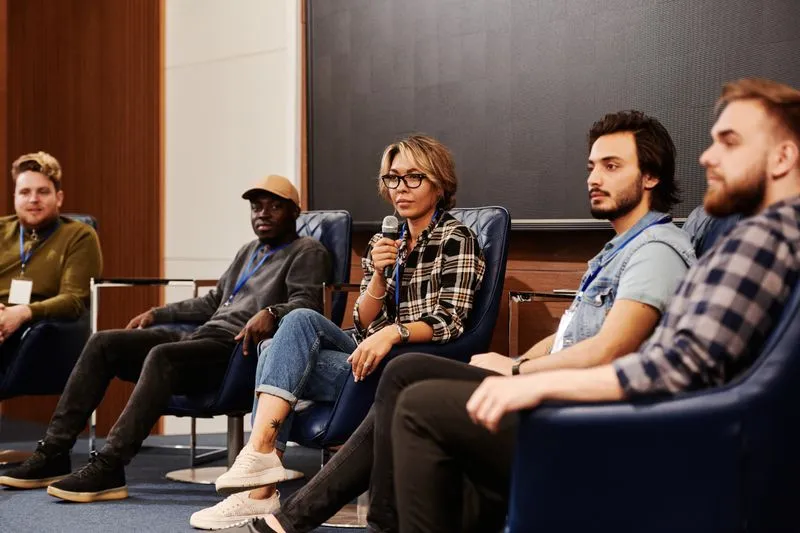
Bookshop signings and small festivals: meeting authors without the crowds
The best signing rarely happens in the biggest tent. It happens at a small-town festival on a Saturday morning — or in your local bookshop on a Thursday evening. Smaller festivals tend to have shorter queues — and authors there have time to talk. For a first signing, that's the format I'd recommend.
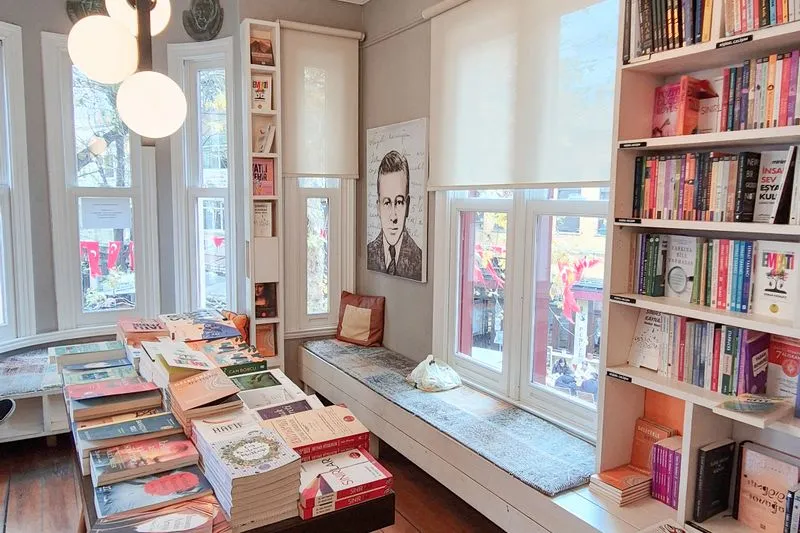
Bookshops run author events all year round, too. Sign up to your local shop's mailing list, or just ask the bookseller what's coming up. Mine — two streets away in Hackney — holds evening events regularly: thirty of us on folding chairs between two shelves, and the conversation with the author lasts ten minutes, not thirty seconds. That's where your battered, three-times-reread copy belongs.
If you're heading to Hay next month, remember three things: a book, a sticky note, a sentence. The rest is queueing.
Frequently asked questions
Do I have to buy the book at the festival to get it signed?
Not always — it depends on the festival. Buying from the festival bookshop is the simplest option (Edinburgh's is run by Waterstones and stocks titles by visiting authors), and it's a sale that counts for the author. If you want to bring your own copy, check the festival's FAQ first.
Do I need a ticket to get into Hay Festival?
Walking onto the Hay Festival site is free: Hay's FAQ says you don't need a ticket to enter the site, but you do need to book a ticket for each event you want to attend. Book the ones that matter to you in advance, as popular events sell out, and check each listing for its price.
How many books can I get signed at once?
One per author is basic courtesy when the queue is long. Some festivals set limits, others leave it to the author or publisher. If you own the whole series, choose the volume that matters most, or ask at the end of the session when nobody is waiting behind you.
Do authors get paid to sign books?
Not necessarily. When there is a fee, it covers the appearance, and the books sold earn the author a royalty. In 2016, a Society of Authors survey reported by the Guardian found that 12 of the 17 festivals that replied paid all their authors, mostly £150 to £200.
Can I ask a graphic novelist or illustrator for a drawing?
Better not to ask. A sketch takes time, and it's up to the artist whether to offer one. If they do, it's a gift — enjoy it. If they simply sign, thank them just the same.
Can I get a second-hand book or an ebook signed?
A second-hand copy, yes, within the festival's rules on your own books (and ideally not at a table where the same title is on sale new). An ebook, no — if you read on a Kindle, ask whether the author will sign a bookmark or a card instead.
How can I meet an author without going to a festival?
Through bookshop events. Many bookshops invite authors throughout the year, with fewer people and more time to talk. Join your local bookshop's mailing list or follow it on social media — that's usually where dates are announced first.
Sources
- The Guardian — Michael Sheen, Jameela Jamil and Hanif Kureishi join packed Hay festival lineup (11 March 2025)
- Hay Festival — Hay-on-Wye FAQ (archive of 30 November 2023)
- Edinburgh International Book Festival — Visiting the Festival (archive of 25 March 2025)
- The Guardian — Philip Pullman resigns as Oxford literary festival patron over lack of pay for authors (14 January 2016)
- Society of Authors — Rates and fees (archive of 3 April 2025)
- The Guardian — Black British Book festival founder criticises lack of diversity in publishing (2 October 2024)
- Cheltenham Festivals — Cheltenham Literature Festival (archive of 10 June 2024)
- Harrogate International Festivals — Theakston Old Peculier Crime Writing Festival 2025 (archive of 23 March 2025)
- Bloody Scotland — International Crime Writing Festival (archive of 5 April 2025)