In this article
A few months ago, one of my patients — let's call her Mathilde, 34, a tech manager — told me something I hear at least three times a week in clinic: "I know what I should be eating. My problem is that on a Tuesday evening at 8:30pm after a 10-hour day, the only thing I'm capable of doing is ordering a pad Thai on Deliveroo."
Mathilde doesn't have a nutrition knowledge problem. She has a food logistics problem. And that's the case for the vast majority of people who struggle to eat well on a daily basis. The gap between what we know we should eat and what we actually eat is almost never an information issue — it's an organisation issue.
Meal prep solves this problem at its root. By dedicating 2 hours on Sunday to preparing your weekday meals, you eliminate the most exhausting daily decision — the 7:30pm one, when tiredness tips every choice towards the quickest option (and usually the least balanced).
What the research says: According to a meta-analysis published in the International Journal of Behavioral Nutrition (2017), people who prepare meals in advance consume on average 23% more vegetables and 17% fewer ultra-processed foods than those who cook day-to-day. Organisation isn't a luxury — it's a public health tool.
Why meal prep is a nutritional game-changer
Before giving you the method, it's worth understanding why meal prep works so well from a nutritional standpoint. Because it's not simply "cooking ahead" — it's a paradigm shift in your relationship with food.
The decision is made when you're sharp
On Sunday morning, rested, you choose grilled chicken, quinoa, and roasted broccoli. On Tuesday evening at 9pm, exhausted, you'd choose pizza. Both "you"s exist — but the Sunday morning version makes better nutritional choices. Meal prep is about letting the rested version of yourself decide for the knackered version.
Portion control is built in
When you divide your meals into containers on Sunday, the portions are calibrated. No "I'll just have a second helping because the pot's right there." Each container = one meal = the right quantities. The NHS Eatwell Guide recommends this kind of anticipated portioning as a tool for dietary self-regulation.
The budget is controlled
Shopping once a week with a precise list eliminates impulse buys (the "just in case" biscuits, the "backup" ready meal) and waste (the vegetables forgotten at the back of the fridge). My patients who switch to meal prep typically see a 15-25% drop in their food spending.
The balanced plate: the foundation of everything
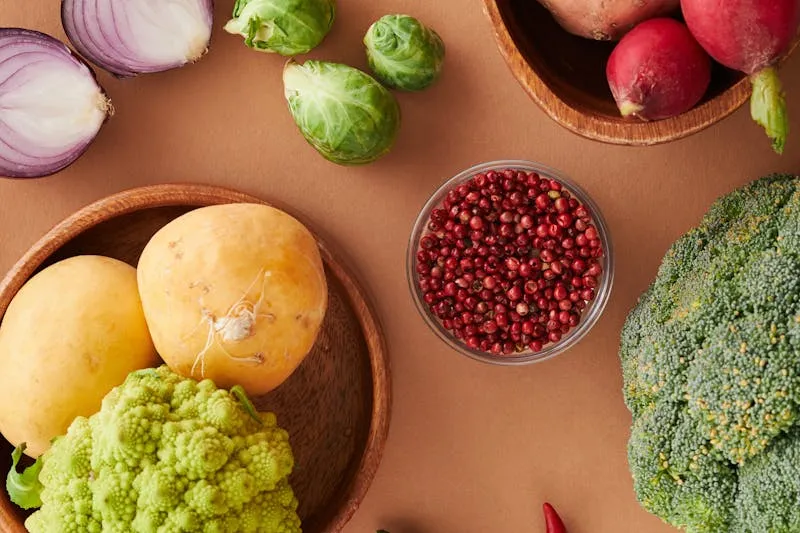
Before talking recipes, you need the balanced plate model in mind. It's the simplest and most reliable visual reference for composing your meals — recommended by the WHO, the NHS, and the British Nutrition Foundation.
The quarter-quarter-half rule
- 1/2 of the plate: vegetables (raw or cooked — vary the colours)
- 1/4 of the plate: protein (meat, fish, eggs, pulses, tofu)
- 1/4 of the plate: wholegrain carbohydrates (brown rice, quinoa, sweet potato, wholewheat pasta)
- + 1 tablespoon of healthy fat (olive oil, avocado, seeds, nuts)
That's it. No need to count calories, weigh every morsel, or download an app. This visual model, applied to each prepped meal, guarantees balanced macronutrient and micronutrient intake.
The macros in numbers (for those who want to go deeper)
For a moderately active adult woman (1,800-2,000 kcal/day per NHS guidelines):
- Protein: 50-65g/day (roughly 15-20% of energy intake)
- Carbohydrates: 200-250g/day (roughly 45-50%)
- Fat: 65-80g/day (roughly 35-40%)
- Fibre: 30g/day minimum
Don't fall into the obsessive counting trap. The numbers above are guidelines, not targets to hit to the gram. The British Nutrition Foundation emphasises that food quality (unprocessed, varied, seasonal) matters more than arithmetic precision on macros. If you follow the balanced plate model, you're on track — without reaching for the calculator.
Essential equipment
Containers
Invest in glass containers with airtight lids. Glass doesn't retain odours, is microwave and dishwasher safe, and releases no substances when heated (unlike some plastics). A set of 8-10 containers (800mL-1L) covers a full week of lunches and dinners. Budget: £20-35 for a quality set.
The baking tray
A large baking tray (40 × 30cm minimum) is your best friend in meal prep. It lets you roast enormous quantities of vegetables in a single batch — the single most time-efficient move.
Timers
Effective meal prep relies on simultaneous cooking. While the rice cooks (timer 1), the vegetables roast in the oven (timer 2), and the chicken grills in the pan (timer 3). Three timers, three parallel cooks — that's what makes the 2-hour window possible.
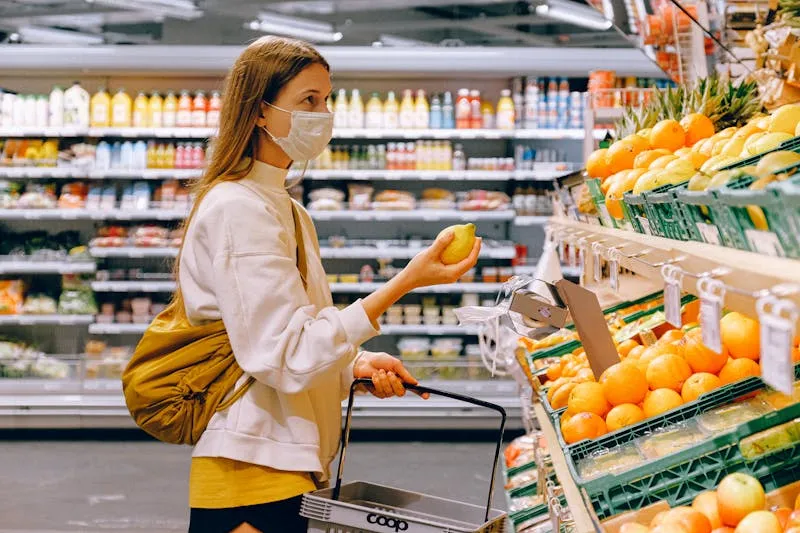
The investment that pays for itself in 3 weeks: If you currently spend £40-55 a week on bought meals (canteen, Deliveroo, ready meals), switching to meal prep brings that down to £20-30. The glass container set pays for itself in 2-3 weeks. It's one of the few kitchen investments with a measurable and immediate return.
The method: a 2-hour session for 5 days
Here's the optimal order for a meal prep session. Each step is designed so that downtime during one cook is filled by preparation for the next.
First 30 minutes: launch everything that takes time
- Preheat the oven to 200°C/400°F
- Start the rice/quinoa cooking (20-25 minutes unsupervised)
- Prep the vegetables for roasting: wash, chop, oil, season, into the oven
- Start the hard-boiled eggs (10 minutes cooking + ice bath)
Minutes 30-60: the proteins
- Cook the main proteins: chicken in a pan or oven, salmon en papillote, or lentils for a veggie week
- Make a vinaigrette or sauce for the week (in a jar, keeps 5-7 days)
- Turn the vegetables at the halfway mark
Minutes 60-90: assembly and extras
- Everything out: rice, roasted veg, cooked proteins
- Prep raw vegetables: salad, cucumber, cherry tomatoes, grated carrot
- Prepare a soup or velouté with remaining vegetables (optional but excellent for light dinners)
Minutes 90-120: portioning and storage
- Let everything cool to room temperature (never put hot food in the fridge — it raises the internal temperature and promotes bacterial growth)
- Divide into containers according to the weekly plan
- Label each container (day + contents)
- Fridge for days 1-3, freezer for days 4-5
Preparing the proteins
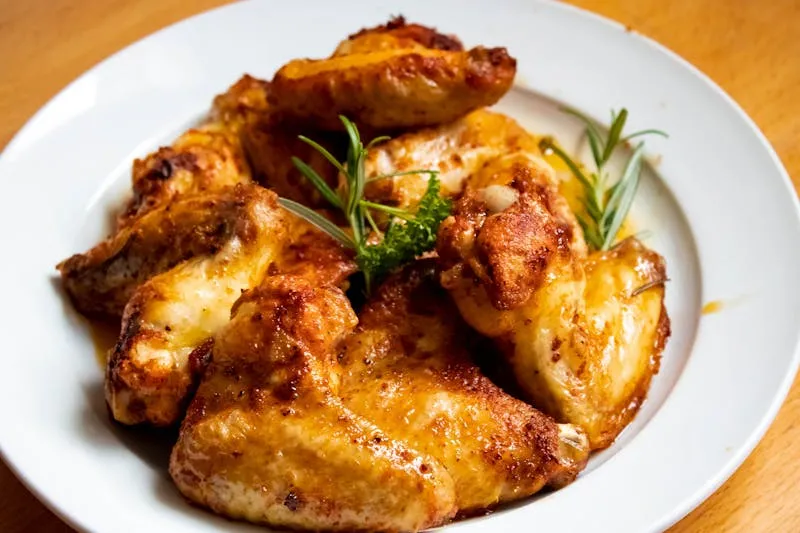
Proteins are the most important element of meal prep — and the one with the shortest shelf life. Here are the best options and their storage times.
Chicken (the meal prep protein queen)
Buy chicken breasts in bulk. The most versatile cook: pan over medium-high heat, 6-7 minutes per side, simple seasoning (salt, pepper, paprika, garlic powder). Slice after 5 minutes' rest. Keeps 3-4 days refrigerated.
Alternative: oven baking. 200°C/400°F, 20-25 minutes. The oven advantage: you can cook 6-8 breasts simultaneously without watching them.
Hard-boiled eggs (the perfect protein snack)
12 eggs into boiling water, 10 minutes, ice bath. Keep for 5 days in the fridge in their shells. Add 2 per container for extra protein, or keep them as snacks.
Pulses (the plant-based option)
Chickpeas, green lentils, kidney beans — tinned to save time (rinse well) or batch-cooked on Sunday. Red lentils are the quickest (15 minutes, no soaking). Keep 4-5 days refrigerated.
Salmon (twice a week max)
En papillote in the oven (180°C/350°F, 15-18 minutes). Cooked salmon keeps 2-3 days maximum — prepare it for early in the week only.
Food safety rule: The Food Standards Agency recommends not keeping cooked animal proteins for more than 3 days in the fridge (at 4°C max). For Thursday and Friday meals, prep portions to freeze on Sunday and defrost them in the fridge the night before. Freezing doesn't significantly alter nutritional quality — it simply stops bacterial growth.
Preparing the vegetables
Vegetables are half of every plate — and they benefit the most from batch roasting in the oven.
Roasting: the universal method
Cut into uniform pieces, drizzle lightly with oil (1 tablespoon of olive oil per tray), season, roast at 200°C/400°F for 25-35 minutes. The best vegetables for meal prep roasting:
- Broccoli: in florets, 20-25 minutes — stays green and slightly crisp
- Sweet potato: in cubes, 30-35 minutes — caramelises beautifully
- Courgette: in half-moons, 20 minutes — careful not to overcook
- Peppers: in strips, 25 minutes — become sweet and tender
- Carrots: in batons, 30 minutes — concentrates the flavour
- Cauliflower: in florets, 25 minutes — incredibly good roasted
Raw vegetables (prepped but uncooked)
Cucumber slices, whole cherry tomatoes, grated carrot, washed and dried salad leaves. Prep on Sunday, store in containers with a piece of kitchen paper at the bottom (absorbs moisture, extends freshness by 2-3 days).
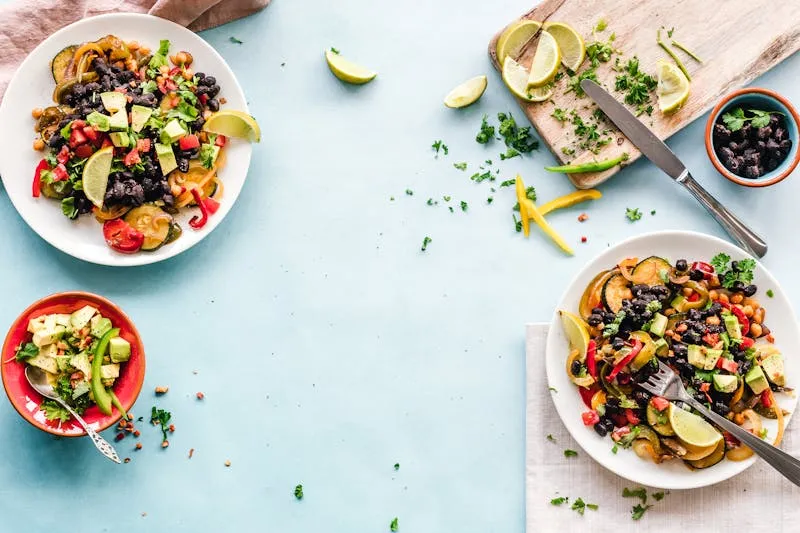
The colour rotation: Vary your vegetable colours each week. This week broccoli (green), sweet potato (orange), red pepper — next week courgette (light green), beetroot (purple), cauliflower (white). Vegetable colours correspond to different families of micronutrients: varying colours = varying nutrients. It's the simplest and most effective nutrition advice there is.
Preparing the carbohydrates
Carbohydrates are your daily fuel. In meal prep, prioritise wholegrain versions — they deliver more fibre, more B vitamins, and a lower glycaemic index (more stable energy, without the 2pm blood sugar crash).
The 4 ideal meal prep carbs
- Brown rice: 1 part rice to 2 parts water, 25-30 minutes. Keeps perfectly for 4-5 days
- Quinoa: 1 part to 2 parts water, 15 minutes. Higher in protein than rice (8g per 100g cooked) — excellent choice for plant-based days
- Sweet potato: roasted in cubes or mashed. Lower glycaemic index than regular potato
- Wholewheat pasta: cooked al dente (very important for glycaemic index — overcooked pasta has a significantly higher GI)
The complete sample week
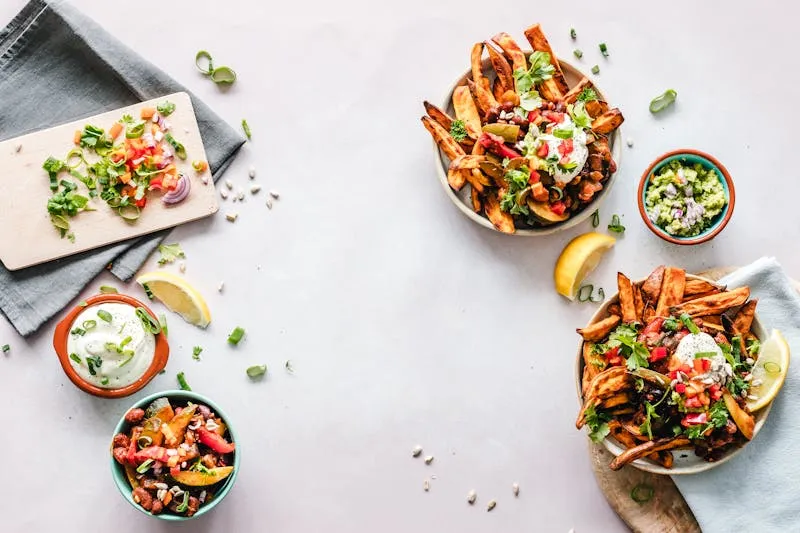
Here's a template plan for a full week of lunches. Dinners are intentionally lighter (soup + bread, composed salad, or a half-portion of the lunch).
Shopping list
- 600g chicken breasts
- 2 salmon fillets
- 12 eggs
- 1 tin chickpeas
- 300g quinoa
- 300g brown rice
- 2 sweet potatoes
- 1 broccoli head
- 3 peppers (red, yellow, green)
- 4 courgettes
- 1 bag mixed salad leaves
- 1 punnet cherry tomatoes
- 2 avocados
- 1 cucumber
- 1 lemon
- Olive oil, balsamic vinegar, Dijon mustard
- Spices: paprika, cumin, garlic powder, dried herbs
The plan
Monday: Paprika chicken + quinoa + roasted broccoli + lemon vinaigrette
Tuesday: Salmon en papillote + brown rice + roasted peppers + green salad
Wednesday: Chickpea bowl + roasted sweet potato + courgettes + houmous (leftover chickpeas, blitzed)
Thursday: Cumin chicken + quinoa + courgettes + cherry tomatoes + boiled egg
Friday: Salmon (frozen Sunday, defrosted Thursday night) + brown rice + broccoli + avocado
The sauce that changes everything: Make a homemade vinaigrette on Sunday (olive oil + balsamic vinegar + Dijon mustard + honey + salt + pepper, in a jar). Add it to each meal at the moment of eating — the same meal with or without dressing is two completely different taste experiences. This sauce transforms "boring-looking" containers into appetising bowls.

Storage rules
Storage is the critical link in meal prep. Mistakes here can ruin your work — or, more seriously, create a food safety risk.
In the fridge (4°C maximum)
- Cooked meat and fish: 3 days max
- Hard-boiled eggs (in shell): 5 days
- Cooked pulses: 4-5 days
- Cooked rice and quinoa: 4-5 days
- Roasted vegetables: 4-5 days
- Prepped raw vegetables: 3-4 days (with kitchen paper)
- Homemade vinaigrette: 5-7 days
In the freezer (-18°C)
- Complete meals in containers: 2-3 months
- Cooked proteins alone: 3 months
- Soups and veloutés: 3 months
Mistakes to avoid
- NEVER put hot food straight in the fridge. Cool to room temperature for 1 hour maximum, then refrigerate. Beyond 2 hours at room temperature, bacteria multiply rapidly
- NEVER defrost at room temperature. Always in the fridge (12-24h) or in the microwave if urgent
- NEVER refreeze food that's been defrosted. Exception: if it was defrosted in the fridge and hasn't been out for more than 24 hours
Reheated rice: a safety point. Cooked rice is a favourable environment for Bacillus cereus, a bacterium that can cause food poisoning. Golden rule: cool rice quickly after cooking (spread it on a large plate), refrigerate within the hour, and reheat thoroughly (piping hot, not just warm). Cooked rice should never sit at room temperature for more than 1 hour. Both the NHS and the Food Standards Agency are categorical on this point.
Frequently asked questions
Doesn't meal prep make meals boring?
It's the most common complaint — and the easiest to counter. The key is to vary the seasonings, not the bases. The same chicken + rice + veg with a soy-ginger sauce on Monday and a honey-mustard dressing on Tuesday gives you two completely different meals. Prepare 2-3 different sauces on Sunday and rotate. Change the carb and vegetable combinations each week too. Over 4 weeks, you never have the same meal twice.
How long does it really take on Sunday?
For 5 complete lunches: 1.5-2 hours once you're practised. First time around, allow 2.5-3 hours to find your groove. After 3-4 sessions, the movements become automatic. The trick: put on a podcast or a series in the background. The 2 hours fly by. And every minute invested on Sunday saves you 30-40 minutes of cooking and washing up on weekday evenings.
Does meal prep work for families with children?
Absolutely — and it's arguably where it's most useful. Children eat the same bases (chicken, rice, vegetables) with simplified seasoning (less spice, more tomato sauce). Prepare children's portions in smaller containers (400-500mL). The Sunday routine can become a family activity: children wash vegetables, count containers, choose the week's colours. It's also an excellent food education tool.
Can you meal prep as a vegetarian or vegan?
Meal prep is even easier as a vegetarian. Pulses (lentils, chickpeas, beans) keep perfectly for 4-5 days, tofu and tempeh marinate and grill like meat, and plant proteins pose none of the bacterial conservation challenges of animal proteins. Swap chicken for paprika-roasted chickpeas, salmon for grilled tofu, eggs for edamame. Nutritional balance is entirely achievable — just make sure to vary your plant protein sources to cover all essential amino acids.
Should I invest in glass containers, or is plastic fine?
Glass is strongly recommended for two reasons: health and durability. Plastic containers, even those labelled "BPA-free," can release microplastics when heated in the microwave — a research area still evolving but documented enough for the Food Standards Agency to recommend caution. Glass poses none of these issues. It's heavier and more expensive upfront, but it lasts years where plastic warps and stains within months.
Does microwave reheating destroy nutrients?
Contrary to popular belief, the microwave is actually one of the cooking methods that preserves nutrients best — because cooking time is short and there's no contact with water (which leaches water-soluble vitamins). A study in the Journal of Food Science (2019) found that microwaving preserves 90% of vitamin C in broccoli, compared with 66% for boiling. The only precaution: reheat at medium power and stir halfway through for even heating.
How do I avoid boredom after several weeks?
Adopt a 4-week rotation with themes: Mediterranean week (chicken, quinoa, peppers, olives, feta), Asian week (teriyaki chicken, rice, edamame, stir-fried veg), Mexican week (spiced chicken, black beans, sweetcorn, avocado, salsa), comfort food week (slow-cooked beef, sweet potato, broccoli). Each week has its own flavour palette. At the end of the cycle, start again — but you'll have forgotten the first week by then.