My best friend rang me on a Sunday morning in January. I was still in bed, half-asleep, my tea going cold on the nightstand.
"Are you sitting down?"
I wasn't sitting down. I was horizontal.
"Do you want to be my witness? My maid of honour?"
I said yes. Immediately, with absolute conviction. Then I hung up. Then I put my phone down. Then a thought formed in my mind with the precision of a guillotine blade: But what exactly does being a wedding witness actually involve?
I knew it was important. I knew there was a speech involved. I vaguely knew I'd have to sign something. But beyond that — fog. No training, no handbook, no manual delivered alongside the question. Just the quiet panic of someone who's just accepted a mission without knowing its scope.
This guide is everything I wish I'd known that Sunday morning in January. The legal role (which is actually quite different in the UK from what people imagine), the practical responsibilities, a month-by-month timeline, how to organise the hen do, how to write and deliver the speech, what to wear on the day, and how to survive the whole experience emotionally. Everything. No grey areas.
The legal role of a wedding witness in the UK
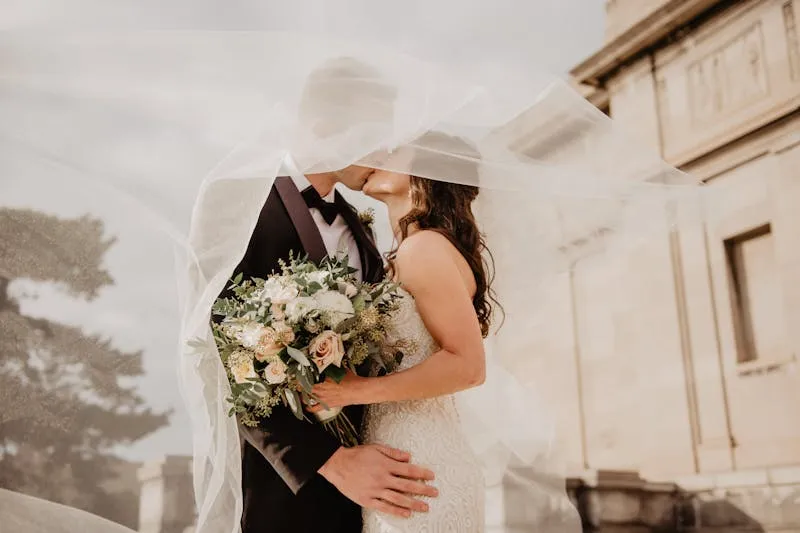
Here's something worth clarifying straight away: in the UK, the legal role of a wedding witness and the social role of best man, maid of honour, or chief bridesmaid are entirely separate things — and the social role is actually more demanding.
The legal bit
Under the Marriage Act 1949 (and its subsequent amendments), a marriage in England and Wales must be witnessed by two witnesses, both of whom must:
- Be present at the ceremony
- Sign the marriage register (or marriage schedule, post-2021 reforms)
- Be able to understand what is happening
That's essentially it from a legal standpoint. The witnesses can be anyone — there is no age restriction explicitly set by statute (though under-16s are generally considered unable to understand the proceedings in practice), no restriction on family members, no nationality requirement. They don't need to know the couple well. They just need to be present and able to sign.
Following the Registration of Marriages Regulations 2021, witnesses now sign a marriage document (rather than an open register), and their details (name, signature) are recorded in the official documentation.
Civil ceremony vs. church wedding
In England and Wales:
- Civil ceremony (register office or licensed venue): two witnesses sign the marriage schedule. This is the only legally binding ceremony.
- Church of England ceremony: also legally binding in its own right, with witnesses signing the register in church.
- Other religious ceremonies: must be preceded or followed by a civil ceremony to have legal standing, unless the religious building is registered for marriages.
- Scotland: different legislation (Marriage (Scotland) Act 1977) — two witnesses required, minimum age 16, but the legal requirements are similarly minimal.
- Northern Ireland: Marriage (Northern Ireland) Order 2003 — similar witness requirements.
💡 Kristina's tip
If you're a witness at a civil ceremony, bring valid photo ID (passport or driving licence). Some register offices ask for it; others don't. Don't be the person who slows things down fumbling through their bag whilst the registrar waits. Have it in your hand, ready.
Civil partnership witnesses
Civil partnerships follow the same two-witness requirement under the Civil Partnership Act 2004. If you're asked to witness a civil partnership, everything in this guide applies equally — the social role, the hen party equivalent, the speech at the reception. The love is identical; the paperwork is very slightly different.
The social role: where it gets complex
The legal bit is simple. What's actually complex — and what requires months of planning — is the social role attached to being a best man, maid of honour, or chief bridesmaid. Unlike France, where the témoin has a clearly defined legal function, in the UK the social roles have evolved organically from tradition, and they carry enormous organisational weight.
Best man responsibilities traditionally include:
- Organising the stag do
- Delivering the main speech at the reception
- Supporting the groom on the day (keeping the rings, managing timing)
- Being the point of contact for logistical issues
Maid of honour / chief bridesmaid responsibilities include:
- Organising the hen do
- Supporting the bride emotionally and practically throughout
- Coordinating bridesmaids (if there are any)
- Often delivering a speech at the reception (though less universal than the best man speech)
- Being the on-the-day crisis manager
None of this is codified in law. It's tradition — but it's tradition that comes with very real expectations. Understanding those expectations from the start makes everything easier.
Who can be a witness? And what makes a good one?
Legally, almost anyone who's present. Practically, someone who will actually be there for the couple over the course of a year, not just on the day.
What makes a genuinely good witness / maid of honour / best man
The title matters less than the qualities. A good witness (in the full social sense) combines:
- Real availability: the six to twelve months before a wedding are intense. A good witness shows up — for dress fittings, venue visits, 11pm anxiety calls.
- Organisational ability: hen dos, group coordination, collective budgets — this requires practical logistics skills.
- Diplomacy: family tensions, bridesmaids who don't like each other, seating plan disputes — you'll navigate all of it.
- Emotional presence: weddings are intense. The bride or groom needs a human anchor, not a project manager.
- Reliability: deadlines, documents, bookings — if you say you'll do something, it happens.
The witness timeline: 12 months to the big day

The classic mistake: accepting the role thinking the real work starts two weeks before the wedding. If the wedding is less than twelve months away, the work has already started. Here are the milestones.
12 months out — Say yes, understand the role
- Have a serious conversation about expectations: does the bride want a big party hen do or a relaxed spa weekend? A long speech or a short one? Funny or heartfelt?
- Identify the other bridesmaids and make contact
- Block key dates in your diary (wedding, likely hen do, rehearsal dinner)
- Check your passport or driving licence — is it in date?
9 months out — Strategic planning
- Join venue visits if the bride/groom wants a second opinion
- Start thinking about the hen do: approximate date, budget, type of activities
- Canvass hen do invitees for availability
- Start noting down stories, shared moments — they'll feed your speech
6 months out — Concrete hen do planning
- Set the hen do date (typically one to three months before the wedding)
- Book the venue, accommodation, activities
- Send invitations and start collecting money
- Draft a clear budget and communicate it to all participants
- Begin working on the speech — even just a rough outline
3 months out — Finalising and preparing
- Confirm all hen do elements
- Have a complete first draft of your speech
- Think about your outfit (in line with the dress code)
- Check with the couple what they need from you on the day specifically
1 month out — Rehearsal and final coordination
- Finalise the speech and start rehearsing out loud
- Confirm attendance at the rehearsal dinner if there is one
- Assemble your on-the-day emergency kit
- Get the detailed timeline for the wedding day
The wedding week — Crisis management mode
- Be available for the bride or groom: listen, reassure, problem-solve
- Confirm key suppliers if asked
- Prepare everything for the day (outfit, ID, speech in print)
- Make sure the bride or groom is sleeping, eating, and not catastrophising unnecessarily
💡 Kristina's tip
Create a shared folder from the start (Google Drive, Notion, whatever works) with the other bridesmaids and the couple. All the important stuff in one place: timeline, hen do guest list, budget, supplier contacts, speech text. When things accelerate in the weeks before the wedding, you'll be very glad not to be trawling through 47 WhatsApp threads.
Organising the hen do: the complete guide

The hen do. Two words that have the power to transform the most organised person into a full-time event planner. Budget to collect, a group to coordinate, activities to choose, a surprise to maintain — it's a mini event in its own right. Here's how to do it without sacrificing your sanity.
Define the bride's profile first
The cardinal sin of hen do planning: organising the hen party you'd want, rather than the one that fits her. These are deeply personal events. Before you book anything, answer these questions honestly:
- Is she big night out and dancing or spa, wine, and early to bed?
- Adventure and adrenaline or creative and cultural?
- Group of 6 or group of 25? (Very different logistics.)
- Comfortable budget or tight?
- Full weekend, single day, or evening?
- Does she want a surprise or would she rather be involved in the planning?
Budget: collection, transparency, honesty
The topic that causes the most hen do tension: money. Clear rules from the start prevent about 90% of conflicts.
The bride's costs are traditionally covered by the group. This isn't law — it's convention. But state it explicitly in the invitation rather than assuming everyone knows.
How to communicate the budget:
- Give a clear, specific cost per person (e.g., "roughly £80 per person excluding travel")
- Break it down: what does it cover? Activity, dinner, decorations, the bride's share?
- Set up a collection (Monzo, PayPal, a shared account) from the start
- Give a payment deadline with a week's buffer
- Send a final breakdown of costs at the end — transparency prevents resentment
⚠️ When someone can't afford it
If someone in the group genuinely can't stretch to the budget, speak to them privately rather than letting them feel publicly uncomfortable. It's better to quietly adjust the cost or create a tiered option than to lose someone important to the bride on the day she needs everyone around her. The perfect hen party doesn't exist if a close friend isn't there.
Activity ideas by personality type
The big night out type:
- Cocktail masterclass followed by a club
- Escape room then dinner and drinks
- Weekend city break (London, Edinburgh, Dublin, Amsterdam if the budget allows)
- Themed bar crawl with dares
The wellness and cosy type:
- Spa hotel weekend (there are great options throughout the UK at various price points)
- Yoga retreat or sound bath session followed by brunch
- Rented cottage with pool, hot tub, board games and nice food
- Floral arrangement workshop followed by a long lunch
The adventure type:
- Coasteering, paddleboarding or wild swimming (Wales, Cornwall, Scotland are brilliant)
- Clay pigeon shooting or archery
- Axe throwing (increasingly popular, very fun)
- Gorge walking or white-water rafting
The creative type:
- Life drawing class with prosecco
- Painting and wine class (Paint and Sip)
- Pottery workshop
- Jewellery-making or macramé
- Private cookery class with a local chef
The L-plates and sashes debate
The hen party accessories question. Sashes, L-plates, veils, "Bride Tribe" matching T-shirts, and yes — novelty items involving the male anatomy.
My position: the accessories should serve the bride, not the concept of what a hen party is supposed to look like. If she'd find a "Last Night of Freedom" sash mortifying on the train to Leeds, don't make her wear one. If she'd love a full matching-dressing-gown-and-champagne photo moment, absolutely do that. The question to ask is always: what does she actually want? Not what looks good on Instagram.
Managing group dynamics
A hen do group is often wonderfully heterogeneous: school friends, university friends, work colleagues, future in-laws, cousins no one else really knows. They don't all have the same energy, budget, or tolerance for late nights.
How to navigate:
- Build in downtime or optional activities (the person who wants an early night shouldn't feel guilty)
- Identify the "difficult person" in the group before the weekend — there's always one — and prepare your diplomacy
- Never let a conflict fester during the hen do; the wedding follows shortly after
- Have a private word rather than a group confrontation if something goes wrong
💡 Kristina's tip
Create a separate WhatsApp group for the planning (without the bride!) and another for everyone including her. And designate a co-organiser among the group: you shouldn't be the only one carrying the logistics. Delegate the money collection, delegate the restaurant bookings, delegate the decorations. Your role is to coordinate — not to do everything yourself.
The wedding speech: structure, tips and pitfalls

Fear of the wedding speech is universal. Even people who are perfectly comfortable at a work presentation feel something particular at the prospect of speaking in front of eighty guests at one of the most important moments of their best friend's life.
Good news: a successful speech isn't about natural talent. It's about structure, preparation, and a few simple rules.
The structure that always works
A successful wedding speech breaks down into four parts:
1. The hook — 30 seconds
A short, visual anecdote, or a memorable opening line that captures attention immediately. Don't start with "So, for those who don't know me, I'm the maid of honour..." — everyone already knows that. Dive straight into a concrete scene.
Example: "The first time Sophie mentioned Dan to me, we were in a coffee shop at 11pm and she spilled her entire oat latte because she was looking at her phone and smiling like an idiot. I knew then it was serious."
2. The portrait — 1 to 2 minutes
What you know about the person getting married. One or two anecdotes that show them as they truly are — not the public version, the real character. The kind of detail that makes everyone in the room nod: "Yes, that's exactly her."
3. The emotion — 1 minute
The moment where you speak sincerely about what this person means to you, and what you wish for them. This is where people cry. It's not mandatory — but it's often the most powerful part if you mean it.
4. The toast — 30 seconds
A memorable closing. A sincere or poetic wish. Something that invites the room to raise their glasses with a sense of collective warmth. Avoid the tired clichés ("may your love last forever"). Be yourself.
Duration: the golden rule
Three to five minutes maximum. Beyond five minutes, even the best speech loses its audience. People have eaten, drunk, and their attention drifts. A short, dense speech is worth infinitely more than a long, diluted one. Four well-paced minutes is the sweet spot.
What you should NEVER say
The classics that cause damage:
- Ex-partners: no references, however oblique, however long ago, however "funny". On their wedding day, exes don't exist.
- Anecdotes the couple haven't cleared: if you want to tell something potentially embarrassing, show it to them in advance. What seems hilarious to you may be painful or mortifying for them.
- In-jokes nobody else gets: funny for you and two other people. For the other 78 guests, it's alienating and slow.
- Unsolicited relationship advice: you're not their therapist.
- An exhaustive list of every quality the person possesses: a string of positive adjectives isn't a speech, it's a greetings card.
- Breaking down before you've said anything: if you know you'll cry, practise holding the first minute together. Tears in a wedding speech are beautiful — if they arrive after the substance, not instead of it.
Managing nerves
Practical techniques:
- Rehearse out loud — not in your head, actually out loud — at least ten times before the day. Nerves often come from not knowing the text in your mouth, not just in your mind.
- Print the speech in large font (16pt minimum), double-spaced. Even if you know it by heart, having the paper in your hand is a psychological safety net.
- Find the microphone in advance: how it works, how close to speak. Testing the mic before the meal prevents surprises.
- Take two deep breaths before you begin — not for the room, for yourself. The first word is always the hardest.
- Accept the nerves: they're visible and expected. Nobody judges them — they're rooting for you. A trembling voice at the start of a wedding speech reads as emotion, not incompetence.
💡 Kristina's tip
Film yourself rehearsing. It's uncomfortable to watch (nobody enjoys seeing and hearing themselves), but it's the most effective way to catch tics, "ums", a too-fast pace, or the moments where you look down at your notes for too long. Do it at least twice: a week before, then two days before.
The big day: hour by hour
The wedding day is a complex machine. Things will happen differently from planned. Your job isn't to prevent that — it's to absorb the disruptions before they reach the couple.
The morning — Before the ceremony
If you're on the bride's side:
- Be present during getting ready (hair, makeup) — not necessarily to "manage", but to be there
- Bring an emergency kit: safety pins, anti-blister plasters, tissues, painkillers, a stain remover pen, sugar-free gum, spare lipstick
- Manage supplier delays if necessary — without letting the stress reach the bride
- Keep hold of the bouquet or ceremony accessories when needed
- Remind everyone of timings without being drill-sergeant about it
The ceremony
- Arrive 15 minutes early minimum
- Photo ID within reach (not buried at the bottom of your bag)
- The registrar or officiant will tell you when to sign and where
- Read what you're signing before you sign it
- Smile for the photos — you'll be in the official documents forever
The drinks reception
Often the most chaotically organisational moment. Canapés, photographs, introductions, people who don't know each other. You can be useful by:
- Coordinating group photographs with the photographer
- Introducing guests who don't know each other (especially useful for blended friend groups)
- Gently managing Uncle Terry before he has his fourth glass and decides to give his own speech
- Being the liaison between the couple and any suppliers who need a decision
The wedding breakfast and speech
- Eat something before your speech — an empty stomach amplifies nerves
- Keep your printed speech in an easily accessible pocket or clutch
- When the moment comes, take the mic calmly, wait for the room to quiet
- After your speech: enjoy the rest of the meal. The hardest part is done.
The evening and beyond
- Continue to be the point of contact if issues arise (a guest feeling unwell, a technical problem, family tension)
- Make sure the couple have what they need to leave (or stay) comfortably
- Help with any morning-after logistics if needed: brunch, collecting belongings
Emotional support: being the buffer, not the judge
Much is written about the logistical side of being a wedding witness. Less about the emotional side — which is often the most important part.
Pre-wedding stress crises
The months before a wedding are emotionally intense. Budget pressure, family dynamics, decision fatigue, competing expectations — the couple is under constant stress. The bride or groom will almost certainly have moments of doubt, tears, irrational anger or decision paralysis. This is normal. It's universal.
Your role in those moments:
- Listen first, before offering solutions
- Validate the feelings without minimising them ("it's completely normal to feel overwhelmed" is worth more than "it'll all be fine")
- Don't take sides in couple arguments — you're there to support, not to adjudicate
- Suggest concrete breaks: "let's stop talking about the wedding for one hour and just go for a walk"
Family tensions
Weddings bring together people who don't always like each other — and sometimes have decades of history between them. The maid of honour or best man is often first in line when two sets of parents disagree, when a seating plan becomes a diplomatic incident, or when someone says something they shouldn't have at the drinks reception.
The absolute rule: protect the couple from drama on the day. Anything that can be managed without them must be managed without them. If a cousin is upset about their table placement, you handle it. If two guests are having a tetchy exchange near the bar, you redirect it. If the mother of the groom is quietly devastated in the corner, you find someone to sit with her.
💡 Kristina's tip
Mentally designate a "co-crisis-manager" for the day — someone you trust among the guests who knows the family well and can handle certain tensions when you can't be everywhere. You can't cover everything alone. And remember: your goal is to create a space where the couple can actually live their wedding day, rather than spending it managing other people's emotions.
The day after
Something rarely discussed: the day after a wedding can be strangely melancholic for the couple. Months of planning, an emotional peak, then emptiness. Being available in the days that follow — not to debrief logistics, but for a cup of tea and a normal conversation — is part of the role too.
What to wear: navigating the dress code

The outfit question comes up every time. It deserves a direct answer.
The non-negotiable rules
- Not white, not ivory, not cream: regardless of your relationship with the couple, this rule applies.
- Respect the dress code as given: "black tie" is not a suggestion; "smart casual" doesn't mean jeans.
- At least as smart as the average guest: you're more visible than most, you'll be in the official photos.
- Comfort for a 12-hour day: the shoes that feel fine at 3pm will be unbearable by midnight.
Fascinator or hat?
For church weddings and many outdoor summer receptions, a fascinator or hat is entirely appropriate and often wonderful. For indoor evening receptions, it can feel a touch formal — read the venue and the couple's style. When in doubt, ask.
Budget
There's no obligation to spend a fortune. A beautiful wedding-appropriate dress or suit between £60 and £150 can be completely right. What matters is the fit to the occasion and comfort throughout. ASOS, & Other Stories, Phase Eight, Reiss, and Monsoon all have strong options at varying price points.
⚠️ Don't leave the outfit to the last fortnight
Alterations take time; online deliveries can be delayed; your first choice may not work when it arrives. Plan to have your outfit confirmed at least two months before the wedding, leaving time to find, order, try, and adjust if needed.
The wedding gift: ideas and budget

Being a witness doesn't exempt you from bringing a wedding gift. You've invested time, energy and money in the role — but a gift still forms part of what the couple will remember.
Personalised gift ideas
Experiences:
- A weekend in a place they've always wanted to visit
- A tasting menu dinner at a restaurant they love
- A shared class (cooking, pottery, dance)
Personalised objects:
- A printed and bound photo album of the wedding (more appreciated than digital files that live on a hard drive)
- A custom illustration of the wedding venue
- A star map of the night they got engaged, or the night of the wedding
- Engraved champagne flutes or a personalised wedding keepsake
Practical:
- A contribution to the wedding list — always appreciated if the list is well-curated
- A contribution to the honeymoon fund
- A subscription they'll use together (a streaming service, a wine club, a weekly recipe box)
Budget for a wedding gift as witness
The average wedding gift in the UK typically sits between £50 and £100 per couple. As a witness, you've often already spent substantially on the hen do — that's a real contribution. A gift in the £50–£75 range is entirely appropriate; a more symbolic but genuinely personal gift is also fine if you've invested significantly in the hen weekend and organisation.
FAQ: your questions, my direct answers
Can the same person be a witness for both the bride and groom?
Legally, both witnesses just need to sign the marriage schedule — there's no rule preventing one person from being the sole witness if the law only requires two. However, in practice, the couple will almost always have a witness each. Socially, being "the maid of honour" or "best man" for both simultaneously isn't a thing — the roles are partner-specific. You can be deeply involved in both sides of the planning without holding the formal title for both.
Does the witness have to pay for their travel to the wedding?
There's no legal or conventional obligation. It's a conversation to have openly with the couple. Some couples cover the travel and accommodation of their witnesses; others don't. If it's not specified, ask early rather than assuming either way. Being transparent about it is far better than harboring resentment later.
Can you decline to be a wedding witness?
Absolutely. Being a witness — in the full social sense — is a genuine commitment of time, energy and money over several months. If you can't honestly take that on, it's far more respectful to decline graciously than to accept and be half-present when it counts. "I'm deeply touched but I know I can't be there for you the way you deserve" is infinitely more loving than a yes that turns into a half-hearted presence.
Is a maid of honour speech obligatory?
No. There is no legal or traditional obligation. Many weddings have no speeches beyond the groom's. Others have several. It's a conversation to have with the couple from the start: do they want one? Specifically from you? At the ceremony, the wedding breakfast, or the evening? How long? These are choices, not obligations.
What if I don't know the partner very well?
Use the months before the wedding to change that. A dinner for four, a shared outing, even an hour of genuine conversation. It will change the dynamic on the day, feed your speech, and build a real relationship rather than polite coexistence. You're about to share intensely emotional moments with this person. Prepare for that.
How do I handle a hen do where I don't know many people?
Your job as organiser is actually to make that problem disappear for others, which means it falls to you to do the introductions, create moments of connection, and ensure nobody feels like an outsider. An icebreaker activity at the start (a quiz about the bride, a group challenge) works remarkably well for exactly this. You don't need everyone to be best friends — just comfortable enough to enjoy themselves.
What do I do if the couple argue about the wedding and ask me to take sides?
Don't. Your loyalty is to the specific person you're supporting — not to refereeing the couple. You can listen, offer emotional support, suggest perspective. But if you're explicitly asked to "choose a side" or deliver a message, that's a healthy boundary to draw: "I love you both, but I can't be in the middle of your relationship."
Sources and references
- GOV.UK — Witnesses at a marriage or civil partnership
- GOV.UK — Getting married: legal requirements and registering a marriage in England and Wales
- Hitched.co.uk — Best man and maid of honour: complete planning guide
- Brides — Maid of Honour duties: the complete checklist
- Brides — How to write a wedding speech: structure and tips
- Marriage Act 1949 (as amended) — Legal requirements for witnesses at a civil marriage in England and Wales
- Civil Partnership Act 2004 — Witness requirements for civil partnerships