
The message landed on a Thursday evening at 9:37pm.
In the WhatsApp group "Sophie's Wedding ✨" — eight people, wildly varying levels of enthusiasm — someone had just shared the invitation. And right there, in metaphorical bold red: Dress code: Garden Party Chic.
The group combusted in under four minutes.
Emma thought floaty maxi dress, definitely. Charlotte suggested "something floral but like, elevated." Jess asked if a nice midi skirt counted. Olivia said she was thinking of a fascinator and immediately sent three hat emojis. Priya typed "what does garden party chic actually mean??" and nobody answered because nobody really knew. And me? I watched the group dissolve in real time and thought: this is not a group chat. This is a collective fashion crisis in eleven messages.
The thing is, I completely understand it. "Garden party chic" — like "smart casual" or "festive formal" — sounds like guidance but actually rules almost nothing out. It's an oxymoron dressed up as a dress code. And this particular kind of sartorial vagueness is peak British wedding culture.
This guide exists to end that WhatsApp spiral. We're going to decode every wedding dress code from black tie to beach casual, talk through the real colour rules (and which ones are myths), put together season-by-season looks, cover the classic mistakes that even well-dressed people make, and sort out the budget question properly. With my honest opinions on the things that divide people — because yes, I have thoughts on black. And on hats. And on wearing white to a wedding. Strong ones.
Decoding dress codes: what they actually mean
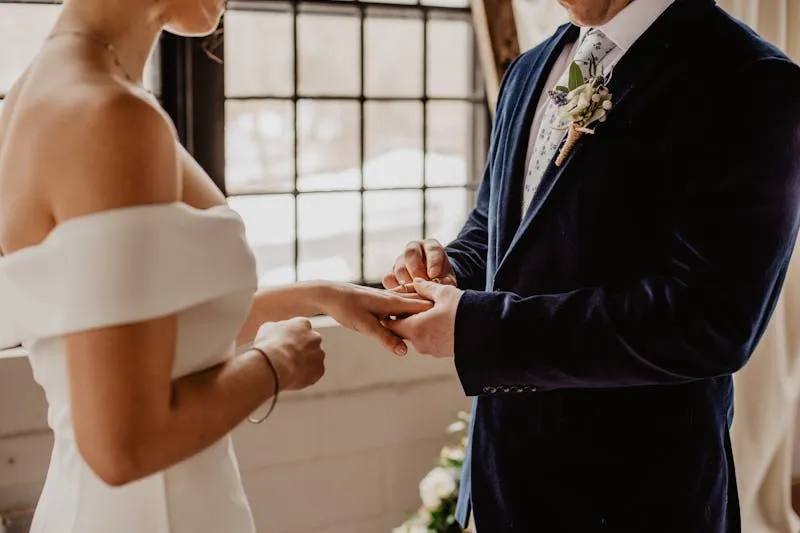
There's a clear hierarchy to wedding dress codes, running from ultra-formal to very relaxed. Each level has concrete expectations. Let's go through them properly.
Black Tie: the grandest occasion
This is the most formal wedding dress code. If the invitation says "Black Tie" — full stop, no ambiguity. You're dressing up, properly.
For female guests:
- Full-length evening gown: the most obvious choice, and always right. The fabric matters as much as the cut — satin, chiffon, silk crepe, velvet.
- Formal cocktail or midi dress: acceptable if the dress is clearly evening in nature (fabric, cut, finish). A sleek satin column dress, yes. A polished wrap dress in ponte, yes. A corporate-looking bodycon, less so.
- Formal trouser suit or jumpsuit: absolutely fine if the tailoring is evening-quality. Wide-leg silk trousers with a bustier or structured top — yes.
What to avoid: short casual dresses, flat casual footwear (though elegant flat sandals are fine), large everyday handbags, denim in any form, anything that reads as "cocktail party at work".
💡 Kristina's tip
If you're torn between two options and one is more formal, go with the more formal for black tie. You can never be overdressed in this context — the only embarrassment is reserved for those who show up in jeans. And if you don't own a floor-length gown and don't want to buy one, rent. HURR and By Rotation both have excellent black tie options at a fraction of purchase price.
Lounge Suit (the British term you need to know)
"Lounge suit" is uniquely British — it's the equivalent of what the French call "cocktail" or what Americans call "semi-formal." It appears regularly on UK wedding invitations and trips up guests every time.
What it actually means: the men are in suits. The women should be at a similar level of formality — smart, polished, clearly dressed for a special occasion.
What works:
- Midi or knee-length dress in a structured or elegant fabric
- Co-ord set (matching skirt and top or blazer)
- Tailored trouser suit in a bold colour
- Elegant wrap dress with good footwear and accessories
- Fascinator or small hat (optional but culturally fitting — more on this below)
The length rule: knee to midi. Floor-length works if the dress is clearly not "too bridal." Anything much above the knee starts to tip into territory that reads as cocktail bar rather than wedding.
Garden Party Chic: the oxymoron dress code
Back to Sophie, Charlotte, Jess and the WhatsApp spiral. "Garden party chic" is the dress code that generates the most confusion because it appears to reconcile two registers that are naturally in tension: the relaxed looseness of a garden party and the polish required by "chic."
The core principle: think elegant outdoor party. Not a picnic. Not a corporate drinks reception. Somewhere between the two, leaning toward the lighter, more floaty end of smart.
What works:
- Floral midi or maxi dress in a quality fabric — florals are not just acceptable, they're practically encouraged
- Linen or cotton midi dress in a strong, clear colour
- Floaty two-piece (matching skirt and blouse or cami top)
- Shirt dress in silk or a silk-look fabric, belted or unbelted
- Something structured over something floaty — a tailored linen blazer over a cami-and-midi-skirt combo works beautifully
What doesn't work:
- Jeans — even very nice ones
- Mini dresses or shorts (even in fancy fabric)
- Heavy formal evening wear (velvet gowns, structured satin — too much)
- Chunky boots or very casual footwear
- Anything that looks like it's going to Glastonbury
💡 Kristina's tip
When the dress code is ambiguous, the venue is your calibration tool. A garden party chic wedding in a barn in the Cotswolds gives you more room for rustic elements than one at a country house hotel in Surrey. Look up the venue on Instagram or their own website — it tells you immediately what level of polish is expected.
Smart Casual: the UK's most misunderstood code
"Smart casual" is British vagueness at its absolute peak. It appears at work events, dinner parties, and weddings — and it means something slightly different in each context.
At a wedding, "smart casual" means: you're dressed for a special occasion, but not in a ball gown. Think midi dress with good shoes, or a nice co-ord set. Think quality fabrics. Think clearly intentional — not "I grabbed this off the back of a chair this morning."
What it categorically does not mean: smart trousers and a nice blouse (fine for work, feels underdressed at a wedding reception), a clean pair of jeans (no), a sundress you'd wear to a pub garden in July (no, even if it's technically a nice sundress).
Beach Wedding: the rules people always get wrong
The main mistake: assuming "beach wedding" means "beach attire." It doesn't. You're still at a wedding. You're just at one where the setting involves sand.
What works:
- Long floaty dress in chiffon, lightweight silk or linen — something that moves with the sea breeze rather than against it
- Midi dress with thin straps and a quality drape
- Block-heeled sandals, wedges, or elegant flat sandals — stilettos on sand is both painful and futile
- Light tropics-adjacent prints, clear sherbet colours
What doesn't work:
- Stilettos (they sink — it's a fact, not an opinion)
- Heavy structured dresses that fight the wind and the heat
- Very dark or heavy fabrics in full summer sun
- Anything you'd actually wear to the beach
Themed Weddings: how far to go
Themed weddings (1920s glamour, "all in white", "pastel rainbow", vintage Hollywood) require a calibrated response. The rule: honour the theme while remaining clearly dressed for a wedding, not a costume party.
If the couple has requested a specific colour for guests, wear it. This is not a suggestion — it's a request made for a reason, usually cohesive photographs. Fudging the colour is unkind to the couple and usually more obvious than you think in photos.
The colour rules: which ones are real, which are myths
Let's talk colour honestly. Wedding colour mythology is rich in unwritten rules, categorical certainties and strong opinions that vary by culture, generation and sometimes individual couple. Here's what I believe is actually true — and why.
White, cream, ivory: the only real universal rule
This one has genuine consensus. Do not arrive in white — or cream, or ivory, or very pale champagne — at a Western wedding where the bride is wearing white.
The reason is simple and non-negotiable: the bride is wearing white (or a variant). Wearing a colour that overlaps with her palette creates visual competition and confusion, regardless of your intentions or how different your actual dress might be. The colour alone is enough to create the problem.
Shades to watch:
- Pure white: no
- Ivory / cream / off-white: no
- Very pale champagne: no
- Bright silver: avoid for the ceremony; acceptable at the evening reception if it's clearly metallic
- Very pale nude / blush: grey area — if it's clearly warm beige, fine; if it photographs white under flash, reconsider
⚠️ The flash test
A dress you perceive as "pale blush" or "nude" can photograph as white under certain lighting or with some Instagram filters. Test your dress in direct sunlight or under a camera flash before making your final decision. The phone flash test is your most honest mirror.
Black: the great debate
My clear position: black is perfectly acceptable at the vast majority of UK and European weddings.
The notion that black is "for funerals" or "inappropriate" at a wedding is fading fast in contemporary Western culture. Black is elegant, timeless, and works in celebratory contexts just as well as sombre ones.
The nuances:
- Evening wedding or reception: black is absolutely perfect. It's arguably the most chic option.
- Outdoor summer garden party: black can feel heavy in 28°C heat. It's not "banned" — it's just potentially uncomfortable and visually heavy for the setting.
- Weddings with non-Western cultural traditions: in some East Asian traditions, black carries specific mourning associations. If you know the wedding incorporates these cultural elements, adapt accordingly.
If anyone in your social circle tells you "you can't wear black to a wedding" — that's a generational or cultural perspective, not an objective rule. You are allowed to disagree.
Red: the divisive opinion
On red, opinions genuinely split. My take: red is fine. It's a celebratory, joyful colour that doesn't encroach on anything. At a French or British wedding, red poses no particular problem.
Where it gets complicated:
- South Asian or Indo-Pakistani weddings: red is often the bride's colour in Hindu and Pakistani traditions. Avoid it at these ceremonies to prevent confusion.
- Chinese weddings: in Chinese culture, red is actually lucky and celebratory — but read the specific context of the wedding you're attending.
- The bride's personality: if the bride is famously camera-shy and attention-averse, a statement red dress might monopolise photographer attention all afternoon. Not a rule, but a consideration.
Should you avoid the bride's colour scheme?
This one comes up constantly. The short answer: it's not a rule. The long answer: it depends on what you know.
If the bride has specifically told you she'd prefer guests not to wear a particular colour, honour that — she's done you the kindness of being direct. If you know the bridesmaids are wearing sage green and you turn up in an identical shade, that might create visual confusion. But absent specific information, there's no formal rule about palette-avoidance.
The only exception, as always, is white.
Prints versus solids: when each works
Solid colours: easier to calibrate, always "safe", simpler to accessorise. They let fabric and cut do the heavy lifting.
Prints: florals, abstract, geometric — they bring personality and energy. Two golden rules: the print should match the dress code register (no very casual prints at black tie, no corporate stripes at a garden party), and the scale of the print should be proportionate to the garment (large prints on petite frames can overwhelm; tiny prints on taller guests can disappear).
💡 Kristina's tip
If you're torn between a print and a solid, let the season guide you. Summer invites bold prints — florals, tropicals, graphic patterns. Autumn and winter call for rich solid colours: burgundy, teal, forest green, plum. Spring is the season for pastels — either solid or in delicate small-scale prints. The season is your palette reference.
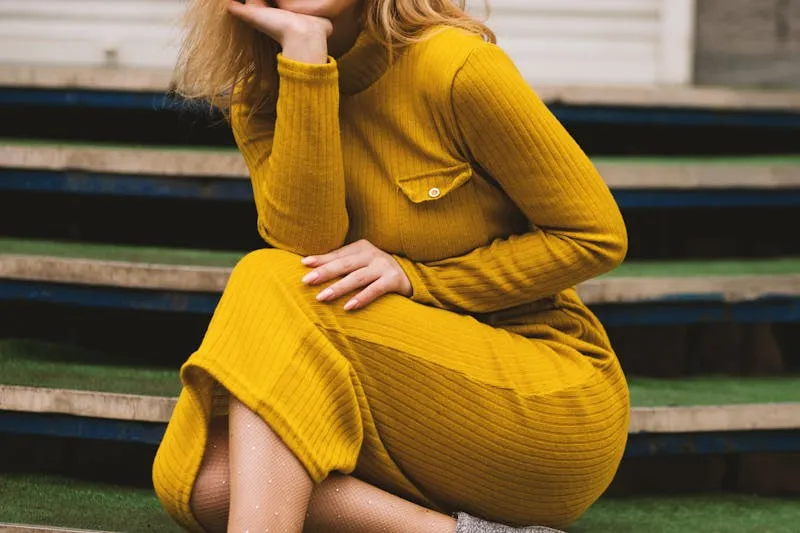
Looks by season: spring, summer, autumn, winter
The season changes everything: fabric choices, colour palette, ideal length, practical footwear, and your weather contingency plan. Here's what each season actually demands.
Spring (March to May): pastels, layering, weather contingency
The spring wedding is visually the most romantic — and meteorologically the most treacherous. It can be 20°C and sunny or 9°C with drizzle, depending on the weekend. In the UK, assume the latter and plan for the former.
Fabrics that work: lightweight chiffon, cotton sateen, crepe, viscose, fine silk. Linen is better from late May onwards — it can look heavy and wintery in early spring.
The ideal palette: soft pastels (pale pink, lavender, mint, lilac, peach), clear neutrals (camel, warm white — careful on the white rule — soft sand), and clear bright tones if you want more energy (lemon yellow, cornflower blue, soft turquoise).
Length: midi is the spring sweet spot. Not too exposed if the temperature drops, not too heavy if the day warms up. A floaty maxi in chiffon or fine jersey also works beautifully.
The weather plan — non-negotiable for UK spring:
- Structured blazer in a complementary or contrasting colour — designed as part of the look, not an afterthought
- Fine linen or cotton jacket
- Wide silk scarf or large pashmina (dual function: warmth + elegance)
- Block heels or strapped sandals rather than stilettos on what may be a wet lawn
💡 Kristina's tip
Layering at a spring wedding works best when the layer is part of the outfit, not an emergency measure. The blazer should complement the dress rather than contradict it. Think of the look in two stages: with the jacket for the ceremony and outdoor cocktail, without it for the evening reception. One outfit, two moments.
Summer (June to August): colour, airflow, sun protection
The summer wedding is where fabric mistakes are most visible and most uncomfortable. A satin dress at an outdoor August wedding in 30°C is a memorably bad decision.
Fabrics that work:
- Linen: breathable, natural, beautifully chic — but it creases. Commit to the crinkle or don't wear it.
- Chiffon / georgette: supreme lightness, floaty and beautiful in long silhouettes
- Viscose / LENZING™ Ecovero: the best compromise of lightness, drape and comfort
- Cotton voile or broderie anglaise: perfect for garden party or village church settings
What to avoid in summer: heavy satin, velvet, brocade, thick structured fabrics, non-breathable polyester (which traps heat and is not kind to you over twelve hours). The simple test: if air doesn't move through the fabric when you shake the dress, it will be uncomfortable at 28°C.
The summer palette: bold, saturated colours are made for summer. Sunshine yellow, burnt orange, bright coral, fuchsia, electric blue. Large floral prints, tropical prints, colour-blocking. Go for it.
Sun protection: frequently overlooked. If the ceremony or drinks reception is outdoors, you need SPF that works with your outfit. Avoid heavy white-cast creams under light-coloured clothes — use a tinted SPF or a fine spray. Sunglasses: in your bag for the reception, not on your head during the ceremony.
⚠️ Outdoor venues and stiletto heels
Summer weddings frequently take place outdoors — country gardens, vineyard terraces, parkland, coastal venues. Stiletto heels are incompatible with grass, gravel, cobblestones, and anything other than flat indoor flooring. If the venue is outdoors (easily checked via their website or Instagram), wear block heels, wedges, platform sandals, or elegant flats. Or do what many wise guests do: heels for the ceremony and photos, flats for the dancing. Everyone respects this strategy.
Autumn (September to November): jewel tones, velvet, rich layering
Autumn is, in my opinion, the easiest and most naturally elegant season for wedding guest dressing. The colour palette is rich and forgiving, the fabrics offer more creative range, and the temperature is still manageable.
The autumn palette: burgundy, plum, rust, deep terracotta, caramel, forest green, teal, mustard. These colours photograph spectacularly in the golden light of an autumn afternoon.
Autumn fabrics:
- Velvet: luxurious, warm, perfect for autumn and early winter weddings
- Matt satin: elegant without being summery
- Heavy crepe: impeccable drape, warm, clearly dressed
- Fine knit: works beautifully under a velvet or structured blazer
Autumn layering options: a velvet smoking jacket, a structured short jacket, a long wool-blend coat over a midi dress. Autumn allows for more complex compositions than summer, and the layers are part of the aesthetic rather than just warmth.
Winter (December to February): deep colours, wraps, closed shoes
The winter wedding has its own visual language. The tones are deeper, the fabrics richer, and the cold-weather plan is an absolute necessity rather than an afterthought.
The winter palette: black (perfect for winter), deep burgundy, bottle green, navy, midnight blue, deep plum, gold, bronze, silver. Light tones also work in winter — ivory, pale blush, ice pink — in heavier fabrics like velvet or thick satin (just mind the white rule).
The coat question: if there are outdoor photographs or a church ceremony, your coat is part of your outfit. A good event coat — long, structured, in wool or cashmere — is a genuinely worthwhile investment if you attend multiple winter events. A faux-fur wrap or coat works brilliantly for photographs and feels luxurious.
Shoes: closed-toe footwear is sensible for practical reasons. A pointed-toe court shoe, a block-heeled mule with opaque tights, a fine ankle boot with a heel — all work well. The strappy sandal-with-opaque-tights combination is technically possible but can look a little forced. Trust your judgement on what looks intentional.
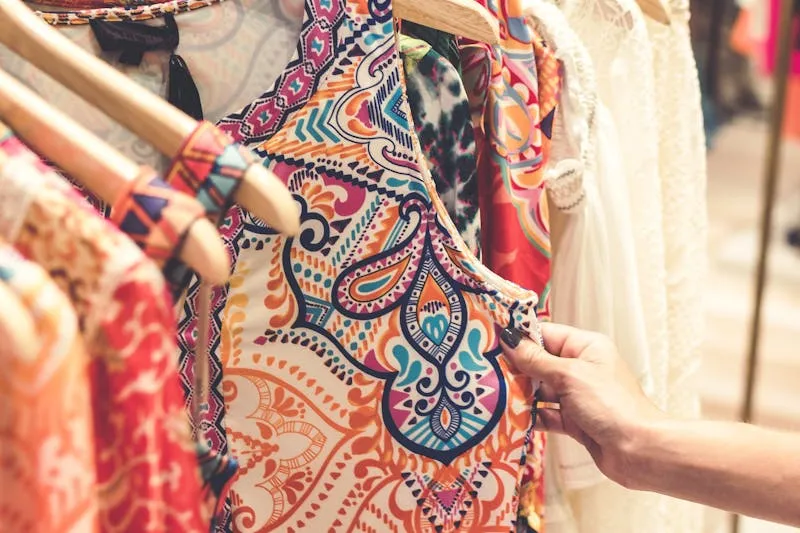
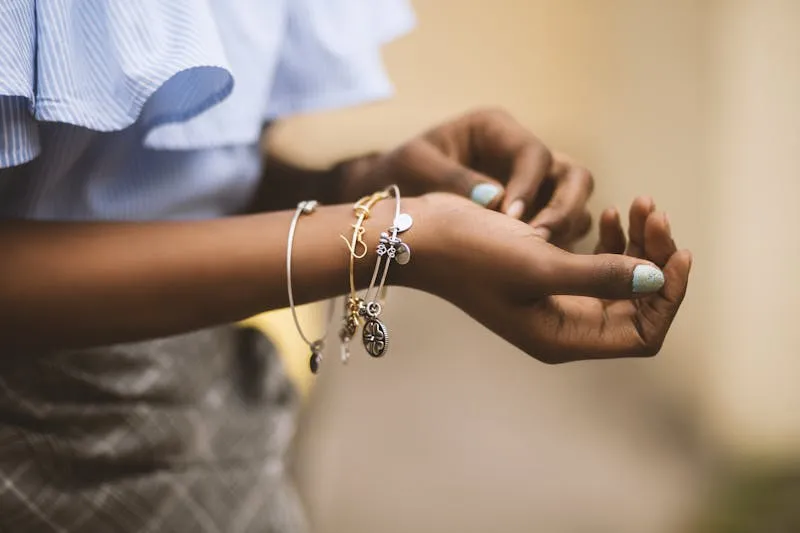
Accessories: bag, shoes, jewellery — getting it right
Your outfit does about 70% of the work. Accessories do the remaining 30% — and this is often where a look is either elevated or quietly undermined.
The bag: the clutch rule
For a wedding, a clutch is the right call. Small, elegant, complements rather than competes with the outfit. It doesn't need to hold much — lip colour, phone, card, tissues. Everything else stays in the car, the cloakroom, or your hotel room.
What works:
- Structured clutch in leather, satin or fabric — coordinated or deliberately contrasting
- Chain-strap mini bag — the classic that never stops working
- Minaudière — the small rigid evening bag, perfect for black tie or formal cocktail
- Raffia or woven clutch — ideal for summer and garden party weddings
What doesn't work:
- Tote bags, backpacks, work bags — regardless of brand or quality
- Large everyday handbags
- Beach bags
If you need to bring more (a change of shoes, a full beauty kit), put it in a larger bag and leave it at the cloakroom on arrival. In the photos, you have your clutch — that's all that matters.
Shoes: the comfort-versus-elegance question
We've covered the terrain and season-specific rules above. Here are the general principles.
The duration principle: a wedding is eight to twelve hours of continuous wear. The shoe that is "slightly tight" at 2pm becomes an instrument of torture by 10pm. I'm not saying abandon heels — I'm saying choose a heel you can physically wear for ten hours. The block heel, the wedge, the kitten heel — all give elevation without destroying you.
The surface principle: establish in advance whether the venue has grass, gravel, parquet, flagstones, or sand. It changes everything about heel choice.
The formats that save weddings:
- Block-heeled mule: elegant, stable, genuinely comfortable
- Multi-strap sandal with a wider heel: summer wedding perfection
- Wedge espadrille or cork wedge: light, works beautifully for garden party and beach settings
- Slightly rounded-toe court shoe: the modern classic — more comfortable than the ultra-pointed toe
💡 Kristina's tip
The two-pair strategy. Pair one: your beautiful heels for the ceremony, drinks reception and photographs. Pair two: elegant flat sandals or loafers for the dancing. Nobody judges you for changing shoes at 9pm — everybody quietly envies you. Slip the flat pair into a tote when you arrive and leave it at the cloakroom. This is not a compromise: it's good planning.
Jewellery: statement versus delicate
The jewellery question is entirely governed by your outfit. One simple rule: the outfit decides.
- Simple, clean-lined dress in a solid colour: you have room for a statement piece — a sculptural earring, a bold necklace, a wide cuff bracelet
- Heavily embellished or ornate dress: jewellery steps back — small gold hoops, a fine bracelet, nothing that competes with the dress itself
- Bold printed dress: one strong jewellery piece maximum — the print is already doing the work
Coco Chanel's grandmother's rule still holds: remove one accessory before you leave the house. If the overall picture is already very busy, something comes off.
Fascinators and hats: a specifically British cultural conversation
This is where UK wedding culture has its own distinct flavour — and it's a significant one. Hats and fascinators at UK weddings are not just accepted; at certain types of weddings (church ceremonies, country house receptions, anything with a particularly formal or traditional tone), they are culturally expected.
The tradition is deeply embedded — think Royal Ascot, Royal weddings, any photograph of the Queen Mother, and the entire Philip Treacy back catalogue. A well-chosen fascinator or small hat at a formal British wedding reads as knowledgeable and chic, not theatrical.
When hats/fascinators work at UK weddings:
- Church ceremony (especially Church of England traditional)
- Country house or stately home venue
- Black tie or morning suit dress code
- Particularly formal or traditional couples
When to leave them at home:
- Registry office followed by a restaurant reception
- Beach or outdoor casual wedding
- Very contemporary, non-traditional weddings
- If you genuinely can't find one that works with your face shape and outfit — a bad fascinator is worse than no fascinator
The fascinator rules: it should complement your outfit rather than clash with it. It sits on one side of your head (never dead centre). It should be proportionate to your frame and the formality of your outfit. And you do not, under any circumstances, wear it inside out or at an angle that defeats gravity.
Classic mistakes and how to avoid them
These are not hypothetical errors. They're observed ones. I've committed several myself. Here they are, offered freely.

Mistake 1: Too much skin for the venue
A very short dress in a church, heavily bare shoulders at a formal synagogue service, a deep plunge at a religious ceremony with conservative congregants. This isn't about prudishness — it's about respecting the space and the ceremony.
If the wedding has a religious ceremony, check the requirements of that specific venue. Many churches request covered shoulders. Some synagogues have specific modesty requirements. A shawl, a structured jacket or a fine-knit cardigan solves this for the duration of the ceremony.
Mistake 2: Underdressing
The denim jacket over a floral dress. The "nice jeans" with a silk blouse. The clean white trainers "because they're pristine." These outfits aren't terrible in themselves — they're just miscalibrated for the occasion.
A wedding is an exceptional event. Dressing as you would for a Sunday lunch or a casual dinner with friends is not honouring the occasion or the couple. A useful benchmark: your outfit should be more dressed up than your normal workwear, even if you work in a fairly formal environment.
Mistake 3: Brand new shoes, never worn before
The most physically painful mistake on this list. New shoes that have never been broken in will discover your blisters at the first slow dance. If you're buying shoes for a wedding, wear them at least twice beforehand — around the house for an evening, to a dinner — to soften them. This is not optional advice.
Mistake 4: Ignoring the weather forecast
Check the forecast at seven days and again at forty-eight hours. Have a weather contingency. Don't leave for an October wedding in a sleeveless dress without a layer. Don't wear a very long floaty skirt to an outdoor venue if ten days of wind are forecast. And in the UK, assume rain is a background possibility regardless of season.
Mistake 5: Accidental competition with the bride
This isn't just about white. It's also about the outfit so spectacular that photographers naturally gravitate towards it. The look so dramatically original that guests spend the afternoon discussing it rather than celebrating the couple. There's a subtle but real difference between being well dressed and being the event.
My rule: be the best version of yourself, but be clearly a guest, not a performer. Think elegant, polished, put-together — not showstopping.
⚠️ The group photograph
Consider how your outfit will read in a group photograph where other guests are in similar registers. If everyone else is in florals and pastels and you're in a floor-length black cape, you'll be the focal point of every wide shot. This might be exactly what you want — but think about whether it's appropriate for this specific couple and celebration.
Mistake 6: Underestimating the length of the day
A UK wedding typically runs from a 2pm ceremony to 1am. That's eleven hours. Your choices need to hold up for eleven hours. A dress that photographs beautifully at 3pm can become a problem at 11pm if it's impossible to dance in, creases spectacularly after sitting, or has thin straps that have been slowly cutting into your shoulders since 6pm.

Looking great without spending a fortune
The full cost of a wedding guest outfit — dress, shoes, bag, jewellery, plus hair if you're having it done — can easily reach £400 or more. Here's how to get around that intelligently.
Rental: the increasingly sensible option
Clothing rental for special occasions has matured significantly in the UK over the past few years. Platforms now offer designer and premium pieces for a fraction of the purchase price.
UK rental platforms:
- HURR: peer-to-peer rental with excellent designer options. £40-180 per rental depending on the piece. Quality varies, but the editorial photography is helpful for assessing actual condition.
- By Rotation: similar model to HURR, strong community and good range of occasion wear. Often better for mid-range pieces.
- Selfridges Rental: curated selection through Selfridges, good quality control, easy returns.
- Front Row: smaller but beautifully curated, high-end designer focus.
The advantages: access to pieces you couldn't afford to buy, no storage problem, zero guilt about wearing something once.
The things to check: sizing (rental pieces can have variable fits — read reviews carefully), delivery timing (book at least ten days out), and the returns window if you're travelling to the wedding.
Second-hand: the gems are there
For a wedding guest dress, second-hand is an excellent option. Evening and occasion wear is typically lightly used and well preserved.
UK platforms:
- Vestiaire Collective: designer and luxury brands, authentication included, reliable interface
- eBay: search "worn once wedding" in the women's formal wear category — this genuinely works
- Vinted: all price points, requires patience and good filters
- Depop: younger demographic, better for vintage and Y2K-adjacent pieces
- Local dress agencies / consignment shops: particularly strong for occasion wear in larger UK cities
High street done well
Several UK high street retailers do very creditable occasion wear. The secret is looking at fabric and finish, not just design.
The pieces worth looking at:
- Reiss: reliably elegant, good fabric quality, excellent for lounge suit or cocktail dress codes
- Coast: specifically designed for occasion wear — midi dresses, bridesmaid-adjacent pieces in quality fabrics
- Phase Eight: consistently good for weddings, particularly midi and tea-length dresses
- Monsoon: underrated for florals and embroidered pieces — ideal for garden party or bohemian dress codes
- ASOS Premium/Luxe: the quality difference between ASOS standard and ASOS Luxe is significant — look specifically in the Luxe range
- John Lewis own brand: quietly very good for timeless occasion pieces
The repeated outfit strategy
The most underrated secret: the same dress worn differently to multiple weddings is a perfectly valid strategy. Different guests attend different weddings. And even when they do overlap, a dress with different accessories reads as a different outfit.
Navy midi dress + gold jewellery + nude heels + tortoiseshell clutch = look one. Same navy midi dress + silver earrings + burgundy heels + black patent clutch + structured blazer = look two, which is visually quite different. Invest in one quality piece and work it across multiple occasions.
💡 Kristina's tip
Before buying, calculate the cost-per-wear. A £240 dress worn to four weddings costs £60 per wear. An £80 dress worn once costs £80 per wear. The economics of quality are clear — as long as you choose a piece versatile enough to adapt to different contexts. The cost-per-wear principle is not about spending more; it's about spending smarter.
Special situations: outdoor weddings, church, abroad
Registry office only
A civil ceremony at a registry office is often smaller, more intimate and shorter. If a reception follows at a restaurant or private venue, dress as you would for that reception. If the registry office ceremony is the entire event, smart cocktail is right — you don't need a floor-length gown for a thirty-minute ceremony in a municipal building.
Church ceremony
Church of England, Roman Catholic, or other Christian denominations: covered shoulders for the ceremony is a standard expectation in traditional churches. A fine cardigan, a structured jacket, a beautiful shawl — any of these works. The key is that it looks intentional, not like you forgot it was cold.
Weddings abroad
Cultural rules vary. Some practical notes:
- France: slightly more formal overall register than the UK for weddings; fascinators less common
- Italy / Spain / Portugal: religious ceremony venues will enforce covered shoulders; outside that, the dress codes are broadly similar to the UK
- Greece: weddings are often very outdoor and very hot — breathable fabrics are not optional, they're survival
- Morocco / Middle East: if attending a wedding with traditional elements, get specific guidance on dress expectations from someone who knows the family
FAQ: your questions, my straight answers
Can you actually wear black to a wedding?
Yes. Black is completely acceptable at the vast majority of UK and Western European weddings. The idea that black is "for funerals" is a fading generational belief rather than a current social rule. For an evening reception or black tie wedding, black is arguably the most elegant choice you can make. For a summer outdoor garden party, it might be practically uncomfortable in the heat — but it's not "wrong." The only contexts where black genuinely warrants caution are weddings with East Asian cultural traditions where it may carry mourning associations.
What if my dress has just a tiny bit of white — like white flowers on a coloured background?
A predominantly colourful dress with white flowers as a detail element is generally fine — you're not arriving "in white." What's problematic is a predominantly white garment. A red dress with small white floral print: fine. A white dress with small coloured floral print: not fine. Dominant colour percentage is the criterion. When in doubt, do the flash test.
Do I have to wear a hat or fascinator to a UK wedding?
No, it's not compulsory. But at a formal or traditional British church wedding — particularly for a morning suit or black tie dress code — a fascinator or small hat is very much in keeping with the cultural expectation and will look chic rather than theatrical. At a relaxed outdoor or contemporary wedding, you can absolutely skip it. The question to ask is: does this specific wedding (venue, dress code, couple's style) call for it? If yes, invest in one that works with your face and your outfit. If no, don't feel pressured.
I'm pregnant — how do I adapt my wedding guest outfit?
The priorities shift to comfort, adaptability and silhouettes that accommodate you gracefully. Empire-line dresses (elasticated under the bust with fabric that falls freely) tend to work well throughout pregnancy. Wrap dresses and jersey-knit dresses adapt to the body beautifully. Avoid very fitted or constricting styles. Breathable fabrics are even more important in pregnancy, as your body temperature runs higher. Midi length is usually most flattering and comfortable. Séraphine and ASOS Maternity both have genuinely decent occasion-wear ranges worth checking.
Is it OK to wear trousers to a wedding?
Absolutely. A tailored trouser suit, a wide-leg jumpsuit, a smart co-ord with palazzo trousers — all are perfectly acceptable alternatives to a dress. The formality question is the same as for dresses: the outfit needs to match the dress code. A sleek trouser suit in a bold colour reads as cocktail or lounge suit. Wide linen trousers with a floaty blouse read as garden party. A velvet or satin tuxedo reads as black tie. The silhouette changes; the formality rules stay the same.
I have a wedding in a week and nothing to wear. What do I do?
Emergency 48-hour plan: 1) Check HURR or By Rotation for delivery timing — some rental pieces can arrive in 48 hours if you book urgently. 2) Physical high street: Reiss, Coast, Phase Eight, John Lewis — all worth a same-day shop. 3) Your own wardrobe: a dress you haven't worn in two years plus new accessories (shoes, bag, jewellery) can be a genuinely fresh look. The new accessory approach works better than you think — a statement earring or new shoes transforms the context of an old dress entirely.
How much should I expect to spend on a wedding guest outfit?
Realistic ranges: dress £60-350 (high street to mid-range brand), shoes £50-200, bag £30-150, jewellery £20-100. A complete outfit can therefore run from £160 (smart high street) to £800 or more (premium brands plus good shoes). Rental brings the dress cost down to £40-150. A sensible target for a complete, polished wedding guest outfit: £150-350 all-in, with pieces you can realistically re-wear. Spending more is not inherently better value — spending well is.
Should I ask the bride what she'd prefer me to wear?
If you're close to her and you know she's the sort of person who has strong opinions about everything (and you'll know if she is), a light question — "Any colours you'd love or hate to see?" — a few months out is a thoughtful gesture. Don't ask too early in the planning when she's overwhelmed, and don't make it a weight for her to carry. If she says "wear whatever you want, just not white" — take her at her word and do exactly that. If she has a specific vision, she'll tell you.
Sources and references
- Vogue UK — What to wear to a wedding: the definitive guide
- Hitched.co.uk — Wedding guest outfit guide: dress codes explained
- Brides — What to wear to a wedding: complete guest style guide
- The Telegraph Fashion — Wedding guest dressing: the complete rules
- HURR — Wedding guest outfit ideas and rental guide
- By Rotation — Wedding guest dresses and occasion wear rental