The first time I watched a fashion show in full, it was Alexander McQueen's autumn-winter 2019 collection, replayed on YouTube on a Tuesday evening. I was expecting to see wearable dresses. Instead, I watched women walk in organza structures that looked like giant jellyfish, set to a soundtrack oscillating between Wagnerian opera and a field recording of a storm at sea. And I thought: what is the actual point of all this?
It's THE question everyone asks — and nobody dares say out loud for fear of seeming uncultured. Why do clothes that nobody will ever wear parade down a runway in front of 800 people photographing them with £1,200 phones? Why four cities and not one? Why February for summer and September for winter? And most importantly: what does it actually change for us, concretely, when we buy our clothes from Zara or & Other Stories?
Spoiler: it changes far more than you'd think. And once you understand the mechanism, you never look at shop windows the same way again.
What is Fashion Week, exactly?
A Fashion Week is a week (in reality often 8–10 days) during which fashion houses present their new collections through runway shows, presentations and events. It's the moment when designers show what we'll be wearing in 6 months — yes, six months. The time lag is the first thing to understand.
There are four major Fashion Weeks that follow each other in an immutable order: New York → London → Milan → Paris. Together, they form what's known as the "Big Four" — the main circuit of international fashion. They happen twice a year: in February (for autumn-winter collections) and in September (for spring-summer collections).
Alongside the Big Four, there are dozens of other Fashion Weeks worldwide — Berlin, Copenhagen, Tokyo, Lagos, São Paulo, Shanghai, Seoul — each with its own identity. Copenhagen has become the benchmark for sustainable fashion. Tokyo is the playground for avant-garde. Lagos represents Africa's booming fashion scene.
Basic glossary: "Collection" = the complete set of pieces created for a season. "Look" = a complete outfit worn by a model on the runway. "Finale" = when all models walk together at the end, followed by the designer's bow. "Mood board" = visual inspiration board that sets the collection's atmosphere.
The Big Four: New York, London, Milan, Paris
The four fashion capitals are not interchangeable — each has its own identity, strengths and audience.
New York (the commercial one)
New York Fashion Week traditionally opens the circuit. Founded in 1943 (yes, during the Second World War, when American journalists could no longer travel to Paris), it's the most pragmatic and commercial of the four. New York collections tend to be more wearable, more "real life" than their European counterparts. This is where major American brands — Ralph Lauren, Marc Jacobs, Michael Kors, Calvin Klein, Tommy Hilfiger — present their lines.
Number of shows: roughly 80–90 per week. Duration: 7–8 days. Iconic venue: Spring Studios in Tribeca (formerly Lincoln Center).
London (the rebel)
London Fashion Week is the most experimental, diverse and often the most daring of the four. It's the proving ground for emerging designers: London's fashion schools (Central Saint Martins, London College of Fashion, Royal College of Art) produce a talent pipeline that takes risks Paris or Milan wouldn't dare. Alexander McQueen, John Galliano, Vivienne Westwood, Stella McCartney — all came through London.
Number of shows: roughly 60–70. Duration: 5–6 days. Vibe: more punk, more underground, less corporate than New York.
Milan (the artisan)
Milan is Italian craftsmanship incarnate. The Milanese houses — Prada, Gucci, Versace, Dolce & Gabbana, Armani, Fendi, Bottega Veneta — excel in fabric quality, technical mastery and glamour. If New York is commercial and London rebellious, Milan is luxurious and sensual. Milanese shows showcase exquisite textiles, impeccable tailoring and a certain visual spectacle.
Number of shows: roughly 70–80. Duration: 6–7 days. Notable: men and women sometimes show together (co-ed format), a trend launched by Gucci in 2017.
Paris (the queen)
Paris closes the circuit — and that's deliberate. It's the most prestigious, most anticipated and most widely covered Fashion Week in the world. This is where the greatest houses show: Chanel, Dior, Louis Vuitton, Saint Laurent, Balenciaga, Hermès, Givenchy, Valentino (even Italian houses come to Paris). It's also the only city that hosts haute couture shows — a legally protected designation in France.
Number of shows: roughly 90–100. Duration: 8–10 days. Iconic venues: the Palais de Tokyo, the Grand Palais, the Louvre — the venues themselves are part of the show.
The Big Four order isn't random: it follows a logic of ascending prestige. New York opens, Paris closes. Buyers and journalists cross all four cities in a month — a fashion marathon the industry calls "the circuit" or "fashion month."
The calendar: why winter in summer and summer in winter
This is probably the most confusing thing when you first discover fashion: autumn-winter collections show in February–March, and spring-summer collections in September–October. Inverted logic, right?
Not really. The time lag is explained by the production and distribution cycle. Here's the timeline of a collection:
Months 1–3 (6–9 months before the show): design. The designer develops the concept, sketches, fabric choices. Months 4–6: prototyping and producing the show pieces. The show (February or September): presentation to buyers and press. 1–2 months after the show: buyers from department stores and boutiques place their orders. 3–5 months after the show: mass production. 6 months after the show: pieces arrive in stores. That's why a February show features winter clothes: they'll be in shops by August–September, just in time for autumn.
The full fashion-year calendar
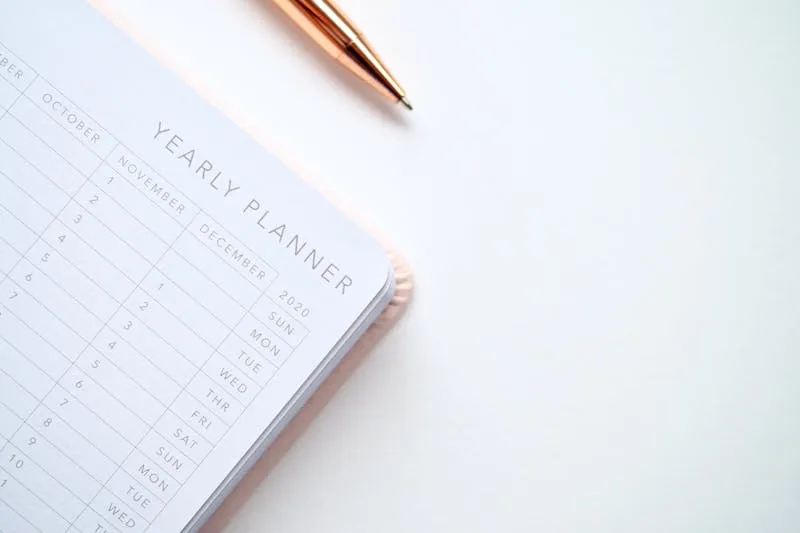
January: haute couture weeks (Paris) + menswear weeks. February–March: the Big Four — womenswear autumn-winter. June: menswear weeks (Paris, Milan, London). July: haute couture autumn-winter (Paris). September–October: the Big Four — womenswear spring-summer. November–December: brands are already preparing next season.
Common confusion: When Vogue runs "Autumn-winter 2025 trends" in February, the clothes won't be in shops until August–September 2025. If you're trying to buy those pieces now, it's too early — they don't exist in stores yet. The magazine is showing what will be available in 6 months' time.
Anatomy of a fashion show: from backstage to finale
A fashion show lasts an average of 12 to 18 minutes. For those few minutes, a fashion house mobilises teams for months and spends between £170,000 and several million pounds. Here's what happens, step by step.
Backstage
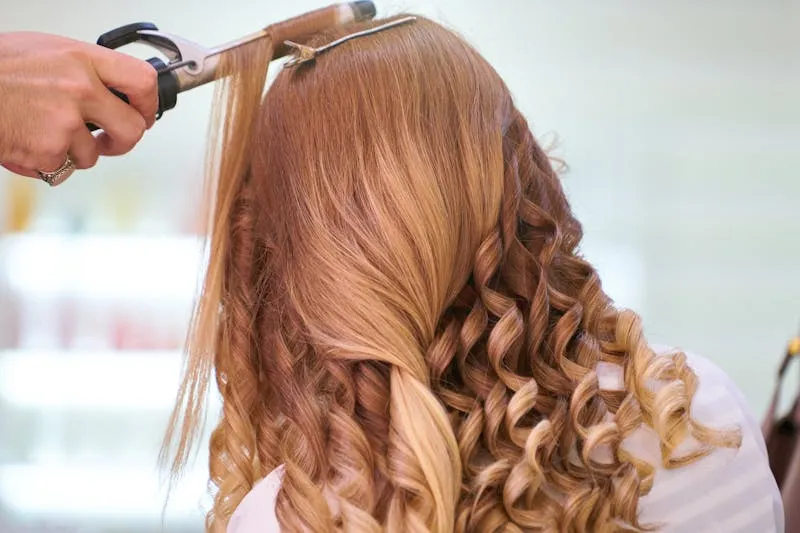
Three to four hours before the show, models arrive for hair and makeup. Each look is timed: a technical sheet specifies which model wears which look, in which order, with which accessories and shoes. Dressers prepare garments on numbered rails. The atmosphere is a mixture of intense stress and focused silence — nobody shouts, but everyone runs.
The casting (model selection) happened weeks earlier. Models are chosen for their physique but also for their walk — every designer has preferences. Some want a robotic, mechanical stride (Prada), others a natural, easy gait (Jacquemus), others still a theatrical attitude (Alexander McQueen).
The show itself
Guests take their seats 30–45 minutes before start time (delays are common — sometimes deliberate, to build anticipation). Lights go down. Music starts. The first model appears. Each look takes roughly 30 to 45 seconds — walk to the end of the runway and back. Photographers fire off shots from the end of the catwalk. Fashion editors take frantic notes.
A collection typically features 30 to 60 looks. The opening looks set the mood, the middle develops the theme, and the final looks — often the most spectacular — conclude with a crescendo. The last outfit (often a bridal gown or a sculptural piece) is the "closer" — the climactic moment of the show.
The finale
All models return together, walking in succession, sometimes looping. The designer appears at the end — a brief bow, perhaps a wave, rarely more. Applause lasts 30 seconds to 2 minutes. It's over. In 15 minutes, months of work have been summarised, judged and broadcast to the entire world.
Trivia: Karl Lagerfeld (Chanel) was famous for spectacular finales — the actual runway transformed into a supermarket, a rocket launch pad, a beach with artificial waves, a tropical garden under the Grand Palais glass roof. The set design for a Chanel show was sometimes more talked about than the clothes themselves.
The front row: who sits there and why
The front row is a fascinating social microcosm. Much of a fashion house's business and image plays out right there.
Buyers: they're the ones who truly matter. Buying directors from department stores (Selfridges, Harrods, Liberty, Nordstrom, Le Bon Marché) decide which pieces will be stocked and in what quantities. They're the ones who turn a runway show into revenue.
Fashion editors: Anna Wintour (Vogue US), Edward Enninful (formerly British Vogue), Emmanuelle Alt (formerly Vogue Paris). Their presence at the front row — or their absence — sends a signal. A positive Vogue feature can make a young designer's career. Deafening silence can end it.
Celebrities: actresses, singers, influencers. They're there to be photographed — and for those photos to be associated with the brand on social media. When Zendaya sits front row at Louis Vuitton, the media exposure is worth millions in equivalent advertising.
Influencers and content creators: a more recent phenomenon (since roughly 2015), they've replaced part of the traditional press on the front row. Their prescriptive power on Instagram and TikTok has become a major commercial lever.
What the photos don't show: behind the glamorous front row, there's "standing" — guests standing at the back of the room. And those without an invitation at all. Seating at a fashion show is a ruthless social hierarchy. Being moved back a row from one season to the next is considered an affront — some editors have refused to sit and simply walked out.
Street style: the other show
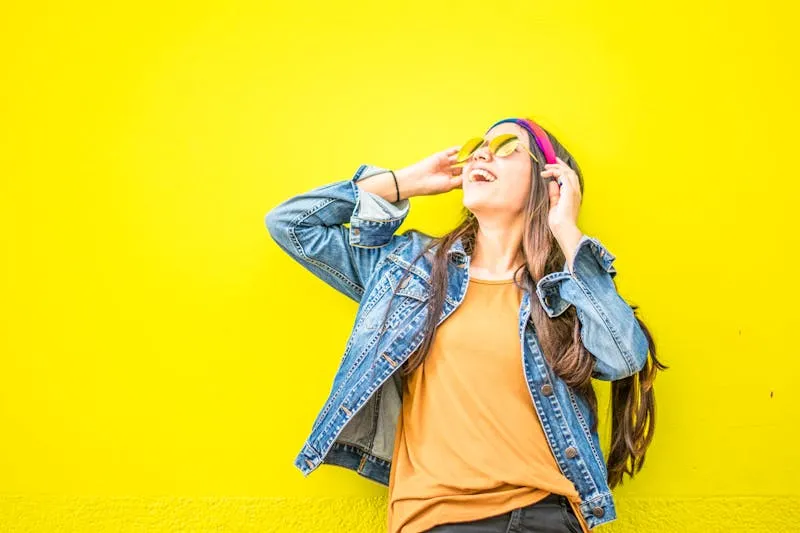
Since the 2010s, street style has become as important — arguably more so — than what happens on the runway. Street-style photographers (Tommy Ton, Scott Schuman aka The Sartorialist, Phil Oh for Vogue) capture the outfits of guests arriving at and leaving shows. These images flood social media and fashion websites in real time.
Street style has created a paradox: some people now dress to be photographed outside the show, not for the show itself. Influencers borrow designer outfits to be snapped, then return them. Brands lend specific garments for street-style exposure. It's a show within a show — a meta-runway with its own economy.
For us, street style is actually the most useful part of Fashion Week. Because these are real people (with generous fashion budgets, admittedly) wearing real outfits in real life. It's far easier to draw inspiration from than runway pieces worn by 5'11" models under sci-fi lighting.
Where to find good street style: Vogue Runway publishes street-style galleries for every Fashion Week. Instagram accounts @thesartorialist, @streetpeeper and @streetstyle_official are reliable sources. On TikTok, search #fashionweekstreetstyle for live footage.
Haute couture vs ready-to-wear: the real difference
This is the most common confusion. No, "haute couture" doesn't simply mean "expensive fashion."
Haute couture is a legally protected designation in France, regulated by the Ministry of Industry. To use the term, a fashion house must meet strict criteria: maintain a workshop in Paris with at least 15 permanent employees, produce bespoke pieces for private clients, and present at least 25 models per collection twice a year. In 2024, only 16 houses hold the official haute couture status — including Chanel, Dior, Givenchy, Jean Paul Gaultier, Schiaparelli and Valentino.
A haute couture dress requires between 100 and 1,000 hours of handwork, costs between £8,000 and several hundred thousand pounds, and is made in a single copy for a specific client. Yes, one dress. For one person. With measurements taken directly on the client's body.
Ready-to-wear (prêt-à-porter in French) is everything else: clothes produced in series, in standard sizes, sold in stores. That's what the February and September Fashion Weeks show. Even Chanel and Dior have ready-to-wear collections — it's their primary revenue source. Luxury ready-to-wear (Chanel, Prada, etc.) is expensive, but it's a different universe from haute couture.
Classic confusion: When someone calls a £400 designer dress "haute couture," they're wrong. It's designer ready-to-wear. Haute couture starts at five figures minimum — and doesn't come in standard sizes.
From runway to high street: how trends reach us
This is where Fashion Week directly concerns us. The mechanism is fascinating — and ruthlessly efficient.
Step 1 — The runway (February/September): designers present their visions. Patterns, cuts, colours and fabrics emerge as common trends — because designers often share the same inspirations (the same trip to Japan, the same film, the same art exhibition).
Step 2 — The analysis (following weeks): trend forecasting agencies (WGSN, Peclers, Trend Union) dissect hundreds of shows and identify macro-trends: recurring colours, dominant silhouettes, star fabrics. These analyses are sold — at considerable cost — to high-street brands.
Step 3 — The adaptation (2–4 months after the shows): design teams at Zara, H&M, Mango, Primark, ASOS "translate" runway trends into accessible pieces. The sculptural £4,000 organza dress becomes a polyester version at £34.99. The £7,000 double-faced cashmere overcoat becomes a wool-blend coat at £79.
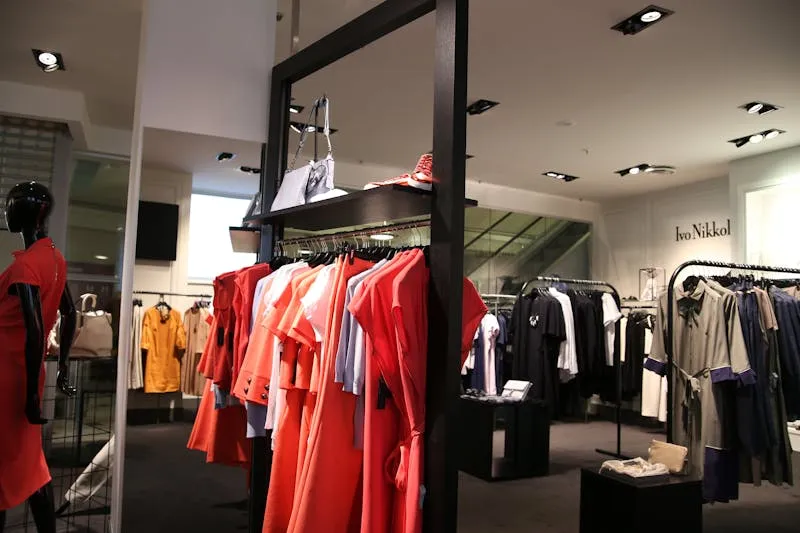
Step 4 — The shop floor (6 months after the shows): pieces arrive in stores. Zara is the speed champion: its production cycle is just 3–4 weeks — versus 6–9 months for a traditional brand. That's why you see pieces "inspired by the Prada show" at Zara only a month after the runway.
Step 5 — Mass diffusion: influencers wear the pieces, photos circulate on Instagram and TikTok, and the trend normalises. What was a radical artistic vision on a runway in February has become a wardrobe staple by October.
In practice: when you see burgundy everywhere in shops in September, it's because the February shows had burgundy on a dozen runways. You didn't know — but Zara's buying teams knew perfectly well. Now you understand the connection.
Fashion Week in the digital age

The 2020–2021 pandemic accelerated a transformation already underway: the digital democratisation of Fashion Week. Before 2020, shows were quasi-private affairs — 800 hand-picked guests, accredited photographers, press embargoes. Today, the majority of shows are broadcast via live stream on brand websites, YouTube and even TikTok.
The consequences are profound. First, anyone can watch a show in real time from their sofa. Chanel, Dior and Louis Vuitton stream their shows with cinematic production quality. Second, social media have shattered press embargoes: looks are commented on, analysed and meme-ified in real time on Twitter and TikTok. The Coperni show where Bella Hadid had a dress spray-painted onto her body? 50 million views in 24 hours.
Some brands have even experimented with fully virtual shows — in augmented reality, in video games (Balenciaga x Fortnite), or as art films. Results are mixed: live streams of real shows work well; purely virtual experiences often struggle to create the same emotion.
How to follow Fashion Week like a pro
You don't need an invitation to enjoy Fashion Week. Here's how to follow it effectively.
In real time: major houses stream their shows on their websites. Vogue Runway (runway.vogue.com) publishes every individual look photographed, with detailed descriptions. It's the bible of show coverage.
Video highlights: the YouTube channels of Vogue, British Vogue and Harper's Bazaar publish Fashion Week "highlights" in 10–15 minutes. Perfect for an overview without spending hours.
Analysis: fashion newsletters (Vogue Business, The Business of Fashion, Showstudio) publish post-show analyses that decode trends and strategies. This is the next level of understanding — for when you want to go beyond "it's pretty / it's ugly."
TikTok and Instagram: fashion content creators (@leoniehanne, @camillecharriere, @aimeesong) share backstage access, street style and real-time analysis. It's the most dynamic and accessible channel.
My Fashion Week routine: I watch the Chanel, Dior, Prada and Valentino shows via live stream (the most visually spectacular), browse Vogue Runway galleries for other brands, and read the Vogue Business analysis the next morning. It takes roughly 2–3 hours per Fashion Week — and it's genuinely fascinating once you understand the codes.
Fashion Week FAQ
Can you attend a fashion show without an invitation?
No, the major shows are invitation-only. However, some Fashion Weeks offer public events — such as presentations (open showrooms where clothes are displayed on rails, less prestigious but accessible) or off-schedule events. London Fashion Week has occasionally offered paid tickets for the public, but it's rare and limited.
How much does a fashion show cost to stage?
Between £170,000 for an emerging designer (modest venue, fewer models, simple set) and several million pounds for the major houses. A Chanel show at the Grand Palais — with spectacular bespoke sets rebuilt each season — reportedly costs between £4 and £8 million. It's an investment in brand image, not a spend measured by immediate ROI.
Are models paid for walking in shows?
Yes, but fees vary enormously. An established top model can earn between £8,000 and £40,000 per show (more for exclusives). An emerging model may receive only £400–£1,500 — or even walk for free for a young designer, in exchange for exposure. The "supers" (Gigi Hadid, Kendall Jenner, Adut Akech) are in a league of their own.
Why are some runway outfits completely unwearable?
The most extravagant runway pieces aren't intended to be sold as-is. They serve as "statements" — they embody the collection's theme and mood in a radical way. They're communication pieces, not commercial ones. The versions sold in stores are more wearable adaptations of the same vision.
What's the difference between Fashion Week and Fashion Month?
Fashion Month is the entire run of all four Fashion Weeks back-to-back (New York → London → Milan → Paris), spanning roughly a month. Each individual Fashion Week lasts 5–10 days. When people refer to "fashion month," they mean this complete marathon that mobilises the entire industry for four consecutive weeks.
Is Fashion Week environmentally responsible?
It's a hot-button topic. The carbon footprint of Fashion Weeks is considerable: flights for thousands of guests between four cities, ephemeral sets, fabric samples, overproduction. Copenhagen Fashion Week has imposed sustainability criteria on participating brands since 2023. Some brands have experimented with virtual shows or local presentations. But overall, the model remains highly polluting and progress is slow.