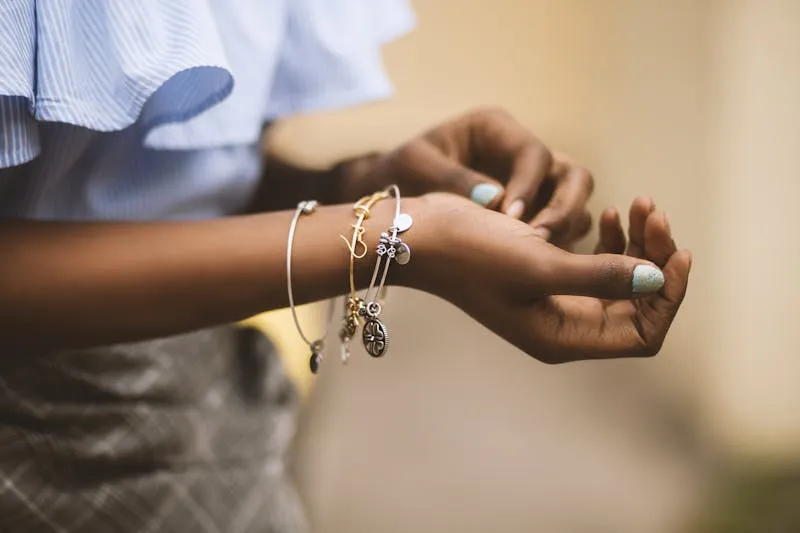
At a dinner party last month, I spent an unreasonable amount of time staring at the wrists of the woman sitting across from me. Not in a strange way — well, slightly. She was wearing five bracelets, all different, and somehow it worked. A gold bangle, a delicate chain with a tiny charm, a freshwater pearl strand, a braided leather cord, and a vintage watch. Five pieces with nothing in common — yet the combination looked deliberate, cohesive, almost effortless. I spent the rest of the evening trying to figure out why.
Because for years, I operated on jewelry autopilot. One necklace, one pair of earrings, done. Not because I didn't love jewelry — I did. But every time I tried to layer, mix, accumulate, the result looked more like a flea market display than a curated look. It took me a long time to understand that jewelry isn't just an accessory you add at the last minute — it's a language. And like any language, it has grammar.
This guide is that grammar. The rules nobody teaches you, the mistakes everyone makes (myself first), and the handful of principles that transform a piece of metal on your neck into something that actually says something.
Skin undertone and metal choice: the founding duo
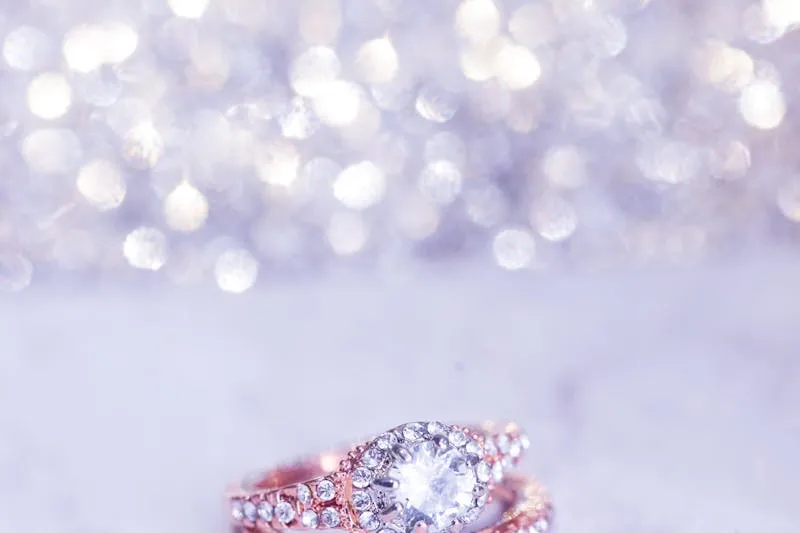
This is the foundation of everything. Before discussing shape, style, or trend — we need to talk about colour. Not the colour of the jewelry: the colour of your skin. Because the same gold necklace can make you look radiant or washed-out, depending on whether your skin leans warm or cool.
How to determine your skin undertone
Forget the old "fair skin = silver, dark skin = gold" classification. That's a myth. What matters is undertone — the subtle hue beneath your skin's surface, independent of its overall shade. There are three undertones:
Warm: golden, peachy, or olive undertones. The veins on your inner wrist appear greenish. You tan easily in the sun. → Yellow gold, rose gold, brass, and bronze are your natural allies. They catch and amplify your skin's warmth.
Cool: pinkish, blueish, or porcelain undertones. Your wrist veins appear blue-purple. You burn before you tan (or you simply don't tan). → Silver, platinum, white gold, and steel are your best friends. They complement the coolness of your complexion without creating dissonance.
Neutral: a blend of both. Your veins are blue-green. You tan fairly easily but can also sunburn. → You can wear either metal family. Literally everything works on you. It's the genetic jackpot of jewelry.
Metals: what the names actually mean
18-karat gold (750/1000): 75% pure gold alloyed with other metals (copper, silver, palladium). The standard in fine European jewelry. It doesn't oxidise, doesn't tarnish, and lasts multiple generations. The price reflects the material.
14-karat gold (585/1000): 58.5% pure gold. More scratch-resistant than 18k (the alloy is harder), slightly less luminous. The standard in the US, UK, and Germany. An excellent durability-to-price compromise.
Vermeil: sterling silver coated with a minimum 2.5-micron layer of gold (in the US; EU regulations vary). It's the look of gold at the price of silver. Plating lifespan: 2-5 years with proper care. After that, it needs replating.
Gold-plated: a base metal (often brass) covered with a thin layer of gold (typically 0.5-3 microns). Less regulated than vermeil, less durable. The plating can wear through in months with daily wear — especially on rings and bracelets, which endure the most friction.
Gold-filled: the middle ground most people don't know about. A thick layer of gold mechanically bonded to a base metal — not electroplated but pressure-bonded. The gold layer is 50-100 times thicker than gold plating. It looks and behaves like solid gold for 10-20 years. In terms of value, it's the smartest option below solid gold.
Sterling silver (925): 92.5% pure silver, 7.5% copper. Pure silver (999) would be too soft for jewelry. Sterling is the global standard. It oxidises on contact with air (the famous dark tarnish) — this isn't a defect, it's a natural reaction. A microfibre cloth restores the shine in seconds.
Body proportions: which jewelry for which silhouette
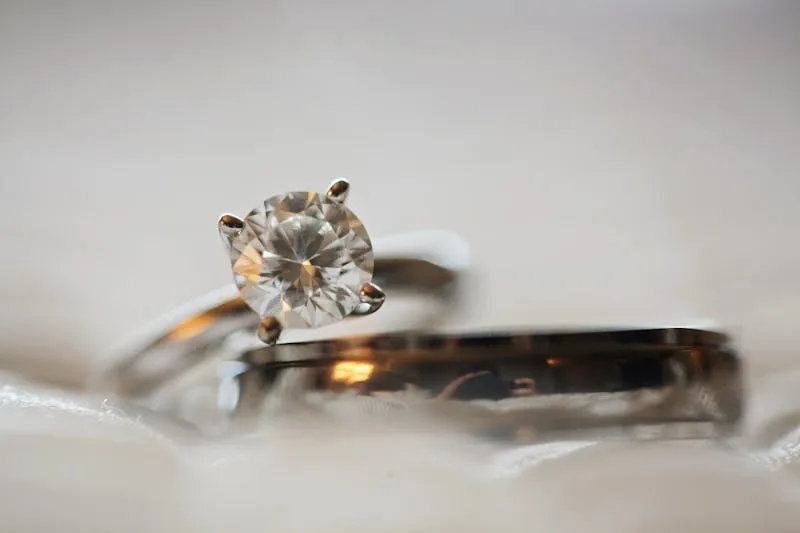
Jewelry doesn't exist in a vacuum. It exists on a body — and that body has proportions, volume, and silhouette. A long, thin pendant that flatters a slender neck can completely vanish on a fuller bust. Conversely, a thick choker that beautifully structures a broader chest can feel constricting on a thin neck.
The universal rule is simple: jewelry creates contrast with the area it occupies. Long neck → short necklace, choker, collar. Short neck → long pendant, V-shaped necklace that elongates. Thin wrists → delicate bracelets or fine stacking. Broad wrists → a structured cuff or bangle that owns the volume.
It's counterintuitive. People often think they should "match" their proportions — thin on thin, bold on bold. In reality, contrast creates visual harmony. Stylists call it "optical compensation": the jewelry rebalances what the silhouette proposes.
For petite frames
Favour fine, delicate pieces with a single focal point. A short necklace with a small pendant, stud earrings or mini hoops, thin-band rings. Excess volume "consumes" a petite silhouette — the jewelry becomes the subject instead of the person wearing it. Subtlety is your superpower.
For tall or elongated frames
You have the real estate. Statement pieces — collar necklaces, large hoops, cuffs — were designed for you. The mistake would be wearing only dainty pieces: on a long frame, a tiny piece looks lost, almost forgotten. Own the scale.
For curvy or rounded frames
Vertical lines elongate. Long pendants, Y-necklaces, drop earrings. Avoid very tight chokers and collar necklaces that cut the neckline horizontally. Stacked thin bracelets work better than a single wide cuff that draws attention to the wrist width.
The art of layering: rules for stacking jewelry
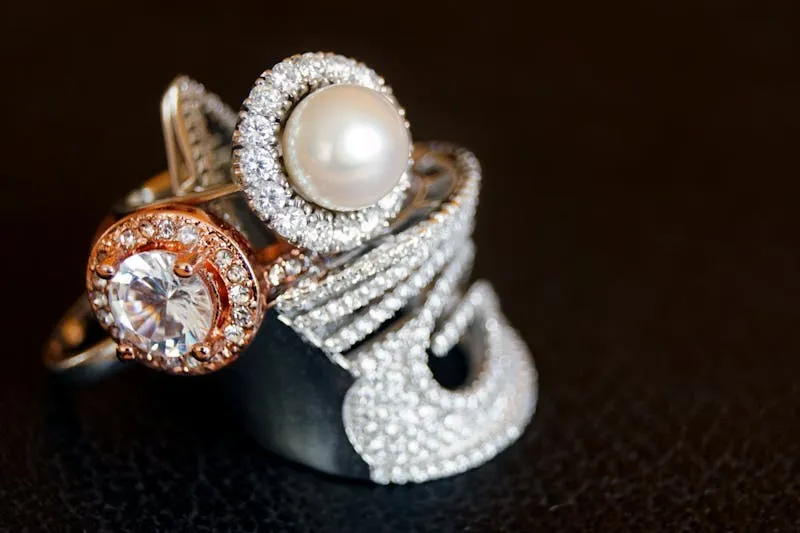
Layering is the art of wearing multiple pieces together — stacked necklaces, accumulated rings, piled-on bracelets. It's also the area where mistakes are most visible. Too much is too much. Not enough is just "I'm wearing a necklace." The zone between the two is where it gets interesting.
The 3 rules of necklace layering
Rule #1: Vary the lengths. A choker (14-15 inches), a mid-length chain (17-18 inches), a long pendant or lariat (22-28 inches). The spacing between pieces must be visible — if two necklaces fall at the same length, they form a confused cluster. Aim for 2-3 inches of separation between each. That's what creates the cascade effect.
Rule #2: One common thread. Same metal (all gold, all silver), same chain weight, or same style (all dainty, all chunky). One unifying element is enough — everything else can vary. That thread is what creates visual coherence and prevents the whole thing from looking like a yard sale.
Rule #3: One focal point. One necklace should "speak" louder than the others — a larger pendant, a medallion, a gemstone. The rest are supporting players, not competitors. If three necklaces are all demanding attention simultaneously, the eye doesn't know where to land.
Bracelet layering
More forgiving than necklaces. You can stack liberally without risking the "too much" threshold — as long as there's coherence in material or style. A wrist full of mismatched bracelets that are all thin and gold? Works. A mix of thick cuff, silver bangle, and beaded strand? Riskier — unless the bohemian eclecticism is a deliberate choice.
Your watch is part of the stack. Integrate it into the composition rather than treating it separately. A vintage watch with a fine metal bracelet flanked by two matching bangles creates a natural ensemble. The watch stops being a tool and becomes jewelry.
Necklaces: lengths, pendants and how to wear them
Necklaces are the most visible category of jewelry — they occupy the centre of the torso, the zone where the eye naturally travels. They're also the most sensitive to neckline: a wrong necklace-neckline combination, and the whole thing falls flat.
Choker (14-16 inches): sits at the base of the neck. Best with V-necks, off-the-shoulder tops, or turtlenecks. Avoid with crew necks or Mandarin collars — the choker competes directly with the collar and creates visual conflict.
Princess (17-19 inches): the classic, most versatile length. Falls just below the collarbone. Works with virtually everything — it's the default necklace, the first to buy if you own only one.
Matinée (20-24 inches): falls at bust level. Ideal with high-necked dresses or blouses. Adds elegant verticality to the silhouette. This is the length of classic pearl strands, of Coco Chanel's signature look.
Opera/Lariat (28-36 inches): the statement. Worn long and loose, or knotted to create volume at a shorter length. Works best with solid-coloured, structured outfits — on a busy print, a long necklace gets visually lost. This piece demands visual space.
The golden rule of necklaces and necklines: the necklace should follow the neckline's shape, not fight it. V-neck = V-shaped pendant. Scoop neck = short, curved necklace. Boat neck = long necklace that creates a vertical line. High collar = no necklace, or a very long chain worn over the top.
Earrings: choosing by face shape
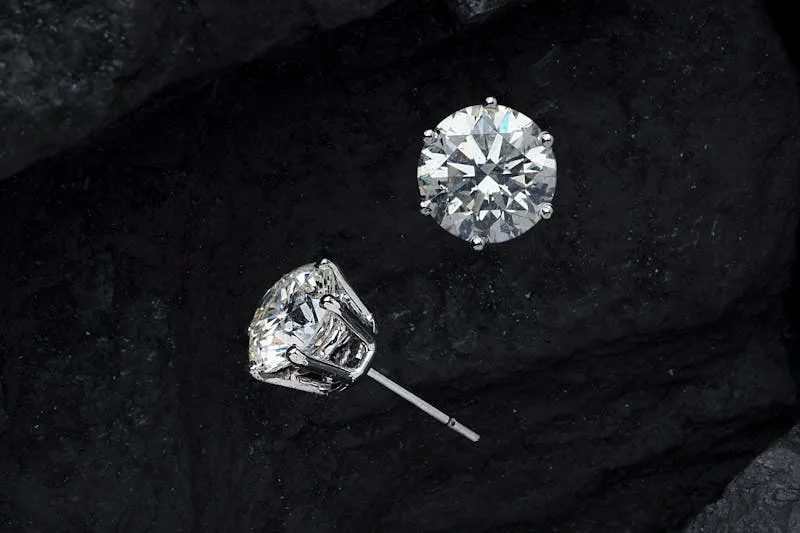
Earrings are the most "intimate" jewelry: they frame the face, catch light near the eyes, and move with every head turn. They're also the most morphology-dependent — here, face shape is criterion number one.
Oval face: the most versatile shape. Almost everything works — studs, hoops, drops, chandeliers. The oval face is the neutral canvas of jewelry. If this is your shape, use it as permission to experiment freely.
Round face: drops, dangles, angular shapes — anything that creates verticality. Teardrop pendants, long chain earrings, rectangular geometrics. Avoid large round hoops and bulky round studs that accentuate the face's roundness.
Square face: rounded, soft, organic shapes. Hoops, teardrop earrings, ovals. They soften the jawline's angles. Avoid overly geometric, angular earrings — they duplicate the face's structure instead of compensating for it.
Heart-shaped face (wide forehead, narrow chin): earrings that add volume at the bottom — chandeliers, wide-bottom drops. They rebalance the forehead-to-chin ratio. Avoid very long, tapered earrings that exaggerate the inverted triangle effect.
Oblong face: chunky studs, wide hoops, buttons, clusters. Anything horizontal and compact. Long dangly earrings are the enemy — they elongate an already long face. Here, you're trying to "break" the verticality.
Rings and bracelets: the proportions that matter
Rings and bracelets are the most visible jewelry in motion — hands move constantly. They're also the most exposed to impact, friction, and chemical contact (soap, lotion, hand sanitiser). The choice needs to be aesthetic AND practical.
Rings
Long, slender fingers: wide bands, signet rings, cocktail rings — you have the structure to carry them. Very thin rings risk looking lost on long fingers. Own the scale.
Short or wide fingers: thin, delicate rings, stacked. A discreet solitaire, a fine band, an adjustable open ring. Very wide bands visually shorten the finger. The secret weapon: wear rings on intermediate knuckles (midi rings) — they optically elongate the finger.
Ring stacking: works best across 2-3 fingers maximum per hand. Not every finger — unless you're Rihanna and committing to a full jewelry statement. Mixing widths (one wide + two thin) is more visually interesting than five identical bands.
Bracelets
Thin wrists: watch out for the bracelet that "spins." A bracelet that's too wide on a thin wrist slides, shifts, and looks like you're wearing someone else's jewelry. Rigid adjustable bangles, fine chains, and tennis bracelets are the best picks. Stacking delicate pieces works better than one thick statement.
Broad wrists: cuffs, wide bracelets, bold watches. You have the surface area for statement pieces. A single thin bracelet risks looking insignificant — it needs company or volume to register.
Practical note: if you wear a watch on your left wrist, bracelets can go on the right — or on the same wrist, integrated into the stack. Both approaches work, but "one wrist bare, one wrist dressed" is the cleaner choice for most people.
Care guide: making your jewelry last for years
An 18-karat gold piece can last three generations. The same piece poorly maintained loses its lustre in three years. The difference comes down to simple habits — routines that take 30 seconds a day and protect your investment for decades.
The "last on, first off" rule. Jewelry is the last thing you put on in the morning and the first thing you remove at night. Why? Because perfume, moisturiser, makeup, and hairspray all contain chemical compounds that attack metals and dull stones. Apply your products, wait five minutes, then put on your jewelry.
Storage. Every piece should be stored separately — in a fabric pouch, an individual compartment, or at minimum on a jewelry stand where pieces don't touch. Metals scratch each other. A gold chain stored next to a stone-set ring will show marks from the setting within weeks. And the knots in fine chains — if you store them loose in a pile, you'll spend more time detangling than wearing.
Routine cleaning. For gold and silver: a dry microfibre cloth after each wear removes sebum and perspiration traces. For deeper cleaning (once a month): warm water + a drop of mild dish soap, gentle scrubbing with a soft toothbrush, rinse with clean water, immediate drying with a soft cloth. Never toothpaste (abrasive), never vinegar on gemstones (acidic), never ultrasonic cleaners on set stones (vibrations can loosen prongs).
Silver tarnish. Silver oxidation is natural and inevitable — it's the sulphur in the air reacting with the silver. The most effective and gentlest solution: line a bowl with aluminium foil, add baking soda, pour in hot water — the electrochemical transfer removes the black tarnish without rubbing or scratching. Ten minutes, spectacular results.
Frequently asked questions
Can you mix gold and silver jewelry?
Yes. The "rule" against it has been obsolete for at least a decade. Mixing metals is not only accepted but actively sought after in contemporary jewelry styling. The key: the mix should look intentional. Wear a gold bracelet on the same wrist as a silver one — don't pair a gold necklace with silver earrings by accident. Rose gold is the ideal mediator between yellow gold and silver: it contains tones from both families and creates a natural visual bridge. When in doubt, add a rose gold piece to connect your gold and silver.
What's the difference between gold, vermeil, and gold-plated?
Solid gold (10k, 14k, or 18k) is an alloy containing actual gold — it never wears away and lasts generations. Vermeil is sterling silver coated with at least 2.5 microns of gold (US standard) — it has the look of gold and the substrate of silver, but the plating wears over time (2-5 years depending on use). Gold-plated is a base metal (often brass) covered with a thin gold layer (typically 0.5-3 microns) — the least durable option, with plating that can wear through in months on daily-wear pieces. Gold-filled sits between plated and solid: a thick gold layer mechanically bonded to a base — it lasts 10-20 years and is the smartest value proposition below solid gold.
How can you tell if a piece of jewelry is quality?
Three reliable indicators. Hallmarks: in the EU and UK, precious metal jewelry must carry official hallmarks (in the UK, assay office marks; in France, the eagle head for 18k gold). In the US, karat stamps (14K, 18K) are standard. Finish: no sharp edges, no visible solder joints, clasps that function smoothly. And weight: quality jewelry has substance — if a "gold" bracelet feels as light as plastic, that's a red flag. Finally, any reputable jeweler can provide a composition certificate on request.
What jewelry should you buy if you don't know someone's taste?
Universal safe bets: delicate stud earrings (pearl, diamond, or simple gold ball), a thin bangle (versatile and adjustable), or a small pendant on a fine chain. Avoid rings (sizing is a minefield) and necklaces with a strong stylistic identity. For the metal: observe what they already wear — if their jewelry is gold-toned, give gold; if silver, give silver. In absolute doubt: rose gold. It's the most universally flattering metal and the least divisive across skin tones and personal styles.
How do you prevent jewelry allergies?
Nickel allergy is the number-one cause of skin reactions to jewelry (itching, redness, contact dermatitis). The solution: wear only hypoallergenic metals. 18-karat gold, platinum, titanium, and surgical-grade stainless steel (316L) are the safest options. Sterling silver is generally well-tolerated. Gold-plated and fashion jewelry are the main culprits — as the plating wears, it exposes the base metal (often nickel-rich) to skin contact. If you're sensitive, invest in noble metals: the upfront cost is higher, but it's the only lasting solution. Nickel-free coatings exist but wear off quickly on friction-exposed pieces like rings.