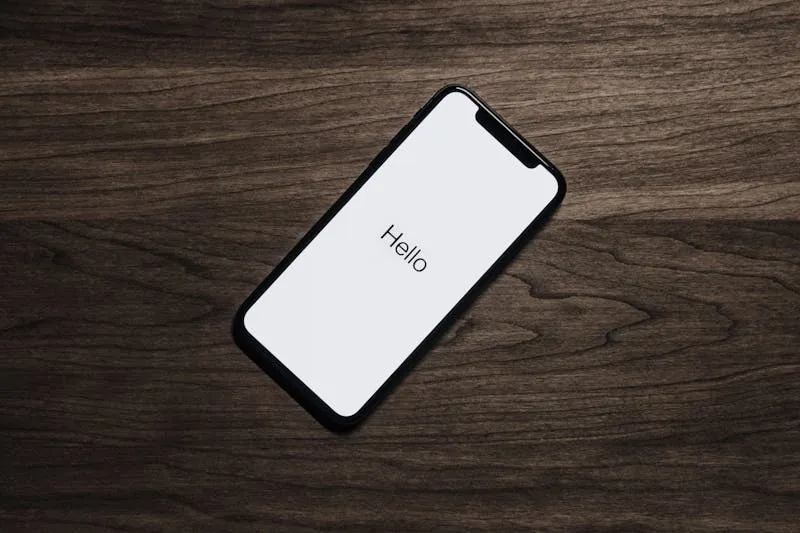
It was an ordinary Thursday evening. My mate Tom rocked up with his new purchase under his arm, wearing the expression of someone who's just been awarded an OBE. He placed his phone on the table, eyes gleaming: "Look at this. iPhone 15 Pro Max. Twelve hundred quid." I looked at him. I looked at the phone. I looked back at Tom. And I said the only honest thing I had to say: "You've paid £600 extra for a processor you'll never fully use and a 5x optical zoom to photograph your Sunday roast from thirty centimetres away."
He wasn't thrilled. But it's the truth. In 2024, the smartphone market has undergone a spectacular transformation: features that were flagship-only at £900 three years ago now appear in devices costing £250. Computational photography, AMOLED 120Hz displays, 67W fast charging, processors capable of running every game on the Play Store without breaking a sweat — all of this is now accessible at prices that won't make you wince at your bank statement.
So yes, I'm writing this article for Tom (and for all the Toms out there). Because the best value for money doesn't mean "as cheap as possible" — it means "the most performance for every pound spent." And trust me, with the right approach, you can find a smartphone that covers 80% of everyday needs for under £350.
In this comparison, I've dissected four price segments, scrutinised the criteria that actually matter (camera, battery, display, software updates, long-term durability), and selected the models that genuinely impressed me. No marketing waffle, no twenty-minute pseudo-tests — just what I've observed through real use.
What actually matters when choosing a smartphone in 2024
Before we talk specific models, we need to agree on what genuinely counts. Because spec sheets are all well and good, but a smartphone is something you live with every day — on the Tube at rush hour, photographing your nephew's birthday cake in a dimly lit kitchen, or trying to make it through a full day without hunting desperately for a charger.
Camera: the number one criterion in 2024
We photograph everything, constantly. Our meals, our outings, our cats (especially our cats), documents we need to sign, price labels at the supermarket. Photography has become the central use case for the modern smartphone. So yes, megapixels matter — but not as much as you'd think.
What actually makes the difference:
- Sensor size: a larger sensor captures more light, producing better low-light photos. It's physics — you can't correct it in software.
- Aperture (f/): the smaller the number (f/1.7 vs f/2.4), the more light the sensor absorbs. Crucial for indoors.
- Software processing: Google excels here thanks to its AI. Samsung tends to over-sharpen. Apple delivers a natural rendering that many people prefer.
- Optical Image Stabilisation (OIS): essential for videos and moving shots. Without OIS, blurry photos multiply.
- DxOMark score: an imperfect but useful benchmark for objectively comparing camera quality.
Before buying, search for real-world photos taken with the model you're considering on Flickr or in GSMArena forums. Manufacturer press shots are retouched beyond recognition — photos from real users don't lie. You'll learn more in ten minutes of browsing than from any spec sheet.
Battery: the mAh myth
4,000mAh, 5,000mAh, 6,000mAh… manufacturers love leading with raw capacity. But a 6,000mAh phone with a 2K 120Hz display and a poorly optimised processor can last less time than a well-managed 4,500mAh. What actually matters:
- Processor efficiency: 4nm chips (Snapdragon 8 Gen 2, Apple A17) consume significantly less power than previous generations.
- Adaptive refresh rate: a display that drops to 1Hz when idle saves considerable energy.
- Charging speed: 67W means 30 minutes to go from 10% to 80%. A genuine quality-of-life improvement.
- Wireless and reverse charging: useful if you have Qi earbuds or a smartwatch.
Display: AMOLED vs LCD, 60Hz vs 120Hz
AMOLED has become near-standard even in the budget tier. True blacks, colour saturation, outdoor readability — it's a real difference in daily use. LCD is effectively dead for anything above rock-bottom pricing.
The 120Hz debate is more nuanced. Objectively, scrolling is smoother and animations feel more natural. But it does consume battery. The good news: most modern smartphones offer adaptive 120Hz that automatically drops to 60, 30, or even 1Hz depending on activity. Result: smoothness and battery life, not a trade-off.
Software updates: the invisible investment
A smartphone that receives security updates for 5 years is a sound investment. A model abandoned after 2 years slowly becomes a security liability — and performance degrades over time. In 2024, the ranking looks like this:
- Apple: 6+ years of updates. The undisputed champion.
- Google Pixel: 7 years of updates from the Pixel 8 onwards. Genuinely impressive.
- Samsung: 4 years OS + 5 years security on recent Galaxy A and S series. Very good.
- Nothing: 3 years OS + 4 years security. Honest.
- Xiaomi / Redmi: 2-3 years. Behind the curve, slowly improving.
- Motorola: variable by model, often disappointing.
A smartphone with only 2 years of update support might look attractive on price, but work out the real cost over 4 years of use. A £300 model maintained for 5 years costs £60 per year. A £180 model abandoned in 2 years costs £90 per year — and you replace it sooner. Longevity is a key component of true value for money.
Under £200: the budget tier surprises

Four years ago, a £150 smartphone was almost guaranteed misery: sluggish processor, unusable camera in any kind of dim light, under-pixelated LCD display and 32GB of storage filled within two weeks. Today, things have shifted — not radically, but enough that certain profiles (grandparents, teenagers who destroy everything, emergency backup phones) can be genuinely well served.
Samsung Galaxy A15 5G (~£150) — The reliable workhorse
Samsung understood that most people simply want a phone that works, with a recognisable interface and service centres everywhere. The Galaxy A15 5G ticks those boxes with ruthless efficiency. Super AMOLED 6.5" Full HD+ display, 5,000mAh battery, native 5G and One UI 6 that feels just like its more expensive siblings — at £150, this is solid.
What I love: An AMOLED panel at this price is genuinely rare. Colours are vivid, blacks are deep. The visual experience well exceeds the price category.
What bothers me: The MediaTek Helio G99 processor is honest but hardly electrifying. Night photos look like impressionist watercolours — charming if you appreciate abstract art, less so if you want to read a menu.
Best for: A child's first smartphone, emergency backup device, casual user who mainly calls, texts and scrolls Instagram.
Xiaomi Redmi Note 13 (~£180) — The category outlaw
Xiaomi plays a dangerous game: offering mid-range specs at budget prices. With the Redmi Note 13, they pull it off again. AMOLED 120Hz display, 108MP main camera (yes, really), 33W fast charging and battery life that comfortably stretches two days with moderate use.
What I love: 120Hz under £200 changes daily life. And 33W fast charging is a comfort you'd normally find £100 higher up the range.
What bothers me: MIUI (recently rebranded HyperOS) remains the most ad-laden, bloatware-filled interface in the industry. It can be cleaned up, but it takes time and patience. And 2 years of updates is simply not enough.
Best for: Tech-savvy users who know how to clean up a system, young people who want a beautiful screen and decent camera without emptying their savings.
Motorola Moto G84 (~£200) — The sensible choice
Motorola offers something others frequently overlook: a near-stock Android interface, clean, fast and free of software pollution. The Moto G84 pushes this further with a 50MP main camera with optical image stabilisation — unheard-of at this price — and a genuinely attractive pOLED 120Hz display.
What I love: Optical stabilisation under £200. My videos no longer look like The Blair Witch Project. It's transformative.
What bothers me: The mono speaker is disappointing, and Motorola's track record on software update consistency is patchy. Two years of OS guaranteed is slim.
In this price bracket, patience pays. These models drop £30-50 in value very quickly after launch. Watch for sales at Currys, John Lewis, or directly through network operators like EE and Three who often bundle deals. I picked up the Redmi Note 12 Pro for £179 (original launch price £249) six months after release. Timing is everything.
£200–£400: the golden zone for value
This is where I spend the most time in this comparison. And for good reason: the £200-400 segment is literally the best place to spend money on a smartphone in 2024. The compromises are reasonable, the performance genuinely good, and you avoid the "premium brand tax" that inflates prices in the upper categories.
Google Pixel 7a (~£350) — My personal top pick
I'll be direct: if I had to recommend a single smartphone for the best value for money of the year, it would be the Pixel 7a. Not because it's the cheapest, not because its specs look the most impressive on paper — but because it delivers the most actual value relative to its price.
The camera first. Google operates in a different league when it comes to software processing. The Pixel 7a with its 64MP sensor and Tensor G2 processor regularly produces photos that surpass smartphones costing twice as much. Night Sight, Computational Photography, Portrait Mode — these aren't marketing words, they're measurable results. DxOMark gives it a score of 132, above flagship Android devices at £800.
Then there's the clean Android experience. No bloatware, no bloated manufacturer interface, no ads in system apps. You start the phone and it's clean, fast and intelligent. The Pixel 7a gets 5 years of security updates — which, in this price range, is significantly above the competition.
What I love: Night photography, pure Android experience, wireless charging (rare at this price), IP67 water resistance.
What bothers me: No microSD slot. 128GB base storage fills up. And the Tensor G2 runs warm under heavy use — not deal-breaking, but noticeable.
Overall score: 9/10. My unreserved recommended purchase in this range.
Samsung Galaxy A55 5G (~£380) — The all-rounder
Samsung has done something admirable with the Galaxy A55: they've pushed part of the S-series DNA down into mid-range pricing. Premium matte glass design, IP67 resistance, Super AMOLED 120Hz Gorilla Glass Victus+ display and a very complete One UI 6.1 experience. It's the smartphone for those who want "the Samsung look" without paying Samsung flagship prices.
The triple camera array is capable: 50MP main with OIS, 12MP ultra-wide and 5MP telephoto. Results are good in good light, acceptable in low light. Not revolutionary, but reliable and consistent — which is what most people actually need.
Samsung has committed to 4 years of OS updates + 5 years of security patches for the Galaxy A55. That's a genuine promise that adds long-term value to the investment.
What I love: Premium finish, IP67, One UI 6.1 packed with features, available through all major UK networks.
What bothers me: Charging caps at 25W when Xiaomi offers 67W at equivalent prices. And the Exynos 1480 processor is slightly behind the Snapdragon 7 Gen 1 found in competitors.
Nothing Phone (2a) (~£330) — The oddity I adore
I'll admit something: the Nothing Phone (2a) surprised me. Not for its specs (decent without being spectacular), not for its camera (good, not exceptional) — but for its overall user experience. Nothing OS 2.5 is one of the cleanest, most coherent and most genuinely attractive Android interfaces on the market. And the Glyph LED interface on the back (yes, LEDs that animate based on notifications) is gimmicky in theory and delightfully addictive in practice.
The Dimensity 7200 Pro offers honest performance for the tier, the 5,000mAh battery with 45W charging is a comfortable combination, and the dual 50+50MP camera produces very acceptable results. Nothing revolutionary — but a coherent whole.
What I love: Nothing OS (finally an alternative to One UI without an inferiority complex), unique design, 45W charging, available at reasonable prices through John Lewis.
What bothers me: No telephoto lens — the second 50MP camera is essentially a second ultra-wide that duplicates the main sensor. For zoom photography, it falls short.
iPhone SE 3rd Gen (~£520 new, ~£350 refurbished) — For the Apple faithful
The iPhone SE remains the only entry point into the Apple ecosystem without emptying your current account. The A15 Bionic chip is formidably efficient — still faster than most mid-range Android processors. iOS is smooth, secure and updated for years. And the camera, thanks to Smart HDR 4 and Neural Engine processing, is genuinely good for a single lens.
But let's be honest: the iPhone SE 3 is a 2022 phone in a 2017 chassis. No Face ID (Touch ID instead), older design language, a tiny 2,018mAh battery that's borderline scandalous, and a 4.7" LCD screen when the world has moved to 6.5" OLED. You're paying for the Apple ecosystem, not the specs.
Best for: Someone upgrading from an older iPhone who wants to keep all their App Store purchases, AirPods, Apple Watch — without spending £900.

Spec sheets don't tell the whole story. A smartphone with a 108MP sensor and f/2.4 aperture will frequently take worse low-light photos than a 50MP model at f/1.8. More megapixels ≠ better photos. Always check real-world photo samples on sites like GSMArena or in user forums before committing to a purchase.
£400–£600: accessible premium
Above £400, compromises become rarer. Processors are powerful (often Snapdragon 7+ Gen 2 or Apple A-series), displays are excellent, triple camera systems are genuinely capable. This is the "I use my phone intensively and want nothing to slow me down" zone.
Google Pixel 8 (~£550) — Artificial intelligence in your pocket
The Pixel 8 is a masterful evolution from the 7a with a genuinely differentiating proposition: embedded artificial intelligence. The Tensor G3 isn't the most powerful chip on the market in raw benchmarks — but it's the most intelligent for everyday tasks.
The camera is at flagship level. Best Take (selects the best facial expressions across a burst of group shots), Audio Magic Eraser (removes background noise from videos), an evolved Magic Eraser for removing unwanted objects from photos — these are features that genuinely change daily photography habits.
And crucially: 7 years of guaranteed updates. This is historic for Android. Bought in 2024, your Pixel 8 receives updates until 2031. Against competitors abandoning you in 2026 or 2027, this is a compelling long-term argument.
What I love: AI photography (best in category), 7-year updates, gorgeous Super Actua 120Hz display, Gemini integration, available from EE, O2, Vodafone and Three.
What bothers me: The Tensor G3 is less thermally efficient than the Snapdragon 8 Gen 2 found in competitors. 4K30 recording causes the phone to warm notably.
Samsung Galaxy S23 FE (~£450) — Flagship quality, sensible price
Samsung has a tradition of Fan Edition devices: take a flagship from the previous year, trim a few features, reduce the price meaningfully. The S23 FE is one of their finest executions of this formula. You get the Snapdragon 8 Gen 1 (still an absolute powerhouse), AMOLED 120Hz display, the S23's triple camera and the promise of 4 years OS + 5 years security for £450.
The triple camera (50MP + 12MP ultra-wide + 8MP 3x telephoto) is very capable. The 3x optical zoom at this price is a genuine advantage for clean portraits and concert photography. Wireless charging and reverse wireless charging are both present.
What I love: Pure price-to-performance ratio, 3x telephoto, Snapdragon 8 Gen 1 raw power, mature and feature-rich One UI.
What bothers me: Charging caps at a disappointing 25W. For a premium device, this feels like a deliberate omission. The 50MP main sensor also trails behind the standard S23's optics.
Nothing Phone (2) (~£550) — Design maturity
Having loved the Phone (2a), the Phone (2) represents a coherent step upward. The Snapdragon 8+ Gen 1 is a proper flagship-grade processor, the LTPO 120Hz screen is brilliant (up to 1,600 nits in sunlight), and the 4,700mAh battery with 45W charging delivers comfortable two-day autonomy in normal use.
Photography improves as well: 50MP main sensor with OIS and Sony IMX890, plus a 50MP ultra-wide. Results rank among the best in the segment, even if Nothing hasn't yet reached Google's or Apple's level of software processing sophistication.
What I love: Proper flagship hardware, even more polished Nothing OS, more expressive Glyphs, a design that genuinely turns heads at the office.
What bothers me: Still no telephoto lens. For capturing detail at distance, you'll need to look elsewhere.
In the £400-600 range, keep an eye out for deals on N-1 models. The Pixel 8 regularly drops to £479 during sales events. The Galaxy S23 FE has touched £379 multiple times. These near-flagship phones lose value rapidly when successors launch — which is precisely when to buy. Amazon's January sales and Black Friday are prime hunting grounds.
Over £600: when spending more is actually justified
Above £600, we enter pure flagship territory. The question is no longer "is this worth the money" in general — but "is THIS worth the money for ME, with MY use patterns." And honestly, for 80% of people, the answer is no. But for the remaining 20%, let me explain when it makes sense.
Samsung Galaxy S24+ (~£850) — The definition of "no compromise"
The Galaxy S24+ is an exercise in total refinement. Snapdragon 8 Gen 3 (the most powerful Android chip in the industry), Dynamic AMOLED 120Hz display at 2,000 nits, triple camera with 10x optical zoom, IP68 resistance, 45W charging, Galaxy AI integrated. It's the daily-use Ferrari — everything works flawlessly, nothing overheats, everything is optimised.
The 10x optical zoom is transformative for certain use cases. Concerts, sports events, wildlife, theatre performances — 10x optical range without quality loss is something no sub-£600 smartphone offers. If you regularly photograph subjects at distance, this matters enormously.
Galaxy AI features (Circle to Search, real-time transcription, live interpreter) are genuinely useful daily tools — not gadgetry. They give a preview of how smartphones will be used in two to three years' time.
iPhone 15 (~£799) — The safe pair of hands
The base iPhone 15 received meaningful upgrades this cycle: A16 Bionic chip, Dynamic Island (finally), USB-C charging (finally overdue), and the 48MP camera sensor inherited from the iPhone 14 Pro. Apple's photography remains among the market's best for colour rendering consistency, calibration and video quality (videographers adore Apple's chromatic fidelity).
The Apple argument remains the ecosystem: seamless AirDrop between Apple devices, Handoff between iPhone and Mac, AirPlay, years of updates, App Store security. Available from all major UK networks — EE, O2, Vodafone and Three all offer competitive deals, particularly on trade-in programmes.
iPhone 15 Pro (~£1,099) — For Tom, who probably won't read this article
My mate Tom's phone. I'll be honest: the titanium frame, 5x optical zoom, ProRes Cinematic Mode, customisable Action Button — all excellent. For a serious mobile photographer or videographer, the iPhone 15 Pro Max might genuinely be the only tool that does everything better than everything else.
But for 95% of everyday use, you won't notice the difference compared to a base iPhone 15 or a Pixel 8 at £550. The question remains unchanged: do your actual use patterns justify the investment?
Refurbished: the smart buyer's secret weapon
I'd be doing you a disservice not to discuss refurbished in a value-for-money article. Because this is where the very best deals hide, full stop.
The refurbished market in 2024 is genuinely mature. Backmarket, Music Magpie, the certified refurbished programmes at John Lewis and Currys — the guarantees are real (minimum 12 months legal, often 24 months via certifications), phones undergo comprehensive technical testing, and the savings are often 30-50% on new.
Concrete comparison: iPhone 14 refurbished vs iPhone 15 new
| Model | Price | Chip | Main camera | Updates remaining |
|---|---|---|---|---|
| iPhone 15 new | ~£799 | A16 Bionic | 48MP | 6+ years (estimated) |
| iPhone 14 refurb Grade A | ~£520 | A15 Bionic | 12MP (excellent processing) | 4+ years remaining |
| Saving | ~£280 | Negligible in real use | Negligible in real use | Slightly less |
Nearly £280 saved for a practical difference that's almost imperceptible in daily use. Those £280 buy you AirPods, a premium case, a year of Apple One and there's still money left over.
Refurbished: what to watch for
- Battery health: insist on Grade A or A+ certification confirming 80%+ battery capacity. Below that, you'll be disappointed within six months.
- The seller: Backmarket is the benchmark. Music Magpie is reliable for UK buyers. Amazon Warehouse and eBay require more due diligence — check seller ratings carefully.
- Accessories: refurbished phones are usually sold without charger or cable. Budget an extra £15-25 for a good USB-C charger.
- The warranty: minimum 12 months legally required. Prefer 24 months where available — John Lewis's certified range typically offers this.
- Network locks: check whether the handset is locked to a specific network. Unlocked devices offer far more flexibility for switching carriers.
The best time to buy refurbished is 6-8 weeks after a new flagship launch. People flood the market selling their previous handsets, prices drop sharply, and you pick up an excellent N-1 model at a floor price. I got my Pixel 6 Pro for £380 three months after the Pixel 7 launch. Perfect condition. Zero regrets. The timing trick works every single year.
Longevity and software support: the real cost of a smartphone
We talk endlessly about purchase price. We rarely discuss total cost of ownership over four years. Yet it's the calculation that changes everything in the value equation.
Working out the actual annual cost
Here's how I calculate the true cost of a smartphone:
Annual cost = (Purchase price − Estimated resale value) ÷ Years of use
Concrete examples:
- iPhone 15 new at £799, used for 4 years, sold for ~£280: real cost = (799 - 280) / 4 = £130/year
- Redmi Note 13 at £180, used for 3 years, sold for ~£40: real cost = (180 - 40) / 3 = £47/year
- Pixel 8 at £550, used for 5 years, sold for ~£180: real cost = (550 - 180) / 5 = £74/year
The Pixel 8, over 5 years, works out cheaper per year than the Redmi Note 13 over 3 years — while delivering a considerably better experience throughout. That's what genuine value for money looks like.
Security updates: non-negotiable
A smartphone without security updates is a walking vulnerability. Your banking apps, personal data, photos — all passing through a device that's no longer protected. This isn't fearmongering; it's basic information security.
The NCSC (National Cyber Security Centre) in the UK explicitly recommends keeping devices updated and replacing devices that no longer receive security patches. Google and Apple are exemplary here. Most others have ground to make up.
Repairability: the emerging criterion
Apple's self-repair programme, Samsung's partnership with iFixit, the Right to Repair legislation progressing through UK and EU law — repairability is increasingly a consumer choice criterion. A screen replacement that costs £80 instead of £200, a replaceable battery — these can extend a smartphone's useful life by two to three years.
In the UK, you can check repairability scores on the iFixit website and cross-reference with Which? reviews, which increasingly include repairability assessments in their testing methodology.
Verdict and recommendations by profile
Time to make firm calls. And I'm going to do so clearly, without the usual "it depends on your needs" that serves no one. Yes, it depends — but here's what I actually recommend for the most common profiles.
You want the best absolute value for money, budget ~£350 → Google Pixel 7a
No hesitation whatsoever. Exceptional camera for the price tier, clean Android without software clutter, wireless charging, IP67, 5 years of updates. If you take one recommendation from this entire article, make it this one.
You want to stay in the Samsung ecosystem, budget ~£380 → Galaxy A55 5G
Premium finish, IP67, One UI 6.1 and 4 guaranteed years of OS updates. An excellent smartphone that won't disappoint. Available competitively through all major UK networks.
You want something distinctive at a reasonable price, budget ~£330 → Nothing Phone (2a)
Nothing OS is a daily pleasure. The design turns heads. Performance is solid. An excellent choice for standing out from the crowd without staking everything on camera performance.
You want the best Android without overspending, budget ~£550 → Google Pixel 8
The best Android camera in the category, 7 years of updates, Gemini AI integration, the most beautiful display Google has ever shipped. It's not cheap, but use it for 6-7 years and the annual cost is unbeatable.
You want to enter the Apple ecosystem without going broke → iPhone SE 3rd Gen refurbished Grade A (~£350)
The intelligent Apple entry point. Not the most modern chassis, but iOS, Apple security and the full ecosystem for £350 is hard to beat. Available from Music Magpie, Backmarket, and certified refurbished at John Lewis.
You genuinely need the best phone available → iPhone 15 Pro or Galaxy S24 Ultra
In which case you don't really need this article. But if you've read this far, perhaps you're still hesitating — and that hesitation is healthy. Think honestly about your actual use patterns before reaching for your card.
Is a £200 smartphone really good enough in 2024?
For basic use — calls, texts, social media, web browsing, occasional photos in good light — absolutely. Models like the Samsung Galaxy A15 5G or Redmi Note 13 offer AMOLED displays, 5G and decent battery life. Where it struggles: low-light photography, demanding games, and software updates that stop too soon. If you use your phone intensively, aim for £300-400 for a meaningfully better experience.
Android or iOS — which should I choose in 2024?
It depends more on your existing ecosystem than on intrinsic quality. If you have a Mac, AirPods, an Apple Watch — iOS is the best integrated experience. If you don't have other Apple products, Android gives you far more freedom, customisation and price variety. For security, iOS holds a slight edge. For features, Android is generally more advanced. Both are excellent in 2024 — this is a genuine preference call, not a quality call.
Is refurbished actually reliable?
Buying through reputable platforms like Backmarket, Music Magpie, or certified refurbished programmes at John Lewis and Currys — yes, genuinely. Grade A+ phones are tested, warrantied and rarely present problems. The key: verify battery health (ideally 85%+ capacity), opt for the longest available warranty (24 months beats 12 months), and test the device immediately on arrival. Returns are generally straightforward within 14-30 days if something's off.
How many megapixels do I actually need?
For 99% of use cases (social media photos, standard prints, sharing in messaging apps), 12 to 50MP is more than sufficient. Sensors at 108MP or 200MP primarily enable aggressive cropping — useful for digital zoom quality, less useful if you never zoom at all. What matters far more: sensor size, aperture and software processing quality. A well-processed 50MP f/1.8 will beat a mediocre 200MP f/2.4 in almost every real-world scenario.
Should I buy now or wait for the next release?
If you wait for the next release, you'll always be waiting — there's a new flagship every six months. The pragmatic rule: if your current phone is genuinely holding you back (constant slowdowns, missed shots, battery dead by 3pm), change now. Otherwise, wait for sales events or the 6-8 weeks after a major new launch (Galaxy S25 in January 2025, iPhone 17 in autumn 2025) to benefit from price drops on preceding models. UK retailers like Currys and Amazon run predictable sale cycles.
Do I need to pay extra for 5G?
In 2024, 5G is available on many models from around £150, so the price premium has narrowed considerably. Coverage in UK cities is reasonably strong, particularly on EE and Vodafone. In rural areas, meaningful 5G benefit remains limited. The main advantage: download speeds on the move (fast downloads, high-quality streaming). For someone predominantly on home Wi-Fi, 5G is a convenience rather than a necessity. For a heavy mobile data user, it's worth the modest premium it now commands.
- Which? — Smartphone Reviews — Independent UK consumer testing with rigorous methodology
- TechRadar — Best Phones — Comprehensive hands-on reviews and ranked recommendations
- DxOMark — The global benchmark reference for smartphone camera and video quality
- GSMArena — Exhaustive technical database with standardised battery and performance tests
- Tom's Guide — Best Smartphones — In-depth reviews including real-world battery life measurements