
They had been together for thirteen years. Two children, a mortgage, a Sunday morning ritual with fresh pastries and Radio 4. When she told me "we love each other, but we don't desire each other anymore", her voice didn't waver — she was stating a fact, with that clarity that sometimes hurts more than anger. This couple wasn't in crisis, nor unhappy. Somewhere between the second baby and the kitchen renovation, desire had simply stopped knocking at the door.
If you recognise yourself in this description, know that you're far from alone. According to a 2023 YouGov UK survey, 41% of couples together for more than ten years report a significant decline in sexual desire — rising to 56% after fifteen years. This is neither inevitable nor a sign of failure. It's a documented, studied phenomenon, and most importantly: a reversible one.
This guide won't promise you'll "rediscover the passion of your early days." It offers something more ambitious: understanding the real mechanisms behind eroding desire, and building an intimacy that is richer, more conscious and more enduring than that initial blaze.
Why desire erodes — the real reasons

Let's clear the ground first: declining desire in a long-term couple is not a symptom of falling out of love. Therapist Esther Perel — whose work remains the gold standard on this subject — sums up the fundamental tension in a single sentence: "Desire needs distance, love needs closeness." The stronger the domestic intimacy you build, the more you inadvertently create conditions that smother erotic energy.
Several factors combine, often insidiously:
Excessive familiarity
After five, ten, fifteen years, you know every inch of your partner's body. Their morning habits, the way they brush their teeth, the exact sound of their chewing. This intimate knowledge — wonderful for trust — erodes mystery. Yet erotic desire feeds precisely on a form of otherness, a gap to be bridged. When you know everything, there's nothing left to discover — or so you believe.
Mental load and exhaustion
Desire isn't a switch you flip independently of everything else. It exists within a global ecosystem: sleep, work stress, domestic burden, parenting worries. A study published in the Journal of Sex & Marital Therapy (2022) found that unequally distributed mental load is the top predictor of desire decline in women in heterosexual relationships — more than age, health, or even perceived relationship quality.
The love-desire confusion
Our romantic culture maintains the illusion that love and desire are a single feeling. They are not. Love takes root in stability, predictability, "we." Desire is born in the gap, the risk, the "I." When a couple fuses too completely — eating the same, thinking the same, finishing each other's sentences — the space for desire compresses until it vanishes.
Perel's paradox in practice: couples who maintain spaces of individual autonomy — separate activities, their own friendships, alone time — report more sustained desire than those who "do everything together." Temporary separation feeds longing, and longing feeds desire.
The sexual script
Over time, most couples develop an implicit sexual script: same initiation, same gestures, same sequence, same position, same day of the week. This script provides reassurance — you know what will happen, so you avoid rejection and awkwardness. But it also transforms sex into a domestic routine, much like the weekly supermarket shop. Arousal, by definition, is born of the unexpected.
The neurochemistry of desire in long-term couples
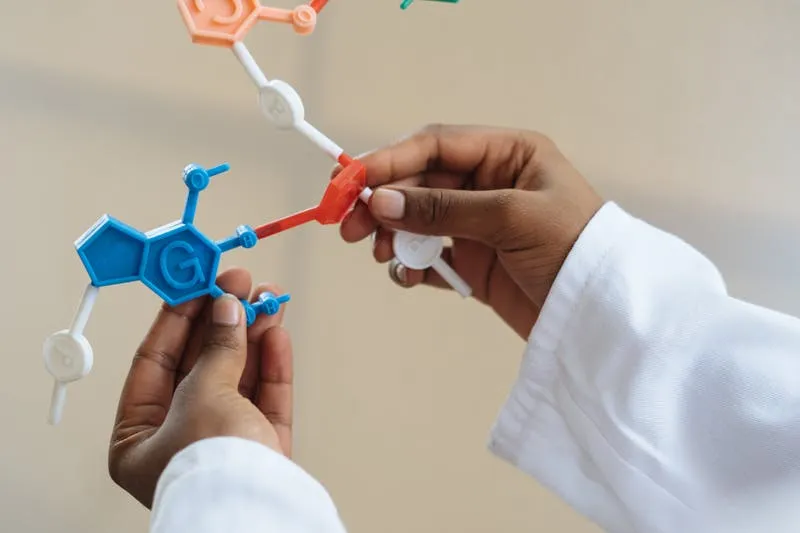
To understand why your body no longer responds as it did on those first dates, you need to look at what's happening beneath the neurochemical bonnet.
Phase 1 — The blaze (0 to 18 months)
The early months of a relationship are governed by an explosive chemical trio: dopamine (the pleasure and reward neurotransmitter), norepinephrine (arousal, racing heart) and phenylethylamine (euphoria, obsession). This cocktail is literally addictive — brain scans show that the areas activated in new lovers are the same as those in cocaine users. Your brain is drugged, and desire seems inexhaustible.
Phase 2 — Attachment (18 months to 4 years)
Gradually, dopamine gives way to oxytocin and vasopressin — the hormones of attachment, bonding and trust. This is the chemistry that makes you feel "at home" with your partner. Wonderful for building a life together. Less spectacular for eroticism.
Phase 3 — Homeostasis (beyond 4 years)
The brain reaches a new equilibrium. Dopamine levels associated with your partner normalise — they no longer trigger the same neurochemical cascade. It's not that desire is "dead": it's that the reward circuit has acclimatised. In neuroscience, this is called hedonic habituation.
What neurochemistry does NOT say: these mechanisms are not a death sentence. The brain remains plastic throughout life. New experiences with the same partner can reactivate dopaminergic circuits — provided you break the routine. Biology explains the tendency; it does not determine destiny.
Researcher Emily Nagoski proposes an essential complementary model: the accelerator and brakes system. Every person has an accelerator (what activates desire) and brakes (what inhibits it). In long-term couples, the problem is often not a weak accelerator but overpowered brakes: stress, accumulated resentment, chronic fatigue, poor body image.
Nagoski's exercise: separately list your accelerators (what awakens your desire) and your brakes (what blocks it). Share these lists with your partner. Often, the solution isn't "adding more excitement" but removing brakes — tidying the bedroom, resolving a lingering conflict, getting an extra hour of sleep.
Myths that sabotage your intimate life
Before rebuilding, some toxic beliefs need demolishing — beliefs that generate pointless guilt and prevent you from seeking real solutions.
Myth #1: "If we truly loved each other, desire would come naturally"
This is probably the most destructive myth. It implies that the absence of spontaneous desire signals a lack of love. In reality, spontaneous desire — the kind that appears from nowhere — is the norm at the start of a relationship but is replaced in most individuals by responsive desire: desire that emerges in response to stimulation. It's no less authentic; it's simply a different mechanism.
Myth #2: "The ideal frequency is X times a week"
There is no "normal" frequency. Studies show an average of one to two encounters per week for cohabiting couples, but this average masks enormous variation. What matters isn't the number — it's the desire gap between partners and how that gap is managed.
Myth #3: "We need to recapture what we had at the start"
You won't recapture the neurochemical passion of the first months — and that's good news. What you can build is more interesting: an eroticism grounded in deep knowledge of the other, a chosen rather than compulsive intimacy, a conscious rather than impulsive desire.
Myth #4: "Desire should be symmetrical"
In every couple, there is a desire gap — one person who wants more, one who wants less. This gap is normal, fluctuating, and has nothing to do with love. Problems arise when the gap becomes a power dynamic, a source of reproach, or a taboo subject.
Trap to avoid: never turn sexual frequency into a health indicator for your relationship. Some very fulfilled couples make love once a month; some suffering couples do it three times a week out of obligation. The relevant marker is satisfaction, not frequency.
Intimate communication: saying what's never said

Here's the paradox: long-term couples often struggle more to discuss sexuality than new couples do. The reason is simple — there's more to lose. After ten years, raising an unmet need or unspoken desire means questioning a shared construction. It's dizzying.
Yet all the research converges: the quality of sexual communication is the single best predictor of sexual satisfaction — ahead of frequency, physical compatibility, or even attraction.
Rules for a productive intimate conversation
Choose the right moment. Never in bed, never right after a frustrating encounter, never when one of you is exhausted. Favour a neutral moment — a walk, a quiet dinner — where words can flow without pressure.
Use "I" rather than "you." "I'd like us to try…" rather than "You never…". The distinction seems cosmetic; in practice, it determines whether the conversation will be an exploration or a trial.
Receive without judging. If your partner expresses a desire, a fantasy, a frustration — resist the urge to react immediately. Listen. Ask for clarification. Acknowledge the trust it represents.
Name the fears. "I'm worried you'll think I'm odd if I say this." "I'm afraid you'll think I don't love you anymore." Naming the fear strips it of its power.
The "3-3-3" exercise: each partner shares 3 things they love about your intimate life, 3 things they'd like to explore, and 3 things that hold them back. Absolute rule: zero commentary during the exchange. Discussion comes afterwards, in a separate moment.
When communication is blocked
Sometimes unspoken words have calcified into resentment. Every attempt at conversation turns into blame, silence, or tears. In such cases, the help of a third party — a couple's therapist or sex therapist — isn't an admission of defeat but an act of courage. Some words need a safe space before they can be spoken.
Reconnection routines: desire as practice

Desire in a long-term couple can no longer be left to chance. It requires intentionality — not in the mechanical sense of "Tuesday is sex night," but in the sense of consciously attending to your partner as an object of desire, not merely a parenting teammate or an affectionate housemate.
Daily micro-reconnections
Researcher John Gottman identified what he calls "bids for connection" — those small daily solicitations (a look, a comment, a touch in passing) through which a partner seeks contact. Couples who respond positively to these bids more than 86% of the time have a significantly higher probability of maintaining a satisfying sex life.
In practice, this means:
- Truly looking at each other at least once a day — not whilst checking your phone, not whilst loading the dishwasher. Five seconds of intentional eye contact.
- Touching without sexual intent — a hand on the small of the back, fingers brushing the nape of the neck, a twenty-second embrace (the minimum time to trigger an oxytocin release).
- Ritualising transitions — saying a proper good morning, a proper good night. Not a grunt from under the duvet. A kiss, a look, a word.
The reinvented date night
The "date night" concept has become a cliché, but the principle remains valid — provided you move beyond the restaurant-cinema-bed formula. What reignites desire isn't the date itself but shared novelty. A classic study by Aron and Aron (2000) showed that couples who engage in new, stimulating activities together report a significant increase in both relational and sexual satisfaction.
Ideas that actually work:
- Taking a class together (cooking, salsa, climbing, pottery) — shared awkwardness builds complicity
- Exploring an unfamiliar neighbourhood in your own city — playing tourist disrupts routine
- Attending something outside your usual interests — a jazz gig, a rugby match, an immersive exhibition
- Travelling together, even briefly — unfamiliar settings reactivate dopaminergic circuits
The alternation rule: every other date, your partner chooses the activity without consulting you — and vice versa. The element of surprise, however modest, recreates the unpredictability desire needs.
Erotic novelty: breaking the script

The sexual script — that implicit choreography you've developed together — is the primary enemy of arousal in a long-term couple. The problem isn't that the script is "bad"; it's that it's become too predictable to activate dopamine.
The progressive variations method
There's no need to revolutionise everything at once — that creates more anxiety than desire. Start by changing one variable at a time:
- Location: not the bedroom. The living room, the bathroom, a hotel for the night.
- Timing: not Saturday evening. Morning, midweek. During a lunch break.
- The initiator: if the same partner always initiates, swap roles.
- The pace: instead of a full encounter, spend an evening exploring touch alone, with no penetrative goal.
- Verbal communication: say aloud what you're feeling, guide your partner's hand, whisper what feels good.
Consensual erotic exploration
Beyond everyday variations, some couples choose to explore bolder territory. Shared erotic reading, light role play, sex toy introduction, fantasy sharing… These explorations don't suit everyone, and that's perfectly fine. The only non-negotiable rule: enthusiastic consent from both partners.
A useful tool is the "yes / maybe / no" list: each partner independently categorises a list of practices into these three columns, then you compare. Mutual "yeses" are safe exploration ground. Mutual "maybes" deserve discussion. "Nos" are respected without negotiation.
Hard boundary: erotic novelty must never be imposed, negotiated under pressure, or used as a bargaining chip. "If you loved me, you'd try it" is manipulation, not an invitation. A partner who doesn't wish to explore a practice owes no justification.
Rediscovering sensuality without performance pressure
One of the most insidious traps in long-term couples is performance-oriented sex: it has to "work," orgasm must be reached, duration must be satisfactory, both partners must climax. This pressure turns sex into a sporting event — and performance anxiety is one of the most powerful sexual brakes.
Sensate focus
Developed by sexologists Masters and Johnson in the 1960s, sensate focus remains one of the most effective tools for couples who have lost touch with sensuality. The principle: touching each other mutually with no sexual goal whatsoever, concentrating solely on physical sensation.
The three-phase protocol:
- Phase 1: non-genital touching. Explore your partner's body (back, arms, legs, stomach) with your hands, focusing on texture, warmth and reactions. Genitals and breasts are explicitly off-limits.
- Phase 2: touching that includes genital areas, but still without any goal of arousal or orgasm. Explore, don't stimulate.
- Phase 3: gradual reintroduction of full sexual activity, with the emphasis on shared pleasure rather than performance.
This protocol sounds simple — it is devastatingly effective. By removing the pressure of "results," it allows desire to resurface naturally, freed from anxiety.
The body awareness bath: before a sensate focus session, each take five minutes to scan your own body. Where are you tense? Where do you feel pleasure? This self-connection prepares the ground for connecting with each other.
Slow sex and erotic mindfulness
The slow sex movement proposes radically decelerating the pace of sexual encounters — not through lack of passion, but through excess of presence. Drawing on mindfulness applied to sexuality means: being entirely present in your body, in your partner's body, in the moment. No script to follow, no mental stopwatch, no comparison with a fantasised ideal.
In practice: decelerate every gesture. Breathe together. Notice micro-sensations. Let pleasure build in waves rather than forcing it in a straight line towards orgasm. For many couples, this approach represents a revolution — and a rediscovery.
When and how to see a sex therapist

Seeing a sex therapist still carries stigma — unjustly. In the UK, accredited psychosexual therapists are trained professionals (COSRT or BACP registered) who support couples within a structured, compassionate framework.
Signs that warrant a consultation
- The desire gap has become a source of suffering for one or both partners
- You can no longer discuss it without the conversation turning to conflict
- Functional difficulties (pain, erectile issues, anorgasmia) have become established
- One partner avoids physical contact — even non-sexual contact
- Infidelity is in play — past, present or fantasised
- You've tried on your own for several months without improvement
Finding the right professional
In the UK, look for COSRT (College of Sexual and Relationship Therapists) or BACP accreditation. Word-of-mouth or professional directories are more reliable than Google searches, which mix qualified practitioners with unregulated coaches. Sessions typically cost £60–£120, and some private health insurers cover them partially.
What happens in a session
Forget the Hollywood clichés. A psychosexual therapy session involves talking — not practice. The therapist helps the couple articulate what remains implicit, suggests exercises to try at home (like the sensate focus described above), and works on relational patterns that maintain the blockage. A typical course of therapy lasts 8 to 15 sessions.
Real stories: three journeys back to desire

Sophie and Marc, 42 and 44 — 16 years together. "We were having sex out of duty, once a month, on Saturdays. It had become a chore for me and a humiliation for him. Our sex therapist banned intercourse for six weeks. Just touching, massage, kissing. The deliberate frustration reignited something we thought was extinct. Now it's less frequent than at the start, but infinitely more intense."
Leïla and Tom, 38 and 40 — 12 years together. "Our problem was the unspoken. He thought I no longer desired him; I thought he wasn't making any effort. In truth, we were both terrified of rejection. One weekend, after a glass too many, we laid everything on the table — fantasies included. It was terrifying and liberating. We haven't tried everything, but simply knowing what the other desires changed everything."
Claire and Nadia, 36 and 34 — 9 years together. "We discovered that our sexual script had become ultra-codified — always the same roles, the same gestures. We began exploring slow sex, decelerating completely. The first sessions were frustrating; it felt like we weren't 'doing' anything. Then one evening, we rediscovered each other's bodies as if it were the first time. Hard to explain — it was familiar and new all at once."
FAQ — desire in long-term relationships
Is it normal to no longer desire my partner after 10 years?
Extremely common, and it doesn't mean you no longer love them. Neurochemical habituation, domestic routine and mental load are well-documented factors. What matters is recognising the phenomenon and deciding, together, to address it.
Can low desire have a medical cause?
Yes. Hormonal imbalances (thyroid, testosterone, menopause/perimenopause), certain medications (antidepressants, hormonal contraceptives, blood-pressure drugs) and chronic pain can all significantly affect desire. A medical check-up is advisable if the decline is sudden or accompanied by other symptoms. Your GP or an NHS sexual health clinic is a good starting point.
Is "sex-scheduling" (planning intimacy) a good idea?
Contrary to popular belief, planned intimacy can work — provided you schedule availability, not the act itself. Blocking an evening to be together, phone-free and obligation-free, creates a space where desire can emerge. It isn't "artificial" — it's intentional, like a date night.
What if my partner refuses to discuss it?
Respect the immediate refusal, but don't give up permanently. Express your need without pressure: "This matters to me, and I'd love us to talk about it when you feel ready." If the blockage persists, suggest the mediation of a professional — sometimes a third party makes the words easier.
Does pornography help or hinder desire in couples?
Research is nuanced. Moderate consumption that is shared and discussed can be an exploration tool. Solitary, hidden, compulsive consumption is associated with decreased conjugal sexual satisfaction and unrealistic expectations. The key is transparency and intentional rather than compensatory use.
Is opening the relationship a solution to declining desire?
Open relationships (polyamory, swinging) can suit some couples — but they never "fix" a struggling sex life. Couples who manage openness successfully are, paradoxically, those who already have excellent sexual communication. Opening a relationship to fill a gap typically adds complexity to an unresolved problem.
At what age does desire naturally decline?
There is no threshold age. The notion of "natural decline" is vastly overstated. Studies show that individuals aged 70 and above maintain active, satisfying sex lives. The most determining factors are not age but overall health, relationship quality and the absence of taboo around ageing sexuality.
Sources and references
- Esther Perel, Mating in Captivity (2006) — Harper
- Emily Nagoski, Come As You Are (2015) — Simon & Schuster
- YouGov UK, Sex & Relationships Survey, 2023
- Journal of Sex & Marital Therapy, vol. 48, 2022
- Aron, A. et al., "Couples' Shared Participation in Novel Activities", Personal Relationships, 2000
- Gottman, J., The Science of Trust, 2011 — Norton