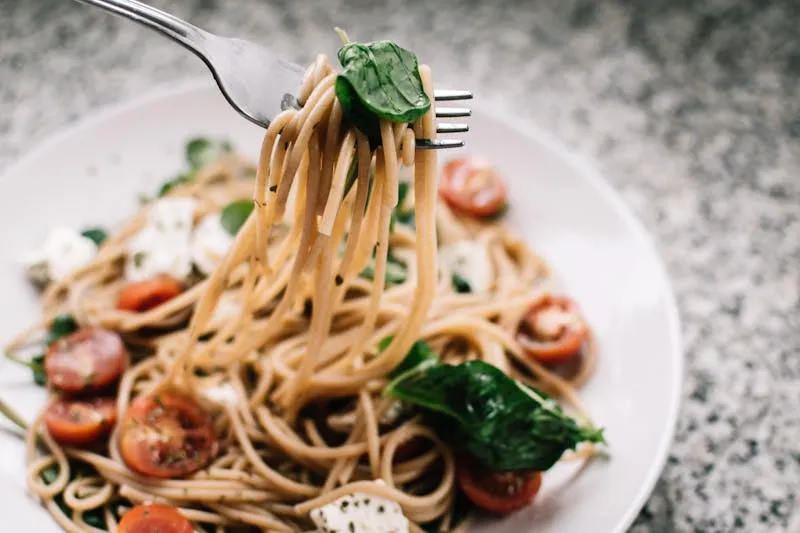
There's a precise moment, in the life of anyone who cooks, when you realise that boiling water in one pan for the pasta AND making the sauce in a frying pan beside it AND keeping an eye on the veg in a third vessel is, objectively, an absurd system. Three containers, three cooking times to synchronise, three things to wash up. For pasta. Pasta.
I had that moment on a Tuesday evening in November, standing in front of my sink full of washing up, wondering why the simplest dish in the world required the logistics of a house move. And then Martha Stewart — yes, Martha Stewart — published that one pot pasta recipe that broke the internet. The idea: everything in a single pan. Pasta, tomatoes, onions, garlic, basil, olive oil, water. Bring to the boil, stir, wait. Done.
I was sceptical. The Italian in me (by adoption) was screaming heresy. But I tried it. And I understood that one pot pasta isn't a lazy shortcut — it's a brilliant culinary principle. The starch from the pasta naturally thickens the sauce. Flavours concentrate instead of dispersing. The result is often MORE creamy and MORE flavourful than the classic method.
After five years of obsessive experimentation, here are my best recipes — from the classics to the genuinely surprising.
On the menu
The one pot pasta principle — and why it works
One pot pasta rests on a simple principle: cook the pasta directly in the sauce (or in a flavoured liquid) instead of separately in plain water.
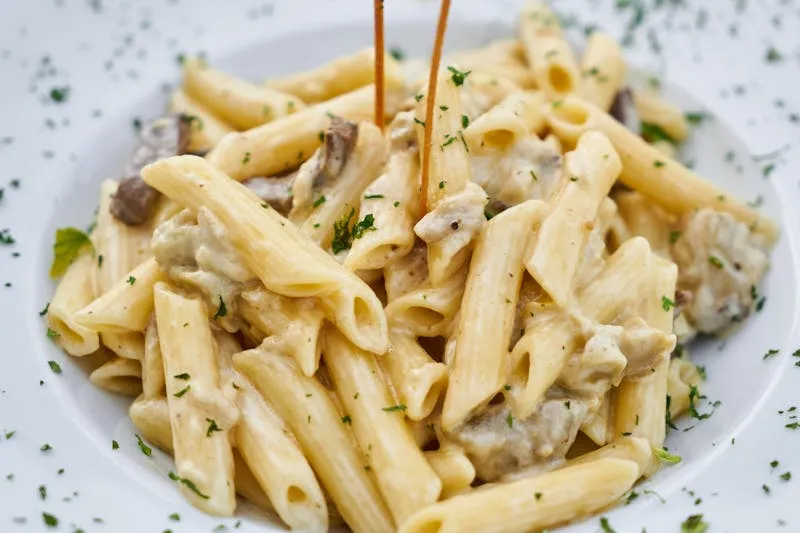
Why it's more than a gimmick:
When pasta cooks in lots of water, the starch it releases gets diluted and thrown away when you drain. In a one pot, that starch stays in the pan and naturally thickens the liquid into a creamy, clinging sauce — without adding cream. It's the same principle Italians use when they "mantecare" (toss) pasta with cooking water in the sauce pan.
Plus, the pasta absorbs the flavours of the cooking liquid instead of being flavoured after the fact. The taste is literally IN the pasta, not just on it.
Kristina's tip — Use short pasta (penne, fusilli, farfalle, rigatoni) for one pot. Spaghetti works too but you need to snap it in half (I know — sacrilege — but it's necessary so it stays submerged). Long pasta sticks together more easily in a one pot.
The kit:
- A large saucepan or deep pan (minimum 24 cm diameter, 4–5 litres)
- A lid (important: it traps steam that helps the cooking)
- A wooden spoon or spatula for stirring
- That's it. Genuinely it.
The classics — 5 tried-and-tested recipes
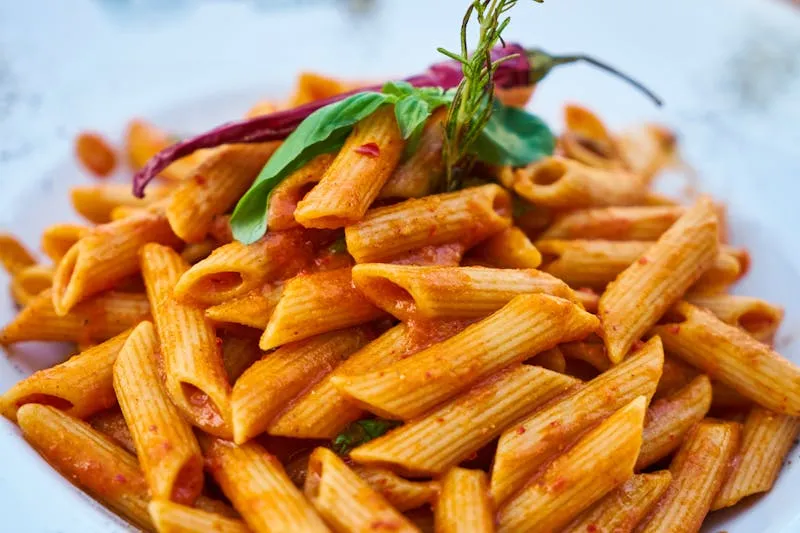
1. The classic tomato-basil (the Martha Stewart recipe, tweaked)
In a large pan, put: 350 g penne, 1 tin chopped tomatoes (400 g), 1 sliced onion, 3 sliced garlic cloves, 1 tsp chilli flakes, a big handful of fresh basil, 2 tbsp olive oil, 700 ml water, salt, pepper. High heat until boiling, then medium, lid off, stirring every 2–3 minutes. 12–14 minutes. When the pasta's al dente and the liquid has formed a sauce, add grated Parmesan. This is the founding one pot — the one where it all begins.
2. Express one pot bolognese
Brown 250 g mince in a drizzle of oil, 3–4 minutes, breaking it up. Add 1 sliced onion, 1 grated carrot (yes, grated — it melts and adds sweetness), 2 garlic cloves. 2 minutes. Add 1 tin chopped tomatoes, 600 ml water or stock, 350 g rigatoni, 1 tsp oregano, salt, pepper. Boil, then medium heat, lid ajar, 14 minutes, stirring regularly. Parmesan to finish. It's not nonna's bolognese — it's Tuesday night bolognese, and it's genuinely convincing.
3. One pot alla norma (aubergine-ricotta)
Dice 1 aubergine into 2 cm cubes. Brown in 3 tbsp olive oil until golden (5 min). Add 2 garlic cloves, 1 tin chopped tomatoes, 600 ml water, 300 g penne, salt, chilli. High then medium, 13 minutes, stirring. At the end, drop 3–4 tbsp ricotta on top in big spoonfuls, add fresh basil. Don't stir the ricotta in — it creates gorgeous creamy swirls.
4. One pot sausage and fennel
Slice 3–4 Italian sausages into rounds. Brown them 3 minutes in a drizzle of oil. Add 1 finely sliced fennel bulb (yes, fennel — trust me), 2 garlic cloves. 2 minutes. Add 1 tin chopped tomatoes, 600 ml water, 350 g fusilli, 1 tsp fennel seeds if you have them, salt. Medium heat, 14 minutes. The fennel melts and brings an aniseed sweetness that takes the sausages to another level.
5. One pot cacio e pepe
The most minimalist. In a pan: 350 g spaghetti (snapped in half), 900 ml water, 1 tbsp olive oil, salt. High then medium heat, lid off, 10–12 minutes, stirring often. When there's just a puddle of starchy liquid left and the pasta is cooked, take off the heat. Add 100 g grated Pecorino and a scandalous amount of freshly ground black pepper. Stir vigorously — starch + cheese + pepper form a creamy sauce without any cream. Three ingredients. Zero regrets.
Warning — The cacio e pepe one pot demands vigilance with liquid. Too much water and the sauce will be soupy. Too little and the pasta sticks. Stir often and adjust: if it's drying out too fast, add a splash of hot water. If there's too much liquid at the end, crank the heat for 1–2 minutes.
The creamy ones — 4 recipes for comfort evenings
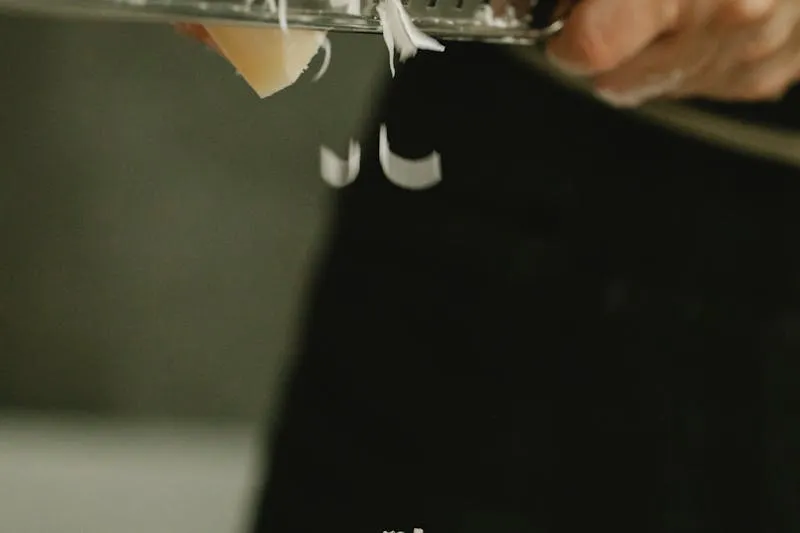
6. One pot mushroom cream
Brown 300 g sliced mushrooms in butter, 4–5 minutes until golden. Add 2 garlic cloves, a sprig of thyme. 1 minute. Add 350 g penne, 500 ml vegetable stock, 200 ml double cream, salt, pepper, nutmeg. Medium heat, lid ajar, 14 minutes, stirring. Parmesan to finish. It's a risotto disguised as pasta, and it's exactly as good as it sounds.
7. One pot chicken-mustard-tarragon
Cut 2 chicken breasts into pieces. Brown 3 minutes in a drizzle of oil. Add 1 sliced shallot, 2 minutes. Pour in 500 ml chicken stock, 150 ml crème fraîche, 2 tbsp wholegrain mustard, 350 g fusilli. Medium heat, 14 minutes, stirring. At the end, add chopped fresh tarragon (or parsley if you can't find it). A French bistro classic in zero-washing-up mode.
8. One pot bacon-spinach-Parmesan
Brown 150 g diced bacon, 3 minutes (no oil needed — the fat renders). Add 2 garlic cloves, 350 g penne, 600 ml stock, 100 ml cream, salt, pepper. Medium heat, 13 minutes. 1 minute before the end, add 2 big handfuls of fresh spinach — it wilts in 60 seconds. Generous Parmesan. It's a carbonara that met a salad — and they got along brilliantly.
9. One pot squash and sage
Autumnal and comforting. Dice 300 g butternut squash into small cubes (1 cm — smaller = faster). Brown in butter with 4–5 sage leaves, 3 minutes. Add 350 g penne, 700 ml stock, 100 ml cream, nutmeg, salt, pepper. Medium heat, 15 minutes, stirring. The squash partly breaks down and creates a velvety orange sauce. Parmesan. Crushed hazelnuts if you want to be fancy.
Kristina's tip — For creamy one pots, add the cream RIGHT AT THE START with the stock. It combines better and won't "split" (separate into lumps). If you add it at the end on high heat, it can curdle. From the start = silky smooth guaranteed.
The 100% veggie — 3 recipes for meat-free nights
10. One pot primavera (seasonal veg)
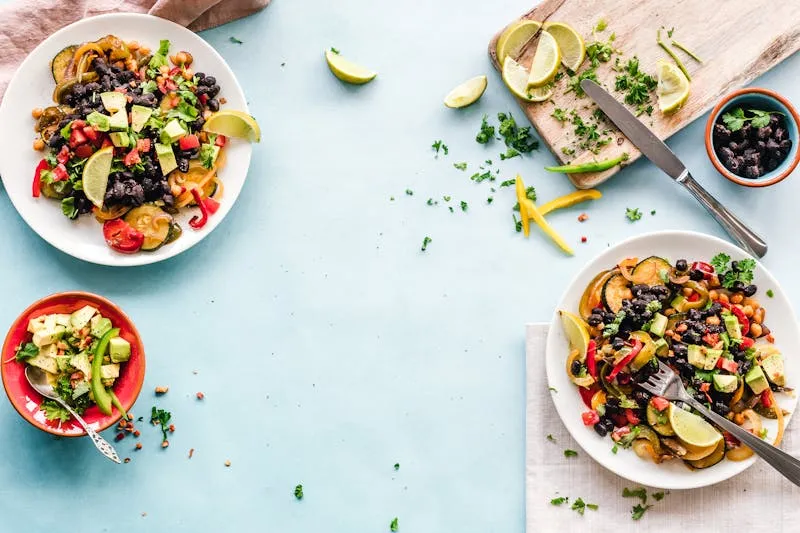
The idea: use what you've got. Spring version: courgette + peas + asparagus. Summer: cherry tomatoes + peppers + courgette. Autumn: mushrooms + leeks + squash. The principle is the same: sauté the veg 2–3 minutes in olive oil. Add 350 g fusilli, 700 ml water or stock, salt. Medium heat, 13 minutes. Finishing olive oil, Parmesan, fresh herbs. An infinitely adaptable one pot — the recipe you'll make when you've got "three random things in the fridge."
11. One pot tomato-chickpea-spinach
Sauté 1 sliced onion and 2 garlic cloves, 2 minutes. Add 1 tsp cumin, 1 tsp smoked paprika — 30 seconds to release the aromas. Pour in 1 tin chopped tomatoes, 1 tin chickpeas (drained), 400 ml water, 300 g penne, salt. Medium heat, 13 minutes. At the end: 2 handfuls of fresh spinach (30 seconds to wilt), a drizzle of olive oil, a squeeze of lemon. Mediterranean, complete in plant protein, and ready in a quarter of an hour.
12. One pot pesto-broccoli
Cut 1 head of broccoli into small florets. In the pan: 350 g fusilli, the broccoli, 750 ml water, salt. High then medium, 12 minutes. When cooked and the liquid is nearly absorbed, add 3–4 tbsp pesto (homemade or jarred — no judgement), stir off the heat. Parmesan, pine nuts, a drizzle of olive oil. The broccoli softens with the pasta and creates an incredible texture, almost like a natural green cream.
The global flavours — 3 recipes beyond Italy
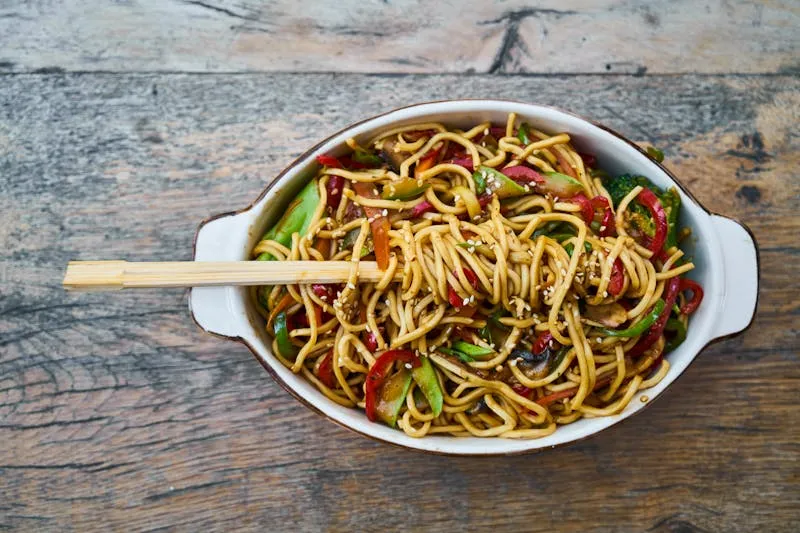
One pot pasta isn't condemned to be Italian. The technique works with any flavour profile. Here are three detours that'll surprise you.
13. One pot coconut curry
Sauté 1 sliced onion and 1 diced pepper, 2 minutes. Add 2 tbsp curry paste (red or yellow), 30 seconds. Pour in 1 tin coconut milk (400 ml), 300 ml water, 350 g fusilli, 1 tbsp soy sauce, salt. Medium heat, 13 minutes, stirring. Add baby spinach at the end. Fresh coriander, crushed peanuts, a squeeze of lime. It's a Thai curry disguised as pasta — and it's addictive.
14. One pot peanut-soy (pad Thai style)
Mix 2 tbsp peanut butter, 2 tbsp soy sauce, 1 tbsp rice vinegar, 1 tsp honey, 1 tsp Sriracha, 600 ml water. Pour into the pan with 350 g spaghetti (snapped in half). Medium heat, 12 minutes. At the end, if you have them: grated carrots, sliced spring onions, crushed peanuts. The peanut sauce coats the pasta in an utterly irresistible satin veil. Protein version: add chicken or prawns at the start.
15. One pot miso-mushroom
Maximum umami. Brown 250 g mushrooms (shiitake if possible, otherwise any) in 1 tbsp sesame oil, 3 minutes. Add 2 garlic cloves, 1 tsp grated ginger. In a bowl, dissolve 2 tbsp miso paste in 700 ml hot water. Pour into the pan with 350 g spaghetti. Medium heat, 12 minutes. At the end: sliced spring onions, sesame seeds, a dash of soy if needed. A bowl of Japanese comfort with zero complexity.
Kristina's tip — Tinned coconut milk is a brilliant cream substitute in one pot pasta. Same richness, more flavour, and it works just as well with Asian profiles as Mediterranean ones. A one pot courgette-tomato-coconut with cumin? Brilliant.
Mistakes to avoid — the anti-disaster guide
One pot pasta is simple but not foolproof. Here are the mistakes that turn an express dinner into a sticky catastrophe.
Mistake 1: Too much liquid
The most common. Too much water and your pasta swims in bland soup instead of being coated in a glossy sauce. The correct ratio: just enough liquid to cover the pasta by 2 cm at the start. The starch does the rest.
Mistake 2: Not enough stirring
One pot sticks if you don't stir. Every 2–3 minutes, give it a good stir with a wooden spoon. The pasta at the bottom tends to catch — stirring redistributes the liquid and starch.
Mistake 3: Lid on the whole time
If you seal the lid, water can't evaporate and you end up with soup. Keep the lid ajar — closed enough to maintain temperature, open enough to let excess steam escape.
Warning — "Quick cook" pasta (3 minutes) does NOT work in one pot. They absorb liquid too fast, before the other ingredients have had time to cook and release their flavours. Use regular pasta with a 10–12 minute cooking time — they work best.
Mistake 4: Forgetting the salt
In classic cooking, pasta cooks in heavily salted water. In a one pot, there's less water, so salt is even more important — it seasons the pasta from within. Don't skimp.
Mistake 5: Dumping everything in at once without thinking
Some ingredients need to be seared BEFORE adding liquid (meat, mushrooms, onions — for Maillard reaction and caramelisation). Others go in at the end (spinach, fresh herbs, cheese). The "everything at once" approach only truly works for all-veg and tomato recipes.
The golden rule: liquid-to-pasta ratio
This is THE question everyone asks. How much liquid for how much pasta? Here's the formula that works every time, tested across dozens of recipes.
For 2 people:
- 250–350 g dried pasta
- 700–900 ml total liquid (water + tomatoes + cream + stock — everything liquid counts)
The visual check: at the start, liquid should cover the pasta by about 2 cm. If pasta pokes out, add a bit more. If it's drowning, it's too much.
During cooking: if liquid absorbs too fast (pasta still hard), add 100 ml hot water. If there's too much liquid at the end (pasta cooked but sauce too thin), crank the heat for 1–2 minutes to evaporate the excess.
Kristina's tip — Boil the kettle at the start of the recipe. If you need to top up liquid mid-cook, add HOT water — not cold. Cold water stops the cooking and extends the time. Hot water keeps the momentum going.
Cooking time:
Almost always 12–15 minutes after boiling. That's 2–3 minutes more than the "normal" time on the packet, because the pasta cooks in less liquid (it's more concentrated in starch, which slightly slows absorption). Taste at 10 minutes and adjust.
Create your own one pot pasta:
Once you've nailed the ratio, you can invent infinite combinations. The magic formula:
- Protein (optional) — seared first: chicken, sausage, bacon, prawns
- Aromatics — sweated next: onion/shallot + garlic
- Pasta (short preferably) — added
- Liquid — water, stock, tinned tomatoes, cream, coconut milk — total ≈ 2× the volume of pasta
- Seasoning — salt, pepper, spices, dried herbs
- Cook — 12–15 min, lid ajar, regular stirring
- Finish — cheese, fresh herbs, oil, spinach, lemon
It's a grammar, not a score. Once you know it, you improvise. And that's where the real fun begins.
Warning — Hard cheeses (Parmesan, Pecorino, Gruyère) go in OFF THE HEAT, stirred vigorously. If you throw them into boiling liquid, they form rubbery lumps instead of melting into sauce. Take the pan off the heat → add cheese → stir. In that order.
Frequently asked questions
Is one pot pasta as good as regular pasta?
Different, but not worse. One pot gives pasta with a more enveloping, creamy sauce (thanks to the retained starch). Classic cooking allows better control over al dente texture and a more "distinct" sauce. One pot is ideal for weeknights; the classic method is still preferable when you want a very precise gastronomic result.
Which pasta shapes work best for one pot?
Short, compact shapes: penne, fusilli, farfalle, rigatoni, orecchiette. They absorb liquid evenly and don't stick together. Spaghetti works if you snap it in half. Fresh pasta is not recommended — it cooks too quickly and falls apart.
Can you make a one pot pasta in the oven?
Yes! It's a brilliant variation. Put everything in a lidded oven dish (or cover with foil), oven at 180°C/350°F, 30–35 minutes. The result is more baked, less creamy. Add grated cheese on top 5 minutes before the end for a golden crust. It's the one pot for days when you want to set it going and have a shower.
Does reheated one pot pasta taste good?
Honestly, it's decent but not optimal. The pasta keeps absorbing liquid as it sits, so the next day it's drier and more compact. Hack: add a splash of stock or cream when reheating, and cover. The microwave works well if you add 2–3 tbsp water and cover the bowl.
How do I adapt recipes for one person or four people?
The ratio stays the same. For 1 person: 150–175 g pasta, 350–450 ml liquid. For 4 people: 500–600 g pasta, 1.2–1.5 L liquid. Note: with more pasta, cooking time increases by 2–3 minutes (more mass to heat) and you need to stir more frequently.
Does one pot work with wholemeal pasta?
Yes, but with two adjustments: 1) Add 100–150 ml extra liquid (wholemeal pasta absorbs more). 2) Increase cooking time by 3–4 minutes. The result is more rustic, more filling, and nutritionally superior.
Do children like one pot pasta?
It's often one of kids' favourite formats. The sauce is gentle (no "suspicious" bits floating around), the pasta is well coated, and the creamy texture is generally a hit. Parent tip: the tomato-basil and cream-mushroom one pots are the best starting points. Avoid the spicier versions for little ones.