The best compliment you can receive after 25 minutes of careful makeup application is: "Your skin looks amazing today." Not "I love your makeup." Not even "You look so glam." Just: "Your skin looks amazing." That is the entire point of the no-makeup look. It's the art of applying makeup to look as though you haven't applied any. It's the pinnacle of makeup sophistication — and it's considerably more technical than a smoky eye.
Anyone can Google a smoky eye tutorial and muddle through with three pencils and determination. The no-makeup look requires something harder: understanding your skin, selecting the right products in the right order, and keeping a light hand precisely when every instinct says to add more. It's a discipline. Lisa Eldridge has said as much in her tutorials, and she's been perfecting it for decades.

This is the complete tutorial, step by step. Not the generic advice you find everywhere. The actual techniques, the real product recommendations (from Boots staples to Space NK splurges), and precisely why each choice matters.
The Compliment Paradox
Before we begin, something slightly counterintuitive: the no-makeup look demands more attention to your skin than almost any other makeup style. With a full glam look, you can conceal poor texture beneath three layers of full-coverage foundation. With the no-makeup look, your skin is on display — nearly bare — and it needs to hold up.
This is why well-meaning but vague advice like "just a bit of BB cream and you're done" only works if you already have naturally perfect skin. For the 95% of us dealing with uneven tone, dark circles, visible pores, or midday shine, the no-makeup look is a carefully constructed project that begins well before the first product touches your face.
Step 1 — Skin Prep: The Real Foundation
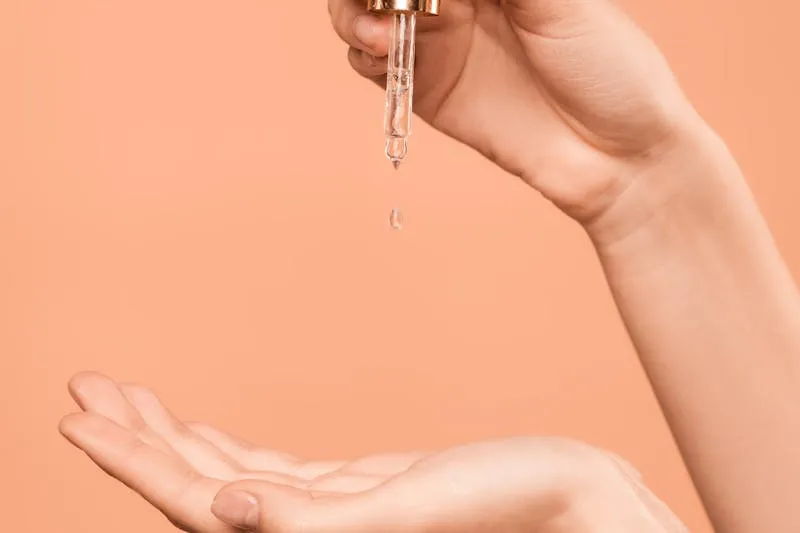
Professional makeup artists spend the first 15 to 20 minutes of any session on skin prep. While you might think "the makeup hasn't started yet," they're already halfway to the final result.
Cleansing: yes, even in the morning
I know — plenty of people skip morning cleansing because they "just slept." But your skin produces sebum and sweat overnight. Applying makeup over uncleansed skin is building on sand. A gentle cleanser (gel, foam, or micellar water for dry skin types) removes excess oil without stripping, creating a clean surface for everything that follows.
For dry skin: micellar water or a rinse-off milk cleanser. For combination to oily: a pH-balanced gel cleanser — CeraVe Foaming, La Roche-Posay Effaclar, Simple Kind to Skin Moisturising Facial Wash (available at Boots, brilliant value). For sensitive skin: nothing with sodium lauryl sulphate — colloidal oat or aloe vera formulations are your friends.
Moisturising: the most underestimated step
Well-hydrated skin takes makeup twice as easily as dehydrated skin. Foundation glides, adheres evenly, and dehydration fine lines simply disappear. Conversely, applying makeup over dry skin creates that cracked, creased effect around the mouth and on the cheeks that no amount of setting powder can fix.
Wait until your moisturiser is completely absorbed before applying anything else — two to five minutes depending on the formula's texture. If you can still see a damp film on your skin, it's too soon. Makeup applied over unabsorbed moisturiser migrates, clumps, and streaks.
SPF: non-negotiable, full stop
If you're not applying SPF before leaving the house, we simply cannot have an adult conversation about the no-makeup look. Hyperpigmentation, sun spots, UV damage — these accumulate over years, compromise skin texture, and make the no-makeup look progressively harder to achieve. The NHS is clear on this: SPF50 for outdoor activities, SPF30 minimum daily, regardless of weather or skin tone.
Choose a lightweight formula that doesn't leave a white cast. Tinted mineral SPF is particularly useful here because it does some of the evening work already. Altruist SPF50 (exceptional value, available online), La Roche-Posay Anthelios Tinted SPF50, Ultrasun Face Tinted SPF50+ — all excellent UK-accessible options.
Step 2 — Primer: When and Which One
Primer is the most debated step in the no-makeup look because the honest answer is nuanced: sometimes yes, often no.
If your skin is well moisturised and you're using a light foundation or skin tint, you likely don't need primer. Adding an extra layer actually risks making the result heavier and working against the natural finish you're after.
When primer earns its place
Oily skin and enlarged pores: a mattifying primer creates a smoother surface and extends wear without over-maquillage. The Benefit Porefessional remains a cult classic available at Boots and Cult Beauty. Smashbox Photo Finish also works well.
Dull or tired skin: an illuminating primer (with luminous particles or vitamin C) wakes up the complexion without heavy foundation. Charlotte Tilbury Flawless Filter used alone or as a primer is extraordinary here — and you can find it at Space NK or Boots.
Dry skin: a hydrating primer (e.l.f. Power Grip, Milk Makeup Hydro Grip) improves adherence and prevents end-of-day cracking.
Step 3 — Base: The Less-Is-More Hierarchy

For the no-makeup look, the guiding principle is simple: use the lightest base product that addresses your specific concerns. Not what your friend uses, not what's trending — what your skin actually needs.
The base hierarchy
1. Tinted moisturiser — The absolute minimum. Hydration plus a whisper of colour. Perfect for skin needing only the gentlest evening. Laura Mercier Tinted Moisturizer Natural Skin Perfector (the genre's founding text, available at Selfridges and online), NARS Pure Radiant Tinted Moisturizer, Bobbi Brown Vitamin Enriched Face Base. Covers: minor tone unevenness. Does not cover: pronounced redness, dark circles, blemishes.
2. Skin tint — A step up. Ultra-light, often water-based formulas enriched with actives (hyaluronic acid, niacinamide). Allows skin texture to show through — which is exactly the point. Charlotte Tilbury Beautiful Skin Foundation (arguably the gold standard), Glossier Skin Tint (available directly from Glossier UK), Fenty Skin Tint. Best for: genuinely good skin that just needs colour evening.
3. Light-coverage foundation — When the first two don't quite cut it. Stay firmly in lightweight, fluid formulas — not full-coverage. Armani Luminous Silk Foundation (a drop, applied with a damp sponge), NARS Sheer Glow, L'Oréal Infallible 24H Fresh Wear in a careful application. Applied with warm fingers or a damp beauty sponge for that skin-from-within finish.
The application technique that changes everything
For a genuine "no-makeup skin" effect: apply your base with warm fingers rather than a brush. The heat of your skin melts the product into it rather than depositing it on top. The result is a "second skin" finish that's impossible to achieve with a brush alone.
Quantity: less than you think. Start with a pea-half. You can add — you cannot subtract without starting again. More focus in the centre of the face; barely anything at the temples and hairline.
Step 4 — Concealer: Only Where Needed
Rule number one of concealer for the no-makeup look: you are not concealing everything. You're concealing what prevents the skin from looking rested. These are not the same thing.
The two legitimate zones
Under the eyes: This is where concealer makes the greatest difference to perceived freshness. A carefully applied dot of concealer under each eye, well blended, creates the impression of a full night's sleep. Classic traps: going too close to the lash line; using a shade two tones too light (the classic ghostly triangle); applying too much (product collects in fine lines and amplifies the problem).
Shade: your skin tone or half a shade lighter — never more than that. Peachy or orange-toned concealer works better for purple or blue-toned dark circles than a pale neutral shade. Bobbi Brown Creamy Concealer Kit is the British makeup artist's perennial go-to. Charlotte Tilbury Magic Away, NARS Radiant Creamy Concealer — both available at Boots or Space NK.
Technique: tap, never rub. Depositing with your ring finger in small taps allows the product to meld into foundation. Rubbing shifts the base beneath and creates streaks.
Blemishes: directly on the lesion only, never smeared around it. A fine concealer brush or fingertip, patted precisely onto the spot. Spreading concealer over a wide surrounding area creates a visible halo that draws more attention than the original blemish.
Step 5 — Setting: The Powder Rules
Translucent powder is the most misused product in the no-makeup look. Most people dust it everywhere to "set" everything — and end up with a flat, chalky result that says "I'm wearing foundation."
The two-zone rule
Translucent powder only in the T-zone: forehead, nose, chin. These areas produce shine quickly and reliably — powder earns its place here. Cheeks, temples, the eye area: zero powder. These zones should stay slightly dewy for the "naturally luminous skin" effect.
A fluffy powder brush (not a flat one — it deposits too much), applied with tapping rather than sweeping. If you see a white veil on your skin in direct light, you've applied too much. The Charlotte Tilbury Airbrush Flawless Finish Powder is beloved for its seamless finish; RCMA No Color Powder remains the professional standard across London makeup studios.
Step 6 — Brows: Fill, Don't Redraw
Brows are the no-makeup look's best structural tool — but they must remain your brows, lightly improved. Not redrawn. Not reshaped. Any alteration to the brow's natural shape, thickness, or length creates an immediately "drawn-on brow" effect that kills the no-makeup look dead.
The golden rule
Fill sparse areas within your existing brow shape. Do not change its outline, its start point, its end point. Tinted brow gel is your best tool here: it grooms, sets, and adds light colour in one pass. Glossier Boy Brow (available through Glossier UK and Cult Beauty) remains the gold standard. Benefit Gimme Brow+, Charlotte Tilbury Brow Lift, L'Oréal Unbelievabrow — all excellent for the no-makeup look.
For genuinely sparse patches: a fine-tipped brow pencil with short strokes mimicking individual hairs. Never a continuous line — that reads as drawn immediately. Move in the direction of natural hair growth, using the lightest possible pressure.
Shade: half a tone lighter than your hair colour. Brows that are too dark on a no-makeup look dominate the face and create artificial contrast.
Step 7 — Eyes: The Effective Minimum

The no-makeup eye comes down to three gestures. One alone can be sufficient depending on the effect you want.
Gesture 1: the wash of neutral shadow
A single warm neutral — taupe, champagne, dusty rose depending on your complexion — swept across the whole lid with a finger. No blending gradient. No definition. It's a veil that tidies the eyelid and makes it look "neat" with zero visible makeup. Takes ten seconds.
Your finger is the ideal tool: warmth and natural blending. Palettes that work brilliantly: Charlotte Tilbury Pillow Talk Luxury Eyeshadow Palette (available at Boots), Urban Decay Naked Basics, MAC Omega (single shade, a perennial makeup artist favourite).
Gesture 2: tightlining
Tightlining — eyeliner applied directly to the upper lash line, into the gaps between lashes — is the professional makeup artist's trick for a no-makeup result. It densifies the lash line without drawing a visible line. Effect: lashes appear naturally fuller, the gaze is more defined — but no one can see the liner. Lisa Eldridge demonstrates this in her tutorials, and it genuinely transforms.
Tool: a soft kohl pencil (not liquid liner — too precise, too visible). Dark brown or very dark charcoal for daytime; never intense black on a no-makeup look. A short side-to-side wiggling motion at the root of the lashes deposits product exactly where needed.
Gesture 3: brown mascara
Brown mascara — not black — is the key. Intense black on well-curled, lengthened lashes reads as clearly made-up. Brown mascara elongates, defines, and builds density while remaining within the natural colour palette. Apply one coat, wipe the brush on a tissue first to remove excess, focus on the outer and centre lashes.
Skip the lower lashes entirely. On a no-makeup look, lower lash mascara consistently creates a tired "panda" effect by mid-afternoon. Curl lashes before mascara — always. This opens the eye and creates the "naturally wide-awake" effect you're after. A lash curler is not optional here.
Step 8 — Cheeks: Cream Blush Is Your Hero Product

Cream blush is the no-makeup look's hero product. If you were to take away everything else on this list and keep only one recommendation, it would be cream blush.
Why cream, not powder
Powder blush applied to skin has a visible texture in natural light — it sits on the skin. Cream blush melts into the skin and creates a natural flush — the kind your cheeks produce when you're cold outside, or mildly embarrassed, or genuinely glowing. No visible demarcation. No powder. No trace of product.
Application: with your fingers. Deposit the product on the apple of the cheek and tap, tap, tap until it's completely melted in. No brush for this step if you want an authentic natural result — the warmth of your fingers makes the difference.
Position: higher than you'd expect. On the apple of the cheek and softly towards the temple. Never in the hollow below the cheekbone (that's contouring — the opposite of no-makeup). Never across the nose bridge (that reads as rosacea rather than healthy glow).
The cream blushes that consistently deliver: Rare Beauty Soft Pinch Liquid Blush (extraordinarily pigmented — start with a literal dot), NARS Afterglow Cheek Palette, Ilia Multi-Stick (doubles on lips), Glossier Cloud Paint (available from Glossier UK).
Step 9 — Lips: Your Natural Shade, Amplified

The lip rule for the no-makeup look is straightforward: MLBB — My Lips But Better. A shade that amplifies your natural lip colour by one or two tones without changing it dramatically.
Tinted balm vs nude lipstick
The tinted lip balm is king here. It moisturises, adds colour, applies easily with a finger or straight from the bullet — and even if it strays slightly, it looks natural. Charlotte Tilbury Collagen Lip Bath (cult status at Space NK and Boots Beauty), the iconic Clinique Almost Lipstick in Black Honey (available at Boots — makes every lip shade work), Fresh Sugar Lip Treatment, Dior Addict Lip Glow.
If you prefer a lipstick: satin finish rather than gloss (too shiny = too visible) or matte (too drying, too defined). Apply directly from the bullet without a lip brush for a more relaxed, less precise result — exactly what you want.
The overdrawing rule
Lip liner on a no-makeup look is permissible for longevity — with one absolute condition: the same shade as your lips, applied inside the natural border, never overdrawn. A clearly defined liner that enlarges lip shape is instantly incompatible with the no-makeup look. For natural-looking volume, a tiny dab of clear gloss at the centre of the upper lip after your tinted balm — but invisible, not a full glossy overlay.
Products by Skin Type

The no-makeup look doesn't apply identically across all skin types. Here are the most appropriate products — from accessible Boots finds to Space NK splurges.
Dry or dehydrated skin
Absolute priority: hydration. Your enemy: makeup that accentuates dehydration fine lines (especially around the eyes and on the lips).
Budget (Boots): CeraVe Moisturising Cream + L'Oréal True Match Foundation in lightest application + Collection Lasting Perfection Concealer. Mid-range: Liz Earle Skin Repair Moisturiser + Kosas Tinted Face Oil. Prestige: Elemis Pro-Collagen Marine Cream + Charlotte Tilbury Beautiful Skin Foundation.
Oily or combination skin
Priority: all-day wear and T-zone mattifying without drying out the cheeks. Your enemy: that midday shine that breaks the illusion.
Budget (Boots): Neutrogena Oil-Free Moisture + Maybelline Fit Me! Matte + Poreless + NYX Matte Finish Setting Spray. Mid-range: La Roche-Posay Effaclar Duo + Fenty Skin Tint. Prestige: Clinique Dramatically Different Moisturizing Gel + NARS Natural Radiant Longwear Foundation (light application).
Sensitive or reactive skin
Priority: fragrance-free, alcohol-free formulas without potential irritants. Your enemy: redness that worsens with the wrong products.
Budget (Boots): Aveeno Calm + Restore Oat Gel Moisturiser + Bourjois Healthy Mix Foundation. Mid-range: Avène Skin Recovery Cream + bareMinerals Original Loose Powder Foundation (minimal ingredients). Prestige: Chantecaille Just Skin Tinted Moisturizer SPF30 — formulated specifically for reactive skin, available at Space NK.
Frequently Asked Questions
How long does a proper no-makeup look actually take?
Between 15 and 25 minutes for a careful application. Skin prep accounts for 5 to 8 minutes (cleanse, moisturise, SPF), with the makeup itself taking 10 to 15 minutes. With a practised hand, you can get it to 12 minutes. The good news: the no-makeup look genuinely simplifies with habit. After a week of daily practice, product selection and application become near-automatic — and the time reduces accordingly.
Can I use powder as a base instead of a liquid foundation for the no-makeup look?
Technically yes, but achieving a natural finish is considerably harder. Powder formulas — even very light pressed powders — tend to accumulate in pores and around fine lines, creating a textured, visible result. If you're committed to powder, opt for a very fine HD loose powder (Laura Mercier Translucent Loose Setting Powder, available at Boots) applied over a tinted moisturiser — never as the sole base on bare skin.
My light foundation slides off my oily skin within two hours. What do I do?
Three adjustments: 1) Switch to an oil-free moisturiser formulated for oily skin rather than a rich cream. 2) Add a mattifying primer targeted only to your T-zone. 3) Finish with a long-wear setting spray — Urban Decay All Nighter (available at Boots and Cult Beauty) is consistently excellent. If you're using a skin tint, it may be worth moving to a lightweight but longer-wearing formula — Maybelline Fit Me! Matte + Poreless applied with a damp Beautyblender delivers strong hold with a natural finish.
How do I find the right foundation shade for a flawless no-makeup look?
For the no-makeup look specifically, shade matching is more critical than for full-coverage — because demarcation lines are visible. Always test in natural daylight (not under shop fluorescents). Apply a stripe to your jaw — not the back of your hand — and check outdoors. The right shade disappears with no contrast. Identify your undertone (cool, warm, neutral): warm-undertoned skin with a cool-undertoned foundation reads as grey and dull — precisely the opposite of the healthy glow you're building.
Can the no-makeup look hold up through a full working day?
Yes, with the right products and a few midday touch-ups. For all-day wear: appropriate primer, setting spray as your final step, and translucent powder on the T-zone. For midday refresh: blotting papers (not repowdering over an existing layer) and a quick reapplication of tinted lip balm. Cream blush typically holds well because it bonds to skin. The most vulnerable area: under the eyes, where concealer tends to migrate — the light baking technique (a dusting of translucent powder, left two minutes) significantly extends hold.
Does the no-makeup look work for all skin tones?
Absolutely — but product selection changes significantly. Deeper and darker complexions have historically faced a frustrating lack of range in skin tints (the market is improving but unevenly). One practical solution: mix a skin tint that runs too light with a few drops of full-coverage foundation in your correct shade to create a bespoke formula. For eyes: brown mascara works across all complexions. For blush: burgundy, plum, and berry tones read beautifully on deeper skin tones where pale pinks simply don't register.
What's the difference between a no-makeup look and just... going without makeup?
That's precisely the paradox this tutorial addresses. Bare skin shows your dark circles, uneven tone, blemishes, and any shine or redness — honestly. The no-makeup look shows skin that appears naturally rested, even, and luminous — with thoughtful product choices behind every centimetre. It's a constructed image of naturalness, not raw skin. Hence the compliment paradox: "Your skin looks amazing" isn't a comment on your skin. It's a comment on your makeup skill.