It was at the rehearsal dinner, the evening before, that it hit you. You were laughing with your sister-in-law — genuinely laughing, the unselfconscious kind — when a wave of panic broke over you without warning. Not because of anything concrete: the caterer had confirmed, the flowers were delivered, the playlist was ready. No. The panic came from the sheer scale of it. Tomorrow, 120 people will be looking at you. And you're no longer certain you chose the right lipstick.
That mixture — the rational and the irrational coexisting in perfect, unhelpful harmony — is one of the most universal experiences of wedding day anxiety. Hundreds of brides have described it in almost identical terms: "Everything was ready. And yet I wasn't ready." This is not fragility. This is a perfectly normal response to one of the most emotionally charged days of your life.
This article will not promise you a stress-free wedding. That would be dishonest. What it offers instead is something more useful: an understanding of why your body responds the way it does, and precise, evidence-based tools — not tradition, not platitudes — to help you move through the day with greater presence and ease.

Why weddings trigger so much anxiety
The short answer: because your brain cannot distinguish between a threat and an event of enormous personal significance. For the nervous system, both activate the same alarm system.
Several factors particular to weddings converge to create an unusually dense emotional load — and British weddings carry their own particular cultural weight.
Perfectionism, social pressure, and the British wedding ideal
Wedding culture — amplified by social media, glossy magazines, and television programmes — has constructed a powerful ideology of the "perfect day". Research consistently links high social visibility and performance pressure to elevated anxiety responses. A wedding maximises both: total visibility, explicit expectations from family and friends, and absolutely no opportunity for a second take.
The British tendency toward emotional restraint — that deeply ingrained "mustn't make a fuss" disposition — can add an additional layer: the pressure not only to be happy, but to appear appropriately, composedly happy. Hiding anxiety behind stoicism is exhausting work.
Family dynamics reactivated
A wedding brings families together. And families have memories. Tensions buried for years can surface in the weeks before: the mother who inserts herself into decisions that are not hers, the father with pointed remarks about the budget, in-laws with expectations that were never quite discussed. On the day, you are managing a logistical event and a charged emotional subtext. That is exhausting — even when everything appears to proceed smoothly on the surface.
The accumulated decision fatigue
Cognitive psychology research demonstrates that repeated decision-making depletes mental resources — what researchers call decision fatigue. Planning a wedding involves hundreds of micro-decisions over many months: the colour of the napkins, the seating plan, the menu, the readings, the vows, the wedding list. Arriving at the day with already partially depleted emotional resources is structurally inevitable.
Financial pressure
The average cost of a UK wedding now exceeds £20,000 according to Hitched's annual survey. This financial pressure creates a diffuse additional stress. Spending such a sum on a single day generates an implicit expectation of perfection that is psychologically heavy to carry.
The symbolic weight
Even for couples who attach no religious dimension to marriage, a wedding carries a symbolic significance that is rarely matched: a public commitment, witnessed by the people who matter most, that shapes your future. Your unconscious knows this. That is why the night before, you dream that you have forgotten your dress, that your partner hasn't arrived, or — the classic — that you are catastrophically late.
💡 Diana's tip — Normalise your stress before trying to manage it. Tell yourself — and tell the people around you — that feeling anxious on your wedding day is not an ill omen, not a sign you are making a mistake, not a character weakness. It is physiological information about the importance of what is happening. That reframe changes everything about how you experience the feeling.

The physiology of stress: what happens in your body
Understanding what happens biologically when you are stressed is not an academic digression. It is one of the most effective keys to regaining composure — because we manage what we understand.
The cortisol-adrenaline cascade
Faced with an event perceived as high-stakes — a wedding, for example — your hypothalamus triggers a hormonal cascade. Adrenaline is released first, within seconds: accelerated heart rate, faster breathing, muscular tension, perspiration. Then comes cortisol, the chronic stress hormone, which sustains the alert state over time.
The difficulty: your primitive brain cannot distinguish between a real threat and a symbolic threat. The alarm activates with equal intensity in both cases. This is precisely why you may feel unable to breathe normally — or unable to eat anything — even when, objectively, everything is fine.
The autonomic nervous system and its two branches
The autonomic nervous system operates in two opposing modes:
- The sympathetic system (fight-or-flight mode): accelerates everything, mobilises resources, prepares action.
- The parasympathetic system (rest-and-digest mode): slows, regulates, restores.
Under intense stress, the sympathetic takes over. Your role — and the purpose of the techniques below — is to deliberately activate the parasympathetic and rebalance the system. This is not wishful thinking. It is applied neurophysiology.
The impact on cognition
Acute stress reduces activity in the prefrontal cortex — the area responsible for rational thought, decision-making, and emotional regulation. This is why under stress you may feel you "cannot think clearly", forget simple things, or react disproportionately to minor details. This does not mean you are losing control. It means your biology is doing exactly what it is programmed to do.
⚠️ Good to know — Some people, under acute stress, experience intense physical reactions: nausea, dizziness, shaking hands, a quavering voice. These responses are real, not performed, and can occur in people who are ordinarily very composed. Anticipate their possibility rather than discovering them for the first time on the morning of your wedding.
Breathing techniques that actually work
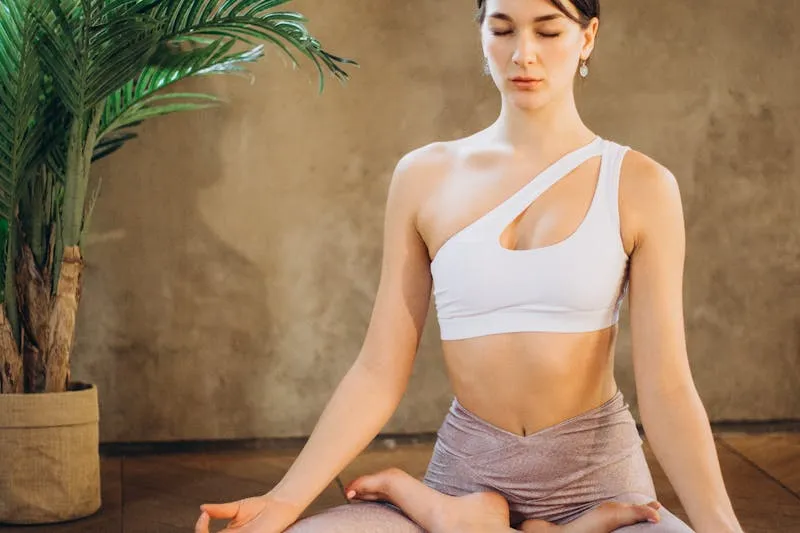
Breathing is not a wellness technique among many others. It is, in the strictest sense, the only parameter of the autonomic nervous system that you can consciously control. By modifying your breathing rhythm, you act directly on your heart rate, vagal tone, and cortisol levels. Neuroscientist Andrew Huberman's research at Stanford has documented these mechanisms with considerable precision.
The 4-7-8 breath
Developed by Dr Andrew Weil from pranayama practice, the 4-7-8 breath is one of the most thoroughly documented techniques for rapid parasympathetic activation.
- Exhale completely through your mouth (with a "whoosh" sound)
- Inhale silently through your nose for 4 counts
- Hold your breath for 7 counts
- Exhale slowly through your mouth for 8 counts
- Repeat 3 to 4 cycles
The extended hold and exhalation are the active elements: they engage the vagus nerve and trigger the parasympathetic response. Four cycles are sufficient to produce a measurable effect on heart rate.
Box breathing
Used by United States Navy SEALs to manage operational stress in extreme conditions. The consistency of the rhythm is the active mechanism:
- Inhale for 4 counts
- Hold for 4 counts
- Exhale for 4 counts
- Hold for 4 counts
Repeat 4 to 6 cycles. Particularly effective in the 10 to 15 minutes before an intense moment — the ceremony, the speech, the first dance. It can be practised discreetly in the loos, in the car, eyes open.
The physiological sigh
Neuroscientist Andrew Huberman has highlighted a technique even faster than the above — one that our bodies spontaneously use during sleep to regulate CO₂ levels.
- Inhale deeply through your nose
- Without exhaling, take a second small inhale to fully inflate the alveoli
- Exhale slowly and fully through your mouth
A single cycle is sufficient to produce a measurable drop in heart rate. This is the ideal technique for moments of sudden intense stress — when the veil catches on the rose arch, when the photographer says something unhelpful, when a family member makes an ill-timed remark in the car.
💡 Diana's tip — Do not discover these techniques on the morning of your wedding. Practise one (one, not all three) every day for the two weeks beforehand. When a technique is automated, it remains accessible even under maximum stress. That is the difference between a skill and a good intention.

Mental preparation: the weeks before
Managing wedding day stress begins weeks in advance. The tools you put in place in the preceding weeks largely determine your capacity to remain present on the day itself.
Visualisation: rehearsing success mentally
Visualisation is not a New Age technique. It is a method validated by sports psychology research, used by Olympic athletes, surgeons, and airline pilots. The principle: your brain processes mental imagery and real experience through the same neural circuits. "Rehearsing" a future event mentally, with sensory precision, reduces anticipatory anxiety and improves actual performance.
How to practise for your wedding:
- Sit comfortably with your eyes closed
- Visualise the day in sequence: waking up, breakfast, getting ready, arriving at the venue, the ceremony, the meal, the evening
- Activate all senses: what you see, hear, and feel physically, the scent of your flowers, the texture of your dress
- Visualise yourself inside the scene, not watching from outside
- If something goes wrong in the visualisation, imagine responding to it with calm and lightness
Ten minutes a day for the two weeks beforehand is sufficient to produce a measurable effect on anticipatory anxiety.
Planning for worst-case scenarios (paradoxically calming)
Research by psychologist Gabriele Oettingen on mental contrasting shows something counter-intuitive: explicitly anticipating what might go wrong — and mentally preparing a response — reduces anxiety more effectively than naive positive thinking.
Practical exercise — list the five scenarios that worry you most:
- It rains on the day. → My response: we have the covered backup area confirmed; rain in wedding photographs can be genuinely beautiful.
- My hair or makeup doesn't look right. → My response: I have the backup contact saved, and in five years, no one will remember.
- A family member causes a scene. → My response: X is the designated person for difficult situations; I trust them completely.
- I forget my vows. → My response: I have the text saved on my phone in my dress pocket.
- I cry during the ceremony. → My response: the photographs of tears are always among the most beautiful. The guests will cry with me.
The psychological effect is clear: once you have a prepared response to every catastrophe scenario, the unknown loses much of its power to generate anxiety.
The "what actually matters" exercise
In the month before your wedding, sit down and write — by hand — an answer to this question: "In ten years, what do I want to remember about this day?"
You will see. The answer almost never mentions the exact shade of the floral arrangements. It speaks of your partner's expression, of laughter with the people you love, of the moment the music started. This exercise anchors the "why" — and when you are lost in the details on the day itself, that "why" is what brings you back.
💡 Diana's tip — In the weeks beforehand, designate one trusted person (not you, not your partner) as your "crisis manager" for the day. Their role: to make operational decisions if something goes wrong, without involving you. Knowing this person exists and is briefed considerably reduces your anticipatory mental load.

The morning-of ritual
The morning of the day is not made for making decisions. It is made for grounding yourself, eating well, and protecting your emotional space. Everything that can be decided should have been decided already.
The ideal morning structure
1. Build in at least 45 minutes of buffer time
The stress of rushing adds a layer of adrenaline you do not need. If you are ready 45 minutes early, you have a quiet moment. If you have no buffer and something takes longer than expected, you enter the day in emergency mode.
2. Eat a proper breakfast
Low blood sugar amplifies anxiety symptoms. Cortisol and insulin interact, and remaining unfed under stress intensifies trembling, dizziness, and irritability. Eat something substantial — even if you "don't feel hungry" (that's the stress suppressing appetite, not your body not needing fuel).
3. Establish a clear phone policy
Decide in advance: your phone passes to a designated person after your departure time. You do not need to see messages from guests who cannot find the venue, or last-minute questions from the caterer. That is no longer your role from this morning onwards.
4. Choose your music deliberately
Music has a documented effect on emotional state via the limbic system. Prepare a playlist the evening before — not what you think you should listen to, but what genuinely makes you feel happy, settled, and present in your body.
5. Keep a moment for yourself
Even ten minutes, in the bathroom, before anyone else arrives. Just you. Look at yourself in the mirror. Say something kind to yourself. This is a neurological necessity: activating a positive internal voice before the day begins.
Grounding: staying in the present moment
When anxiety projects your mind into the future ("what if..."), grounding techniques return you to the present. The simplest and most effective:
The 5-4-3-2-1 method:
- 5 things you can see around you (describe them mentally with precision)
- 4 things you can touch (the fabric of your dress, the warmth of a mug)
- 3 sounds you can hear
- 2 smells you can detect
- 1 thing you can taste
This exercise activates the sensory cortex and interrupts anxious rumination. It takes under two minutes and can be practised anywhere, at any point in the day.
⚠️ Avoid on the morning of your wedding — Social media. Without exception. Do not open Instagram, do not read comments, do not scroll TikTok. Exposure to "perfect wedding" imagery at the moment you are most vulnerable to comparison is precisely what you do not need. Research published in the Journal of Social and Clinical Psychology established a direct link between heavy social media use and elevated cortisol. Put down the phone.
When things go wrong — and they will
Let us start from a realistic premise: on your wedding day, something will not go according to plan. This is not pessimism. It is a statistical certainty. Every experienced wedding coordinator will tell you the same thing, without exception: there is always something.
Cognitive reframing: turning the unexpected into memory
Research in positive psychology — particularly Barbara Fredrickson's work — demonstrates that our memories of an event are largely shaped by how we responded to it, not by what happened objectively.
The unexpected things that make the best wedding stories:
- The sudden downpour that created extraordinary photographic light
- The father-of-the-bride's improvised speech that reduced the room to tears
- The cake that tilted slightly and everyone found charming
- The DJ system that failed, prompting the guests to sing together a cappella
- The family dog who wandered into the ceremony
In every case, the unexpected became, with time, the story people tell. Not the failure. The anecdote.
The five-year test
When something goes wrong and you feel panic rising, ask yourself: "In five years, will this still matter?" In the overwhelming majority of cases, the honest answer is no. This temporal perspective does not eliminate the discomfort, but it places it in a realistic scale.
Real-time crisis delegation
This is exactly why the designated crisis manager is indispensable. If the caterer announces a problem at 5 p.m., that person handles it. Not you. You are getting married today. You are not an events coordinator. These two roles are incompatible.
💡 Diana's tip — Prepare in advance a phrase you will say to yourself when something goes wrong. Something simple, personal, that works for you. "This is part of the story." "It doesn't matter." "I'll laugh about this." "Perfectly imperfect." Having this phrase genuinely ready — not just thought of, but practised — gives you an immediate anchor when stress spikes.
For your partner: recognising each other's stress
Wedding stress is not unilateral. But it is often asymmetrical: in heterosexual couples, statistically, brides tend to carry a greater share of the coordination burden, family expectations, and aesthetic pressure. Their partner may be stressed for different, less visible reasons.
Recognising signals without amplifying them
Stress manifests differently in different people: irritability, silence, hyperactivity, withdrawal, ill-timed humour. It is not useful to analyse these signals on the day itself. What is useful: remembering that your partner is also in an emotionally intense state, that their reactions are probably not aimed at you personally, and that mutual kindness is your most valuable shared resource.
The reserved connection moment
Many wedding coordinators and couple therapists recommend building into the day a 5-to-10-minute moment alone together — after the ceremony, before the meal, or at the end of the evening. Just the two of you, without cameras, without guests. A moment to look at each other, say something simple, breathe together.
This does not happen spontaneously in the flow of a wedding day. It needs to be planned, and someone needs to physically bring you together for it. But couples who have experienced it consistently say it is among the most precious memories of the day.
Returning to the reason for all of this
At the centre of all the logistical and emotional stress lies a simple reality: you are marrying someone you love, in front of the people who matter most to you. Everything else — the décor, the menu, the lipstick — is set dressing. The heart of the day is the two of you. Returning to that truth, repeatedly, is the most powerful act of emotional regulation available to you.

When anxiety becomes clinical: seeking help
There is a meaningful difference between situational anxiety linked to a wedding — normal, temporary, manageable with the techniques presented here — and clinical anxiety that warrants professional support.
Signals worth taking seriously
- Persistent insomnia over several weeks, not linked to specific logistical worries
- Recurring panic attacks (episodes with intense physical symptoms: palpitations, sensation of suffocation, fear of collapse or death)
- Avoidance: being unable to discuss the wedding, cancelling preparation appointments, obsessive rumination
- Impact on daily functioning: difficulties at work, in your relationship, with close friends
- Persistent, intrusive existential doubts about your relationship or your partner — distinct from ordinary stress about logistics
Pre-wedding therapy is normal — and increasingly common
In the UK, consulting a therapist or counsellor in the months before a wedding is not an admission of weakness, nor a distress signal about your relationship. It is a preparation practice. Many couples choose to go together — not because their relationship is in difficulty, but because they want to enter this major life transition with greater awareness and tools.
The British Association for Counselling and Psychotherapy (BACP) maintains a searchable register of accredited therapists. Cognitive Behavioural Therapy (CBT) has a strong evidence base for event-specific anticipatory anxiety; several targeted sessions in the weeks before can be sufficient.
For lower-threshold support, Mind offers excellent online and telephone resources. The NHS provides access to Talking Therapies via GP referral. The Headspace app — founded in the UK — offers structured mindfulness programmes shown to reduce anxiety symptoms with as little as 8 minutes of daily practice.
⚠️ Important — If you are experiencing deep, persistent doubts about your relationship — not about the logistics, not about your ability to handle the day, but about your partner and your shared future — take those signals seriously. Anticipatory anxiety about the event and doubts about your choice of partner are two distinct realities. A therapeutic space — individual or couples — is the appropriate place to explore that distinction, without judgement.
Is it normal to want to cancel the wedding the night before, just from the stress?
This thought — often fleeting — is far more common than most people realise, and almost never means what you fear it might mean. In the vast majority of cases, it expresses not a doubt about your relationship or your decision, but a protective response to the enormity of what is about to happen. Your brain, faced with an event of this emotional and symbolic weight, can generate a flight impulse. It is not a message about your future. It is a message about the intensity of the present. If the thought is recurring, persistent, and accompanied by concrete doubts about your relationship (rather than the logistics), speak with a professional before the day.
How do I manage tears during the ceremony without ruining my makeup?
First, a clarification: tears during a wedding ceremony do not "ruin" anything. They produce some of the most moving photographs. If you would still like to prepare: choose waterproof eye makeup, ask your makeup artist to use a high-hold setting spray, and keep a small handkerchief to hand (dab gently beneath the eyes — not on the nose). The box breathing technique can help you modulate the emotional response if you would like to regain composure quickly.
My partner seems far less stressed than I am. Should I be worried?
Not necessarily. Stress expression varies enormously across individuals, genders, and cultures. Someone may be highly stressed without showing the usual signs, or genuinely calm because they have a higher natural tolerance for this type of social pressure. Neither is a reliable indicator of their investment in the relationship or the day. If the gap is making you feel alone in your anxiety, say so — simply, before the day.
Can I take anxiety medication on my wedding day?
This is a medical decision that belongs to your GP, not to a wedding blog. What you should know: benzodiazepines (the most common class of anxiolytics) can reduce anxiety and positive emotions, affect your memory of the day, and produce sedation incompatible with a long, socially intensive day. If you are considering this option, speak with your GP at least two weeks before the wedding to trial the medication and dose in an ordinary context. Never take anything for the first time on the day itself.
How do I handle a family member who adds stress rather than alleviating it?
The solution is not to manage this person on the day — it is to keep them away from sensitive decision points before it. Practically: do not delegate any responsibility to them, do not ask for opinions on decisions already made, and brief someone else to act as an intermediary if needed. For the day itself, designate an alternative point of contact for this person so that you do not have to manage their reactions at key moments.
Do breathing techniques actually work, or is it just placebo?
They work, and the mechanisms are well documented. Slow, deep breathing activates the vagus nerve — the main pathway of the parasympathetic nervous system — producing a measurable reduction in heart rate and cortisol levels. This is not placebo: neuroimaging studies have shown the changes in neural activity associated with these practices. The condition for them to work under acute stress: having practised them regularly beforehand. A technique learned on the morning of the wedding is far less effective than one that is automated.
Sources
- Huberman, A. D., & Krasnow, M. A. (2022). Physiological sigh and its neural basis. Cell, 185(6).
- Oettingen, G., & Gollwitzer, P. M. (2010). Strategies of setting and implementing goals. APA.
- Fredrickson, B. L. (2001). The role of positive emotions in positive psychology. American Psychologist, 56(3), 218–226.
- Hunt, M. G. et al. (2018). No more FOMO. Journal of Social and Clinical Psychology, 37(10), 751–768.
- Mind (2024). Understanding anxiety. mind.org.uk
- British Association for Counselling and Psychotherapy (2024). Find a therapist. bacp.co.uk
- NHS (2023). Talking Therapies. nhs.uk
- Hitched (2024). UK Wedding Report — Average wedding costs. hitched.co.uk
- Weil, A. (2015). Spontaneous Happiness. Hachette Books.
- Marks, I. M., & Mathews, A. M. (1979). Brief standard self-rating for phobic patients. Behaviour Research and Therapy, 17(3), 263–267.