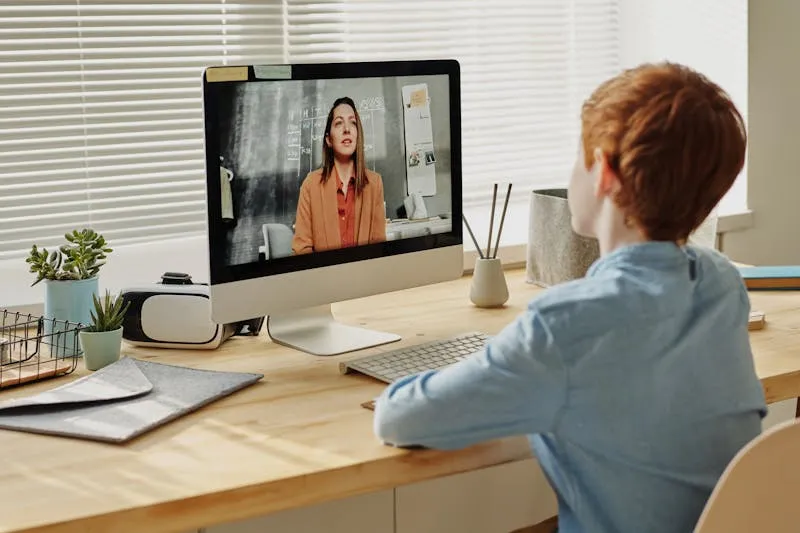
It's 6.30pm and Lucas, seven, has been glued to his tablet for forty-five minutes. His mum, Celine, hesitates. If she takes it away now, he'll scream — and she hasn't the energy for a meltdown, not tonight, not after this day. If she lets him continue, guilt will gnaw at her all evening. She's read the alarmist articles, seen the documentaries about "children's brains destroyed by screens," heard her mother-in-law say that "in her day, children played outside." Between panic and permissiveness, Celine is looking for a workable path. This guide is written for her — and for you.
Screens are neither the devil nor a neutral tool. Their impact depends on three variables: time spent, content consumed and context of use. The research is nuanced — far more so than newspaper headlines suggest. This report lays out the data, the validated recommendations and the concrete tools for building a realistic balance, adapted to your family, without guilt or excessive rigidity.
What the science actually says: impact on development

Let's start with what is scientifically established — and what isn't.
What's documented
- Sleep: screen exposure in the hour before bedtime delays sleep onset (blue light + cognitive stimulation). The effect is significant from just 30 minutes of exposure in under-6s.
- Language (0-3): time spent in front of passive screens (background television) is associated with poorer vocabulary. But the effect disappears when the screen is used actively with an adult (video call with a grandparent, for example).
- Attention: excessive consumption (>2h/day in under-6s) correlates with attentional difficulties. Definitive causation isn't proven — children with pre-existing attention issues also consume more screen time.
- Sedentary behaviour: screen time replaces physical activity time. UK children aged 5-15 spend an average of 3.5 hours/day in front of screens outside school (Ofcom, 2023) — well beyond recommendations.
- Social development: for under-3s, screens don't replace human interaction for language and social development. A child doesn't learn to talk by watching a video — they learn by interacting with a human.
What's exaggerated or misunderstood
- "Screens destroy the brain": no. Neuroimaging studies show minor grey matter modifications in heavy users, but clinical interpretation is debated and effect sizes are small.
- "All screens are the same": no. A video call with granny, a digital building game and a YouTube video marathon don't have the same impact.
- "Zero screens is the only safe option": no. The AAP and WHO recommend limiting, not banning (except passive screens before 2). The goal is balance, not abstinence.
Beware of catastrophist studies: many viral articles cite observational studies (correlation, not causation), with small samples and self-reported exposure measures. The science is nuanced: impact depends on age, content, context and duration. Don't let fear guide your decisions — let the data.
Recommendations by age: the international consensus

Here are the converging recommendations from the WHO, the AAP and the RCPCH (Royal College of Paediatrics and Child Health):
0-2 years: avoid passive screens
Recommendation: zero passive screens (television, videos). Video calls with family are acceptable as they involve real social interaction. Why: the baby's brain needs human interaction, object manipulation and sensory exploration — not two-dimensional stimulation.
2-5 years: maximum 1 hour/day
Recommendation: limit to 1 hour/day maximum of quality content, ideally accompanied by an adult. Why: the child is in a critical period for language and social development. Every hour in front of a screen is an hour without human interaction, creative play or movement.
6-12 years: frame without obsessive timing
Recommendation: no single hourly threshold — the AAP recommends "ensuring screen time doesn't replace sleep, physical activity, homework and social interactions." In practice, 1-2 hours of recreational screen time per day remains a reasonable benchmark.
12+ years: support autonomy
Recommendation: a negotiated framework with the teenager. Prohibition becomes counterproductive — dialogue and support take over. Priorities: protect sleep (no screens in the bedroom at night), maintain physical activity and offline socialising.
The RCPCH's pragmatic approach: rather than setting rigid time limits, the RCPCH recommends asking four questions: (1) Is screen time controlled? (2) Does it interfere with sleep? (3) Does it displace physical activity? (4) Does it affect eating habits? If the answer to all four is satisfactory, your family's screen time is likely fine.
Not all screens are equal
Treating "screens" as a monolithic block is the most common error in the public debate. The nature of exposure radically changes the impact.
The passive-active axis
- Passive: watching a video, cartoon, Instagram story. The child receives without acting. Impact: the most negative for cognitive and language development.
- Interactive: video game, educational app, creation (digital drawing, video editing). The child makes decisions, solves problems. Impact: neutral to positive depending on content.
- Social: video call, cooperative online game with friends, messaging. The child interacts with other humans. Impact: variable — social contact partially offsets screen time.
- Creative: programming, music creation, animation. The child produces rather than consumes. Impact: generally positive — develops logical thinking and creativity.
The context axis
- Accompanied screen: an adult watches with the child, comments, asks questions, links to real life. Impact: significantly mitigated compared to solo exposure.
- Solo screen: the child is alone with the content, without mediation. Impact: the most problematic, especially before age 6.
- Background screen: the television left on permanently, even if the child isn't directly watching. Impact: attention disruption, play fragmentation, reduced verbal interactions.
The "what" and "how" test: before evaluating your child's screen time, ask: what are they watching (passive or active content?) and how (alone or accompanied?). Thirty minutes of Scratch (creative programming) with a parent is not comparable to 30 minutes of autoplay YouTube. Time alone tells you nothing — content and context tell you everything.
Quality content: how to identify it

Criteria for good content
- Age-appropriate: content for a 4-year-old isn't content for an 8-year-old. PEGI ratings (games) and platform age recommendations exist for a reason.
- Moderate pace: ultra-fast content (cuts every 2 seconds, frenetic music, garish colours) overstimulates the nervous system. Prefer calmly paced content.
- Interactive: content that asks the child to respond, choose or create is better than content passively endured.
- Ad-free: children under 8 cannot distinguish advertising from content. Favour ad-free apps and platforms, or those with parental controls.
- Clear ending: an episode has an end, a game has a goal. Autoplay and infinite scroll are designed to retain, not educate.
Concrete recommendations by age
2-5 years: Bluey, Hey Duggee, Numberblocks (calm pace, short episodes), Montessori apps (Busy Shapes, Montessori Preschool). Avoid: YouTube on autoplay (uncontrolled algorithm).
5-8 years: BBC Bitesize, Horrible Histories, games like Monument Valley, Toca Boca. Creative apps: GarageBand, Stop Motion Studio.
8-12 years: BBC nature documentaries, Scratch (programming), Minecraft in creative mode (building, not combat). Podcasts: Fun Kids, Newsround.
Building a family framework: step by step

Step 1 — Take stock
For one week, note the actual screen time of every family member (including yourself). The result is often surprising — and it's the basis for an honest conversation.
Step 2 — Define screen-free zones
Three zones minimum:
- Bedrooms at night: no phone, no tablet, no TV. Sleep is non-negotiable.
- The dinner table: mealtimes are family connection moments. Phones stacked in the middle of the table.
- The first hour of the day: starting the morning without screens anchors a healthy routine and protects morning mood.
Step 3 — Define screen "windows"
Rather than a permanent counter (exhausting to manage), set fixed time slots: "screens are after homework and before dinner" or "Saturday morning for 1 hour." Predictability reduces negotiations.
Step 4 — Write a family charter
Involve the children in drafting it. What's negotiated is better respected than what's decreed. Display it somewhere visible. Review every 3 months — needs evolve.
The AAP's Family Media Plan: the American Academy of Pediatrics offers a free online tool (healthychildren.org/MediaUsePlan) to create a personalised screen use plan per child. It's an excellent structured starting point.
Managing screen-related meltdowns
The moment you turn off the screen is often the hardest. The child is in a dopaminergic stimulation state — withdrawal triggers a mini-frustration comparable to weaning. Some strategies:
- Visual timer: "5 minutes left, then the screen goes off." Advance warning reduces surprise — and therefore the meltdown.
- Soft transition: offer an enjoyable activity immediately after screen time (snack, game, outing) rather than a void. The brain needs a replacement, not a deprivation.
- Complete episode: stopping an episode mid-way feels like an assault. Negotiate the stopping point BEFORE: "You can watch 2 episodes, then we switch off." The child anticipates and accepts more easily.
- Hold firm: if a meltdown happens despite prevention — acknowledge the emotion ("you're frustrated, that's normal"), maintain the rule, don't give in. Every meltdown weathered is a lesson in emotional regulation.
Never use screens as punishment or reward: "If you're good, you can have the tablet" turns the screen into a reinforced object of desire. "You're grounded — no screens" gives the screen disproportionate value. Screens should be a neutral tool, subject to consistent rules — not an emotional lever.
Practical alternatives by age group

2-5 years
- Sensory bins (coloured rice, figurines, water)
- Playdough or salt dough
- Free painting (large format, on the floor)
- Construction (Duplo, Kapla, cardboard boxes)
- Shared reading (3 stories = 20 minutes)
- Pretend play (toy kitchen, garage, dolls)
5-8 years
- Board games (cooperative ones first)
- Junk modelling (cardboard, rolls, glue)
- Gardening
- Simple cooking
- Science experiments (vinegar + bicarb, germination)
- Nature outings with a "mission" (find 5 species)
8-12 years
- Long-term projects (den, newspaper, nature journal)
- Free sport (cycling, rollerblading, football)
- Independent reading
- Strategy games (chess, tabletop role-playing)
- Musical instruments
- Unplugged then plugged-in coding (Scratch)
Teenagers and smartphones: a separate chapter

Teenagers are a separate case. The smartphone has become their primary socialising tool — taking it away is equivalent to isolating them from their peers. The approach must be radically different from that applied to young children.
Principles
- Negotiate rather than dictate: a co-built framework is infinitely better respected than a parental decree.
- Protect sleep: the only non-negotiable rule. The smartphone doesn't sleep in the bedroom — full stop. A traditional alarm clock replaces the alarm function.
- Build critical thinking: rather than blocking content, teach your teenager to evaluate it. "Is this information sourced? Is this photo retouched? Does this content make you feel good or bad?"
- Model: if you scroll compulsively at the dinner table, your lectures about screen time are inaudible.
- Respect privacy: reading your teenager's messages without consent destroys trust. Prefer open dialogue to spyware.
Warning signs
Seek professional advice if you observe:
- Progressive withdrawal (the teenager refuses all offline activities)
- Persistent sleep disturbance
- Marked irritability after use
- Compulsive checking (multiple times per minute)
- Abandonment of previously enjoyed activities
- Recurring negative comments about their own body
The parent and their own screens

Let's address the uncomfortable subject: your own screen consumption. Studies show UK parents spend an average of 3 hours 40 minutes a day on their smartphones — often in their children's presence. This "technoference" (technological interference in parent-child interactions) is documented as having a significant impact on attachment quality.
Some pointers:
- Phone parking: at home, the phone has a fixed spot (hallway, kitchen). Not in your pocket, not on the sofa.
- "Sacred moments": mealtimes, bath time, bedtime stories, school run — phone on airplane mode or silent.
- Transparency: "Daddy is looking at his phone because he needs to reply to a work message. He's done now." Naming the use normalises the framing.
- Parental screen time check: check yours. The result is often a wake-up call — and the best driver of change.
The child's question: one day, your child will ask why they have screen time limits and you don't. Prepare an honest answer: "Because your brain is still developing and needs lots of play and movement. Mine is formed. But you're right — I should reduce mine too. Shall we try together?"
FAQ — children and screens
My 18-month-old watches videos — is this serious?
Don't panic. The WHO recommends avoiding passive screens before 2, but the recommendation targets intensive daily use, not occasional exposure. If your child watches 10 minutes of Hey Duggee while you prepare dinner, the damage is minimal. What's problematic is the television left on constantly or more than an hour of daily passive screen time at this age.
Do video games make children violent?
Research does not support this categorical claim. Meta-analyses show a weak, temporary effect of violent games on aggressive thoughts, but no causal link to violent behaviour. What matters: the child's age, the game's content (respect PEGI ratings), duration of exposure and the presence of other risk factors.
Should I use parental control software?
Before 10-12: yes, it's recommended. Built-in tools (Screen Time on iOS, Family Link on Android) let you limit time, filter content and block in-app purchases. After 12: technical controls become less relevant than critical education. A teenager who wants to bypass a filter will do so — better to invest in dialogue than surveillance.
Is background television really problematic?
Yes. Even if the child isn't directly watching, background TV reduces parent-child verbal interactions by 20%, fragments attention and lowers play quality (Pediatrics study, 2009). If nobody is watching it, turn it off.
How do I manage screens during holidays?
Relaxing the framework on holiday is normal and healthy. A long car journey with a tablet isn't an educational disaster. The key is maintaining fundamentals (no screens before bed, accompanied screens for little ones) while accepting that holidays are a time for flexibility. Rigidity on holiday creates more conflict than benefit.
My child is bored without screens — what should I do?
Boredom is a symptom of temporary withdrawal, not a permanent deficit. Children accustomed to screens take 3-7 days to recover their capacity for autonomous play. During this transition: suggest alternatives (without imposing), make creative materials accessible, and resist the urge to "rescue" the child from boredom. Boredom is the soil of creativity — let it germinate.
At what age should I give a first smartphone?
There's no universally recommended age. The most common advice is to wait until secondary school (11-12) and start with a phone without internet access or with reinforced parental controls. Access to social media should be delayed until at least 13-14. Age matters less than the child's maturity and the quality of parental support.
Sources and references
- WHO, "Guidelines on physical activity, sedentary behaviour and sleep for children under 5," 2019
- RCPCH, "The health impacts of screen time: a guide for clinicians and parents," 2019
- AAP, "Media and Young Minds," Pediatrics, 2016
- Ofcom, "Children and Parents: Media Use and Attitudes Report," 2023
- Tisseron, S., 3-6-9-12: Growing Up with Screens, 2013
- Christakis, D. et al., "The Effect of Television on Cognitive Functioning," Pediatrics, 2009