My first encounter with real Japanese cooking didn't happen in a restaurant. It happened in the kitchen of an 18-square-metre studio flat in Kyoto, in 2019, at the home of a 72-year-old woman called Tanaka-san. I was there for a cooking workshop I'd found on Airbnb Experiences — you know, the kind of thing you book on a whim when travelling. Tanaka-san spoke three words of English and I spoke zero words of Japanese. For two hours, she showed me how to cook rice. Just rice. No sushi, no tempura, no spectacular ramen. Rice.
I thought it was a lot. Then I tasted that rice. And I understood that everything I'd ever eaten whilst thinking "this is rice" wasn't really rice. Not like this. Each grain was distinct, slightly sticky, glossy, with a texture both firm and tender that I'd never achieved with my saucepan and my approximate timer. Tanaka-san smiled at my expression — she'd clearly seen that face a thousand times on Westerners.
That day, I grasped the fundamental principle of Japanese cooking: perfection in simplicity. No complex sauces masking the ingredients. No spectacular techniques to impress the gallery. The taste of the ingredient, elevated by precise technique. That's all — and it's an entire universe.
In this guide
The philosophy of washoku — far more than just cooking
In 2013, washoku — Japanese dietary traditions — was inscribed on UNESCO's Intangible Cultural Heritage list. Not a particular dish. Not sushi. Not ramen. The entire system. The philosophical approach to food.
Washoku rests on five principles that structure every meal:
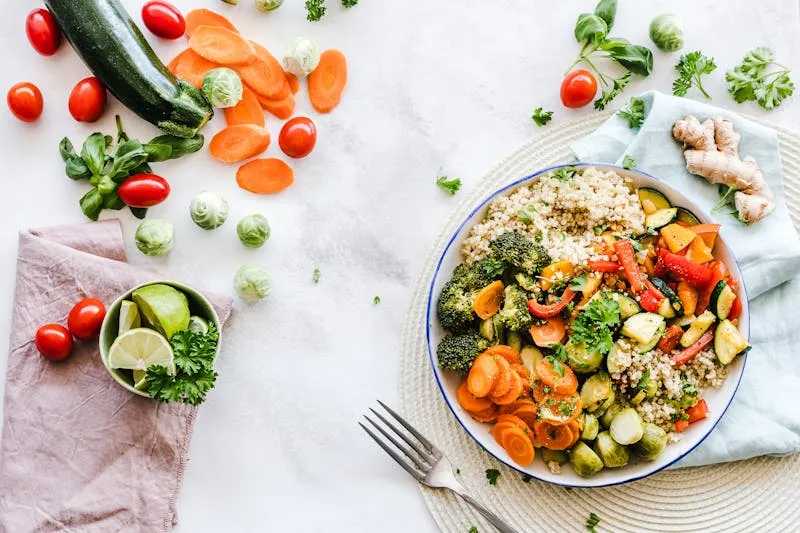
Go-shiki (五色) — five colours: white, black, red, green/blue, yellow. A Japanese meal should ideally contain all five. This isn't gratuitous aesthetics — each colour corresponds to a different nutritional group. Rice (white), nori seaweed (black), salmon or pickles (red), green vegetables, egg yolk or fried tofu (yellow). Visual diversity guarantees nutritional diversity.
Go-mi (五味) — five flavours: sweet, salty, sour, bitter, umami. The concept of umami is Japanese — identified in 1908 by chemist Kikunae Ikeda while studying kombu. It's that deep, savoury, enveloping flavour found in dashi, soy sauce, mushrooms, aged cheese. Umami is the keystone of Japanese cooking.
Go-ho (五法) — five techniques: raw (nama), grilled (yaki), steamed (mushi), boiled (ni), fried (age). A complete meal ideally uses several of these techniques.
Kristina's tip — You don't need to master washoku philosophy to cook Japanese at home. But remember one principle: ichigo ichie (一期一会) — "every moment is unique." In cooking, this translates to respecting seasonality and fresh ingredients. Cook what's in season, treat it with respect, and you're already in the Japanese spirit.
The essential Japanese storecupboard
You don't need a full Asian supermarket to cook Japanese. You need eight core ingredients — available in most supermarkets or online — that'll let you make 80% of classic recipes.
The 8 essentials:
- Soy sauce (shoyu) — Not just any. Kikkoman is a solid standard, widely available. Choose "naturally brewed" (jōzō shōyu), not the chemically hydrolysed version. Two main types: koikuchi (dark, most common) and usukuchi (light, saltier but lighter in colour for clear broths).
- Mirin — Sweet rice wine for cooking. Adds roundness and a lacquered gloss. "Real" mirin (hon mirin) contains ~14% alcohol. "Mirin-style seasoning" (mirin-fū) contains less than 1% and often includes glucose syrup — an acceptable but less subtle substitute.
- Rice vinegar — Milder and less acidic than wine vinegar. Essential for sushi rice, Japanese dressings, marinades.
- Miso — Fermented soybean paste. Three families: shiro miso (white, mild, for light soups and marinades), aka miso (red, intense, for stews and sauces), awase miso (blend of both, versatile). Start with shiro — it's the most approachable.
- Dashi granules (hondashi) — Instant Japanese stock. Not as good as homemade dashi, but infinitely practical for a Tuesday night. 1 tsp in 500 ml hot water = a decent stock for miso soup or sauces.
- Japanese rice (short grain) — Not basmati, not long grain. Japanese rice (japonica) is short-grained and round, slightly sticky when cooked. It's what makes sushi and donburi possible. In supermarkets, look for "sushi rice" or "Japanese rice." Koshihikari is the gold-standard variety.
- Toasted sesame oil — Used as a finishing touch, never for cooking (it burns quickly). A few drops transform a dish.
- Nori seaweed — In sheets (for maki and onigiri) or flakes (furikake) to sprinkle on rice. Umami sea flavour that boosts everything.
The "extras if you want to go further":
- Kombu — Dried kelp for homemade dashi
- Katsuobushi — Dried bonito flakes for dashi
- Panko — Japanese breadcrumbs (airier, crunchier than standard breadcrumbs)
- Cooking sake — For deglazing and marinades
- Firm tofu — Versatile protein
- Fresh ginger — Essential for sauces and marinades
- Wasabi in a tube — More practical than powder (and "real" fresh wasabi is virtually unobtainable outside Japan)
Warning — Cheap soy sauce found in supermarkets is often made by chemical hydrolysis (HVP) in days, instead of natural fermentation over months. The flavour difference is massive. Check the ingredients: a good soy sauce contains soybeans, wheat, water, salt. Full stop. No caramel, no glucose syrup, no flavour enhancers.
Perfect rice — the foundation of everything
In Japanese, the word "gohan" (ご飯) means both "cooked rice" and "meal." That's no coincidence. Rice IS the meal. Everything else — fish, vegetables, soup — is "the accompaniment" to the rice (okazu). This inverted hierarchy compared to Western cooking tells you everything about the importance of rice in Japanese cuisine.
The perfect rice method (without a rice cooker):
- Measure — 180 g of rice per person (one "gō," the Japanese unit for rice).
- Wash — This is the step 90% of Westerners skip, and it's exactly the one that makes the difference. Place the rice in a large bowl, cover with cold water, swirl gently with your fingers. The water turns white (that's surface starch). Drain. Repeat 3–4 times until the water runs almost clear. This washing removes excess starch that would make the rice mushy and gummy (the bad kind of sticky).
- Soak — Leave the rice soaking in fresh water for 30 minutes. This allows the grains to absorb water evenly, guaranteeing uniform cooking. Yes, 30 minutes. No, you can't skip this step. It's where the magic happens.
- Drain — Drain the rice in a sieve for 5 minutes.
- Cook — In a heavy-bottomed saucepan: rice + cold water in a 1:1.1 ratio (for 360 g rice, 400 ml water). Lid on. Medium heat until boiling. As soon as it boils (you'll see steam escaping), turn to the lowest setting for 12 minutes. DO NOT LIFT THE LID. Seriously. Steam is the key.
- Rest — Turn off the heat. Leave to rest for 10 minutes, lid still on. During these 10 minutes, the steam finishes cooking the top grains and moisture redistributes evenly.
- Fluff — Lift the lid, fluff the rice with a paddle (shamoji) using gentle cutting motions — don't stir in circles, you'd crush the grains. Cut, lift, fold.
Kristina's tip — Japanese rice is eaten at room temperature or warm, NEVER cold from the fridge. For next-day bentos, reheat 1 minute in the microwave with a splash of water (or a damp cloth over it) to restore the texture. Cold rice is hard and dry — that's not a flaw in your cooking, it's the nature of starch recrystallising.
Sushi rice (shari):
Same method, but after cooking, pour over a seasoned rice vinegar mixture (for 360 g cooked rice: 3 tbsp rice vinegar, 1 tbsp sugar, 1 tsp salt — heated to dissolve the sugar). Pour over the hot rice and mix with cutting motions while fanning with a fan (or a magazine, or a piece of cardboard — the idea is to cool the rice quickly whilst seasoning it). Sushi rice should be glossy, each grain vinegared but not soaking, at room temperature.
Dashi — the founding stock

Dashi is to Japanese cooking what a fond de veau is to French cuisine: the invisible foundation that gives depth to everything. Except dashi is infinitely simpler to make — two ingredients, ten minutes — and it's the quintessence of umami.
Ichiban dashi (first stock):
- Place 10 g kombu (dried kelp) in 1 litre cold water. Soak 30 minutes (or overnight in the fridge if you're planning ahead).
- Place over medium heat. REMOVE THE KOMBU just before it boils (when small bubbles appear at the bottom). If you boil the kombu, it releases slimy, bitter substances.
- Bring to the boil. Turn off the heat.
- Add 20 g katsuobushi (bonito flakes). Steep 3–5 minutes without stirring.
- Strain through a cloth or fine sieve. Don't squeeze the flakes — it'll make the stock cloudy.
The result is a clear golden stock, limpid, with a depth of flavour that seems disproportionate to the simplicity of the recipe. It's umami in its purest form — natural glutamate (from the kombu) + inosinate (from the katsuobushi) which, combined, create a scientifically documented flavour synergy.
Niban dashi (second stock):
The same kombu and katsuobushi returned to 750 ml water, brought to the boil and simmered for 10 minutes. More modest in flavour, perfect for miso soups and vegetable simmering. Zero waste.
Warning — Dashi granules (hondashi) contain added MSG (E621) and a lot of salt. It's convenient, but if you want the authentic flavour, make dashi from scratch at least once — the difference is striking. And it takes only 10 minutes of active work. Kombu and katsuobushi are available from any Asian grocery and keep for months.
Soy sauce, mirin, miso: the magic trio
If dashi is the foundation, the trio of soy sauce–mirin–miso is the architecture. These three ingredients, alone or combined, form the seasoning base for 90% of everyday Japanese cooking.
Soy sauce (shoyu):
Fermentation of soybeans + wheat + salt + water over 6 to 18 months. The result is an umami-rich liquid with an aromatic complexity that goes far beyond "salty." Soy sauce naturally contains glutamate (no added E621). In cooking, it often replaces salt — but with a depth salt doesn't have.
The three basic uses:
- Direct seasoning — a few drops on rice, tofu, fish
- Sauce base — soy + mirin + dashi = the universal tare (sauce)
- Marinade — soy + mirin + ginger + garlic = teriyaki
Mirin:
Sweet rice wine that brings three things: sweetness (without being as blunt as sugar), gloss (proteins and sugars caramelise on the surface), and aromatic depth. Rule of thumb: mirin and soy sauce almost always go together, in equal proportions.
Miso:
Fermented soybean paste — alive, rich in probiotics, and incredibly versatile. Beyond miso soup, it works as a marinade (chicken miso, salmon miso), vinaigrette (miso + rice vinegar + sesame oil), sauce (miso + mirin + a splash of dashi), and even dessert (miso caramel — don't laugh, it's incredible).
Kristina's tip — The magic formula for everyday Japanese cooking: 1 part soy sauce + 1 part mirin + 1 part sake (or water). It's the base for teriyaki, nikujaga, oyakodon, and dozens more dishes. Master this ratio and you hold the key to Japanese home cooking.
5 iconic recipes to master
These five recipes are ranked by difficulty. Each teaches a fundamental concept of Japanese cooking. Master them in order, and you'll have the foundations to explore everything else.
1. Miso soup (misoshiru) — Concept: dashi in action
Miso soup is breakfast, lunch and dinner in Japan. It's the most quotidian dish that exists — every family has their version, and there's no "correct" recipe. Here's a solid foundation.
Bring 500 ml dashi to a gentle simmer (not a rolling boil). Add 100 g silken tofu cut into 1 cm cubes and 1 tbsp dried wakame (seaweed that rehydrates in 2 minutes in the broth). When the tofu is warm (2 minutes), take the pan off the heat. In a small bowl, dissolve 2 tbsp miso in a little hot broth, then pour into the pan. IMPORTANT: miso must NEVER boil. Heat destroys the probiotics and alters the flavour. Add sliced spring onion. 8 minutes flat.
2. Onigiri (rice balls) — Concept: rice as a vehicle
Onigiri are the Japanese sandwich — the thing you take everywhere, eat with your hands, customise endlessly. With rice still warm (but handleable): wet your hands (so the rice doesn't stick), sprinkle with salt. Take a handful of rice (~100 g), place a filling in the centre (tuna mayo, umeboshi/salt plum, flaked grilled salmon), shape into a triangle by pressing firmly but not too hard. Wrap in a half sheet of nori. 3 minutes per onigiri. The Japanese take them to work, on hikes, on picnics. The ultimate snack.
3. Gyoza (pan-fried dumplings) — Concept: yaki cooking
Mix 250 g pork mince with 150 g finely shredded Chinese cabbage (salted and squeezed dry to remove water), 2 sliced spring onions, 1 tbsp soy sauce, 1 tsp sesame oil, 1 tsp grated ginger, 1 minced garlic clove. Place 1 tsp filling in the centre of each gyoza wrapper (found in the chilled Asian section). Fold into a half-moon, pinching the edges with water to seal.
The cooking is the genius part. Oil in a frying pan. Arrange gyoza in a circle, flat side down. Medium-high heat, 2–3 minutes until the bottom is golden. Pour 80 ml water into the pan, cover immediately. Steam-cook for 5 minutes until the water evaporates. Remove the lid, let it go 1 more minute so the bottom crisps up again. The result: golden and crackling underneath, soft and juicy on top. This is the yaki-gyoza method and it's the most satisfying cooking technique that exists.
Dipping sauce: 2 tbsp soy sauce + 1 tbsp rice vinegar + a few drops sesame oil + chilli oil if you like heat.
4. Oyakodon (chicken and egg rice bowl) — Concept: the donburi
The donburi (丼) is the concept of "a bowl of rice topped with something." The oyakodon — literally "parent-child bowl" (chicken = parent, egg = child; yes, the Japanese have a particular sense of humour) — is the most popular.
Cut 200 g chicken thighs into 2 cm pieces. Slice 1 onion. In a small pan: 100 ml dashi, 2 tbsp soy sauce, 2 tbsp mirin, 1 tsp sugar. Bring to a simmer. Add the onion, 2 minutes. Add the chicken, cover, 5 minutes. Lightly beat 3 eggs (you want streaks of white and yolk, not a uniform mixture). Pour over the chicken in a spiral, cover, 1–2 minutes — the eggs should be barely set, still runny in the centre. Slide onto a bowl of hot rice. Sliced spring onion. 12 minutes for the ultimate comfort meal.
Warning — Egg doneness in oyakodon is crucial: they must be RUNNY ("half-cooked," toro-toro in Japanese). If you cook them through completely, the dish loses its magic — that flowing texture that mingles with hot rice is the entire point. If you're uncomfortable with softly cooked eggs, use very fresh, high-quality eggs.
5. Karaage (Japanese fried chicken) — Concept: light frying
Karaage is to Japan what fried chicken is to America — a national dish, universal comfort — except it's lighter, more aromatic, and technically superior.
Cut 500 g boneless chicken thighs into 3–4 cm pieces. Marinate 30 minutes in: 3 tbsp soy sauce, 1 tbsp sake (or water), 1 tbsp grated ginger, 2 grated garlic cloves, 1 tsp sesame oil. Drain. Coat each piece in potato starch (katakuriko) — not wheat flour; it's the starch that gives that uniquely airy crunch. Fry in oil at 170°C for 3–4 minutes, then raise to 180°C and re-fry for 1–2 minutes (this double frying is the karaage secret: crispy outside, juicy inside, zero excess grease). Drain on kitchen paper. Lemon wedges.
Kristina's tip — Double frying (nido-age) is the Japanese secret to perfect crunch. The first fry (170°C, 3–4 min) cooks the inside. The second (180°C, 1–2 min) sears and crisps the outside. Without the second fry, the crunch goes soggy within minutes. With it, it lasts an hour.
The art of presentation — eating with your eyes
In Japan, they say "the eyes eat too" (me de taberu). Presentation isn't a bonus — it's an integral part of the meal. You don't need Japanese crockery to apply these principles:
Asymmetry over symmetry. A Japanese dish is never centred perfectly on the plate. Asymmetry creates movement, naturalness. Place the main element slightly off-centre, with intentional empty space.
Height over spread. Stack vertically rather than spreading flat. A rice bowl topped with a garnish has more presence than a spread-out plate.
Texture contrasts. Crispy (tempura, karaage) beside soft (rice, tofu). Crunchy (pickles, raw veg) beside meltingly tender (braised meat).
Garnish as punctuation. A scattering of sesame, a few shiso leaves, a sliver of yuzu zest, spring onions cut on the diagonal. These aren't decorations — they're flavour accents placed with intention.
The right vessel. The Japanese eat from bowls (for rice and soups), flat plates (for grilled fish), compartmentalised trays (bento). At home, use what you have — but remember that smaller dishes create an impression of generosity and care.
Common Western mistakes
I've made every one of these mistakes. Every single one. You'll probably make a few too — and that's fine. But you might as well know about them in advance.
Drowning everything in soy sauce. Soy sauce is a seasoning, not a dipping pool. Sashimi is dipped delicately, fish-side (not rice-side for sushi). Flooding a dish with soy sauce is like grinding 15 turns of pepper onto a Wagyu steak. You're burying the flavour instead of elevating it.
Not washing the rice. Unwashed Japanese rice is mushy, gummy (the bad kind), with a starchy taste. Washing takes 2 minutes and makes the difference between "rice" and "Japanese rice." It's not optional.
Boiling the miso. Miso dissolves in broth OFF THE HEAT or over very gentle heat. If you boil it, you kill the lactic ferments (probiotics), alter the flavour, and the texture turns grainy. Add it last, always.
Confusing Japanese and Chinese. The techniques, flavours, and philosophies are radically different. Chinese cooking is built on the wok and fierce heat. Japanese cooking values gentle cooking, raw preparation, and precision. Confusing them is like confusing Italian and French cooking because they're both "European."
Forgetting umami. The "flat" taste of a failed Japanese dish almost always comes from a lack of umami. Dashi, soy sauce, miso, mushrooms — each brings umami. If your dish lacks depth, it's probably missing one of these four.
Warning — The wasabi served in 99% of restaurants outside Japan is NOT wasabi. It's horseradish dyed green with food colouring. Real wasabi (Wasabia japonica) is a freshly grated root that costs around £200 per kilo and loses its flavour within 15 minutes. It's not a tragedy — fake wasabi is tasty too — but you might as well know.
Frequently asked questions
Can you make real Japanese food without a rice cooker?
Absolutely. Millions of Japanese people cooked perfect rice in a saucepan for centuries before the rice cooker was invented (1955). The saucepan method described in this article produces identical results. A rice cooker is a convenience, not a necessity. If you cook rice more than 3 times a week, it becomes a smart investment (Zojirushi and Tiger are the benchmarks). Otherwise, the saucepan is all you need.
Where can I buy Japanese ingredients in the UK?
Kikkoman soy sauce is in every supermarket. Mirin, rice vinegar, and sushi rice are in the "world foods" aisle. For kombu, katsuobushi, miso, panko, and specialities: Asian supermarkets (Wing Yip, Loon Fung, SeeWoo) or online (Japan Centre, Sous Chef, Amazon). Miso is increasingly available in health food shops too.
Is Japanese food healthy?
The Japanese have one of the highest life expectancies in the world, and diet is a key factor. The traditional Japanese diet is rich in fish, vegetables, soy, and seaweed, and low in saturated fat. However, it can be high in sodium (soy sauce, miso, pickles) — the Japanese consume an average of 10 g of salt daily, well above the NHS recommendation of 6 g. The key: moderate the soy sauce and vary your seasoning sources.
Can I use basmati rice for Japanese cooking?
Not really. Basmati (long grain, non-sticky) is excellent for Indian cooking but doesn't work for sushi, onigiri, or donburi — it doesn't stick enough to be shaped, and it has a nutty aroma absent from Japanese rice. Japonica rice (short grain, slightly sticky) is essential. In supermarkets, look for "sushi rice" or "short grain rice."
How do I store miso?
Miso keeps in the fridge, well sealed, for 6 to 12 months. As it's a living fermented product, it continues to evolve slowly — a white miso may darken over time, which is normal. Don't freeze it (it alters the texture). A miso that's slightly changed colour is still perfectly safe to eat.
What's the difference between sushi and sashimi?
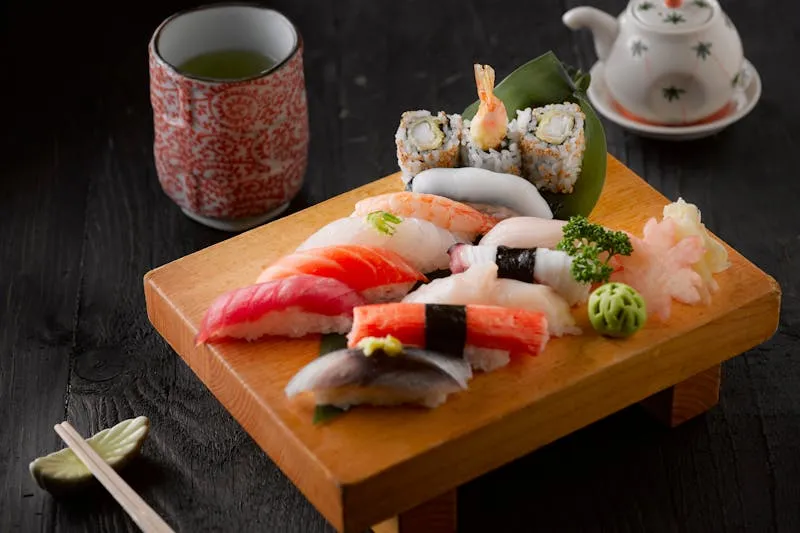
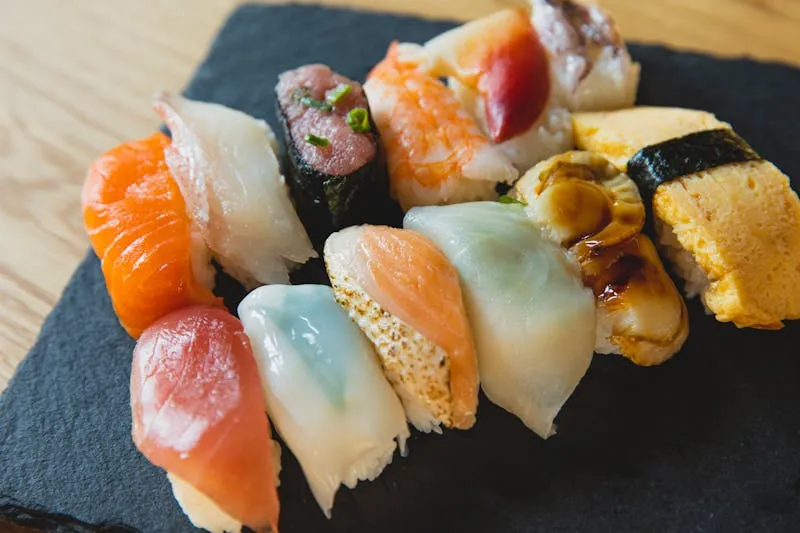
Sashimi is sliced raw fish, served alone. Sushi is vinegared rice (shari) paired with a topping — which can be raw fish, but also grilled fish, vegetables, or omelette. Nigiri (rice ball + fish slice) and maki (rice + filling + nori roll) are the most well-known sushi forms. The common assumption that "sushi = raw fish" is incorrect — sushi is first and foremost a story about rice.
Is Japanese cooking hard to master?
The basics are surprisingly accessible. Miso soup, perfect rice, gyoza, oyakodon — all of these can be mastered in a few attempts. What's difficult is professional-level sushi (10 years of apprenticeship in Japan), high-level tempura, and kaiseki (formal multi-course dining). But Japanese home cooking (kateiryōri) — what actual Japanese people cook at home — is straightforward, logical, and remarkably forgiving for beginners.