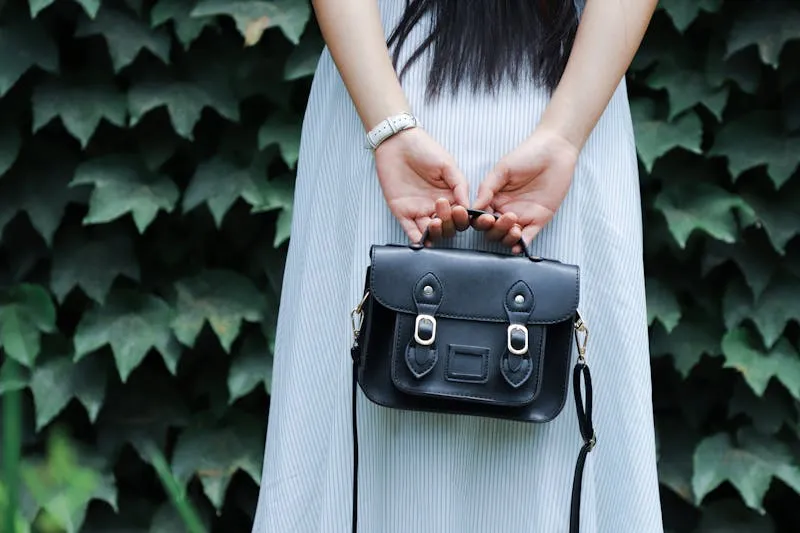
I was seventeen when I saw my first Birkin. Not in an Hermès window — on the Paris metro, a grey Tuesday morning, carried by a woman in jeans and white trainers. She held it carelessly, like an old travel companion, and it was precisely that nonchalance that mesmerized me. That bag told a story without her needing to say a single word.
Years later, digging through fashion archives for an entirely different topic, I stumbled upon a number that stopped me cold: a Himalaya crocodile Birkin sold for $388,000 at Christie's in 2022. One. Handbag. And yet, the more I researched, the more I understood that price wasn't absurd — it was the culmination of a desire machine perfectly engineered over decades.
Sure, you can dismiss it as superficial. You can roll your eyes at six-year waiting lists. But it-bags reveal something far deeper about our relationship with beauty, status, craftsmanship, and — let's be honest — the psychology of desire. And that's genuinely fascinating.
How an it-bag is born — anatomy of a phenomenon
The term "it-bag" emerged in the 1990s, fuelled by the Supermodel Era and the rise of glossy fashion magazines. But the concept predated the word by decades. A bag becomes "it" when it transcends its utilitarian purpose to become an object of cultural desire.
The recipe is surprisingly codified. First, a design distinctive enough to be recognizable from ten metres away — Chanel's quilting, Dior's cannage, Hermès' Togo leather. Then, a story. Not a marketing brief — a real story: a chance meeting on a plane (Birkin), a tribute to a princess (Lady Dior), a designer's personal obsession (Silvia Venturini Fendi's Baguette).
Third ingredient: scarcity — genuine or engineered. Hermès doesn't take direct orders for the Birkin. You can't walk into a boutique and say "I'll take that one." You need a purchase history, a relationship with a sales associate, and patience. A lot of patience. This artificial scarcity transforms a luxury object into a trophy.
Fourth factor, and no less important: organic celebrity endorsement. Not a paid placement, not an Instagram campaign — genuine adoption. Jane Birkin with her wicker basket then her Birkin. Princess Diana with her Lady Dior. Carrie Bradshaw (yes, a fictional character) with her Fendi Baguette. When a cultural icon claims a bag, she breathes into it an aura that millions in advertising budget couldn't buy.
And the fifth? Objective quality. Not one of these bags is a mediocre product masked by branding. A Birkin requires 48 hours of artisanal work by a single craftsman. A 2.55 uses lambskin selected from the top 1%. This excellence isn't a selling point — it's a prerequisite.
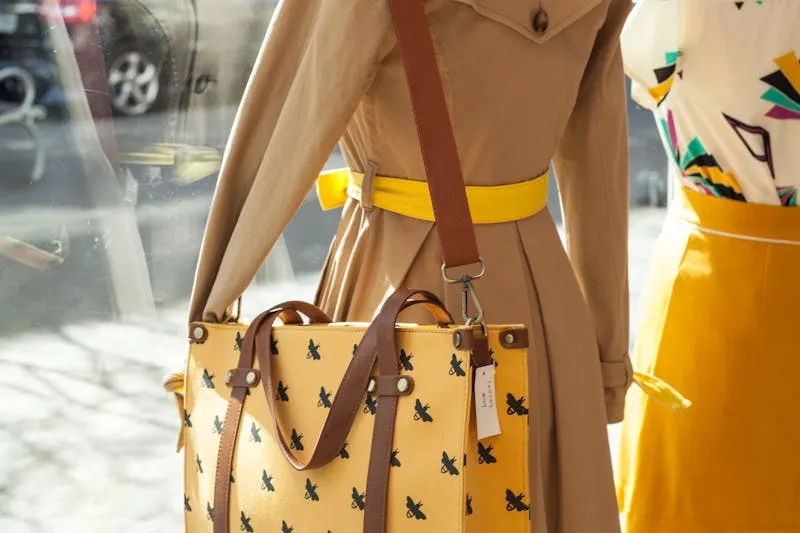
The Hermès Birkin — the ultimate holy grail
The story is well-known, but it deserves telling properly — because the version circulating on Instagram is often truncated. It's 1984, on a Paris-to-London flight. Jane Birkin, Franco-British actress and singer, is seated next to Jean-Louis Dumas, Hermès CEO. Her wicker basket topples over, scattering its contents down the aisle. She complains: impossible to find a leather bag that's both elegant and practical.
Dumas sketches designs on an airsickness bag (an authentic detail I love). By 1986, the "Haut à Courroies" has been redesigned — enlarged, softened, reimagined. The Birkin is born.
What makes the Birkin unique, beyond the legend, is Hermès' distribution system. No online sales. No phone orders. A client must establish a "purchase relationship" — meaning: regularly buy other Hermès products (scarves, belts, fragrances) before being "offered" a Birkin by their SA (Sales Associate). This system — which some call discriminatory, and which is indeed the subject of lawsuits in the US — fuels a scarcity that keeps resale prices 20 to 40% above retail.
The numbers are staggering. A Birkin 25 in Togo leather starts at roughly €9,800 at retail (2025 prices). On the secondary market, the same bag trades between €12,000 and €18,000. In crocodile? Multiply by five. In Himalaya (the rarest)? Over €200,000. And these prices only climb: according to Baghunter, the Birkin has outperformed the S&P 500 over 35 years with an average annual return of 14.2%.
But don't reduce the Birkin to an investment. It's first and foremost an object of remarkable functional beauty. Four sizes (25, 30, 35, 40 cm), dozens of leathers (Togo, Clemence, Epsom, Box, Swift, exotics), hundreds of colour-hardware combinations. Each Birkin is unique — and it ages with you, developing a character no new bag can match.
The Chanel 2.55 — February 1955's quiet revolution
February 1955 — hence the name "2.55." Coco Chanel is 71 years old and she's had enough. Enough of handbags women must clutch at arm's length, robbing them of their hands. At a time when women are only just beginning to conquer the workplace, it's a physical constraint that is also, symbolically, a shackle.
Her solution? A chain. Inspired by chains the nuns at the Aubazine orphanage (where she grew up) wore to hang their keys. This biographical detail isn't trivial — it explains why the 2.55's shoulder strap isn't a gimmick but a manifesto: women must have free hands.
Every element of the 2.55 carries meaning. The diamond quilting? Inspired by jockeys' jackets at Chantilly, where Coco spent her weekends. The burgundy lining? The colour of the orphanage uniform. The interior zippered pocket? Where Coco hid her love letters. The rectangular clasp called the "Mademoiselle Lock"? Because Coco never married — by choice.
The Classic Flap's price evolution is a case study in luxury strategy. In 2010, a Medium Classic Flap cost about €2,850. In 2025, the same bag retails at €10,800. That's a 279% increase in fifteen years — far outpacing inflation. Chanel deliberately repositioned the bag toward ultra-premium, with biannual price increases of 10 to 15%. Controversial strategy, but economically brilliant: sales have never weakened.
If you take one thing away about the 2.55, let it be this: it wasn't designed as a luxury object. It was designed as a tool of freedom for women. The fact that it became one of the world's most expensive bags is a paradox Coco would have probably hated — and secretly adored.
The Lady Dior — when a princess writes history
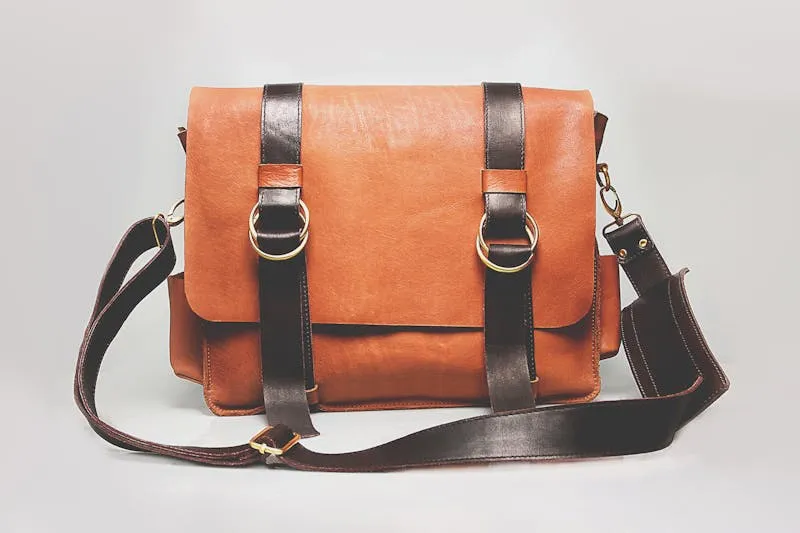
1995. Bernadette Chirac, France's First Lady, is looking for a gift for Princess Diana during her visit to Paris for the Cézanne exhibition at the Grand Palais. She asks the House of Dior for an exclusive model. The bag has no name yet — internally, it's simply called "Chouchou."
Diana loves it instantly. She carries it to the opening — photographs broadcast worldwide. Then she carries it again. And again. And again. She orders it in different sizes and colours. In 1996, Dior officially renames the bag "Lady Dior" — a direct tribute to Diana, with her permission.
What makes this story unique in the it-bag universe is the authenticity of the association. No contract, no payment, no agency brief. Diana simply loved this bag — and her love was visible every time she carried it. After her death in 1997, the Lady Dior became an emotionally charged object, a tangible link to a woman the entire world mourned.
Technically, the Lady Dior is a leatherworking masterpiece. The "cannage" pattern — quilted, stuffed diamond shapes — is directly inspired by the Napoleon III chairs Christian Dior used at his fashion shows. Each bag requires eight hours of work. The D-I-O-R letter charms suspended on the side clink softly when you walk — a sensory detail planned from inception.
Today, the Lady Dior ranges from €3,900 (mini, calfskin) to over €7,000 (large, exotic leather). The "Lady Dior Art" edition, limited and decorated by contemporary artists, can exceed €15,000 — and resells for well above that.
The Fendi Baguette — the bag that conquered Sex and the City
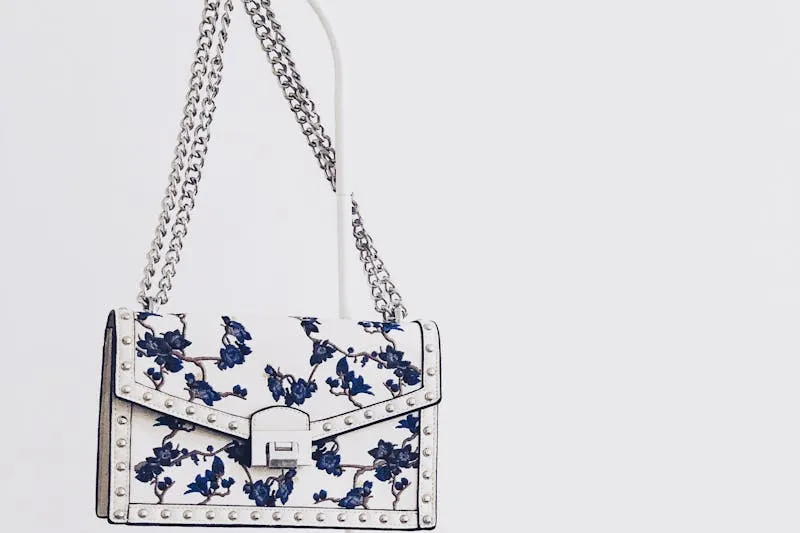
1997. Silvia Venturini Fendi designs a small rectangular bag that tucks under the arm like a Parisian baguette. The design is almost provocative in its simplicity — at a time when luxury means maximum ostentation, the Baguette is compact, understated, almost offhand.
Then comes 2000 and a Sex and the City episode that changes everything. Carrie Bradshaw is mugged on the street. The assailant demands her bag. Her response, now legendary: "It's not a bag, it's a Baguette!" In one line, Sarah Jessica Parker catapults an Italian handbag into global pop culture. Sales explode. Fendi releases over 1,000 different versions of the Baguette — pearls, fur, denim, sequins, embroidery, python.
What the Baguette revolutionized was the notion of a bag as expressive accessory rather than functional tool. Before it, a luxury bag was a sober, timeless investment. With the Baguette, Fendi declared: a bag can be fun, exuberant, seasonal — and that's perfectly legitimate. This philosophy paved the way for every "statement" bag that followed.
Current retail: between €2,600 and €4,200 depending on material. But the real game is on the vintage market: an embroidered Baguette from the 2000-2003 collections in good condition can fetch €3,000 to €8,000 on The RealReal or Vestiaire Collective.
Other legends — Speedy, Peekaboo, Boy, and Puzzle
The it-bag pantheon obviously extends beyond these four monuments. Here are the other bags that made history — each in their own way.
The Louis Vuitton Speedy (1930/1965). Originally designed as a compact travel bag, downsized to 25 cm at Audrey Hepburn's request in 1965. It's the world's best-selling luxury bag — and paradoxically, the least "exclusive" of the it-bags. Its LV monogram is so recognizable it's become counterfeiters' primary target. Retail: roughly €1,340 for the Speedy 25 in classic monogram — making it the most accessible entry point into it-bag territory.
The Fendi Peekaboo (2009). Designed by Silvia Venturini Fendi — yes, the same creator as the Baguette. Where the Baguette was expressive and exuberant, the Peekaboo is architectural, structured, almost austere. Its name comes from the fact that when open, the bag "peeks" at its contrasting interior. It's the bag for women who don't want their bag speaking for them. Retail: €4,200 to €6,000.
The Chanel Boy (2011). Karl Lagerfeld created this bag as a tribute to Boy Capel, the love of Coco's life — a British polo player who financed her first boutique. The Boy is edgier, more masculine than the 2.55: heavy chain, chunky clasp, angular lines. It won over a generation that found the Classic Flap "too prim." Retail: around €6,500 for the medium in calfskin.
The Loewe Puzzle (2015). Jonathan Anderson, appointed creative director of Loewe in 2013, designed a bag made from geometric leather pieces assembled like a 3D puzzle. The result is technically stunning — and visually unique. The Puzzle transformed Loewe from a low-profile Spanish house into a major luxury player. Retail: €3,200 to €4,500.
The it-bag as investment — myth or reality?
Let's talk money — since it's the elephant in the room. The idea that a luxury bag could be an "investment" makes traditional financiers cringe and collectors' hearts race. The truth is nuanced.
What appreciates: rare pieces in excellent condition from heritage houses. A Birkin 25 in Togo leather bought at retail in 2015 for €7,000 resells today between €12,000 and €15,000 — an annualized return of roughly 7 to 9%, before taxes and fees. A Chanel Classic Flap bought for €4,500 in 2018 is worth €8,000-9,000 on the secondary market today. Baghunter's 2016 study shows the Birkin delivered an average 14.2% annual return over 35 years — outperforming both gold and the S&P 500.
What doesn't appreciate: mainstream items from accessible luxury brands, "trendy" models without historical heritage, bags in synthetic materials, pieces in poor condition. A Michael Kors or Coach bag bought for €400 on sale will never be worth more than its sale price. And even at the high end, a damaged bag or one missing its original accessories loses 40 to 60% of its resale value.
Golden rules if you're considering the investment angle:
- Favour classic sizes — Birkin 25 and 30, Chanel Medium, Lady Dior Medium are the most liquid on the secondary market
- Choose timeless colours — black, gold, étoupe, navy blue sell faster and higher than seasonal colours
- Keep everything — box, dust bag, authenticity card, receipt. The complete set can add 15 to 25% to resale value
- Buy at retail — since retail price is below resale for the most sought-after pieces, buying in-store guarantees the best margin
- Store properly — stuff the bag with tissue paper, keep it in its dust bag, avoid humidity and direct light
But here's something investment-focused luxury articles never say: buying a bag solely as a financial instrument is a bad idea. Liquidity is low (you can't sell a Birkin with a click like a stock), authentication takes time, and trends can reverse the curve. Buy a bag because you love it — and if its value increases, consider it a bonus.
Choosing and caring for your iconic bag
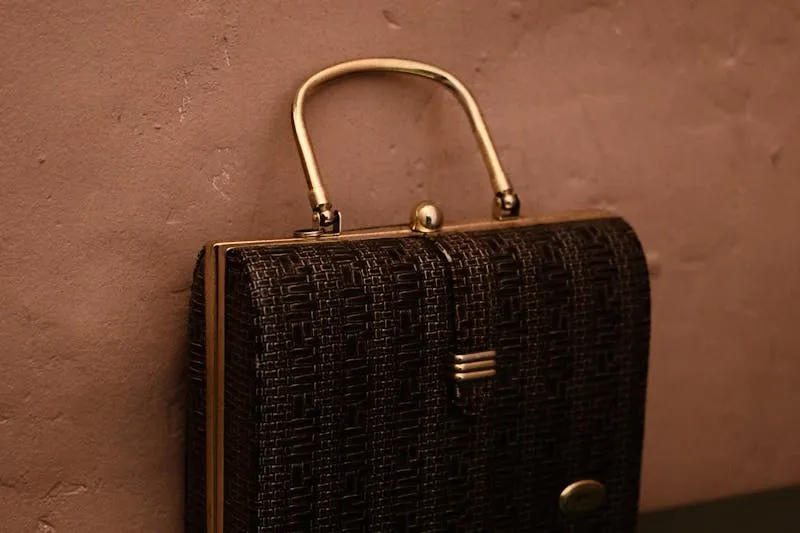
So you've found your grail. Maybe it's a Chanel 2.55 you've dreamed of since your twenties. Maybe a Loewe Puzzle that matches your minimalist-but-not-boring style. Maybe a Birkin — in which case, arm yourself with patience. Here's how to make the right choice and keep it for decades.
Choose based on your lifestyle, not your Instagram feed. A bag you're afraid to set on a restaurant floor is a bag that owns you, not the other way around. If you take public transport, avoid Hermès Box leather (ultra-scratch-sensitive). If you carry children, prioritize a shoulder or crossbody bag. If you travel often, the Speedy or Puzzle (it folds!) will be your best allies.
Try. It. In. Store. Dimensions on a website don't tell the whole story. A Birkin 35 seems reasonable in photos — in person, it's practically a tote. A Chanel WOC (Wallet on Chain) looks adorable online — in person, you can't even fit your current phone inside. Go to the boutique, load the bag with your everyday items, stand in front of a mirror for ten minutes. It's the only way to know.
For maintenance, each leather has its demands:
- Togo / Clemence (Hermès) — the most resilient. A damp cloth wipe is sufficient. Leather conditioner once a year maximum
- Lambskin (Chanel) — fragile! Avoid rain, friction, dark denim (colour transfer). Store stuffed, always in its dust bag
- Calfskin (Dior, Fendi) — medium resilience. Waterproof before first use. Condition every six months
- Canvas / coated canvas (Louis Vuitton) — very resilient but watch the corners: canvas cracks over time. Never clean with alcohol
- Box leather (Hermès) — gorgeous but temperamental. Scratches at the slightest contact. Develops a stunning patina over time — but you must accept the marks
A final word on the secondary market, since it's often the only way to access certain models. Reliable platforms: Vestiaire Collective (Europe), The RealReal (US), Rebag, Collector Square. Each has its own authentication process — but none is infallible. For pieces above €5,000, I recommend an independent authentication service as well (Entrupy, Real Authentication). That's €30-50 that could save you from a scam worth thousands.
And if you're just starting out, if this is your first real designer bag, here's my honest advice: start with a black classic in a medium size. Chanel Classic Flap, Lady Dior Medium, or Speedy 25. You'll learn to live with a beautiful bag, understand what you love and what you're missing — and your second purchase will be perfectly informed.
Frequently Asked Questions About It-Bags
How can I tell if an it-bag is authentic?
Check the stitching (even, no loose threads), leather quality (animal smell, not chemical), hardware (crisp engravings, not painted), and serial number. For secondary market purchases, use an independent authentication service like Entrupy (3D scanning) or Real Authentication. Platforms like Vestiaire Collective and The RealReal have their own processes, but double-checking on pieces above €3,000 is always recommended.
What's the best it-bag for a first purchase?
The Chanel Classic Flap Medium in black and the Louis Vuitton Speedy 25 are the two most versatile options. The Chanel is a bigger investment (~€10,800) but holds its value exceptionally well. The Speedy (~€1,340) is the most accessible entry point and suits virtually any style and occasion. Choose based on your budget and risk tolerance.
Do it-bags lose value over time?
It depends entirely on the model and brand. Birkins, Chanel Classic Flaps, and Hermès Kellys consistently appreciate. Trendy models without historical heritage (ephemeral collaborations, accessible brands) lose an average of 50-70% of their value in the first year. The rule: the longer a bag's history and the more restrictive its distribution, the better it retains — or increases — its value.
How long does it take to get an Hermès Birkin?
There's no fixed timeline — that's the whole system. You need to develop a purchase relationship with an Hermès boutique, meaning regular purchases of other products (scarves, jewellery, fragrances). The typical wait ranges from 1 to 5 years depending on the boutique, desired model, and colour. Some clients are never offered one. It's this scarcity that makes the myth — and the price.
Can you carry a vintage it-bag daily?
Absolutely — it's actually their finest life! A 1990s Birkin, 2000s-era 2.55, or vintage Baguette carried with casual confidence radiates a charm that brand-new models simply don't have. The key is respecting the leather: condition it regularly, avoid prolonged rain exposure, and have it restored by a professional (not a generic cobbler) if needed. Houses like Hermès and Chanel offer their own restoration service — often the best option.