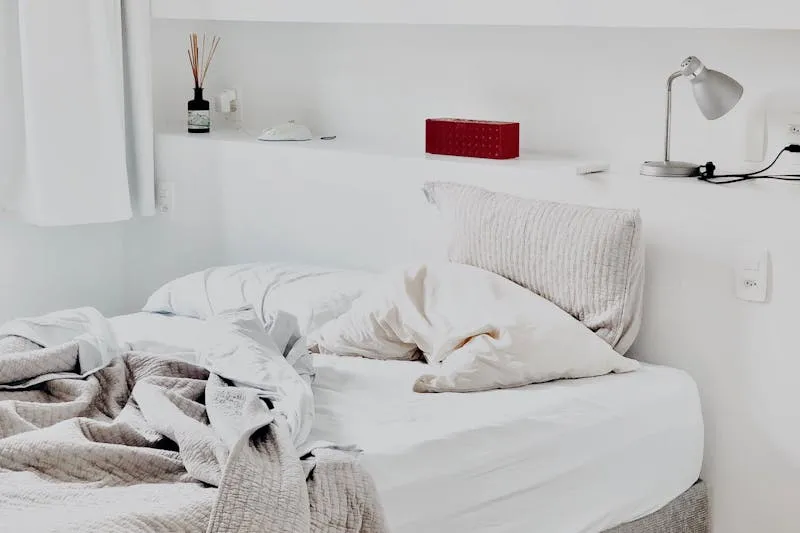
A friend once told me I was "aggressively wrong" about bedding. We were standing in her guest bedroom, and she'd just handed me a pillowcase — a single pillowcase — and asked me what I thought it was made of. "Silk?" I guessed, rubbing it between my fingers. "Nope. Cotton percale. Three hundred threads." She said it like she was revealing state secrets. And honestly, it kind of was. Because the sheets on my own bed at home — the ones I'd been sleeping in for three years — were also cotton. They were also "percale." And they felt nothing like this.
That conversation sent me down a rabbit hole I never expected. I learned that "100% cotton" is about as descriptive as "contains food" on a restaurant menu. That thread count is one of the most successfully marketed lies in home goods. That an $89 sheet set and a $29 one share the same label but share almost nothing else. This guide is what I wish I'd had before I spent a decade sleeping in mediocre sheets without realising it.
Why bedding matters more than you think

We spend roughly a third of our lives in bed. That's a stat you've probably heard before, but never fully absorbed. A third. If you live to 80, that's over 26 years lying between sheets. And yet most of us invest more in our daytime clothes — worn for 14 hours — than in the fabric that touches our skin for the other 10.
Bedding isn't just about comfort. It's about health. A low-quality fabric traps more dust mites, washes less effectively, deteriorates faster — and ends up accumulating detergent residue, dead fibres, and micro-organisms. The OEKO-TEX® Standard 100 certification exists specifically to verify that textiles don't contain substances harmful to skin. How many of your current sheets carry that certification? Worth checking.
And then there's the sensory dimension. Sleeping in long-staple cotton percale is a sensation that can't be described — it has to be experienced. The coolness of the fabric. The softness that intensifies with every wash. The gentle crispness as you slide in. It's a quiet, daily luxury, and it's surprisingly accessible once you know what to look for.
Fabric types: cotton, linen, Tencel, bamboo — fact vs fiction
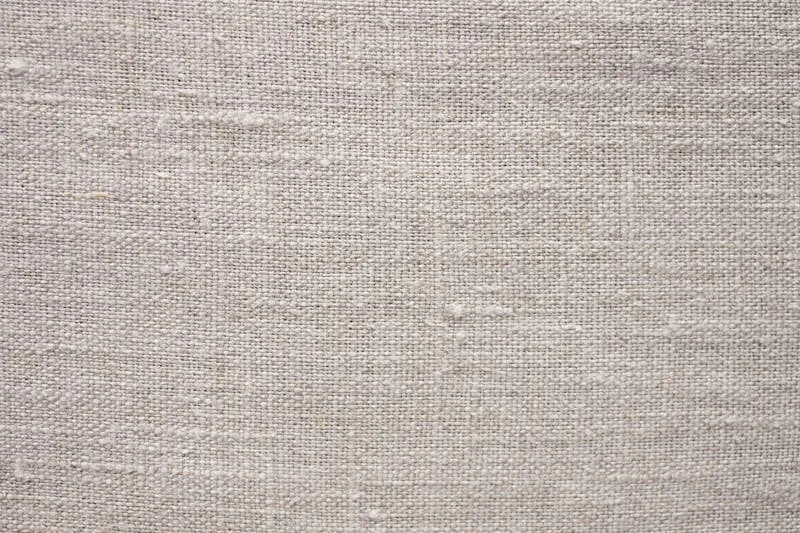
Everything starts with the fibre. It's the raw material of the fabric, and it determines the feel, durability, temperature regulation — and a significant portion of the price. Here are the main players, without the sales pitch.
Cotton — the reliable choice (when chosen well)
Cotton accounts for roughly 80% of bedding sold worldwide. But all cotton is not created equal. The fundamental difference is fibre length. Standard cotton (short-staple) produces a decent fabric that pills, loses shape, and fades in softness after a few dozen washes. Long-staple cotton — Egyptian cotton (Giza varieties), Supima (American Pima), Sea Island cotton — has fibres of 35mm or longer, which allows for a finer, smoother, more resilient yarn.
The trap: the label "Egyptian cotton" guarantees nothing on its own. Following major traceability scandals (the most notable in 2019, uncovered by the FBI), it became clear that a significant percentage of cotton marketed as "Egyptian" simply isn't. The Cotton Council International (CCI) certification for Supima and traceable labels (Better Cotton, GOTS) are far more reliable than the word "Egyptian" alone.
Linen — the summer king (and so much more)
Linen is the oldest fibre ever used by humans — traces have been found dating back 36,000 years. And there's a reason it has never disappeared: it's an exceptional fabric. Thermoregulating (cool in summer, insulating in winter), hypoallergenic, naturally antibacterial, and almost absurdly durable — a well-maintained linen sheet lasts 20 to 30 years. It gets softer with every wash without losing structural integrity.
Washed linen (stone-washed) is the ready-to-use version: pre-softened at the factory, it won't shrink further and has that characteristic rumpled drape that is its entire aesthetic identity. Yes, linen wrinkles. No, that's not a flaw — it's the sign of a living natural fibre. If wrinkles bother you, linen may not be your match (and that's fine).
The main barrier: price. A complete linen set (duvet cover + fitted sheet + pillowcases) costs between $200 and $400 depending on the brand. But when you calculate the cost per year of use (20 years minimum), it's often cheaper than budget cotton replaced every 3 years.
Tencel (Lyocell) — the eco-conscious technical fibre
Tencel is a cellulose fibre manufactured from eucalyptus or beech wood pulp in a closed-loop process that recovers 99% of the solvents used. Translation: it's one of the most environmentally sound fibres on the market. To the touch, Tencel is silky — smoother than cotton, almost slippery. It absorbs 50% more moisture than cotton, making it an excellent choice for sleepers who run hot or sweat at night.
The trade-off: pure Tencel is relatively delicate and wrinkles easily. The best Tencel sheets are often blends (Tencel-cotton, Tencel-linen) that combine Lyocell's softness with the structure of another fibre. In pure Tencel, expect to pay $150-250 for a set. Blends are more affordable.
Bamboo — watch out for the green packaging
"Bamboo" bedding is almost always bamboo viscose — meaning the original bamboo fibre is chemically dissolved using carbon disulphide (a toxic solvent) to be regenerated into yarn. The result is soft, yes. But the eco-friendly claims frequently attached to bamboo textiles are significantly overstated. The FTC has actually fined multiple brands for deceptive advertising on this exact point.
If you're drawn to the "bamboo" softness, Tencel (Lyocell) offers a comparable hand feel with a genuinely clean manufacturing process. It's the more honest alternative.
Percale, sateen, jersey: understanding weave types

The raw material (cotton, linen…) is the fibre. The weave is how the yarns are interlaced to form the fabric. And the weave determines the hand feel, appearance, and laundering behaviour as much as the fibre itself. Two "100% cotton" sheets can feel radically different depending on whether they're woven in percale or sateen.
Percale — the hotel crisp
A simple one-over-one-under plain weave. The result is a matte fabric, cool to the touch, with a slight crispness that hotel sheet enthusiasts live for. Percale is the standard in luxury hospitality and the choice of people who love the feeling of sliding into fresh, cool sheets. It softens beautifully over time without losing its character.
It's ideal for hot sleepers: the tight but breathable weave allows good airflow. The trade-off: percale wrinkles more than sateen — that's the deal. If you want perfectly smooth sheets without ironing, this isn't your pick (spoiler: no quality natural-fibre sheet comes out of the machine crease-free).
Cotton sateen — the enveloping softness
Important distinction: cotton sateen has nothing to do with synthetic satin (polyester sateen). It's a specific weave where one weft thread passes under three or four warp threads before crossing over. The result: a fabric with a luminous face, extremely smooth, with a slight glide. It's the choice for people who want to feel wrapped — almost cradled — by their sheets.
Sateen is warmer than percale — the denser weave retains more body heat. That's an asset in winter, a mild drawback in summer. Another advantage: it wrinkles significantly less. The flip side: sateen sheets are slipperier, which can be disconcerting at first (your duvet will slide around — duvet clips become essential).
Jersey — the T-shirt sheet
Jersey is knitted, not woven. Same technique as a cotton T-shirt. The result: a stretchy, soft fabric that hugs the mattress perfectly and never slips off. It's the ultimate "cocooning" comfort. Jersey sheets never need ironing (truly never), stay put, and feel immediately soft without any break-in period.
The drawback: jersey pills. Even quality jersey. It's inherent to the knitted construction. After 30-50 washes, small balls appear — especially at friction points. A fabric shaver extends the life, but it's a reality to accept. Jersey is perfect for guest beds, children's beds, or as dedicated winter bedding. As year-round primary bedding, percale or sateen will hold up better over time.
Thread count: the truth behind the marketing number

Thread count is the number-one sales argument in bedding. "800 threads!" "1,200 threads!" — surely more is better, right? No. It's one of the biggest myths in the industry, and budget brands exploit it relentlessly.
Thread count measures the total number of threads (warp + weft) per square inch of fabric. A 200-thread-count sheet has 200 threads per square inch. Simple enough. The problem starts when manufacturers count yarn "plies." A two-ply twisted yarn? Some count it as two threads instead of one. A three-ply? Three threads. And suddenly, a fabric with 200 actual threads becomes "600 thread count" on the label. It's legal. And it's misleading.
The technical reality: beyond 400-500 threads in single-ply count, fabric density stops providing meaningful quality improvements. A 300TC Supima cotton single-ply will be incomparably better than an 800TC budget cotton multi-ply. The fibre quality and weave matter far more than the number on the packaging.
Choosing bedding by season and sleep style
There is no universal bedding. What's perfect in January will be unbearable in July, and vice versa. The real luxury — the one that transforms your sleep quality year-round — is having two sets: one for warm months, one for cold. Sounds excessive? In practice, it costs exactly the same as one set of mediocre quality replaced every two years.
Spring–Summer: cotton percale (200-300 TC), washed linen, or Tencel-cotton blends. These fabrics breathe, wick moisture, and stay cool to the touch even when the room temperature hits 85°F. Percale is the most versatile choice. Linen is the undisputed king of summer — nothing matches its natural coolness.
Autumn–Winter: cotton sateen (300-400 TC) for enveloping warmth, or flannel for those who run cold. Flannel is brushed cotton — a soft, warm, almost fuzzy fabric that makes getting out of bed feel like a personal betrayal. Note: flannel quality drops sharply at the budget end. Invest in flannel at a minimum of 170 GSM (grams per square metre) for lasting results.
For night sweaters: pure Tencel or Tencel-cotton blends are the best option regardless of season. Lyocell fibre absorbs moisture without feeling clammy and dries quickly. It's also an excellent choice for dust mite allergy sufferers, thanks to its natural antibacterial properties.
Care guide: making your sheets last 10+ years
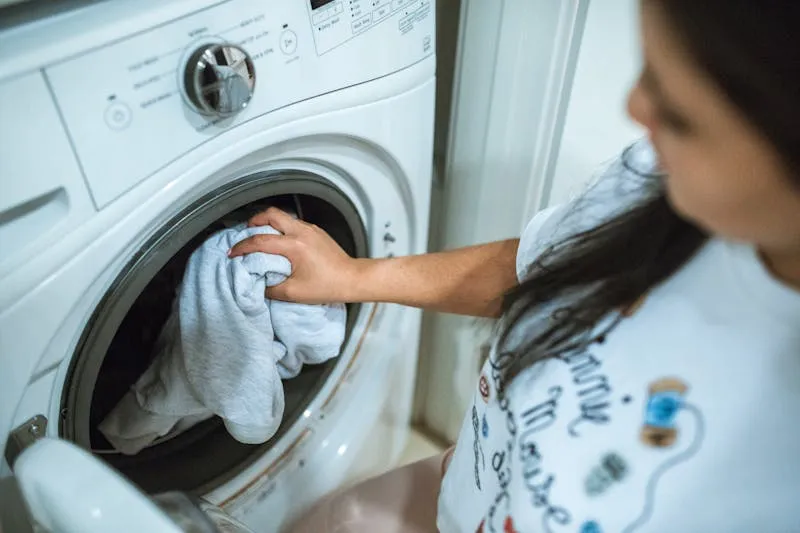
A set of Supima cotton percale sheets, properly maintained, can last 10 to 15 years. The same sheets treated carelessly will be finished in three. The difference isn't complicated routines — it's simple habits you adopt once and stick with.
Wash temperature. This is the single biggest factor in fabric degradation. Hot water is standard in many households — and it's way too aggressive. 105°F (40°C) is sufficient for hygienic cleaning with a modern detergent. Cotton fibres start deteriorating significantly above 120°F (50°C). Linen tolerates slightly higher heat (up to 140°F), but 105°F remains ideal for everyday washing. Reserve the hot cycle for illness situations or stubborn stains only.
Spin speed. 800 RPM maximum for bedding. Not 1,200, not 1,400 — even if your machine offers it. An aggressive spin cycle deforms fibres, creates invisible micro-tears, and accelerates pilling. Less spin = more durability. The extra drying time is only a matter of minutes.
Detergent. Liquid, not powder (powder leaves residue trapped in dense weaves). Without fabric softener — ever. Textile softener coats fibres with a layer of silicone or wax that gradually waterproofs them. The fabric loses its absorbency, its breathability, and starts smelling musty faster. For softness, use white vinegar in the softener compartment: half a cup per cycle. It's a natural descaler, natural softener, and odour-neutral once dry.
Drying. Air-dry when possible. The tumble dryer is bedding's greatest enemy — the heat and mechanical friction break down fibres. If you must use a dryer, select the delicate/low-heat setting and remove sheets while still slightly damp. For linen specifically: the dryer is off-limits. Linen air-dries, period. It's non-negotiable if you want it to retain its drape and texture.
Ironing. Percale can be ironed for purists (cotton setting, sheets still slightly damp). Cotton sateen needs only a light pass. Linen is never ironed — its natural wrinkle is its signature. Jersey is never ironed. And honestly: a fitted sheet? Nobody irons those. Not even hotels.
Best-value brands worth your money
The bedding market is a minefield. Between luxury brands that overcharge for packaging and discount retailers selling polyester disguised as premium cotton, finding genuine value requires discernment. Here's an honest framework.
Entry-level quality ($40-80 for a queen set): Target's Threshold and Casaluna lines, IKEA's DVALA percale range, H&M Home organic cotton collection. These are honest sheets in real cotton that'll last 3-5 years with careful maintenance. Don't expect Supima softness, but they're a solid starting point.
Mid-range ($80-180): Brooklinen, Parachute, The Company Store, LL Bean. This is where the value proposition is strongest. These brands use long-staple cottons, verifiable certifications (OEKO-TEX®, GOTS), and produce in Portugal, India, or Turkey with established quality controls. The bedding lasts 7-10 years, and the quality difference from entry-level is perceptible from first touch.
Premium ($180-400): Matouk, Sferra, Boll & Branch (organic), Rough Linen (linen). Exceptional fibres, impeccable finishing, extraordinary durability. It's an investment — but when you calculate the cost per night over 15 years, a $300 sheet set comes to about 5 cents per night. Five cents to sleep in exceptionally crafted long-staple cotton or heirloom linen. Perspective is everything.
Frequently asked questions
What's the best fabric for sheets if you sweat at night?
Tencel (Lyocell) is the highest-performing fibre for moisture management: it absorbs 50% more moisture than cotton and dries faster. Linen is a strong alternative — it's naturally thermoregulating and wicks perspiration efficiently. Cotton percale is also a solid choice thanks to its breathability. Avoid cotton sateen (too insulating) and polyester sateen (which significantly worsens night sweating). If you run hot year-round, a Tencel-linen blend is arguably the best investment you can make.
Should you wash new sheets before using them for the first time?
Yes, always. New textiles contain manufacturing residues: chemical finishes (formaldehyde, sizing agents), unfixed dyes, and sometimes residual pesticides (for non-organic cotton). A first wash at 105°F with a normal detergent dose removes most of these substances. For sensitive skin, a second pre-use wash is recommended. It's also an opportunity to fix colours and begin softening the fibres — new percale in particular improves dramatically after its first wash.
How can you identify genuine Egyptian cotton?
True Egyptian cotton (varieties Giza 45, 70, 86, 87, 88) is a long-staple cotton grown in the Nile Delta. For authentication: look for the Cotton Egypt Association (CEA) certification, which is the most reliable label. The hand feel is an indicator — long-staple cotton produces finer, smoother yarn, and the fabric is softer, more lustrous, and less fuzzy than standard cotton. Unfortunately, without certification, it's impossible to distinguish genuine Egyptian cotton from standard cotton by touch alone — the counterfeits are very well made.
Why do my sheets pill and how can I prevent it?
Pilling is caused by friction: short fibres work loose and clump into small balls on the surface. Short-staple cotton sheets, jersey, and budget flannel are most prone to pilling. To minimise it: choose long-staple cotton or linen (which virtually never pills), wash at 105°F maximum, limit spin speed to 800 RPM, and avoid the tumble dryer. If pilling has already appeared, an electric fabric shaver ($10-15) is the most effective way to restore the surface. Some people use a disposable razor in a pinch — it works, but the fabric shaver is safer for the textile.
How many sets of sheets should you ideally own?
Three sets per bed is the functional minimum: one on the bed, one in the wash/drying, one in reserve. The ideal is four to five sets, which allows slow enough rotation that each set wears evenly, plus the option of dedicated summer and winter sets in different fabrics. Changing sheets every 7-10 days is the standard recommendation. With three sets in rotation, each set gets washed approximately 17 times per year — at that pace, quality bedding easily lasts a decade or more.