In 1966, Yves Saint Laurent presented "Le Smoking" — a trouser suit for women. The critics destroyed it. Restaurants turned away women who wore it at the door. And yet, that evening, something shifted. Because every time a woman changed what she wore, she changed what she could do. Trousers meant the right to stride. The bikini meant the right to have a body. The burnt bra (which was never actually burnt) meant the right to refuse.
The history of women's fashion is not a history of trends. It's a history of conquests. Every clothing revolution has corresponded to a social revolution. You cannot really understand what women wore across the centuries without understanding what they were not allowed to be.
This retrospective begins with the Victorian corset, moves through the Roaring Twenties, two world wars, Dior, Mary Quant, punk, 1980s power dressing, the grunge decade, and the complex present of body positivity and gender-fluid fashion. At each stage: what changed, why it mattered, who drove it, and what remains.

The corset and its liberation — late 1800s to Paul Poiret 1906
To understand why every revolution in women's fashion matters, you have to start with the corset. Not the corset as a sexy accessory reinvented by 1990s lingerie. The corset as an instrument of physical control.
In the nineteenth century, the steel-boned or whalebone corset modified the female silhouette by compressing the waist to physiologically impossible measurements. Victorian medical journals describe fractured ribs, displaced organs, chronic respiratory difficulties. Women fainted — not from delicacy, but from mechanical asphyxiation.
This wasn't vanity. It was a social norm imposed and reinforced from childhood. Little girls wore training corsets. The hourglass silhouette — wasp waist, amplified bust and hips — signalled membership of polite society. Not wearing one was a moral transgression as much as an aesthetic one.
Liberation began with the British Dress Reform movement of the 1880s–1890s, driven by doctors and first-wave feminists who denounced the corset as incompatible with health and mobility. The Rational Dress Society, founded in London in 1881, campaigned for clothes that allowed women to breathe and move. Dr Gustav Jaeger published his theories on hygienic dress. The suffragette movement, gaining momentum through the same decades, connected dress reform explicitly to political rights — the same women fighting for the vote were fighting against physical constriction.
The aesthetic rupture, however, came from a couturier: Paul Poiret, who in 1906 presented dresses without corsets, with high waists and fabric falling freely over the body. The silhouette was vertical, not hourglass. Fashion followed the arts — Japonism, Orientalism, Diaghilev's Ballets Russes. Women could now breathe in their clothes.
The 1920s: flappers, Chanel and the revolution of the silhouette

The First World War forced women into work — factories, hospitals, transport networks. They managed farms while men were in the trenches. And when the war ended, they were not simply going back to the corset.
The Roaring Twenties produced a clothing revolution that was actually a declaration of independence: dresses shortened to the knee (scandalous), waists dropped to the hips, busts flattened, hair cut into the bob or the "garçonne" crop. The androgynous silhouette was a deliberate provocation against the feminine ideal of the previous generation.
Gabrielle "Coco" Chanel embodied this revolution more than any other designer. She borrowed jersey — fabric then reserved for men's underwear — and made it into day wear. She popularised trousers for women. In 1926, she created the "little black dress": the simple dress that could be worn anywhere, at any hour, by any woman. The American Vogue called it "the Ford of fashion" — democratic, functional, essential.
The Second World War: when necessity became freedom (1939–1945)
The second involuntary clothing revolution in women's history came from wartime restrictions. Fabric rationing, rubber shortages (used in elastic and underwear), and the necessity of working in armaments factories produced a functional fashion by obligation.
In Britain, the Board of Trade introduced the Utility Clothing scheme in 1942: production standards limiting fabric per garment, the number of seams, ornamentation. No more than two pockets per garment. No lapels. No embroidery. Hardy Amies — later dressmaker to Queen Elizabeth II — designed Utility pieces. The clothes were well made, simple, and distributed fairly via a coupon system. Crucially, they were also designed to be made by women working in reduced circumstances.
American women, meanwhile, wore overalls and trousers en masse in factories. Rosie the Riveter — the American wartime propaganda icon — wore a blue boilersuit, sleeves rolled up, red headscarf. The image is not incidental: it legitimised the female presence in traditionally male spaces, visually and officially.
The bikini, invented in 1946 by French engineer Louis Réard, was named after the Pacific atoll where the United States had just detonated an atomic bomb. The symbolism was deliberate: Réard promised his swimsuit would have the effect of a bomb. No professional model agreed to wear it for the first presentation. Réard engaged a nude dancer from the Casino de Paris. The British government banned it from public beaches — a ban not fully lifted until the late 1950s in practice.
1947: Dior's New Look — regression or celebration?
On 12 February 1947, Christian Dior presented his first collection at 30 avenue Montaigne in Paris. Harper's Bazaar editor Carmel Snow exclaimed: "It's quite a new look!" The name stuck.
The New Look was an absolute aesthetic revolution: nipped waists, full skirts falling below the knee, rounded shoulders, an emphasized bust. After years of rationing and utility clothing, Dior reintroduced luxury, an abundance of fabric (one New Look skirt could use twenty metres of material), extravagant femininity.
In the UK specifically, the reception was sharply divided. A group of women demonstrated outside Christian Dior's London boutique with placards protesting the lengthening skirts. The British government — still under rationing — actively discouraged British couturiers from copying the style. Several newspapers ran letters from readers angry about the return to restrictive silhouettes after the practical clothes they'd worn during the war. The Picture Post magazine ran a feature asking: "Is the New Look worth it?"
On the other side: women who had spent the war in utility clothing and wanted to celebrate, to wear something beautiful and feminine and unrationed. The division wasn't generational or class-based — it cut across both. The same tensions would resurface in every major fashion revolution since.
The 1960s: Mary Quant, London as the new fashion capital, and youth taking power
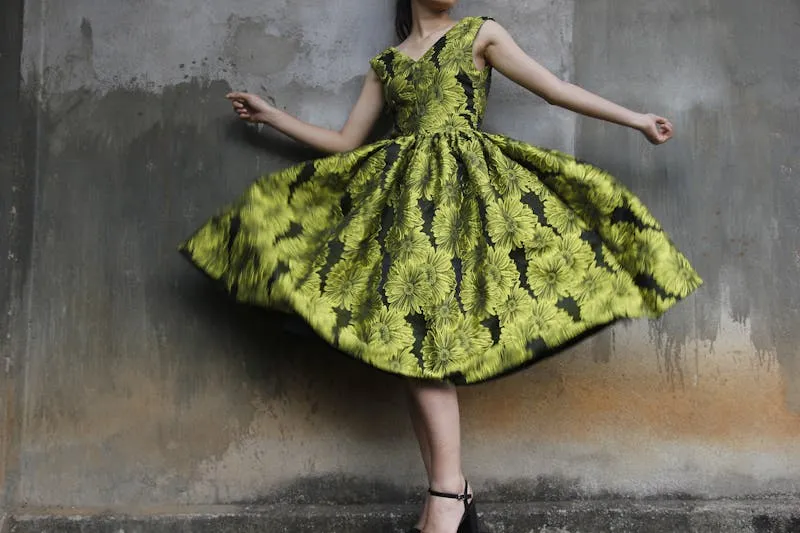
If the 1950s had been Dior's decade, the 1960s belonged to the young. And this revolution didn't come from Paris — it came from London, from Carnaby Street and King's Road.
Mary Quant is the central figure. Born in 1934 in Blackheath, south London, she opened her boutique Bazaar on King's Road in Chelsea in 1955. She sold clothes she made herself, aimed at young women — not the middle-aged bourgeoisie who were the typical customer of Parisian haute couture. She later recalled: "I wanted to make clothes for women who are real, not for ladies of fashion."
The miniskirt — whose authorship is disputed between Quant and French couturier André Courrèges — drastically shortened hemlines: fifteen centimetres above the knee, then twenty, then further. The moral shock was considerable. Women were turned away from workplaces and schools. Some restaurants refused entry. The then Archbishop of Canterbury weighed in.
But the miniskirt was also a generational declaration. For the first time in fashion history, young women were dictating the trend rather than following it. Parisian haute couture adapted to the young — not the reverse. This was a fundamental shift in the power structure of fashion. When Quant was awarded the OBE in 1966, she wore a miniskirt to Buckingham Palace to collect it.
Courrèges's "Space Age" collection of 1965 brought the visual language of the space race into fashion: white and silver, geometric cuts, flat-heeled white go-go boots, plastic visors, synthetic fabrics. Paco Rabanne presented a collection in linked metal plates in 1966. Fashion had become sculpture.
In the same year — 1966 — Yves Saint Laurent presented "Le Smoking", the women's trouser suit inspired by the male tuxedo. Women were turned away from Paris restaurants for wearing it. Within a decade, trouser suits were standard professional dress. The fashion revolution and the political moment were inseparable: this was two years before 1968, and the streets of Paris, London, and every major Western city were restless with student protests.
The 1970s: jeans as feminist statement and the DVF wrap dress
The 1970s are simultaneously the decade of second-wave feminism and its most concrete sartorial translation. The jeans — until then American working-class workwear — became a universal political statement.
Wearing denim meant refusing gendered dress differentiation. It meant choosing comfort over imposed elegance. It meant aligning with counter-culture movements, rock music, militant feminism. In American and European universities, jeans were the uniform of the generation protesting against the Vietnam War and for abortion rights.
Levi's 501s — founded in 1853 for California gold miners — became a global icon of freedom. A unisex garment before the term existed. Women wore them loose, tight, ripped, stonewashed — each variation an assertion.
Diane von Furstenberg's response to the working woman came in 1974: the wrap dress, in jersey, tying at the waist, sold at an accessible price. DVF sold five million in eighteen months. It was a dress that could take a woman from office to dinner without changing, that flattered the figure without constraining it, and that could be put on and taken off without assistance. Her line: "Feel like a woman, wear a dress."
The "bra burning" of the feminist movement is — as with the French version — largely mythological. At a 1968 Miss America protest in Atlantic City, women threw items symbolising oppression (bras, high heels, false eyelashes, girdles) into a "Freedom Trash Can". No burning occurred — the protesters had been denied a fire permit on the boardwalk. A journalist made the comparison with draft card burning; the term entered the cultural record inaccurately. The reality was symbolic enough without the embellishment.
The 1980s: power dressing, shoulder pads and the Dynasty effect
The 1980s produced a paradoxical revolution: women entered management and executive roles in unprecedented numbers — and dressed like men in order to be taken seriously in those roles.
Power dressing was a dress code born from the necessity of signalling authority in male-dominated spaces. The structured trouser suit with padded shoulders, the shirt dress, neutral colours (navy, grey, black), discreet but quality accessories. The silhouette was broad at the shoulder, creating an inverted V — the visual mark of masculine power.

Thierry Mugler took power dressing to its extreme: his clothes were wearable architecture, glamour armour staging a ferociously powerful woman. Giorgio Armani stripped the business suit down to essentials — the broad shoulders without ostentation, fabric quality speaking for itself. Both were dressing women for spaces men had designed for themselves.
The political image of this aesthetic is embodied in Margaret Thatcher — whose clothing choices were deliberate and documented. She worked with Aquascutum and later with fashion advisers to project authority through dress: handbag (the "handbagging"), pearls, tailored suits, power-blue. Simultaneously, the American soap opera Dynasty gave the world Joan Collins as Alexis Carrington: shoulder-padded suits, statement jewellery, immaculate hair. The line between political reality and fictional drama was porous in the decade's collective imagination.
In simultaneous reaction, Vivienne Westwood and the British punk scene produced a violent counter-revolution: slashed clothing, safety pins as jewellery, provocative prints (including the "God Save the Queen" silk-screens transforming the monarch's portrait). Westwood's boutique on King's Road — first "Let It Rock", then "Sex", then "Seditionaries" — became the epicentre of a movement that made fashion explicitly political. The Sex Pistols wore Westwood. The establishment was horrified. The Victoria and Albert Museum now holds extensive Westwood archives.
The 1990s: grunge, minimalism and the anti-fashion position
After the excess of the 1980s — the shoulder pads, the glam, the shiny synthetics — the 1990s produced a double reaction: on one side, grunge; on the other, minimalism.
Grunge came from Seattle and the music scene around Nirvana, Pearl Jam, Soundgarden. Deliberately shredded flannel shirts worn open over worn T-shirts, ripped jeans, Dr. Martens boots, studied carelessness. Marc Jacobs for Perry Ellis translated grunge into high fashion for his spring 1993 collection — and was immediately sacked. The collection was judged too radical. It is now considered one of the most influential collections of the decade.
Kate Moss embodied the decade's aesthetic: slim, androgynous, photogenic in imperfection. The "heroin chic" aesthetic — which drew fierce criticism for its impact on body image, including from US President Bill Clinton in 1997 — valued fragility and pallor over the health-and-muscle ideal of the previous decade. Calvin Klein's black-and-white advertising campaigns, shot with Moss and others in harsh light, became the visual language of a generation.
Minimalism responded to excess with rigour: Helmut Lang, Jil Sander, Calvin Klein proposed pared-back clothes, precise cuts, sober fabrics. Nothing superfluous. Beauty in restraint. This was fashion that required a different kind of physical confidence from the 1980s — not the armour, but the quiet certainty.
Japanese designers — particularly Yohji Yamamoto and Rei Kawakubo of Comme des Garçons — had been challenging Western conventions of the "beautiful" and the "feminine" since their Paris debuts in 1981. Overlapping volumes, deconstructed seams, asymmetry, unconventional materials. Their work positioned the 1990s avant-garde in a dialogue with questions that Western fashion would only fully catch up with decades later.
The 2000s: democratisation and its contradictions
The 2000s saw the explosion of fast fashion — Zara, H&M, Primark, later Boohoo and eventually Shein — and with it a real democratisation of access to trends, accompanied by human and environmental costs that would only be fully documented and widely understood a decade later.
Fashion became accessible, in price terms, to almost all social classes. A designer capsule collection could be copied and available in stores within weeks of a runway show. The trend cycle — which had taken a decade to democratise in the 1950s, and a season in the 1980s — could now be measured in weeks.
The paradox of the decade: in making fashion accessible, it was simultaneously devalued. Clothes produced at low cost were designed to be worn a handful of times and replaced. The relationship with clothing shifted from investment (a piece kept for years, maintained, possibly passed on) to disposable consumption.
The digital world arrived simultaneously: fashion blogs, then Instagram, radically altered the temporality of trends. Influencers — a term that didn't yet exist in that sense — began dictating dress codes to millions of followers, bypassing traditional fashion media entirely. By 2010, a blogger photographed on a London pavement could shift the commercial fortunes of a small brand overnight.
2010 to now: bodies, identity, sustainability and gender

The clothing revolution of the 2010s and the current decade is perhaps the most complex of all — because it is multiple and simultaneous.
The body positive movement challenges the hegemony of a single silhouette in fashion. Brands like Rihanna's Savage X Fenty present lingerie on models of all sizes, skin tones and body types. Ashley Graham became the first plus-size model to appear on the cover of American Vogue's swimsuit issue in 2016. British Vogue under Edward Enninful (editor since 2017) has significantly expanded representation — of race, size, age, disability — on its pages and covers. The criticism remains legitimate — representation remains insufficient and often commercially calculated — but the rupture with the single standard of the size 8 model is real.
Gender-fluid fashion blurs the boundaries between "womenswear" and "menswear". Harry Styles wears dresses and nail varnish on magazine covers. Billy Porter arrived at the 2019 Oscars in a tuxedo-gown by Christian Siriano. JW Anderson, Gucci under Alessandro Michele, Harris Reed — these designers have made gender-ambiguous clothing central to their commercial propositions. The Fashion Museum Bath's 2022 exhibition on dress reform noted that dress and gender norms have been contested throughout British history — what's different now is the mainstream commercial visibility.
Sustainability has moved from marginal concern to central debate. The Ellen MacArthur Foundation's reports on circular economy in textiles, WRAP's Valuing Our Clothes reports, the work of the UK's Parliamentary Environmental Audit Committee on fashion — all have created documented pressure. Brands like Patagonia (lifetime guarantee, repair service, 1% of revenue to environmental causes), platforms like Vinted (secondhand), and a generation of consumers who ask "who made my clothes?" and "will I wear this thirty times?" mark a genuine shift in the relationship with fashion — even if the scale of fast fashion's dominance means the overall impact is still growing rather than shrinking.
The revolution is not finished. It never has been. Every generation of women has renegotiated what it means to get dressed — not merely as an aesthetic gesture, but as a political, economic and identity act. What's different today is perhaps only that we have the tools to document this revolution in real time, and that the history behind us allows us to see how deep it goes.
Frequently asked questions about the history of women's fashion
Who actually invented the miniskirt — Mary Quant or André Courrèges?
The authorship is contested and both designers presented short versions in near-simultaneous timing in the mid-1960s. Mary Quant had been shortening hemlines at her King's Road boutique from the early 1960s. Courrèges presented his Space Age version in 1965. Most fashion historians attribute the global cultural phenomenon — the miniskirt as symbol — to the London ecosystem (Swinging London, Twiggy, Carnaby Street) more than to any single designer. Quant herself, when asked, often said the mini wasn't invented by any designer but by the girls on the King's Road who simply cut their skirts shorter.
Did feminists really burn their bras?
No — or at least not in the way the popular account has it. At the 1968 Miss America protest in Atlantic City, demonstrators threw items including bras, high heels, girdles and false eyelashes into a "Freedom Trash Can". No burning took place — the protesters were denied a fire permit on the boardwalk. A journalist drew a parallel with draft card burning and the term "bra burning" entered the historical record. The actual events were symbolically powerful enough without the fabrication; the myth has unfortunately obscured the substance of what the protest was about.
Was Dior's New Look really so controversial in Britain?
Yes, significantly so. Britain was still under rationing in 1947, and the fabric-intensive New Look (some skirts used twenty metres of material) was seen by many as wasteful and retrograde. Women demonstrated outside Dior's London boutique. The government discouraged British couturiers from copying the style. Newspapers ran critical coverage. At the same time, many British women were genuinely delighted after years of utility clothing — the response was divided along lines that had less to do with class or age than with individual experience of the war years.
What is the significance of Vivienne Westwood to British fashion history?
Vivienne Westwood (1941–2022) is arguably the most important British fashion designer in terms of cultural impact. Her King's Road boutiques from the early 1970s were the commercial epicentre of the punk movement. She later developed a distinctive vocabulary of historical reference (corsets, tartans, platform shoes) that influenced fashion globally. She was awarded the OBE in 1992 (she arrived at Buckingham Palace without knickers and curtsied to reveal the fact). The V&A holds extensive Westwood archives. Her environmental activism, particularly regarding climate change, was consistent and documented over decades before it became fashionable.
When did trousers actually become fully acceptable for women in British workplaces?
Later than most people assume. Throughout the 1970s, many professional workplaces — including the House of Commons — maintained dress codes that effectively excluded women in trousers. Female MPs were expected to wear skirts. Airlines had strict requirements about skirt length and hosiery for female cabin crew into the 1990s. Legal challenges and changing social norms gradually shifted these expectations, but formal prohibitions in various institutions persisted into the 2000s. The legal landmark is harder to pin down than in France (which had a formal ordinance abolished in 2013) because British dress codes were more informal but no less real.
Is gender-fluid fashion genuinely new?
No. Cross-dressing and clothing that blurs gender codes exists across history in virtually all cultures. The Elizabethan stage required boy actors to play women's roles in women's dress. Eighteenth-century dandyism involved elaborate, feminine dress codes for men. What's relatively new is the integration of these codes by commercially mainstream fashion houses (Gucci, Saint Laurent, JW Anderson, Harris Reed) and the media visibility of public figures who wear them. The novelty is cultural and commercial — not anthropological. The Fashion Museum Bath's collections on dress reform include documentation of Victorian and Edwardian cross-dressing that complicates any simple narrative of progress.
What is the best museum resource on the history of British women's fashion?
The Victoria and Albert Museum (V&A) in London is the primary reference, with collections spanning several centuries and a searchable online database. The Fashion Museum Bath holds particular strengths on eighteenth- and nineteenth-century British dress, the suffragette-era dress reform movement, and mid-twentieth-century couture. British Vogue's archive (partially accessible by subscription) is a valuable secondary source for twentieth-century fashion journalism. For primary documents on the fashion industry's contemporary practices, the Parliamentary Environmental Audit Committee reports on fashion are freely available and rigorously sourced.
Sources
- Victoria and Albert Museum — Fashion collection, London
- Fashion Museum Bath — British dress history collections
- British Vogue — Archive and fashion history resources
- Parliamentary Environmental Audit Committee — "Fixing Fashion: Clothing Consumption and Sustainability" (2019)
- WRAP — "Valuing Our Clothes: the cost of UK fashion" reports
- Caroline Evans, Fashion at the Edge (Yale University Press) — academic reference on fashion avant-garde
- Valerie Steele, The Corset: A Cultural History (Yale University Press, 2001)
- Anne Hollander, Sex and Suits: The Evolution of Modern Dress (Knopf, 1994)