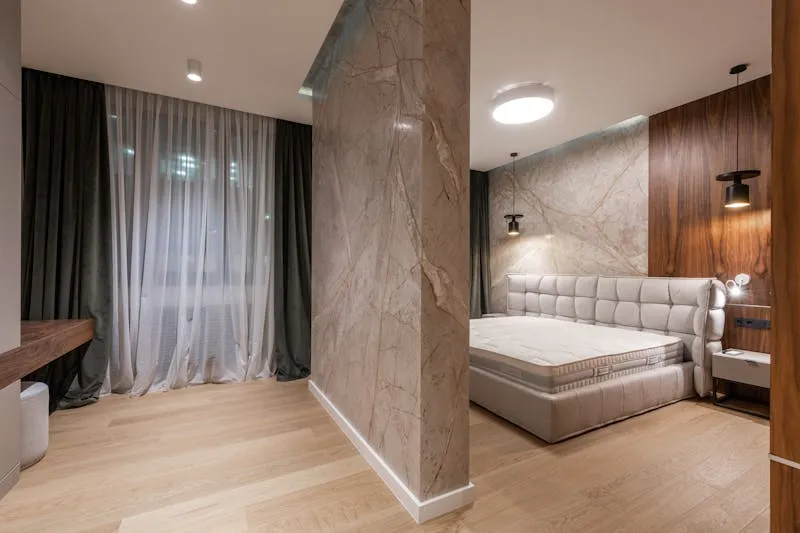
I was 26, living in a wonky studio in East London, and sleeping appallingly. Waking at 3am, unable to drift off again, chronic fatigue. I tried melatonin, chamomile tea, meditation apps — nothing. Then a Chinese friend came over, looked at my bedroom and said: "Your bed faces the door. Your feet point into the corridor. Of course you sleep badly." She had me rotate the bed 90°. That night I slept straight through. Coincidence? Perhaps. But since then, I've taken feng shui seriously.
Fair warning: I'm not going to sell you magic crystals or ask you to calculate your kua number. This guide is the pragmatic version of feng shui — the principles that have spatial, ergonomic and even psychological logic, stripped of the folklore. Concrete things you can apply this weekend that will change how your home feels. Promise.
Feng shui basics in 5 minutes
Feng shui (literally "wind and water") is a Chinese system over 4,000 years old that studies how environment affects wellbeing. The central principle: the way you arrange your space influences your energy, mood and ability to rest, work and connect. It's less mystical than it sounds.
In practice, feng shui rests on three pillars:
- Chi flow (vital energy): energy should circulate freely through your home, without stagnation (cluttered corners) or excessive speed (long empty corridors)
- Balance of five elements: wood, fire, earth, metal, water — each room should contain a touch of each to feel harmonious
- The command position: in every room, you should be able to see the door without being directly opposite it. It's the most important principle — and the simplest to apply
Kristina's tip: If the whole concept feels too esoteric, remember just one word: "intention." Feng shui forces you to ask WHY each object is where it is. When you pose that question for every piece of furniture, every object, every colour in your home, you automatically end up with a more intentional interior — and therefore a more harmonious one. No cosmic-energy belief required.
Chi: making energy flow
Chi is feng shui's central concept. In non-mystical terms: it's the natural flow of movement and light through a space. When chi flows well, the space feels open, inviting, alive. When it stagnates, the space feels heavy, cluttered, stifling.
What blocks chi
- Clutter: the number-one cause. Every pile of post, every drawer that won't shut, every cluttered corner is an energy "dam." In modern terms: mess creates visual and mental stress
- Blocked doors: a door that won't open fully (because there's a bag behind it, say) physically and symbolically restricts flow
- Obstructed windows: natural light is the purest form of chi. Heavy curtains shut all day, objects stacked on windowsills = blocked chi
- Dead corners: dark spots where nothing moves, nothing lives. Solution: a plant, a lamp, an object that "activates" the corner
What makes chi flow
- Clear space: being able to walk without sidestepping obstacles. Chi follows the same paths as you — if you zigzag, it zigzags
- Natural light: open the curtains. Clean the windows. It sounds simplistic but the impact is immediate
- Fresh air: open the windows for at least 10 minutes daily, even in winter. Stale air = stale chi
- Moving water: an indoor fountain (if that appeals) or simply a vase with fresh flowers in water
- Living plants: they purify the air, bring wood (one of the five elements) and visual life

Watch out: Artificial plants do NOT replace living ones in feng shui. They represent frozen energy — exactly what we're trying to avoid. If you lack a green thumb, choose nearly unkillable plants (pothos, snake plant, ZZ plant) rather than plastic.
The five elements and how to use them

Feng shui divides matter into five elements that interact with each other. The goal isn't to plaster them everywhere artificially but to check that no element dominates excessively — and none is entirely absent.
The elements and their representations
- Wood: growth, vitality. Represented by: plants, wooden furniture, vertical and columnar shapes, the colour green
- Fire: passion, energy. Represented by: candles, the fireplace, bright light, triangular shapes, red and orange
- Earth: stability, grounding. Represented by: ceramics, stone, crystals, square and horizontal shapes, beige and ochre
- Metal: precision, clarity. Represented by: metallic objects (brass, steel, copper), round and oval shapes, white and grey
- Water: fluidity, wisdom. Represented by: water itself (fountain, aquarium), mirrors, wavy shapes, blue and black
The creation cycle
The elements nourish each other in a cycle: wood feeds fire → fire creates earth (ash) → earth produces metal → metal carries water (condensation) → water nourishes wood. When this cycle is present in a room, harmony comes naturally.
Practical application
If your living room is full of wood (floorboards, oak table, bookcase) but has no metal or water element, it lacks balance. Solution: a mirror (water) and a brass object (metal) are enough to restore the balance. No need to overhaul your décor — subtle touches suffice.
Kristina's tip: Walk through each room with the five-element list in mind. Note which are present and which are missing. Typically, water (we forget it) and fire (no fireplace) are absent. A mirror fills the water gap, a candle fills the fire gap. Two objects, £12, and your room is rebalanced.
The hallway: the mouth of chi
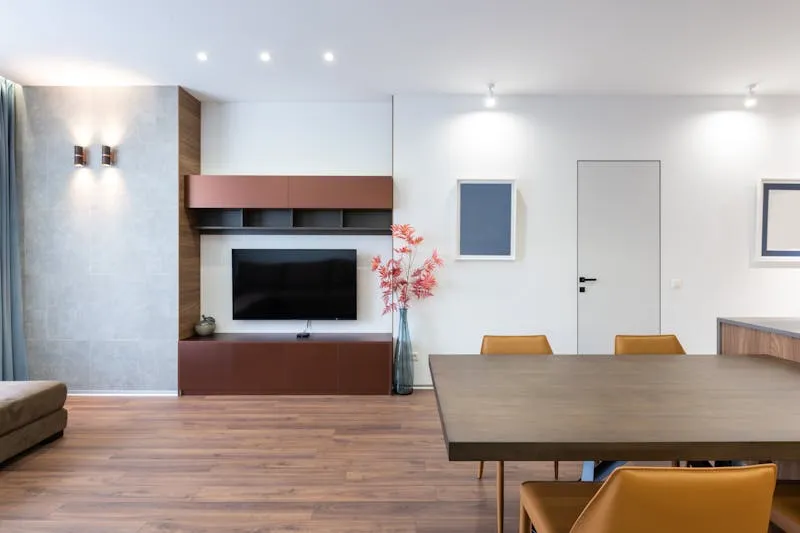
In feng shui, the hallway is the most important point in the home. It's where chi enters — and it's also the first impression you get upon coming home. A cluttered, dark, chaotic entrance sends a stress signal before you've even taken off your shoes.
The principles
- Clear: no piled-up shoes, no overflowing coats, no pushchair blocking the way. Energy (and you) must be able to enter unobstructed
- Bright: if your hallway is naturally dark (true of 80% of flats), add warm lighting that switches on automatically. Light welcomes
- Beautiful: place something lovely right at the entrance — a mirror, a print, a plant, a bunch of flowers. The first object you see sets the tone for your evening
- No mirror facing the front door: in feng shui, a mirror opposite the entrance "bounces" energy back out before it enters. Place it on a side wall instead
Watch out: If your hallway opens directly onto stairs (house), feng shui considers chi "tumbles" down too fast. Solution: a rug at the foot of the stairs, a plant or an object that visually "slows" the flow. In a flat, if the front door opens straight into the living room with no buffer, a room divider or low unit can create the necessary transition.
The living room: the social heart
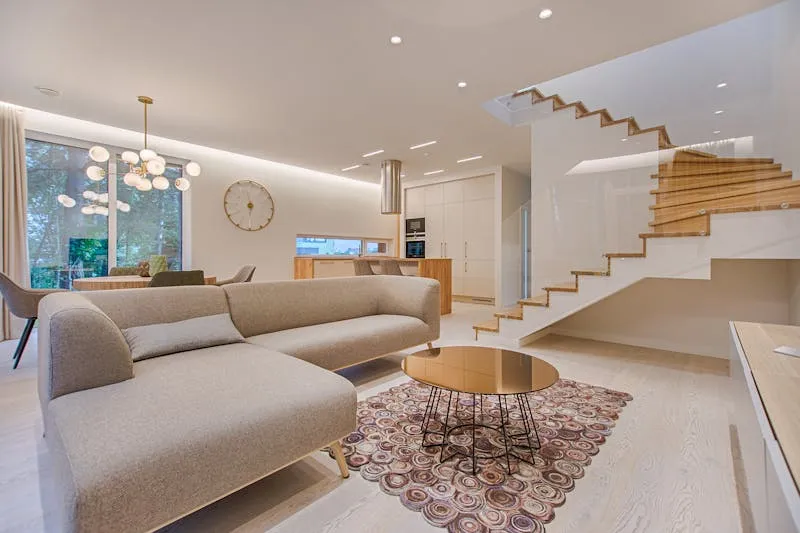
The living room is the quintessential social space — where the family gathers, friends are welcomed, shared life unfolds. In feng shui, it should promote conversation, comfort and openness.
Sofa placement (command position)
The sofa should be:
- Backed against a solid wall (not under a window, not floating mid-room). The wall behind you provides a sense of security — that's basic psychology before it's feng shui
- With a view of the room's entrance (you see who arrives). This is the "command position" — you control your space
- Not directly in line with the door (energy shouldn't "hit" you head-on)
Seating arrangement
Seats should form a conversation space — a U or L shape rather than a line facing the TV. In feng shui, a room where all furniture points at the television fosters isolation, not connection. If you entertain often, place at least two seats facing each other.
The coffee table
Round or oval rather than square or rectangular — angles create "poison arrows" (sha chi) in traditional feng shui. In modern terms: rounded shapes soften a space and are more convivial for conversation. The 2025 trend towards organic tables is, unknowingly, very feng shui.
Kristina's tip: If your sofa can't sit against a wall (small space, open-plan), place a console or low bookcase behind it. This creates a "symbolic wall" that provides the same sense of back support. A piece 80 cm high is enough.
The bedroom: the sleep sanctuary
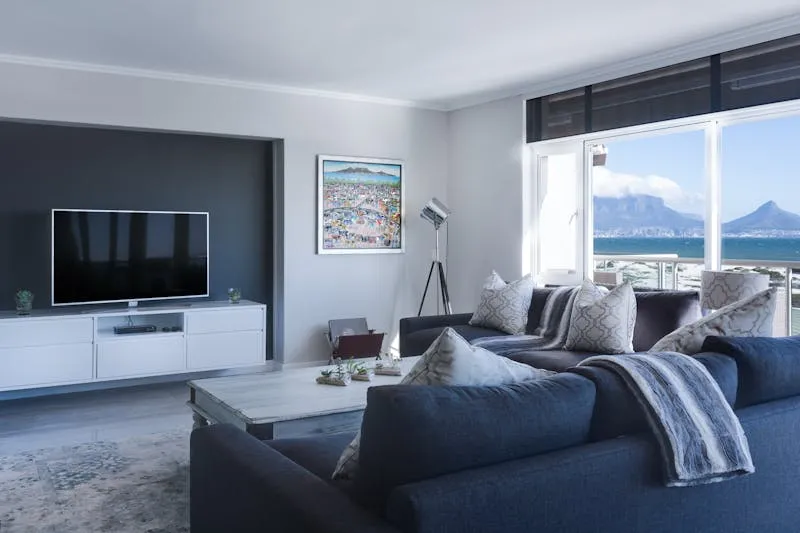
The bedroom is probably where feng shui has the most measurable impact. Why? Because you spend 7-9 hours a day there, your body is at its most vulnerable (asleep), and environmental factors (light, noise, temperature, layout) directly affect rest quality.
Bed position — THE cardinal principle
The bed should be:
- Headboard against a solid wall: not under a window (instability), not in a diagonal corner (disorientation). The wall behind your head is your "mountain" — it protects you
- With a view of the door: you should be able to see the bedroom door from bed without turning your head more than 45°. This is the command position — your subconscious feels safe and relaxes more easily
- Not directly opposite the door: feet pointing at the door is the "coffin position" in feng shui. Beyond the symbolism, sleeping in a direct draught from door to bed is genuinely disruptive
- Accessible from both sides: even if you sleep alone, the bed should have space on each side. This creates visual and energetic balance
What should NOT be in your bedroom
- Screens: TV, laptop, tablet — feng shui discourages them, and sleep science agrees. The "active" energy of screens disrupts rest
- A mirror facing the bed: in feng shui, a mirror reflecting the bed agitates energy during sleep. In modern terms: catching your reflection when waking at night can be startling and interrupt sleep cycles
- Clutter under the bed: you're literally sleeping above chaos. Not ideal for restorative sleep
- Plants: surprisingly, traditional feng shui advises against plants in the bedroom (too active an energy). Science says the CO2 concern is negligible, but if you're a light sleeper, dense foliage can create a sense of visual clutter
Bedroom colours
Feng shui recommends "yin" tones (soft, calming) for the bedroom: soft blue, pale green, blush pink, beige, cream. Vivid colours (red, bright orange, yellow) are "yang" (stimulating) and disrupt rest. This is chromatic common sense as much as feng shui.
Kristina's tip: Symmetry is king in bedroom feng shui. Two matching bedside tables, two matching lamps, cushions in even numbers. This symmetry creates a sense of stability that promotes rest — and if you're looking for love, feng shui sees it as a symbol of "room for two." Believe it or not, it looks beautiful either way.
The kitchen: the nourishing fire
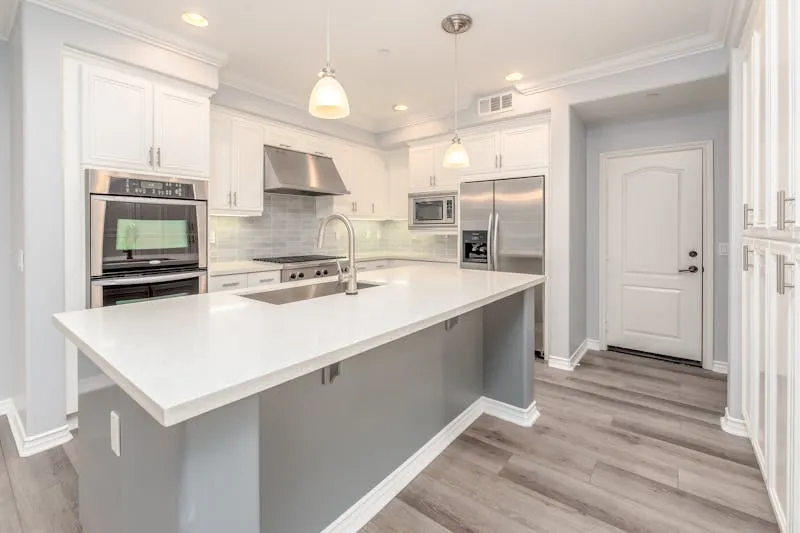
In feng shui, the kitchen is linked to prosperity and health. It's the room that "nourishes" the home — literally and figuratively. A dirty, cluttered or poorly lit kitchen has a negative impact on the entire home's energy.
Key principles
- Absolute cleanliness: clear worktops, clean sink, spotless hob. In feng shui as in hygiene, kitchen cleanliness is non-negotiable
- Fire and water separated: the hob (fire) shouldn't sit right next to the sink (water) — the two elements conflict. If it does (as in 90% of modern kitchens), place a wooden object between them — a chopping board, a wooden utensil pot. Wood buffers fire and water in the elemental cycle
- The cook's position: ideally, you should be able to see the kitchen door while cooking (command position). If your hob faces the wall (most common setup), place a small mirror above it to reflect what's behind you
- Use all burners: rotate through all your burners regularly, not always the same one. In feng shui, each burner represents a source of prosperity — leaving them unused neglects opportunities. Practically: it's also better for hob maintenance
Watch out: Feng shui strongly advises against a visible kitchen bin. The bin represents what you reject — its energy is "downward." Solution: a built-in model under the sink or one with a lid. It's not just symbolism — a closed bin also means fewer smells and a tidier interior.
The home office: the career compass
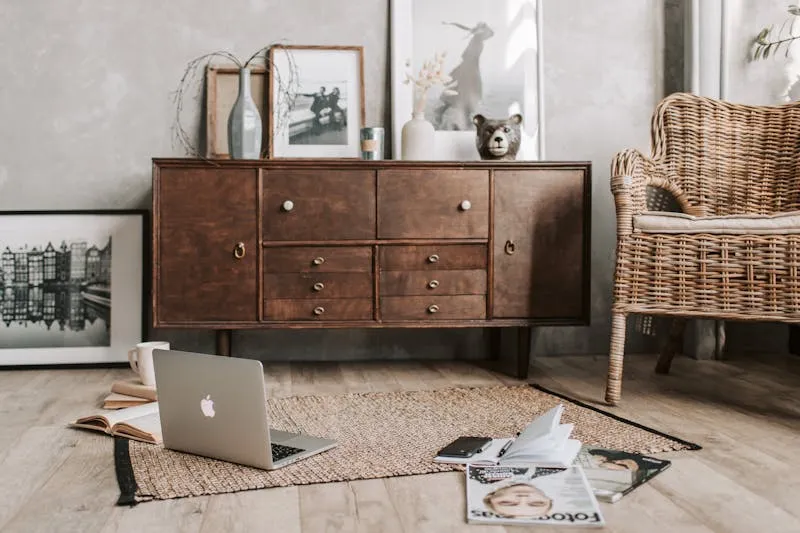
With remote working, the home office has become a room in its own right for millions. Feng shui has very specific recommendations for this space — and they overlap remarkably well with what modern ergonomists say.
Desk placement
- Command position: desk facing the door (you see who enters), back to the wall. This is the layout that most promotes concentration and a sense of control
- Never back to the door: your subconscious stays on alert, which fatigues and reduces focus. If you can't move the desk, place a mirror in front of you to reflect the door
- Not facing a blank wall: a white wall 60 cm from your face for 8 hours is stifling. If that's the case, hang a picture with depth (landscape, horizon) to visually "open" the space
Elements to include
- A plant on the left side of the desk (the growth side in feng shui)
- Quality lighting — natural light first, a desk lamp second
- Order: a cluttered desk = a cluttered mind. That's productive common sense as much as feng shui
- Something inspiring: an object representing your goals, achievements, aspirations
Kristina's tip: Feng shui says the upper-left corner of your desk (viewed from your chair) is the "wealth zone." Whether you put a lottery ticket or simply your favourite coffee mug there, the idea is to place something positive that makes you smile. It might not make you rich — but it makes your desk more pleasant, and a pleasant desk makes you more productive.
The 8 most common feng shui mistakes
After studying feng shui for years and observing dozens of interiors (including my own), here are the mistakes I see everywhere:
- Mirror facing the bed: disrupted sleep guaranteed. If you remember only one thing from this article, make it this
- Cluttered hallway: chi can't enter, and neither can you without stress. Clearing the hallway is the first feng shui action to take
- Bed under a window: instability, draughts, no "mountain" behind you. If it's your only option, invest in a tall, thick headboard that acts as a symbolic wall
- Empty dark corners: chi stagnates there. Solution: a plant, a lamp, even a small decorative object is enough to "activate" a dead corner
- Loo door left open: in feng shui, the toilet "drains" energy. Door shut, lid down — always. It's also a hygiene matter, incidentally
- Keeping broken objects: a cracked mirror, a wobbly chair, a broken photo frame — in feng shui, they emit "broken" energy. Practically: they unconsciously remind you that something's not right. Fix or discard
- Clutter under the bed: you're literally sleeping above chaos. Not ideal for restorative rest
- Aggressive colours in the bedroom: a red wall facing your bed is feng shui in reverse. Red stimulates — exactly what you do NOT want in a rest space
Watch out: Don't fall into the "everything feng shui" trap where you obsess over every object's placement. Feng shui is a guide, not a religion. If your layout doesn't allow the ideal command position, do your best and don't stress — stress is worse than any bad furniture placement.
Frequently asked questions about feng shui
Is feng shui superstition?
It depends on the version. Traditional feng shui includes symbolic and cosmological elements that can be considered spiritual. But the core principles — circulation, light, security positioning, decluttering — have solid ergonomic and psychological foundations. The pragmatic version I'm offering here is common-sense interior design, not esotericism.
Can feng shui be applied in a flat?
Absolutely. Feng shui applies to any living space. In a flat, the principles of circulation (clear hallway), command position (bed, desk, sofa) and elemental balance are identical. The only limitation: you can't choose your building's orientation — but you can optimise the interior.
Do I need to change everything at once?
Definitely not. Feng shui works through gradual adjustments. Start with the bedroom (greatest wellbeing impact), then the hallway, then the living room. Each small change has an effect — and the accumulation produces a spectacular transformation over a few weeks.
Are cacti bad in feng shui?
Traditional feng shui discourages spiny plants indoors because they emit "sha chi" (aggressive energy). Practically: it's mainly a placement issue. A cactus in a high-traffic spot where you regularly scratch yourself — yes, that's bad, but not because of feng shui. A cactus on an out-of-the-way windowsill poses no real problem.
Are feng shui and minimalism compatible?
Very. They share a fundamental principle: every object in your space should have a reason for being there. Decluttering is central to both philosophies. The difference: minimalism trends towards "as little as possible," feng shui towards "just enough" — a space that's too empty is as unbalanced in feng shui as one that's too full.
How do I know if my feng shui is "working"?
You can't measure chi with a gadget. But you can measure how you FEEL in your space: are you sleeping better? Do you feel calmer coming home? Are you more productive at your desk? If the answer is yes, it's "working" — whether thanks to feng shui, ergonomics or the simple pleasure of a well-ordered space.