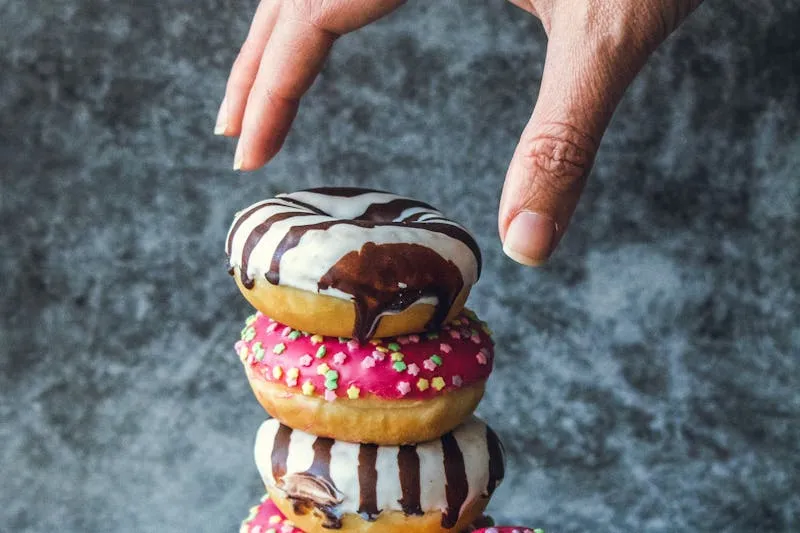
There's this image that stays with me. A documentary I watched on a Sunday evening — not one of those slick, voice-overed affairs, but a raw, handheld camera thing shot in the kitchens at Core by Clare Smyth in Notting Hill. She's standing at the pass, back to the camera, tasting a sauce with her eyes closed. Not for the cameras. For herself. And I thought: that's what gastronomy actually is. Not the stars, not the guides. That moment when you close your eyes and your entire body tells you whether it's right or not.
Women in fine dining — it's a subject that fascinates me as much as it infuriates me. Fascination because the stories are extraordinary: tales of tenacity, raw talent, and sacrifices most people can't even begin to imagine. Infuriation because in 2023, we still have to specify "female chef." As if talent had a gender.
Yet the numbers are there, and they sting: of the roughly 160 Michelin-starred restaurants in the UK, fewer than 15% are led by women. Three stars? Only one British woman has ever held them — Clare Smyth, who earned them in 2021 at Core. Globally, just seven women have achieved the supreme distinction in the guide's history. Seven. Out of thousands of starred restaurants since 1926.
So today, I'm taking you on a journey — not a ranking, not a cold league table. A journey through the stories of women who refused to stay front of house, who picked up the knife and never put it down. Some you'll know, others will surprise you. And all of them, without exception, will inspire you.
What you'll discover
- Eugénie Brazier, the absolute pioneer
- Anne-Sophie Pic and the weight of dynasty
- Clare Smyth: from Northern Ireland farm to three Michelin stars
- Dominique Crenn, the poet of the kitchen
- The rising generation shaking everything up
- Systemic obstacles: why so few starred women
- Is there a "feminine" culinary philosophy?
- Must-visit tables led by women
- The future of gastronomy is plural
- Your questions about female starred chefs
Eugénie Brazier: the mother of all stars
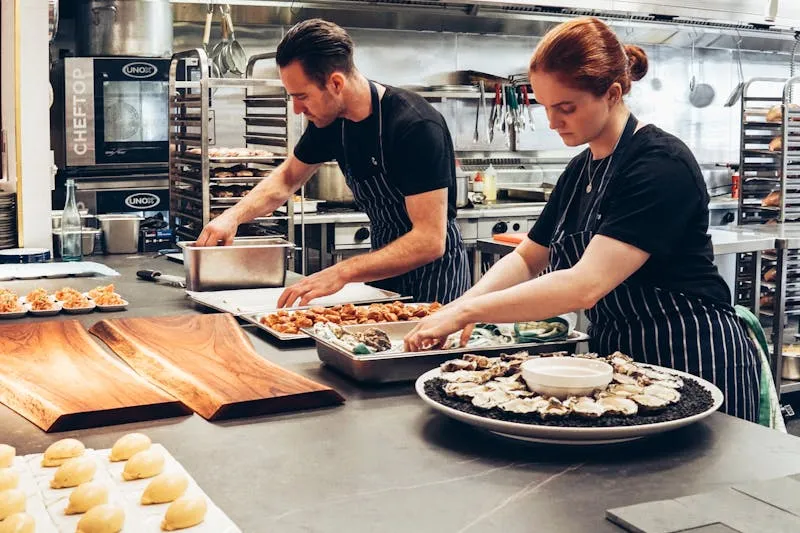
You can't talk about women in gastronomy without starting with her. Eugénie Brazier, born in 1895 on a farm in the Bresse region of France, orphaned at ten, placed as a domestic servant — and who became, in 1933, the first person in history to hold six Michelin stars. Not the first woman. The first person. Full stop.
To put that in perspective: it would take until 1965 and a certain Paul Bocuse for a man to achieve the same feat. Thirty-two years later.
La Mère Brazier — as she was known — ran two restaurants simultaneously: one on Rue Royale in Lyon and another at the Col de la Luère in the Monts d'Or. Her cooking? Dishes of apparent simplicity that concealed absolute technical mastery. Her poularde demi-deuil — a Bresse chicken cooked in a bladder, truffled under the skin — entered legend not because it was spectacular to look at, but because it was perfect to eat.
Did you know? The "Mères Lyonnaises" — Brazier, Fillioux, Bourgeois — literally invented restaurant gastronomy in Lyon in the early 20th century. Before them, fine cuisine existed only in bourgeois homes and Parisian palaces. They democratised excellence — and their influence can still be tasted in Lyon's restaurant culture today.
What's fascinating about Brazier is her relationship with the Michelin Guide. She never courted it. She never adapted her cooking to please inspectors. She cooked what she knew how to cook, with the best ingredients she could find. And the stars came. There's a lesson in that which goes far beyond cuisine: authentic excellence is always recognised eventually.
Her influence on French gastronomy is so profound it's almost impossible to measure. Paul Bocuse himself — who would become the "pope of gastronomy" — did his apprenticeship under her. When he spoke of Brazier, it was always with a deference I never saw him show anyone else. "She taught me that cooking is first and foremost about the ingredient," he said. And that, in 1946, was already revolutionary.
Anne-Sophie Pic: reconquering lost stars
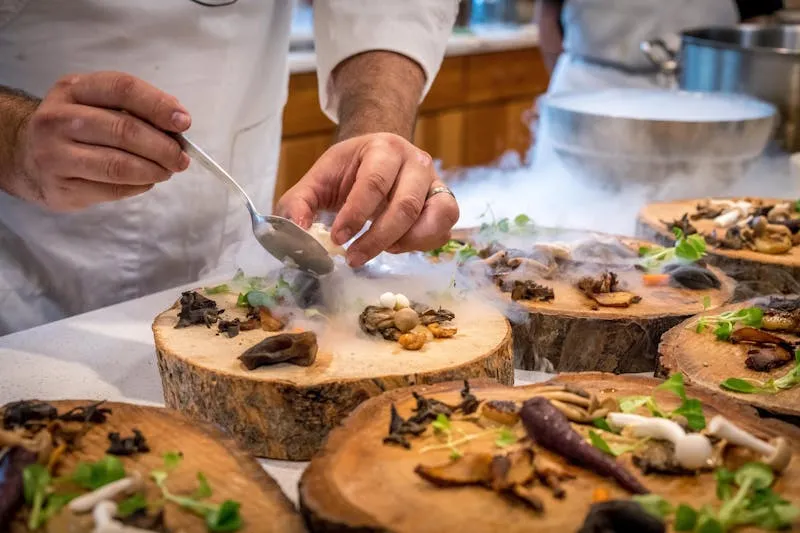
Anne-Sophie Pic's story reads like a script even a novelist wouldn't dare write — it's that loaded. Fourth generation of a cooking dynasty: her great-grandmother, her grandfather André (two stars), her father Jacques (three stars in 1934). Maison Pic in Valence is a monument. And in 1997, catastrophe: after Jacques's death, the restaurant loses its third star.
Anne-Sophie wasn't destined for the kitchen. She was studying business management, saw herself in corporate strategy. But when the third star fell — can you imagine the psychological weight of losing that in a family where cooking is identity? — she dropped everything and walked into the kitchen.
Without classical training. Without years as a commis. In a world where a formal culinary qualification is considered the bare minimum and years of brigade work are a mandatory rite of passage, she learned by doing. By tasting. By failing. By starting over.
What sets her apart Anne-Sophie Pic cooks with her nose. Her olfactory approach — creating flavour pairings by smelling ingredients before cooking them — is unique in world gastronomy. Her unconventional training became her strength: she didn't have classical reflexes, so she invented new ones.
It took her ten years. Ten years of doubt, criticism — "she doesn't have the technical level," "she's coasting on the family name" —, sleepless nights, services where nothing went right, tears swallowed in the walk-in fridge. In 2007, the third star returned. Anne-Sophie Pic became the fourth woman in Michelin Guide history to achieve it, and the only one in France.
Since then, she's built an empire. Pic in Valence (three stars), André in Paris (one star), La Dame de Pic in London, Lausanne, Singapore. Eight restaurants, stars everywhere. And that rare thing among the very greatest chefs: a genuine ability to delegate without losing her culinary identity.
Clare Smyth: from County Antrim to the summit
If there's one chef who embodies what it means to earn everything the hard way, it's Clare Smyth. Born on a farm in County Antrim, Northern Ireland — about as far from the Michelin universe as you can imagine — she left home at 16 to pursue cooking, working her way through some of the toughest kitchens in the world.
Alain Ducasse at the Louis XV in Monaco. Gordon Ramsay at Royal Hospital Road — where she eventually became chef patron, the first woman to run a three-Michelin-starred kitchen in the UK. Heston Blumenthal at The Fat Duck. Thomas Keller at The French Laundry. She didn't just work at these places — she excelled, absorbed, and then moved on to do her own thing.
Core by Clare Smyth opened in Notting Hill in 2017. Within two years, it had two Michelin stars. In 2021, the third arrived. Her signature dish — "Potato and Roe," a humble Charlotte potato dressed in smoked trout roe, herring and dulse beurre blanc — has become one of the most famous plates in British gastronomy. It's a dish that says everything about her philosophy: elevate the ordinary, respect the ingredient, make people feel something.
The Royal seal Clare Smyth cooked the wedding breakfast for the Duke and Duchess of Sussex in 2018. When asked about it afterwards, her response was characteristically understated: "It was a lovely day. The food was good." That refusal to self-aggrandise — in an industry that rewards ego — tells you everything about her character.
What makes Clare particularly remarkable in the British context is her commitment to sustainability and her relationship with British farming. Core works exclusively with British ingredients, often from small family farms she visits personally. Her "natural" menu — a plant-based tasting menu that doesn't feel like a compromise — proved that fine dining can be both luxurious and responsible.
She was also named Best Female Chef by the World's 50 Best in 2018, a title she accepted graciously while making clear she'd prefer the category didn't exist: "I'm a chef. I shouldn't need a separate category." Exactly.
Dominique Crenn: the poet of the kitchen
If Anne-Sophie Pic embodies French elegance and Clare Smyth represents British grit, Dominique Crenn is pure fire. Born in Versailles, adopted, raised by a politician father who took her to restaurants the way other parents take their children to the cinema. She left France for San Francisco at 24 and never looked back — at least, not to cook.
Atelier Crenn, her Marina District restaurant, earned three Michelin stars in 2019, making Dominique the first woman in the United States to reach that summit. Her style? She calls it "poetic culinaria." Each menu is a poem — literally. No dish names on the menu. A poem, written by her, where each line describes a course.
It could be pretentious. From almost anyone else, it probably would be. But when you taste it — and I had this privilege thanks to a friend who lives in SF — you understand. There's a sincerity in every mouthful that disarms criticism. Her "Walk on the Ocean," a seafood dish evoking the Breton coast of her childhood, brought tears to my eyes. While eating. In a restaurant. In front of strangers. I didn't know where to look — and at the same time, I didn't care at all.
Her commitment Dominique Crenn was the first starred chef to remove meat from her menu for environmental reasons (2019). Her restaurant operates near-zero waste. She proves you can reach the pinnacle of gastronomy while staying true to your ecological convictions — and that might be her most enduring legacy.
Dominique Crenn is also a fighter. Breast cancer diagnosis in 2019, announced months after earning the third star. She carried on — not out of bravado, but necessity. "Cooking is what keeps me alive," she told the New York Times. She beat the disease and opened a new restaurant — Bar Crenn — during the pandemic. During. The. Pandemic. When everyone else was closing.
The rising generation: they're coming, and things will change
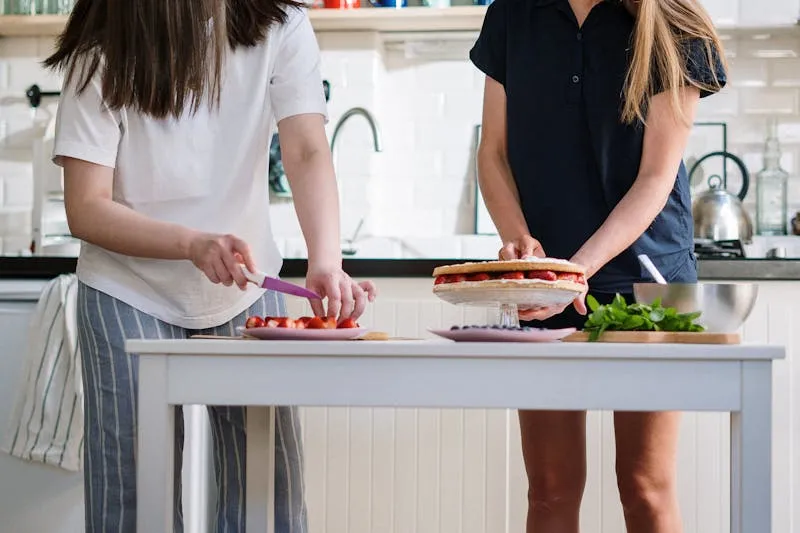
Beyond the established names, there's a new generation arriving that makes me genuinely optimistic. These chefs aren't trying to prove that women "can" cook at the highest level. They couldn't care less about that question. They cook, full stop.
Angela Hartnett — the Italian-British powerhouse
Angela Hartnett's Murano in Mayfair has held its Michelin star since 2010. Trained under Gordon Ramsay, she's become one of the most influential figures in British hospitality — not just for her cooking (refined Italian with British sensibility) but for her vocal advocacy on working conditions, mental health in kitchens, and fair wages. When she talks, the industry listens.
Sally Abé — the quiet revolutionary
Sally Abé earned a Michelin star at The Pem within her first year of opening. Her British-focused, ingredient-led cooking — think native lobster with clotted cream, Herdwick lamb with wild garlic — has a confidence that comes from years of working in some of London's toughest kitchens. She doesn't shout about being a "female chef." She lets the food do the talking.
Pía León — the Peruvian star
Named Best Female Chef by the World's 50 Best in 2021, Pía León's restaurant Kjolle in Lima celebrates Peruvian biodiversity with techniques that blend ancestral and contemporary approaches. Altitude tubers, Pacific seaweed, Amazon herbs — she tells the story of Peru in every dish, with an authenticity that puts many a London hotel's "exotic" menu to shame.
Nina Métayer — pastry's new frontier
Named World's Best Pastry Chef by the 50 Best in 2023, Nina Métayer is doing something radical: she's making pastry accessible without dumbing it down. Her creations — available at Délicatisserie in Paris — are technically extraordinary but designed to be eaten casually, not reverently. It's a democratisation of excellence that would have made Eugénie Brazier proud.
Ones to watch Keep an eye on: Aktar Islam (Opheem, Birmingham — technically not a woman, but championing diversity in starred kitchens), Roberta Hall-McCarron (The Little Chartroom, Edinburgh, one star), and the remarkable chefs coming through the Roux Scholarship, which has produced an increasing number of female finalists in recent years.
Why so few starred women: systemic obstacles

Right, we've talked about inspiring journeys. Now let's talk about the uncomfortable bit. Because if I celebrate successes without analysing why they're so rare, I'm just doing empty storytelling — and that's not how we do things around here.
Why, in 2023, are fewer than 15% of starred restaurants in the UK led by women? The answer isn't simple, and it most certainly isn't "because they don't want to." Let's unpack it.
The brigade: a military system designed by and for men
The brigade system — invented by Auguste Escoffier in the late 19th century — is modelled on the army. Strict hierarchy, martial vocabulary ("yes chef!"), barracks hours (12-16 hour shifts), a culture of "that's just how it is, toughen up or get out." This system produced great cuisine, undeniably. It also produced harassment, burnout, and systematic exclusion of anyone who didn't fit the mould — women first and foremost.
The testimonies are damning. A 2021 survey by the Caterer found that 71% of female kitchen staff had experienced sexist comments, 36% unwanted physical contact, and 18% sexual assault. And those are the reported figures. The real numbers are almost certainly worse, because in a world where your career depends on your reputation and the "chef" has near-absolute power, speaking up is an enormous risk.
Funding: the glass ceiling in the kitchen
Opening a gastronomic restaurant is a colossal investment — £400,000 to £1.5 million for a potentially star-worthy venue. Female chefs face the same biases as all female entrepreneurs: investors take them less seriously, business plans are scrutinised more harshly, and amounts granted are on average 30% lower.
Dominique Crenn has spoken about receiving more than 40 funding rejections before finding an investor for Atelier Crenn. Forty. "If I'd been a man with the same CV, I'd have had my funding in three meetings," she told the Financial Times.
The mental load and motherhood
Being a starred chef is a total commitment: 14 hours a day minimum, six days a week, for years. The question of motherhood — which is never put to men — comes up systematically. Clare Smyth has spoken openly about the difficulty of balancing starred kitchens with any kind of personal life. Angela Hartnett has been vocal about the need for the industry to accommodate parenthood. And how many talented female chefs have simply walked away because the system leaves no room for life outside the kitchen?
Beyond observation This isn't just a "mentality" problem — it's structural. Restaurant hours are incompatible with parenthood for everyone, but women bear the weight disproportionately. Until the industry fundamentally rethinks its organisation of work, the percentage of starred women will remain marginal.
Beware survivorship bias The chefs featured in this article are the ones who made it. For every Clare Smyth or Dominique Crenn, hundreds of equally talented women left the industry — driven out by harassment, impossible hours, or systemic barriers. Celebrating success stories is important, but we must never use them to dismiss the structural problems. "She made it, so anyone can" is a dangerous narrative that lets the system off the hook.
Is there a "feminine" culinary philosophy?
Loaded question. And I'm going to answer honestly, even if it makes me unpopular on both sides.
On one hand, essentialising feminine cuisine — "women cook with more emotion, more gentleness, more instinct" — is reductive and sexist. Alain Passard cooks with infinite delicacy. Heston Blumenthal with boundless creativity. Sensitivity has no chromosome.
On the other hand, denying that life experience influences cooking is absurd. And a woman's life experience in a patriarchal society is different from a man's. Not better, not worse — different. And that difference sometimes produces cooking with a particular colour.
What I observe — and this is personal, not scientific — is that many starred female chefs share certain traits:
A more intimate relationship with raw ingredients. Dominique Crenn, Clare Smyth, Adeline Grattard — they all talk about ingredients as partners, not raw materials to be transformed. There's a respect, a listening to the ingredient that goes beyond technique.
A less ego-centric approach to the menu. In many male-led starred restaurants, the menu is a personal manifesto — "here is MY vision." Among the female chefs I've visited, there's more often a desire to tell a collective story — a terroir, a culture, a family memory.
A different approach to managing the brigade. Not always — some female chefs are as tough as their male counterparts. But there's a documented trend toward more collaborative leadership, with less vertical hierarchy and more mentoring. The era of "yes chef!" barked in terror is beginning to pass — and women are contributing significantly to that shift.
My take The best cooking is sincere cooking. Not "feminine" or "masculine." Sincere. And sincerity means having the courage to cook WHO YOU ARE — your history, your memories, your obsessions. The starred female chefs who define their era are the ones who understood this. Not those who imitate a masculine model, and not those who play the "feminine" card strategically.
Must-visit tables: my (very) personal address book
Right, enough theory. Let's get practical. Here are the female-led tables I've visited — or have on my list, with reviews from people I trust.
In the UK
Core by Clare Smyth, London (three stars) — The temple. Budget accordingly (tasting menu from £295), but this is an investment, not an expense. Her "Potato and Roe" alone justifies the visit — a Charlotte potato that will make you rethink everything you thought you knew about humble ingredients. Book at least six weeks ahead.
Murano, London (one star) — Angela Hartnett's Mayfair gem. Her Italian-British cooking is elegant without being stuffy, generous without being heavy. The hand-rolled pasta is extraordinary, and the dining room has that rare quality of feeling simultaneously special and relaxed. Perfect for a birthday or anniversary.
The Little Chartroom, Edinburgh (one star) — Roberta Hall-McCarron and her husband Shaun serve up Scottish ingredients with real personality. The crab with brown butter and the Borders lamb are standouts. Tiny room, massive flavour, reasonable prices for starred dining (around £85 for the tasting menu). Book well in advance — it's popular for good reason.
The Pem, London (one star) — Sally Abé's celebration of British produce in the Conrad St James hotel. Don't let the hotel setting fool you — the cooking here is personal and passionate. Her native lobster with clotted cream is already a modern classic. Approachable pricing for central London.
International
Atelier Crenn, San Francisco (three stars) — The full Dominique Crenn experience. Budget generously (tasting menu from $365), but also bring an open mind. The cuisine here is a language — if you arrive expecting "just a great dinner," you'll be unsettled. But if you let the poem-menu carry you, it's unforgettable.
Maison Pic, Valence, France (three stars) — Anne-Sophie Pic's temple. Worth crossing the Channel for. Her berlingot — a pasta parcel of foie gras — is legendary. Tasting menu from €390. French fine dining at its absolute peak, with none of the stuffiness.
Kjolle, Lima — Pía León's altitude cuisine. Ingredients you've never encountered — cushuro, muña, airampo — handled with finesse that makes you want to drop everything and move to Peru. Tasting menu at a remarkably accessible price for this level (around £70). Worth building a trip around.
The future: gastronomy is finally becoming plural
I'll finish with optimism — because the reasons for hope are real.
Hospitality schools now count more than 50% women in their graduating classes. Le Cordon Bleu, Westminster Kingsway, Leiths — everywhere, parity is achieved or nearly so. That won't solve everything — systemic biases don't disappear because classrooms are mixed — but it's an essential foundation.
Media plays a role too. MasterChef: The Professionals, Great British Menu, and the extraordinary visibility of chefs on social media mean that young women can see themselves in these roles in a way that simply wasn't possible twenty years ago. The pipeline is filling up.
And then there are structural initiatives. In the UK, organisations like Women in the Food Industry (WiFi) are building networks and mentorship programmes. The Caterer's 30 Under 30 consistently features remarkable young female chefs. Investment funds dedicated to women-led restaurant ventures are beginning to emerge.
Will it be enough? Not if we don't tackle the fundamentals: the inhumane hours, toxic management cultures, biases in star attribution, and unequal funding. But are we moving forward? Yes. And the women I've told you about today aren't exceptions — they're trailblazers.
The gastronomy of tomorrow will be diverse or it won't exist. Diverse in gender, origins, backgrounds, and culinary philosophies. And the day we stop saying "female chef" — because it will have become as absurd as saying "male midwife" — that's the day we'll know we've won.
Until then, go eat at their restaurants. Not as activism. Because it's good. Because it's beautiful. Because it nourishes something deeper than hunger.
Frequently asked questions about female starred chefs
Who is the only woman to hold three Michelin stars in the UK?
Clare Smyth is the only woman in the UK to hold three Michelin stars, earned in 2021 at Core by Clare Smyth in Notting Hill, London. She is also the first British woman ever to achieve this distinction. Trained under Gordon Ramsay and Alain Ducasse, she previously ran Restaurant Gordon Ramsay as chef patron.
How many women have earned three Michelin stars worldwide?
In the entire history of the Michelin Guide — nearly 100 years — only seven women have earned three stars. Among them: Eugénie Brazier (1933, the first person of any gender), Anne-Sophie Pic (2007, France), Dominique Crenn (2019, USA), and Clare Smyth (2021, UK). The number remains strikingly small given the thousands of restaurants starred since 1926.
Why are there so few female Michelin-starred chefs?
The reasons are systemic and multiple: a brigade system inherited from the military that's hostile to women by culture; working hours (14+/day, 6 days/week) incompatible with parenthood without equal sharing of responsibilities; biases in banking and investment; and implicit biases in guide evaluations. It's not a lack of talent — it's a lack of access and structural support.
Who was Eugénie Brazier?
Eugénie Brazier (1895-1977), known as "la Mère Brazier," was the first person in history to hold six Michelin stars (three for each of her two restaurants in Lyon), in 1933. An orphan and former domestic servant, she invented restaurant gastronomy in Lyon and trained Paul Bocuse. Her legacy is fundamental to French — and by extension, global — gastronomy.
Is there a difference between how female and male chefs cook?
There is no inherently "feminine cuisine" — sensitivity and creativity have no gender. However, observed tendencies among starred female chefs include a more intimate relationship with raw ingredients, a less ego-centric approach to menu design (more focused on terroir and collective stories), and often more collaborative brigade management. These traits stem from life experience, not biology.
What budget should I plan for a meal at a female-led starred restaurant?
Prices are comparable to male-led starred restaurants: expect £60-120 for a one-star tasting menu (Murano, The Little Chartroom), £150-250 for two stars (The Pem), and £250-350+ for three stars (Core by Clare Smyth). Some international tables like Kjolle in Lima are surprisingly accessible (~£70) for their level. Lunch menus, where available, offer better value.
Which up-and-coming female chefs should I follow?
In the UK: Sally Abé (The Pem, London), Roberta Hall-McCarron (The Little Chartroom, Edinburgh), and the exceptional pastry chefs emerging through competitions like the Roux Scholarship. Internationally: Nina Métayer (World's Best Pastry Chef 2023), Pía León (Kjolle, Lima), Leonor Espinosa (Leo, Bogotá), and Garima Arora (the first Indian woman to earn a Michelin star).