
There's a particular smugness that lives in fashion. The kind that lets you say, three years from now, when everyone's wearing a certain brand: "I followed them from the beginning." It's petty. It's vain. And it's absolutely delicious. Because discovering a designer before the hype is like stumbling onto an incredible record by a band nobody's heard of yet. Except instead of a song, it's a jacket that makes you feel untouchable.
But beyond that slightly shameful satisfaction of having had the eye before everyone else, there's something fundamentally different about supporting an emerging designer. You're not buying a brand. You're buying a vision. A point of view. Someone who decided to risk everything — the savings, the flat, the nights of sleep — because they had something to say with fabric and scissors.
This selection isn't exhaustive. It's intentional. These are designers whose evolution I've tracked, whose pieces have survived more than one season in the wardrobes I most admire, and whose brand DNA is strong enough that in five years, you'll know exactly who made a piece the moment you see it. That's the signature of a real designer.
How to spot a promising designer before the hype

The question I hear most often: "But how do you find them so early?" It's not magic. It's a method. And anyone can apply it.
The first signal is consistency. A promising designer doesn't change direction with every collection. On the contrary, they deepen. Each new piece seems like an answer to the previous one. There's a logical evolution, a progression. When you look at three or four early collections from a designer and you can trace a narrative thread, that's a good sign.
The second signal is what I call "trend resistance". Designers who last don't chase what's fashionable at the moment they're creating. They create what will be fashionable when their pieces are actually worn. This intentional lag, this slight friction with the present moment, is often the sign of a truly original vision.
The third signal — the hardest to formalise — is how the pieces photograph. Not Instagram-friendly in the filtered, perfect sense. Magnetic. When you're scrolling and your thumb stops on a photo without quite knowing why, something in that piece has a presence beyond the image. Those designers: bookmark them immediately.
Another underused tool: graduate show listings from the great fashion schools. Central Saint Martins, the Royal College of Art, the Royal Academy of Fine Arts in Antwerp. These institutions publish their graduates every year. A good portion of the names that will dominate fashion in ten years are already there.
The prizes that launch careers: BFC NewGen, LVMH Prize, Hyères
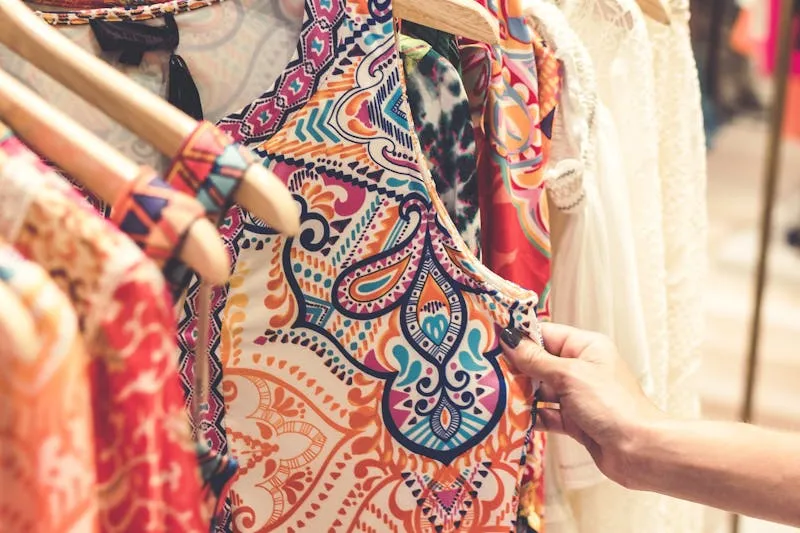
Fashion prizes aren't just institutional beauty contests. They're accelerators. Winning one gives you access to a network, funding, and a legitimacy that years of independent work don't always provide.
BFC NewGen
The British Fashion Council's NewGen programme has been the most important launchpad for emerging British talent since 1993. It provides financial support and mentoring to designers who show at London Fashion Week — and its alumni list reads like a who's who of British fashion: Alexander McQueen, Stella McCartney, Christopher Kane, Jonathan Anderson, Simone Rocha, Matty Bovan, S.S. Daley. The programme's real value is visibility during Fashion Week, when the entire industry's attention is focused on London.
The LVMH Prize for Young Fashion Designers
Since 2013, this prize has transformed the trajectories of dozens of designers. Its particular power: finalists get a week of mentoring with the creative directors of LVMH houses. Nicolas Ghesquière, Maria Grazia Chiuri, Kim Jones. That's not coaching — it's immersion in the highest reaches of the industry. Past recipients include Nensi Dojaka (2021), Casablanca (2018), Marine Serre (2017).
The Hyères Festival
Hyères is different. It's simultaneously a fashion festival and a competition, and its jury — composed of photographers, art directors, stylists — has a reputation for rewarding the most singular visions rather than the most commercially viable ones. It's often where the designers who redefine what fashion can be take their first steps into the spotlight.
London: the names to watch right now

London's emerging scene has always had a specific energy — rougher, more conceptual, more willing to fail spectacularly in pursuit of something genuinely new. Central Saint Martins is the gravitational centre of this scene, but talent comes from everywhere: Goldsmiths, the RCA, self-taught designers who learned in clubs and markets before they learned in classrooms.
S.S. Daley — English pastoral reimagined
Steven Stokey-Daley won the LVMH Prize Special Jury Award in 2022 and hasn't looked back. His brand draws on a very specific slice of English cultural history — country house aesthetics, school uniforms, amateur theatrical societies — and transforms it into something that feels both nostalgic and entirely new. His menswear (and increasingly womenswear) has a quality of found-ness, as if the pieces have lived a life before they arrived on the rack.
Signature piece: Tailored blazers and waistcoats with embroidered or painted details drawn from English pastoral imagery. Price range: £300-£1,200. Where to buy: Matches Fashion, Dover Street Market London, his own website.
Nensi Dojaka — lingerie as daywear, properly done
Central Saint Martins graduate (2019), LVMH Prize winner (2021), Nensi Dojaka has established an immediately recognisable vision: pieces that play with the boundary between underwear and outerwear, built in light materials (mesh, silk, satin) with a technical precision that transforms what might seem fragile into something structured and powerful.
Her collections have a consistency rare for such a young brand — each piece is part of an ongoing conversation about what it means to "expose" and "protect" oneself in contemporary dress. She's on the BFC NewGen programme, which means you can expect to see her at London Fashion Week for the foreseeable future.
Signature piece: Mesh and satin tops and dresses with integrated bra details built into the construction. Price range: £250-£700. Where to buy: Net-a-Porter, Ssense, Dover Street Market.
Stefan Cooke — the intellectual trompe l'oeil of menswear
Stefan Cooke and partner Jake Burt have built their label on an intellectually sophisticated play with the codes of men's clothing. Their pieces seem familiar — a blazer, a polo, jeans — until you look more closely and realise everything is different. Panels that change the structure, prints that simulate textures the fabric doesn't have, constructions that defy what a garment is supposed to do.
LVMH Prize finalists, they have a deeply loyal following in the British fashion community — the kind of designers whose collectors buy systematically, almost every collection.
Signature piece: Blazers and jackets with trompe l'oeil constructions that appear to be two pieces but are one. Price range: £300-£1,200. Where to buy: Ssense, Matches Fashion, their official website.
Matty Bovan — the maximalist who means it
Matty Bovan is the antidote to everything grey and minimalist in contemporary fashion. A York-born, Central Saint Martins-trained designer, his collections are explosive in colour, texture and construction — but never chaotic. There's a rigorous intelligence underneath the apparent maximalism. His knitwear, in particular, is some of the most technically accomplished work being produced in Britain right now.
Long-term BFC NewGen recipient, his work has been collected by major fashion institutions. The V&A owns pieces from his early collections. That's not hype — that's legacy in real time.
Signature piece: Heavily constructed knitwear with layered textures, mixed fibres and unexpected structural elements. Price range: £200-£900.
International: beyond the usual fashion capitals
The fashion hype machine has long been organised around four capitals: Paris, Milan, London, New York. That framework is still present in mainstream media, but it no longer reflects where the most interesting things are happening. Lagos, Seoul, Buenos Aires, Rotterdam — the geographies of talent have expanded irreversibly.
Ahluwalia (Delhi/London) — narrative as material
Priya Ahluwalia built her label on an upcycling foundation — second-hand garments transformed into new pieces — but that's reductive as a full description. Her collections are narrative enquiries into identity (Indian-Nigerian-British), history (post-colonial, musical, sporting), and how clothes carry collective memories. Her photo-textile prints are among the most sophisticated of her generation.
She's since evolved toward mixed collections that aren't exclusively upcycled but retain that narrative depth. Winner of the Fashion for Good prize, LVMH Prize shortlistee, and one of the most articulate voices in fashion about what the industry should be.
Signature piece: Denim pieces with archival photo prints and photographic patchwork. Price range: £180-£600. Where to buy: Her own site, Browns Fashion, Selfridges.
Hodakova (Sweden) — couture from recovery
Ellen Hodakova Larsson is Swedish, trained at Beckmans College of Design in Stockholm, but her vision speaks a language that transcends geography. Her signature: the transformation of unexpected materials — belts, buckles, hardware — into garments of stupefying technical precision. Her dresses made from hundreds of sewn-together belts aren't a gimmick: they're declarations about the lifecycle of objects and what "luxury" can mean when detached from conventional materials.
Signature piece: Dresses and tops constructed from hundreds of sewn belts, as much sculpture as clothing. Price range: £400-£2,500. Where to buy: Dover Street Market, Ssense.
Maximilian (Trinidad/London) — the African diaspora as vision
Maximilian Davis is now the creative director of Ferragamo — but before that, his eponymous label made waves with its first collection in 2021. His pieces explore Caribbean and African heritage through the lens of European luxury, creating something entirely new rather than synthesising two existing heritages. It's less fusion than conversation between distinct visual traditions.
Signature piece: Asymmetric draped dresses in colourful silks that blend African references with European tailoring. Price range: £400-£1,800.
Emerging designers and sustainability: a new generation

Sustainability in emerging fashion has changed in nature. Five years ago, a "sustainable" designer often offered aesthetically compromised pieces in the name of ethics. Today's new generation has understood that this compromise is a false alternative — and that material constraints can be generators of creativity rather than limitations.
AVAVAV (Florence) — the rejection of perfection
Beate Karlsson, founder of AVAVAV, has made "defect" an aesthetic. Her clothes — intentionally "undone", visible seams, unfinished edges, deliberately asymmetric shapes — are a direct response to the "perfect" culture that dominates social media. And paradoxically, it's precisely this claimed imperfection that makes her pieces immediately recognisable.
She produces in Italy, in small runs, with a public commitment to supply chain transparency. Her shows — often satirical performances on industry codes — have had as much social media impact as the clothes themselves.
Signature piece: Intentionally "undone" pieces — frayed edges, reversed seams, deconstructed shapes. Price range: £150-£500.
Duran Lantink (Amsterdam) — upcycling as haute couture
Duran Lantink is one of the most radical designers of his generation in his commitment to circularity. His collections are built entirely from deadstock and recovered garments — but the result has a sophistication that rivals couture pieces produced from new materials. His cutting and assembly technique is unmistakable.
He dressed Beyoncé for some of her most memorable appearances. When Beyoncé chooses you before you're mainstream, something serious is happening.
Signature piece: Ensembles built from cut vintage pieces reassembled into new volumes. Price range: £200-£800.
Accessories: the bag makers and jewellers to discover
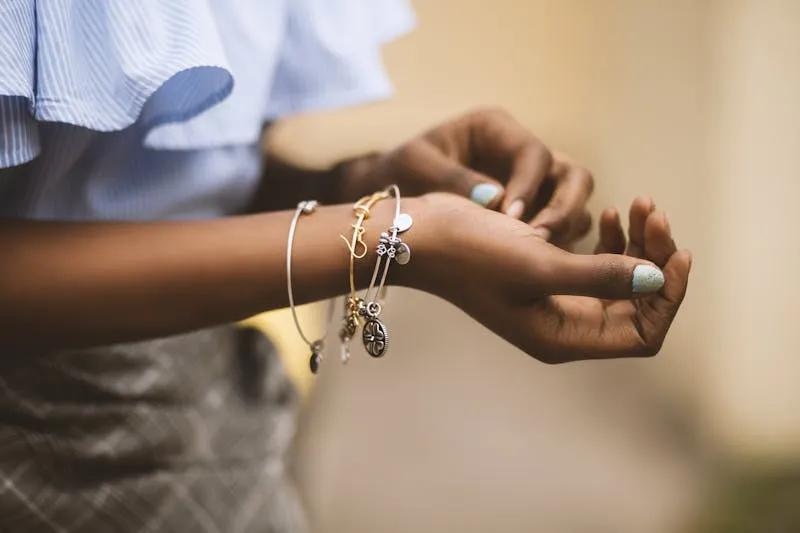
Accessories deserve their own section because they're often the most accessible entry point into a designer's universe — gentler prices, more versatile pieces, and sometimes even more representative of the vision than the clothing itself.
Sophie Buhai (Los Angeles) — jewellery as minimalist architecture
Sophie Buhai has built one of the most coherent jewellery aesthetics of her generation. Her pieces — in sterling silver or gold-plated brass — have a serene monumentality that changes the way you move when you wear them. Putting on one of her earrings is adopting a different posture.
Her label remains relatively niche in the UK (no significant physical British retail presence yet), which makes it exactly the kind of discovery this article is about.
Signature piece: Cylindrical silver earrings and architectural cuffs. Price range: £120-£600. Where to buy: Her official site, Ssense, select US and Japanese boutiques.
Savette (Paris) — leather goods as sculpture
Founded in Paris, Savette has taken on a different dimension since 2020. Their bags — constructed in first-quality leather, with an attention to finish that recalls the great maison maroquiniers — have an immediately recognisable silhouette. The Tondo and Boxy are already classics-in-the-making, and they're shipping internationally with relative ease.
Signature piece: The Tondo bag, a circular form in natural, undyed leather. Price range: £350-£900.
Where to buy emerging designers in the UK
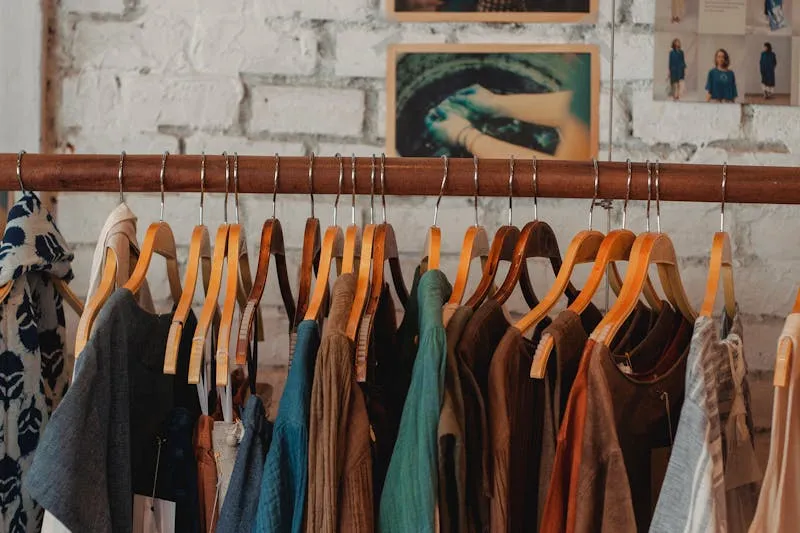
The challenge with emerging designers is often distribution. They're not in the department stores yet (or not necessarily), and ordering internationally can add significant import costs. Here are the right addresses for accessing these designers without complicating your life.
Physical boutiques in London
Dover Street Market London (Haymarket): the international reference. Curated by Rei Kawakubo, DSM mixes the great houses with emerging designers with a singular eye. Expensive, but it's where you'll find Hodakova, Nensi Dojaka and names no other UK retailer stocks.
Browns Fashion (South Molton Street): the historic London retailer that has long had a genuine commitment to emerging British talent. Their buying team has a real editorial point of view, and their website ships reliably across the UK.
Machine-A (Brewer Street, Soho): the most purely emerging-focused destination in London. Curator Stavros Karelis has an extraordinary eye for what's next — if you want to find the names before the names are names, start here.
Hostem (Redchurch Street, Shoreditch): a slower, more considered curation. Their selection leans toward Japanese and Northern European designers alongside British emerging talent. Different energy from the rest — worth visiting if you want something more meditative.
Online platforms with good UK delivery
Ssense: the absolute reference for emerging designers online. Fast delivery, easy returns, and the broadest selection you'll find in this segment. Their editorial content is also an excellent discovery source.
Matches Fashion: higher-end selection, but with a real commitment to emerging designers. Their "Discover" section is a good starting point.
Browns Fashion online: consistent with the physical store, good UK shipping, reliable customer service.
How to follow them without breaking the bank
Because supporting an emerging designer doesn't necessarily mean having the budget to buy every piece that catches your eye. There are other ways to be part of this ecosystem.
Strategic Instagram following
Follow the designer, yes. But also follow the stylists who dress them, the art directors who choose them for their editorials, the boutiques that stock them. Each node in this network is an additional discovery source. Turn on notifications for the designers you genuinely love — their drop announcements and pop-up dates move fast.
Showrooms and pop-ups
Many emerging designers hold seasonal showrooms — often in January/February for spring-summer and July/August for autumn-winter. These events let you see pieces in person, sometimes meet the designer, and order at studio prices. Watch for announcements on Instagram and sign up to their newsletters.
Private sales and archives
Emerging designers regularly hold end-of-collection sales or stock clearances, often announced only to their Instagram community. It's a way to access their pieces at more accessible prices. And archive pieces — from past collections — are often available on Vestiaire Collective at interesting prices, especially as the most sought-after pieces tend to hold or increase their value over time.
Frequently asked questions
How do you know if an emerging designer will last?
No certainty, but positive signals include: a coherent vision across multiple collections, a professional support network (press, multi-brand retailers, stylists), presence at institutional events (official Fashion Weeks, recognised prizes), and a loyal customer base that buys again rather than one-off hype. Designers who disappear after one or two collections often had a media spotlight but not solid commercial foundations.
Where can I find emerging designers with a limited budget (under £100)?
Accessories are often the best entry point — jewellery, belts, small bags. Some designers also offer entry-level pieces (t-shirts, basic tops) at more accessible price points. End-of-collection sales and archive pieces on Vestiaire Collective are other options. Designers who sell direct (without boutique intermediary) often have more accessible prices on their own sites.
Does the LVMH Prize genuinely change a designer's career?
Yes — but not solely because of the financial award (€300,000 for the Grand Prize). The real impact comes from the network: a week of mentoring with LVMH creative directors, global media visibility, and institutional legitimacy that opens doors (distribution, investors, press). Recipients typically see significant sales increases in the 12 months following the prize.
Is it better to buy directly from the designer or through a multi-brand boutique?
Both have advantages. Buying direct (designer's website) is generally cheaper (no boutique margin), and you're contributing more directly to their revenue. In a boutique, you can see and touch the piece, have a local point of contact for any issues, and returns are often easier to manage. If the designer produces abroad, check shipping and import costs before ordering direct.
How do you distinguish a genuine emerging designer from a brand playing at independence?
Transparency about production is the most reliable criterion. A genuinely emerging designer can tell you where their pieces are made, by whom, in what conditions — often because they have a direct relationship with their makers. Brands "playing" at emerging tend to be vague on these questions. Production numbers (how many pieces per collection) are also telling: a genuine emerging designer produces in limited runs, typically fewer than 200-300 pieces per style.
Do emerging designer pieces resell well?
It depends on the designer and the piece. Pieces by designers with a clearly ascending trajectory (Nensi Dojaka before the LVMH Prize, Marine Serre before ANDAM) have indeed increased in value on the secondary market. But buying an emerging designer as a financial "investment" is a risky strategy — buy because you genuinely love the piece, and if it appreciates in value, that's a bonus.