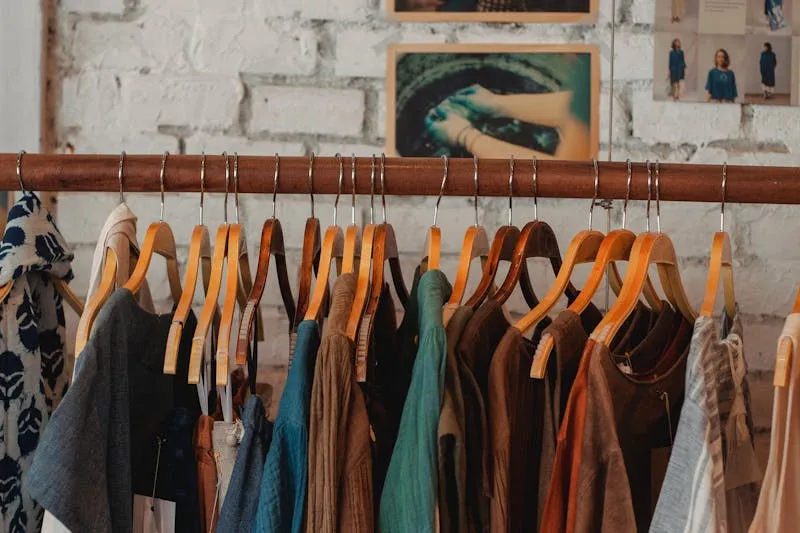
I was 19 when a shop assistant at a high street store told me — in front of my mother — "with your hips, love, I'd avoid straight skirts." I spent the next five years hiding the lower half of my body under shapeless tunics. Five years. Because a woman with zero styling training had decided my hips were a problem to solve.
That is exactly the trap most body-type guides fall into: they assume certain parts of your body are "flaws" to camouflage. This guide won't do that. Your body has nothing wrong with it — it simply has unique proportions, and certain cuts showcase them better than others. That's it. No shame, no complexes, no "hide those hips I cannot bear to see." Just information so you can make informed choices at the clothing rack.
In this article
- How to identify your body type (for real)
- Pear shape (A/triangle): drawing attention upward
- Inverted triangle (V): balancing the shoulders
- Rectangle (H): creating curves
- Hourglass (X): following the lines
- Apple shape (O): structuring and flowing
- The role of fabrics and textures
- 6 myths to forget forever
- Beyond body type: dressing with intention
- Frequently asked questions
How to identify your body type (for real)
Forget those online quizzes asking you to measure your wrist circumference. The most reliable method is visual — and it takes 2 minutes.
The mirror method
Stand in front of a mirror in underwear or fitted clothing. Look at the relationship between three zones: your shoulders, your waist, and your hips. It's the ratio between these three zones that defines your body type — not your weight, not your height, not your age.

The 5 main body types
- Pear (A/triangle): Shoulders narrower than hips, defined waist. The most common body type among women.
- Inverted triangle (V): Shoulders wider than hips, broad bust, narrow hips.
- Rectangle (H): Shoulders, waist, and hips roughly aligned, with little difference between the three.
- Hourglass (X): Shoulders and hips aligned with a clearly defined waist.
- Apple (O): Fullness concentrated around the bust and midsection, often with slender legs.
Important: These categories are guidelines, not boxes. The majority of women are a blend of two body types. You can have V shoulders with an A pelvis — and that's perfectly normal. Use these as a starting point, not an identity.
The weight trap
Your body type doesn't change with the scales. A pear shape remains a pear shape whether she weighs 8 stone or 13 stone — the proportions stay the same. That's why these guides work at all sizes: we're talking about bone structure and distribution, not numbers on a scale.
Pear shape (A/triangle): drawing attention upward
It's the most common body type — and the one that suffers most from clichés. No, you don't need to "hide your hips." You need to create visual balance by drawing the eye towards the upper body.
What works
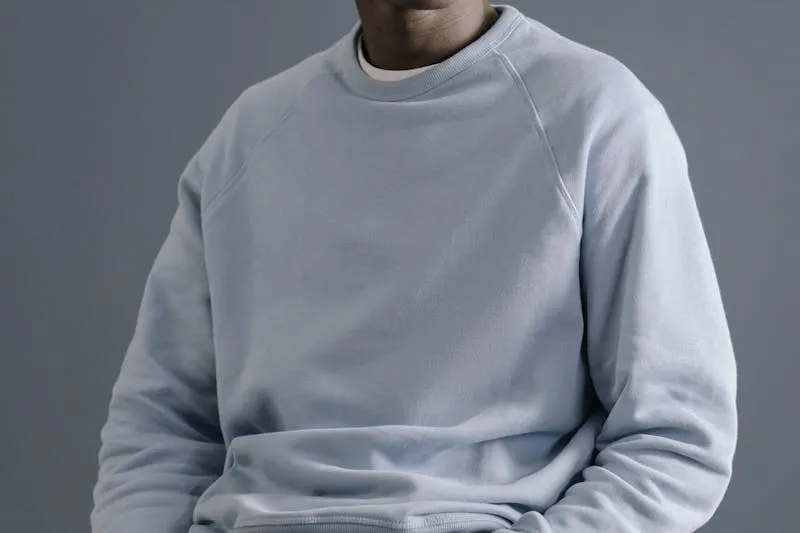
- Tops: boat necklines, bardot necklines, puff sleeves, subtle shoulder pads — anything that visually widens the shoulders
- Colours: bright colours and prints on top, darker colours below
- Bottoms: straight or bootcut trousers (the slight flare creates balance), flared skirts, A-line dresses
- Jackets: structured blazers, padded jackets, denim jackets
- Dresses: empire waist, wrap dress, A-line
What to approach with caution
- Tapered trousers tight at the ankle (they accentuate the top-bottom contrast)
- Very fitted tops without volume (they reinforce the narrow-shoulder impression)
- Ultra-tight pencil skirts (unless that's exactly the look you're going for — in which case, absolutely go for it)
Reminder: These "rules" are tools, not laws. If you love tapered trousers and feel great in them, wear them. The most flattering garment is the one you feel confident in.
Inverted triangle (V): balancing the shoulders
Often associated with swimmers or athletes, the V shape features broad shoulders, a developed bust, and narrow hips. The styling objective: soften the top and visually build up the bottom.
What works
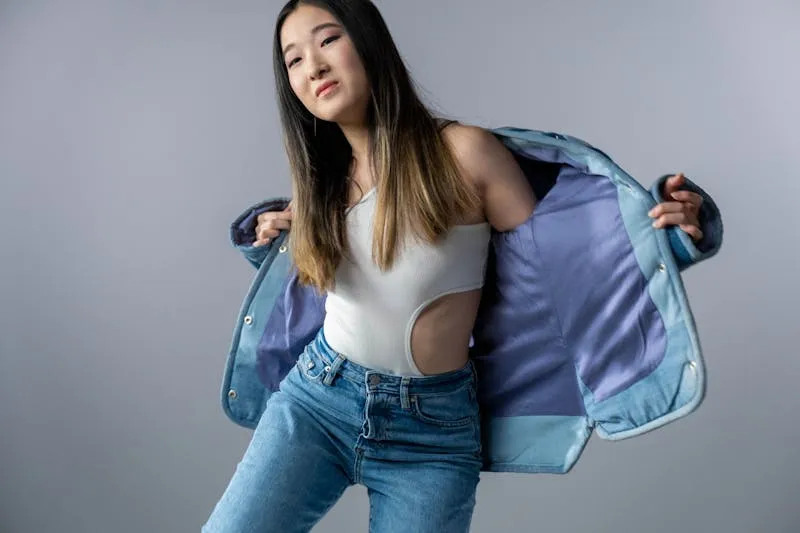
- Tops: V-necks (elongate the torso, soften the shoulders), flowing tops, draped fabrics, raglan sleeves
- Colours: dark or plain colours on top, bright colours or prints below
- Bottoms: wide-leg trousers, palazzos, bootcut, pleated skirts, ruffled skirts — anything that adds volume below
- Jackets: open styles without shoulder pads, long cardigans, kimonos
- Dresses: wrap (the V neckline works wonders), dresses that flare from the waist
What to approach with caution
- Shoulder pads and puff sleeves (they add volume where there's already plenty)
- Boat necklines (they visually widen the shoulders)
- Horizontal stripes across the chest
Rectangle (H): creating curves
The H body type is the most common in modelling — which doesn't mean the others are "less good." It features a straight silhouette where shoulders, waist, and hips are roughly aligned, with minimal width difference between the three.
What works
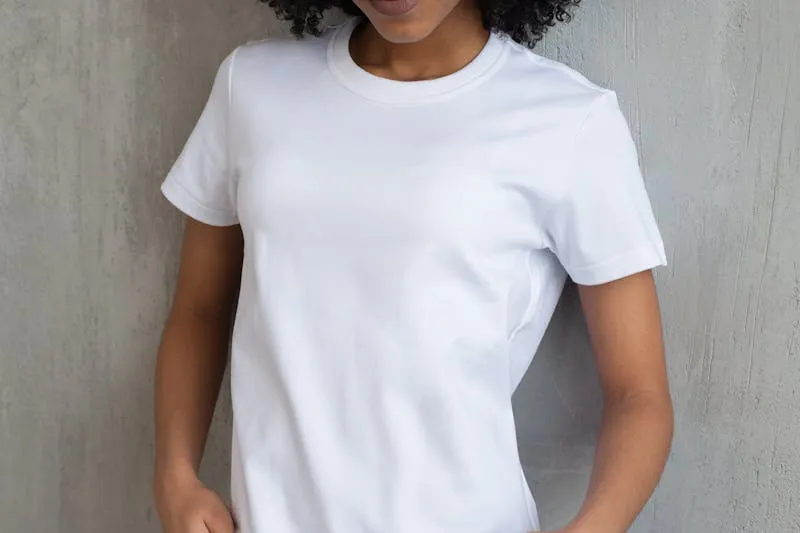
- Belts: your greatest ally — worn at the waist, they create the illusion of a defined waist
- Tops: peplums, fitted blouses, peplum tops, tucked-in shirts
- Bottoms: high-waisted trousers (lengthen legs, define waist), skater skirts
- Jackets: fitted blazers, short biker jackets, tailored bombers
- Dresses: wrap (they create a waist where nature didn't draw one), fit & flare
What to approach with caution
- Completely straight cuts from top to bottom (they emphasise the linearity)
- Long, straight tops without a belt ("box" effect)
- All-one-colour outfits without any line break (unless it's a deliberate choice)
Stylist's trick: For the rectangle shape, colour contrast between top and bottom is your friend. A light top tucked into dark high-waisted trousers creates a visual break that simulates a defined waist.
Hourglass (X): following the lines
The X body type — often presented as "the ideal" — features shoulders and hips of equal width with a clearly defined waist. It's the easiest silhouette to dress, but also the easiest to "lose" under overly loose clothing.
What works
- The watchword: FOLLOW the curves. Anything that hugs the silhouette without squeezing
- Tops: fitted tops, wrap tops, bodysuits, tailored shirts
- Bottoms: skinny or slim jeans, high-waisted fitted trousers, pencil skirts
- Jackets: fitted blazers, tailored biker jackets, belted trenches
- Dresses: wrap dress (THE garment made for the X), bodycon, belted dresses
- Belts: always yes — they highlight what nature provided
What to approach with caution
- Head-to-toe oversized (it hides the waist and creates volume in the wrong places)
- Straight, rigid cuts that ignore the curves
- Too-thick layering at the waist
Apple shape (O): structuring and flowing
The O body type carries fullness around the bust, stomach, and upper hips, often with slim legs and arms. It's the most stigmatised body type in the fashion industry — yet with the right cuts, it's absolutely gorgeous.
What works
- Tops: empire-waist tops, flowing blouses that skim the midsection without clinging, deep V-necks that elongate
- Fabrics: fluid and draping (jersey, crepe, silk), NOT clingy, NOT rigid
- Bottoms: straight or bootcut high-waisted trousers, A-line skirts, palazzos
- Jackets: long and open (waterfall cardigans, kimonos, unbuttoned long blazers)
- Dresses: empire, shirt dress (unbelted or belted under the bust), A-line
- The secret: show your assets — if you have great legs, go shorter; if you have a beautiful décolletage, show it off
What to approach with caution
- Too-clingy fabrics (they mark every crease and create discomfort)
- Tight belts at the natural waist (they divide the body at the wrong point)
- Layering that adds bulk to the centre of the body
- Head-to-toe black "to look slimmer" (it's a myth — monochrome black flattens the silhouette without flattering it)
The game-changer: Vertical lines. An open cardigan creates two vertical lines down the body. A long V-shaped necklace lengthens the torso. An unbuttoned shirt over a plain top creates verticality. These simple details structure the silhouette far more effectively than any "slimming" garment.
The role of fabrics and textures
Cut is queen, but fabric is her prime minister. Two identical garments in two different fabrics can produce radically different results on the same body.
Fabrics that flow
Quality jersey, viscose, modal, silk, crepe — these fabrics follow the body without compressing it. They drape naturally and move with you. Ideal for all body types, particularly O and A.
Fabrics that structure
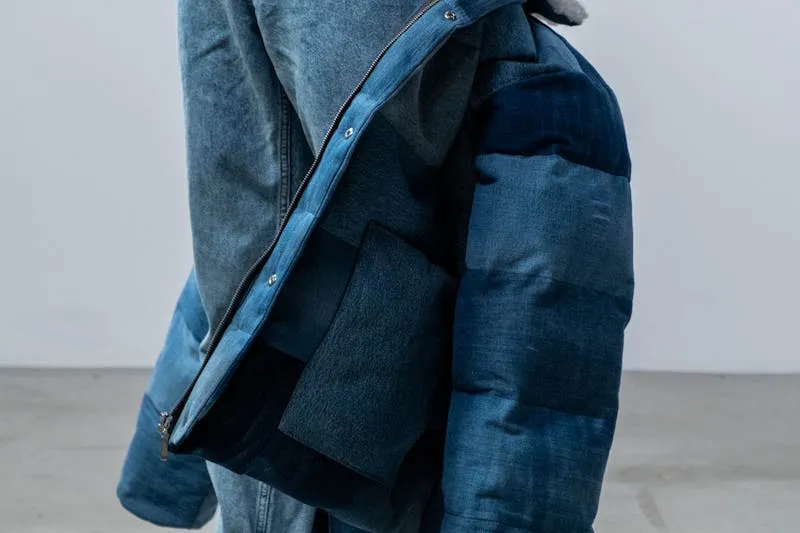
Thick cotton, denim, boiled wool, tweed — these fabrics hold a shape and create a defined silhouette. Perfect for H shapes wanting to create volume, and for jackets and coats across all body types.
Fabrics to handle with care
Lycra/elastane alone (without blending), shiny satin, thin polyester — these fabrics cling to everything, stick to body heat zones, and can reveal what others conceal. This isn't about "flaws" — it's about comfort. If a fabric makes you feel exposed rather than elevated, it's not for you.
Beware "one size fits all": One-size garments are designed for a very specific body type (typically H, UK size 8-10). On everyone else, they simply don't fall correctly — it's not your body at fault, it's the garment that's poorly designed.
6 myths to forget forever
The fashion industry has spread "rules" with zero foundation — yet many women still follow them blindly. Let's demolish them.
Myth 1: "Black is slimming"
Black creates a uniform visual effect, but it doesn't slim. A poorly cut black garment remains a poorly cut garment. What slims is the cut — not the colour. An all-black look can actually flatten the silhouette and erase positive volume.
Myth 2: "Horizontal stripes make you look wider"
Visual perception studies (notably Peter Thompson's at the University of York, 2008) showed that horizontal stripes can actually create a lengthening illusion when they're fine and closely spaced. It all depends on stripe width, spacing, and the garment.
Myth 3: "After 40, you should cut your hair and lengthen your skirts"
This "rule" has zero styling basis. The flattering skirt length depends on your proportions and legs, not your birth certificate. Wear whatever length you please — elegance is ageless.
Myth 4: "Tall women shouldn't wear heels"
Why? Who decided this? Heels change posture, elongate the silhouette, and build confidence — regardless of your height. If you love heels and you're tall, wear heels. Take up space.
Myth 5: "Plus-size women shouldn't wear prints"
Prints work on all bodies. The key is scale: choose prints proportional to your frame. Small, tight prints can indeed compress the silhouette, but medium to large prints in the right colours look absolutely stunning on O body types.
Myth 6: "You should hide what you don't like"
Covering a body area you're self-conscious about under layers of fabric often creates more volume and draws more attention. Paradoxically, fitted cuts (without being skin-tight) are often more flattering than loose ones — because they follow the body instead of hiding it.
Beyond body type: dressing with intention
Body type is a useful tool — but it's not the only criterion. Here are three other dimensions to consider for a truly complete personal style.
Your lifestyle
A capsule wardrobe for a corporate lawyer has nothing in common with one for a freelance graphic designer. Before asking "what's my body type?", ask yourself "how do I spend my days?" Your wardrobe should serve your life, not the other way round.
Your style personality
Are you classic, bohemian, rock, minimalist, maximalist, athleisure-chic? Your style personality has zero connection to your body type — and it should be the first filter for your choices. An apple-shaped woman who loves rock style can wear a leather biker jacket like nobody's business, even if no guide "recommends" it.
Your comfort — the supreme criterion
If a garment itches, pinches, squeezes, makes you hold your stomach in, or needs constant adjusting — it's not for you, regardless of body type. Physical comfort is the foundation of psychological comfort. You cannot feel good in a garment that hurts.
The liberating exercise: Next time you try on a garment in the changing room, instead of scrutinising your body critically, ask yourself ONE question: "Do I feel good?" Not "does it slim me," not "is it flattering." Just: do I feel good. This exercise, simple as it sounds, is an act of radical sartorial freedom.
Frequently asked questions
Can my body type change over time?
Your bone structure doesn't change, but your body mass distribution can evolve with age, pregnancy, hormonal changes, or exercise habits. An hourglass can shift towards apple after menopause, or a rectangle towards pear with motherhood. That's normal — revisit your clothing choices at each major life stage, without nostalgia for the silhouette of before.
Do these tips work for all sizes?
Yes, because they're based on proportions, not measurements. A size 8 pear and a size 20 pear have the same relative proportions (shoulders narrower than hips) — the same cut principles apply. The only difference concerns brands, as not all offer inclusive sizing.
Must I strictly follow my body type's recommendations?
Absolutely not. These recommendations are starting points, not obligations. Fashion is a form of personal expression — if you love a style that "doesn't match" your body type, wear it with confidence. Confidence is the best accessory that exists, and it goes with everything.
How do I handle being between two body types?
That's the case for the majority of women. Read the advice for both body types closest to yours and cherry-pick what works. Between pear and hourglass? Use the hourglass tips for the top (follow the curves) and the pear tips for the bottom (create balance). The mixed approach is often the most accurate.
Are body-type guides body-positive?
It depends on how they're used. Saying "this cut enhances your silhouette" is body-positive. Saying "this cut hides your flaws" is not. Intention makes all the difference. In this guide, we talk about enhancement and comfort — never concealment or correction. Your body is the right body, as it is.
Do men have body types too?
Yes, the same proportion principles apply (V, H, A, O primarily). Cut recommendations are transferable to the men's wardrobe (shirt shoulder width, trouser cut, jacket length). Men's body-type guides are simply less publicised — but the fundamentals are identical.