The last creative thing you made was probably a friendship bracelet at summer camp. Or perhaps something in a Year 9 art class you've largely blocked from memory. Since then — nothing. Not because you aren't creative, but because somewhere along the way, you were quietly convinced that creativity was reserved for artists. It isn't. And starting pottery, embroidery or watercolour at 30 is genuinely one of the best things you can do for your brain.
This guide is straightforward: 10 creative hobbies with honest starter costs, exactly what you need to buy, where to learn in the UK, and how long before you have something you're actually proud of. No "unleash your inner artist" nonsense. Just facts.
Why now (and not "someday")
The "one day I'll get into painting" has existed since you were 22. It'll still exist at 45 if you don't decide otherwise. This isn't a time problem — it's a permission problem.
The research is clear: creative manual activities reduce cortisol (the stress hormone), activate the prefrontal cortex differently from digital work, and produce a flow state comparable to meditation. A 2016 study published in the Journal of Positive Psychology found that engaging in creative activities on a given day was associated with higher positive affect the following day. The School of Life in London runs entire workshops on this premise. It isn't wellness marketing — it's neuroscience.
What's actually blocking you: the idea that you need to "be good at it". You don't. Beginner pottery is wonky. Beginner watercolour bleeds everywhere. Beginner embroidery has knots you didn't plan for. That's the starting point, not the destination.
Pottery — hands in the clay
Pottery is probably the creative hobby with the greatest immediate emotional reward. You take a block of clay, put your hands in it, and after 2 hours you have something real. Not something perfect — but something tangible, physical, made by you.
What you need to start
If you start with studio classes (recommended): Nothing to buy. Clay, the kiln, and tools are all provided. A taster session in the UK typically runs £25–£55 for a 2–3 hour workshop. The London Craft Club, Earth and Fire (Manchester), and Turning Earth (London) are well-regarded options. Most cities have community pottery studios with monthly membership options (£50–£120/month for unlimited wheel time).
If you want to practise at home without a wheel:
- Air-dry clay (no kiln needed): £8–£15 for 500g, enough for 5–6 small projects
- Basic modelling tools: £10–£20 (Faber-Castell or Staedtler sets are fine)
- A protected work surface: a wooden board or oilcloth
First-month budget: £30–£80 if you start with classes; £25–£45 if you start with air-dry clay at home.
Where to learn in the UK
Studio classes are genuinely the best option for beginners — YouTube wheel-throwing tutorials are demoralising if you've never touched clay. Search "pottery classes [your city]" or check your local council's leisure programme (often subsidised). Hobbycraft sell air-dry clay starter kits in store. For online learning, Domestika's pottery courses are structured and well-produced.
Time to a first result
After a single 2-hour session, you leave with something. Not a masterpiece — but a bowl, a pinch pot, something you made with your hands that will sit on a shelf. Wheel mastery takes months, but the immediate satisfaction arrives on day one.
Embroidery — the anti-stress that builds something
Embroidery had a significant revival post-2020 — for a straightforward reason. It's a hobby you can do anywhere (on the train, in front of a series, at a café), requires almost nothing to start, and produces visually satisfying results quite quickly. The Crafts Council noted a surge in textile craft participation in their 2022 report on UK craft engagement.
What you need to start
- An embroidery hoop: £3–£6 for a wooden 15–20cm hoop — sufficient for starting
- DMC threads (the standard): around 80p–£1 per skein. For starters, 10 colours = £8–£10
- Embroidery needles size 7 or 8: £2–£4 for a pack
- Base fabric: plain white or natural cotton, £2–£3 per metre from Hobbycraft or John Lewis haberdashery
- A beginner kit: Hobbycraft and DMC both sell starter kits with everything included for £12–£22
Total starter budget: £15–£25 for a ready-to-stitch kit, or £15–£20 if you buy components separately.
Where to learn in the UK
YouTube is excellent for embroidery. "The Crafty Witch" and "Pumora" are reliable for stitch tutorials. Hobbycraft's website has free beginner guides. For in-person workshops, the London Craft Club and local haberdashery shops regularly run embroidery evenings (typically £25–£40 per session). The Embroiderers' Guild (embroiderersguild.com) has chapters across the UK and offers classes at accessible prices.
Time to a first result
A beginner project (a small floral motif, a monogram, a simple geometric) takes 4–8 hours of stitching. Spread across two or three weekends, you have something frameable within a month. This is one of the best effort-to-result ratios of any hobby on this list.
Watercolour — the forgiving technique
Counterintuitively, watercolour is one of the most accessible techniques for adults who "can't draw". Why? Because the fluid, unpredictable nature of water is part of the technique, not a flaw. You don't control everything — that's the point.
What you need to start
There's an important distinction between student-grade watercolours (fine for starting) and artist-grade (richer pigments, better lightfastness). For beginners:
- Solid watercolours (pans): The Winsor & Newton Cotman 12-colour set is the standard beginner recommendation, £15–£25 at Hobbycraft or Cass Art. Avoid the £4 sets — the pigments are too diluted to understand what you're actually doing.
- Watercolour paper: This detail matters more than the paint. A 300gsm paper absorbs water without buckling. The Fabriano Artistico or Canson Montval pads (A4, 12 sheets) are around £8–£14. Do not start on printer paper.
- Brushes: One large flat (for washes), one medium round, one fine round. The Winsor & Newton Cotman brush set (3–4 brushes) is around £12–£18. Available at Hobbycraft and Cass Art.
- A water pot and a white palette for mixing — that's genuinely it.
Starter budget: £35–£55 for a solid setup that'll last several months.
Where to learn in the UK
YouTube's "Shibasaki" watercolour channel made the technique accessible to millions of beginners worldwide. The Evening Standard regularly features London watercolour workshops. Cass Art (multiple UK locations) and Hobbycraft run occasional workshops. Skillshare and Domestika both have structured watercolour courses (Skillshare from £6.99/month after trial; Domestika courses from £12 individually).
Time to a first result
After 2–3 one-hour sessions, you can produce a sky wash or sunset that genuinely looks intentional. Watercolour effects — wet-on-wet, granulation, blooms — are learnable quickly because they rely on water physics more than precision. A first frameable piece: 2–3 weeks of occasional practice.
Knitting and crochet — not as boring as you think
Knitting and crochet have an outdated image that the reality doesn't support. In 2024, thousands of women in their late 20s and 30s are knitting Icelandic-style jumpers, crocheted summer tops, raffia bags. The Ravelry platform has over 9 million registered crafters worldwide. This isn't a nostalgic hobby — it's a slow, anti-consumerist practice with a genuinely creative output.
Knitting or crochet — which to choose?
Crochet is generally easier to learn for beginners. It uses a single hook, the stitches are easier to read (and to undo), and mistakes are more recoverable. Knitting takes longer to master but produces a finer fabric, which is better for garments. If you're genuinely undecided, start with crochet.
What you need to start
Crochet: A 5mm or 6mm aluminium hook (5mm is the most versatile for a beginner): £3–£5 from Hobbycraft. One ball of chunky yarn (100–200g): £6–£12 depending on fibre. Total: £12–£20.
Knitting: Circular needles size 6–7mm (more comfortable than straight for most beginners): £5–£10 from Hobbycraft or John Lewis. Same chunky yarn: £6–£12. Total: £15–£25.
Where to learn in the UK
YouTube is excellent here. "Bella Coco Crochet" (UK-based, very beginner-friendly) is a reliable crochet resource. "Sheep and Stitch" covers knitting clearly. Ravelry.com has thousands of free beginner patterns. Hobbycraft regularly runs "learn to crochet" and "learn to knit" drop-in sessions in store (check your local branch). The Knitting and Crochet Guild (knitting.org.uk) also runs events and workshops.
Time to a first result
In crochet, a basic scarf takes 4–6 hours. A mini raffia bag for summer: around 10 hours. In knitting, a simple beanie: 6–10 hours depending on pace. Plan on one to two weeks of practice for something functional and wearable.
Calligraphy and lettering — writing as art
Lettering — decorative freehand writing, not necessarily with dip pens — is probably the creative hobby with the most progressive learning curve on this list. You see improvement after every 30-minute session. That's unusual, and genuinely addictive.
What you need to start
Two entry points:
Brush lettering (more accessible):
- Brush markers: Tombow Fudenosuke (fine tip) or Pentel Sign Brush, £3–£6 each. Start with 2–3 colours.
- A practice pad with guide lines: £5–£8 from Cass Art or Hobbycraft
- Total: £15–£22
Traditional calligraphy (dip pen and ink):
- A penholder plus 3–4 nibs (Brause or Leonardt are the standard UK brands): £8–£15
- Black India ink or calligraphy ink: £5–£8
- Smooth paper (Rhodia or Clairefontaine — textured paper catches nibs)
- Total: £25–£38
Where to learn in the UK
"The Happy Ever Crafter" on YouTube is the brush lettering reference internationally. In London, the London Lettering and Calligraphy Guild runs regular workshops and beginner courses. The Evening Standard has featured multiple London calligraphy studios offering taster evenings (typically £35–£60). Hobbycraft and Cass Art both have beginner lettering guides on their websites.
Time to a first result
After 2–3 sessions of 30–45 minutes, your handwriting has measurably changed. A first frameable piece (a quote, a stylised name) is achievable in 3–4 weeks of regular practice — 20–30 minutes a day is enough.
Photography — with what you already own
Photography is often assumed to be expensive (DSLR, lenses...) when the fundamentals — composition, light, framing — are learnable with a smartphone. And honestly, those fundamentals are worth a hundred times the most expensive lens.
What you need to start
To begin (smartphone): Your phone is sufficient. Learn to disable full auto mode and manually adjust exposure (tap and hold, then slide the sun icon on iPhone or Android). Cost: free.
To go further:
- A compact film camera (Olympus Stylus, Minolta AF): £30–£80 on eBay or Vinted UK. Film (Kodak UltraMax, Fujifilm Fujicolor): £8–£12 for 36 exposures, plus £10–£18 for development at Snappy Snaps or a specialist lab. The "return to film" is a genuine subculture.
- A second-hand entry-level DSLR (Canon 1300D, Nikon D3500) on MPB or eBay with the kit 18–55mm lens: £120–£220. Sufficient for years of serious practice.
Where to learn in the UK
YouTube's "Thomas Heaton" (UK-based, landscape and street photography) and "Jamie Windsor" are excellent for creative thinking around photography. The Guardian's photography section regularly features accessible technique guides. Amateur Photographer magazine (UK) is a reliable resource. London Camera Exchange and Park Cameras both run in-person beginner workshops. Photowalks in most UK cities are free and a strong way to improve.
Time to a first result
Within a week of intentional practice with your smartphone, you can produce a coherent series of images you're genuinely pleased with. Photography is the only hobby on this list where the starting equipment is potentially already in your bag.
Sewing — repair, create, transform
Sewing in 2024 is less "I'll make my entire wardrobe from scratch" and more "I'll repair what I own, transform what doesn't fit anymore, and make small considered projects". The visible mending movement — decorative repair using contrasting threads or Japanese boro patchwork techniques — has made sewing genuinely cool, and resolutely anti-fast-fashion.
What you need to start
Hand sewing (to start without a machine):
- An assorted needle pack: £3–£5 from Hobbycraft or John Lewis haberdashery
- Basic threads (white, black, beige, a few colours): £8–£15
- Fabric scissors (never cut anything else with them — it blunts the blade instantly): £8–£20
- Pins and a seam ripper: £5
- Total: £25–£40
Sewing machine: A second-hand Singer Simple or Brother CS6000i: £60–£140 on eBay or Facebook Marketplace. New entry-level: £100–£180 from John Lewis or Hobbycraft. It's an investment, but a decent machine lasts 20 years.
Where to learn in the UK
YouTube's "Professor Pincushion" is a clear and reliable beginner resource. "Made to Sew" covers technique precisely. John Lewis Partnership haberdashery departments often host beginner sewing afternoons. Hobbycraft regularly runs in-store sewing workshops. For patterns, the Simplicity and Butterick ranges are designed for beginners (sold at John Lewis and Hobbycraft). Deer and Doe PDF patterns are particularly well-suited to UK sizing.
Time to a first result
A beginner hand sewing project (visible mending, a small pouch, a tote bag): 3–6 hours. By machine, a basic tote takes 1–2 hours. A "properly sewn" garment (a simple skirt, a blouse): 10–20 hours including fitting.
Bookbinding — making books by hand
Bookbinding is probably the least known hobby on this list — and the most surprising. Assembling paper signatures, sewing them together, covering them in cloth or leather, creating a notebook that is genuinely unique: it's precision work that produces objects you keep for a lifetime.
What you need to start
- A beginner bookbinding kit: Cowling & Wilcox (London) and London Graphic Centre stock beginner sets at £25–£45 (linen thread, bone folder, bookbinding needles, PVA glue, awl)
- Good quality paper: Clairefontaine or Fabriano 90gsm is ideal
- A cutting mat and metal ruler: if you don't have these, £12–£18
- Total: £38–£65 for a complete starter setup
Where to learn in the UK
Bookbinding workshops exist in most UK cities — the Oxfam Bookshop in Oxford and the British Library both run occasional bookbinding days. The London Centre for Book Arts (LCBA) in Hackney is a well-regarded resource with regular beginner workshops and open access studio time. YouTube: "Sea Lemon" is the international reference for clear, well-structured tutorials.
Time to a first result
A first Japanese stab-bound notebook (simple technique, beautiful result): 2–3 hours. A Coptic stitch notebook (exposed spine, flexible cover): 4–6 hours. This is a hobby that rewards precision over speed.
Creative gardening — kokedamas and terrariums
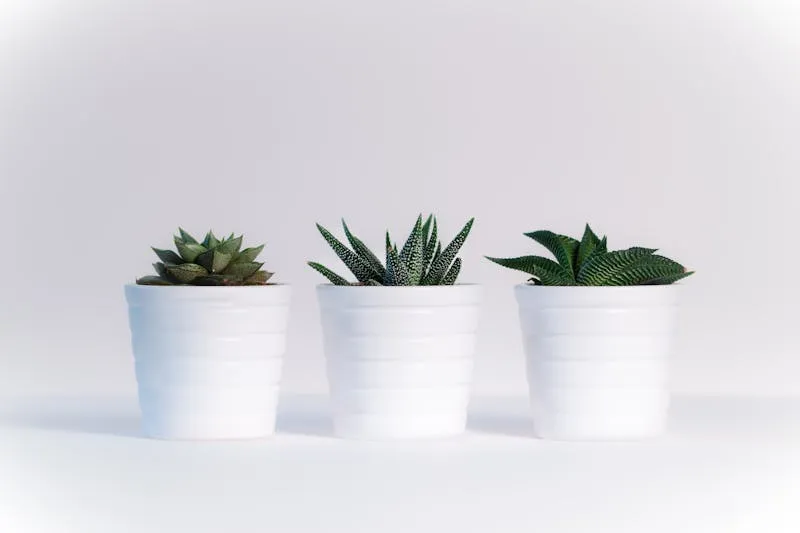
Creative gardening for flat-dwellers in the UK isn't necessarily a balcony full of tomatoes. It's also kokedamas (Japanese moss ball plants you suspend or display), closed terrariums, succulent arrangements, and bottle gardens. Living, decorative objects that often need 5 minutes of maintenance a week.
What you need to start — Kokedama
- Akadama (specialist Japanese soil) or a peat and sand mix: £5–£10 from Japancentre.com or specialist bonsai suppliers in the UK
- Dried sphagnum moss: £5–£8 from garden centres or Amazon
- Cotton or hemp string: £3–£5 from Hobbycraft
- A host plant (pothos, fern, asparagus fern): £5–£10 from a garden centre or Patch Plants
- Total: £18–£35 for 2–3 kokedamas
What you need to start — Terrarium
- A glass container (Kilner jar, a found vessel, or a dedicated terrarium): £5–£30 depending on size
- Gravel, activated charcoal, potting compost: £10–£14
- 2–4 small adapted plants (ferns, mosses, pilea): £5–£15 from Patch Plants or a garden centre
- Total: £22–£50
Where to learn in the UK
The RHS (Royal Horticultural Society) website has clear beginner guides on terrariums and indoor planting. Patch Plants (patchplants.com) has a blog with plant care and project guides. Homebase and Dobbies garden centres regularly run terrarium workshops (typically £20–£35 per session with all materials included). The evening classes at local garden centres are worth checking — Kew Gardens also runs occasional botanical craft days.
Time to a first result
A simple kokedama takes 45 minutes to 1.5 hours. A terrarium: 1–2 hours depending on complexity. These are probably the hobbies on this list with the best time-to-result ratio. A well-placed kokedama in a flat is visually striking in a way few decorative objects match.
Journaling and bullet journalling — organise and create
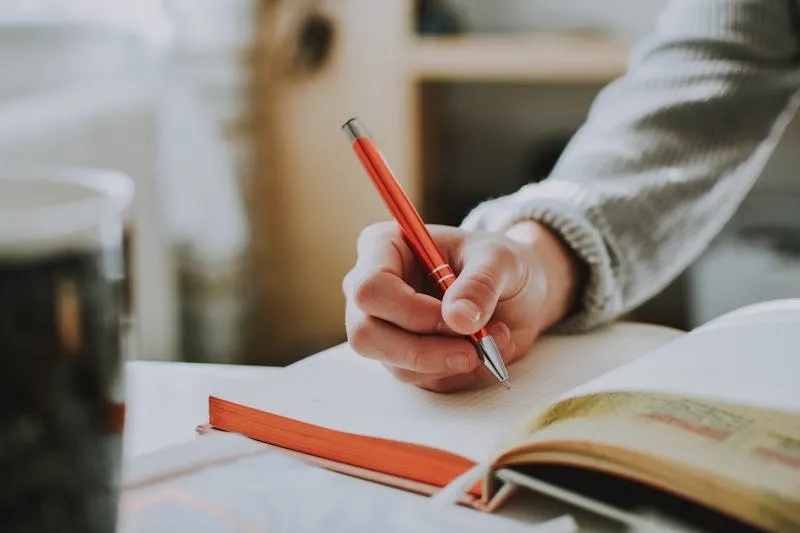
The bullet journal (often shortened to BuJo) earns its place here because it genuinely crosses organisation and creativity in a way few other hobbies do. Created by Ryder Carroll (who is British-American) and popularised on Instagram from 2016, the system is deliberately minimal at its core — logs, collections, migrations. The creativity is entirely optional: layouts, illustrations, colour palettes. You choose how far you take it.
What you need to start
The strict minimum:
- A dotted notebook: the Leuchtturm1917 A5 is the standard (£18–£24 from Cult Pens or John Lewis). The Rhodia Webnotebook is more affordable (£10–£14). Moleskine's dotted range also works well.
- A pen that doesn't bleed through: the Staedtler Triplus Fineliner (£2–£3) or the Pilot G2 (£2–£3)
- Total: £14–£28
For the creative version: Add Stabilo or Tombow markers, stamps, washi tape — additional budget of £15–£35 depending on how far you go.
Where to learn in the UK
Ryder Carroll's official site (bulletjournal.com) explains the core system clearly. On YouTube, "AmandaRachLee" popularised the artistic BuJo format internationally. The Bullet Journal community on Reddit (r/bulletjournal) is active and genuinely helpful for beginners. Cult Pens (cultpens.com) has a comprehensive beginner guide on their blog. The School of Life in London occasionally runs journalling workshops that touch on the BuJo system.
Time to a first result
The bullet journal is an ongoing practice rather than a "finished project". But a first functional and attractive setup (index, future log, monthly log, weekly spread) takes 2–3 hours. The creative element develops over months, not days.
Where to start if you're still not sure
If you've read this list and still can't decide, here's a quick decision grid:
- You want something tangible immediately: Pottery (class), aquarelle, kokedama
- You want something portable (train, café, sofa): Embroidery, knitting/crochet, lettering, bullet journal
- You have a small starting budget (under £25): Embroidery, lettering, bullet journal, photography (smartphone)
- You want a result you'll actually use: Sewing, knitting/crochet, bookbinding
- You want to decorate your home: Kokedama/terrarium, framed embroidery, watercolour
- You want a meditative flow state: Embroidery, bookbinding, pottery
One last thing: there's no "wrong" creative hobby. The selection criterion isn't "which will produce the most impressive results" — it's "which one will make me want to come back tomorrow evening after work". Start there.
Frequently asked questions
Which creative hobby is cheapest to start in the UK?
Embroidery, lettering and bullet journalling are the most accessible financially — between £15 and £30 for a complete setup. Photography is free if you use your smartphone. A pottery taster class is affordable (£30–£55) even if your own equipment is more expensive later. Avoid over-investing before you know whether the hobby suits you — a modest starter kit is entirely sufficient for the first two to three months.
How much time per week do you need to make progress on a creative hobby?
Two to three sessions of 45 minutes to one hour per week are enough to see visible progress on any of these hobbies. Consistency matters more than duration. One Sunday afternoon per month is less effective than three 45-minute weekday sessions. The exception is bullet journalling, which works better as a short daily practice (10–15 minutes in the evening).
Do you need "talent" to start embroidery, watercolour or pottery?
No. Talent is an acquired skill, not an innate gift — and that isn't motivational rhetoric. Research in cognitive psychology, particularly Anders Ericsson's work on deliberate practice (documented in "Peak: Secrets from the New Science of Expertise"), consistently shows that creative mastery is linked to structured practice time, not initial aptitude. Everyone's first attempts are bad. Keep photos of your early work — in six months, you'll be genuinely surprised by how far you've come.
Can you learn pottery at home on your own without classes?
Wheel-throwing pottery is very difficult to learn alone, for a practical reason: the pressure adjustments happen in real time and require immediate feedback that tutorials cannot provide. Hand-building pottery (pinching, coiling, slab work) learns well from YouTube tutorials with air-dry clay at home. If you want to use a wheel, at minimum two or three in-person sessions with an instructor are needed before going solo.
Which creative hobbies work in a small flat?
Almost all of them. Embroidery, lettering, bullet journalling, knitting/crochet and bookbinding need nothing more than a table. Watercolour too — the materials are compact and cleanup is fast. Kokedamas and terrariums are specifically designed for flat living (that's their natural context). Sewing is more demanding with large fabric pieces, but small projects (pouches, tote bags) work fine on a small table. Pottery is genuinely the only hobby that requires dedicated studio space — which is precisely why studio classes are the right starting point.
What are the best apps and resources for creative hobbies in the UK?
By hobby: watercolour and drawing → Procreate (iPad, £12.99 one-off), Sketchbook (free); lettering → Adobe Fresco (free tier); photography → Lightroom Mobile (free), VSCO (free + optional subscription); knitting/crochet → Ravelry (free, massive free pattern library), Stitch Fiddle (free pattern creator); bullet journal → Notion, Obsidian, or a physical dotted notebook. For structured learning: Skillshare (from £6.99/month after trial) and Domestika (individual courses from £12) cover nearly all of these hobbies well. Hobbycraft's website also has a solid library of free beginner project guides.