I'll start with a confession: at 22, I set fire to pasta. Yes, pasta. The most basic item in the culinary universe. I'd forgotten the water. Literally placed dry spaghetti in a bone-dry pan on full heat, then wandered off to reply to a text. When I came back, the kitchen smelled of burning plastic and my flatmate Tom was staring at me with the mix of fascination and horror normally reserved for documentaries about natural disasters.
That's not even my worst kitchen story — it's the second worst. The worst involved trying to "flambé" pancakes and setting the kitchen curtain on fire. But let's move on.
If you're reading this article, there's a good chance you're in one of these situations: you're living alone for the first time and your kitchen is foreign territory. You've been eating ready meals for years and you're sick of it. You tried following a YouTube recipe and ended up with something that resembled neither the video nor food. Or — most common of all — you have this deeply held belief that "I can't cook" is a personality trait, like being a Scorpio or hating coriander.
It's not a personality trait. It's a skill you've never been taught. And this guide is here to get you started — gently, without jargon, without judgement, and without fire risk (promise).
In this guide
- Kitchen vocabulary (finally explained properly)
- The minimum viable equipment
- The 5 techniques that change everything
- Understanding heat (without a physics degree)
- Seasoning: the secret nobody explains
- Classic mistakes (and why they're normal)
- Your 5 first recipes
- How to improve without pressure
- Frequently asked questions
Kitchen vocabulary — finally explained in plain English
The first obstacle when you don't cook isn't a lack of talent — it's vocabulary. Recipes use words nobody ever defined for you, and you don't dare ask because everyone around you acts as though it's all obvious. It isn't. Here's your survival dictionary.
The cuts:
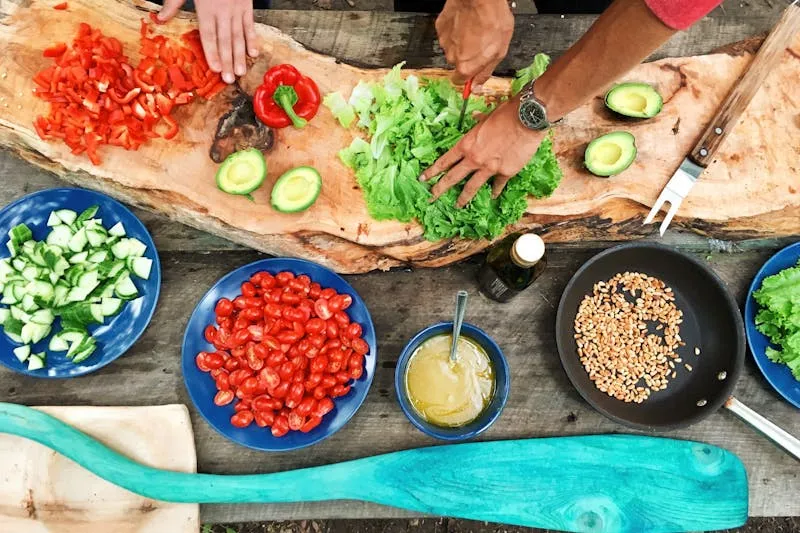
- Dice = cut into cubes. "Fine dice" = small cubes (5 mm). "Rough dice" = larger cubes (1–2 cm). For most recipes, "chop into chunks" is perfectly fine.
- Mince = cut into very small pieces. Think garlic — you want it to almost disappear into the dish.
- Slice = cut into flat pieces. An onion "sliced" means half-moons or rings.
- Julienne = cut into thin matchstick strips. You'll almost never need to do this.
- Roughly chop = cut into uneven pieces. Speed over precision. Most home cooking lives here.
The cooking methods:
- Sear / brown = cook in a little fat over high heat. The goal: get colour (and flavour) on the surface.
- Sweat = cook gently in a little fat over low heat, without colouring. The onion goes translucent, not golden.
- Stir-fry = cook over very high heat, stirring constantly. Wok, big pan, things moving fast.
- Simmer = cook gently in liquid with the lid on. Tiny bubbles, not a rolling boil.
- Poach = cook in barely trembling liquid. The water moves but doesn't bubble.
- Braise = sear first on high heat, then cook slowly in a small amount of liquid, covered.
- Deglaze = pour liquid (wine, stock, vinegar) into a hot pan to lift the caramelised bits stuck to the bottom. It sizzles — that's normal, and that's where the flavour hides.
Kristina's tip — You don't need to master all these terms before you start. Remember "sear" (= colour it on high heat) and "simmer" (= cook gently in liquid). With these two techniques, you can already make 80% of everyday meals.
Measurements:
- tbsp = tablespoon (about 15 ml)
- tsp = teaspoon (about 5 ml)
- A drizzle = a quick thin stream (about 1 tsp)
- A pinch = what you pick up between thumb and forefinger (about 1 g)
- A glug = a generous pour (about 2 tbsp)
- To taste = whatever amount seems right to you. It's vague on purpose — cooking isn't chemistry.
The minimum viable equipment
Kitchen shops are designed to make you believe you need 47 specialised gadgets. A courgette spiraliser. A cherry stoner. A raclette machine used once a year. The truth: you can cook 95% of the world's recipes with roughly 10 items.
The absolute essentials:
- A good chef's knife (20–25 cm) — This is investment number one. One decent knife beats ten cheap ones. Budget: £25–40. Victorinox Fibrox — unbeatable value, recommended by professional chefs.
- A chopping board — Wood or plastic, large (minimum 30×40 cm). Too small = constant frustration.
- A non-stick frying pan (28 cm) — For everything that sticks: eggs, fish, pancakes. No need for an £80 pan — £15–20 and replace it when the coating wears off.
- A medium saucepan (18–20 cm) — For pasta, rice, sauces, soup. With a lid.
- A large stockpot — For big batches of pasta, family soups. With a lid too.
- A wooden or silicone spatula — For stirring without scratching your pans.
- A colander — For draining pasta, rinsing veg.
- A vegetable peeler — For peeling without losing a finger.
- A mixing bowl — For combining, marinating, prepping.
- A tin opener — Because tinned tomatoes and chickpeas will be your best friends.
Warning — Do NOT buy a knife set. You only need a chef's knife and possibly a small paring knife (for fiddly bits). Sets contain 12 knives you'll never use, and the quality is spread across 12 blades instead of concentrated in one.
The "handy but not urgent" extras:
- A stick blender — for smooth soups and sauces
- An oven dish — when you're ready for bakes
- A grater — for cheese and lemon zest
- Measuring spoons — if you want precision
- A timer — your phone does the job
Total starting investment: £60–100. That's the price of 4–5 Deliveroo orders. Except equipment lasts for years.
The 5 techniques that change everything
Cooking isn't about following a recipe to the letter. It's about mastering a few core techniques that appear in EVERY recipe. Learn these five, and you can improvise any dinner.
1. Chop an onion without crying (much)
The onion is the foundation of 70% of the world's dishes. Cut it in half from top to root. Place the half flat, cut side down. Make horizontal slices keeping the root intact (it holds the onion together). Then vertical slices. Then cut across: you get even dice. To cry less: use a sharp knife (a dull knife crushes the cells instead of cutting them, releasing more irritating gas) and pop the onion in the fridge for 30 minutes beforehand.
2. Cook pasta al dente
Big pan of water. Lots of water — 1 litre per 100 g of pasta. When it's at a rolling boil, add salt (1 tsp per litre). Add the pasta. Stir for the first 30 seconds so it doesn't stick. Cooking time: what's on the packet MINUS 1 minute. Taste: it should be tender but with a slight resistance at the centre. That's al dente. Drain (always save a mugful of the cooking water — it's magic for sauces).
Kristina's tip — Do NOT add oil to the pasta water. It's a myth. It doesn't stop them sticking and it stops the sauce clinging to the pasta. What does prevent sticking: enough water, stirring at the start, and tossing with sauce immediately after draining.
3. Cook rice (without a gadget)
Absorption method, the simplest. 1 part rice to 1.5 parts water (basmati) or 2 parts (short grain). Rinse the rice in a sieve until the water runs clear (30 seconds). In a saucepan: water + rice + a pinch of salt. Lid on. Medium heat until it boils, then turn to the lowest setting for 12 minutes. Turn off the heat, leave to rest 5 minutes without lifting the lid. Fluff with a fork. Done.
4. Sear meat properly
The pan must be HOT before the meat goes in. Not warm. Hot. High heat. A drizzle of oil (the oil should almost smoke — but not actually smoke). Place the meat and DO NOT TOUCH IT for 3–4 minutes. Resist the urge to flip it every 30 seconds. When it releases from the pan on its own, it's seared. Flip once only. The difference between a restaurant steak and a sad steak: the temperature of the pan and the patience not to fiddle.
5. Make a vinaigrette
The magic ratio: 1 part vinegar to 3 parts oil. In a bowl: 1 tbsp vinegar (balsamic to start), 1 tsp mustard, salt, pepper. Mix. Add 3 tbsp olive oil in a thin stream while whisking (or shake in a sealed jar). Done. You've just made a vinaigrette better than anything sold in a bottle. You can vary the vinegar (cider, red wine, sherry), add garlic, honey, herbs — but the base stays 1:3.
Understanding heat — without a physics degree
Heat is the nerve centre of cooking. Most kitchen failures come down to temperature — too high, too low, or changed at the wrong moment. Here's the bare minimum.
High heat — For searing, browning, stir-frying. The goal: Maillard reaction (those lovely golden bits that taste incredible). Meat, wok vegetables, the start of almost everything.
Medium heat — The default zone. When a recipe doesn't specify, it probably means medium. Cooking onions, vegetables, sauces.
Low heat — For simmering, melting butter, cooking scrambled eggs, letting flavours develop. The heat everyone underestimates and underuses.
Warning — The number one beginner mistake: cranking the heat to maximum and walking away. High heat demands your presence and attention. If you need to leave the kitchen, turn the heat down. If you forget and it smokes: cut the heat, open the window, remove the pan. NEVER pour water on smoking oil — it causes an explosion of steam and scalding splashes.
How to tell when it's done:
- Chicken — Cut through the thickest part. Juices should run clear, not pink. When in doubt, cut a piece off and taste it.
- Pasta — Taste it. Hard in the centre? Keep going. Uniformly tender with a tiny bit of resistance? Perfect.
- Vegetables — Poke with a knife. If the knife slides in easily, they're done. If you want them to stay crisp (which is often better), pull them when they're starting to soften but still have bite.
- Fried egg — The white is opaque (no longer see-through). The yolk is still wobbly. If you like it runny, that's your moment. If you want the yolk set, cover with a lid for 1 minute.
- Rice — Taste a grain. If it's tender with no hard core, and all the water has been absorbed, it's ready.
Seasoning: the secret nobody explains
You follow the recipe exactly, use the right ingredients, nail the cooking — and the result is bland. Flat. "Not bad but not good either." It's the most common problem beginners face, and the answer is one word: seasoning.
Seasoning isn't "adding spices." It's adjusting four fundamental elements that transform a decent dish into a delicious one:
1. Salt — Salt doesn't make things "salty." It amplifies flavour. A bland dish almost always needs more salt. Taste as you cook, not at the end. Add in small pinches. Better to add gradually than dump too much at once.
2. Acid — A squeeze of lemon, a splash of vinegar, some tomatoes. Acid "wakes up" a dish. If your food has flavour but feels flat, it's acid that's missing. Test: taste your dish, add a few drops of lemon, taste again. The difference is dramatic.
3. Fat — Olive oil, butter, cream. Fat carries flavour — that's why "healthy" dishes that eliminate all fat often taste of nothing. A finishing drizzle of olive oil transforms a dish.
4. Heat / spice — Not compulsory, but a touch of chilli, black pepper, or ginger adds depth. Start small.
Kristina's tip — When a dish seems "meh but I can't work out why," ask these three questions in order: 1) Is it salty enough? 2) Does it need acid? (add lemon) 3) Does it need fat? (add olive oil). 9 times out of 10, it's one of those three.
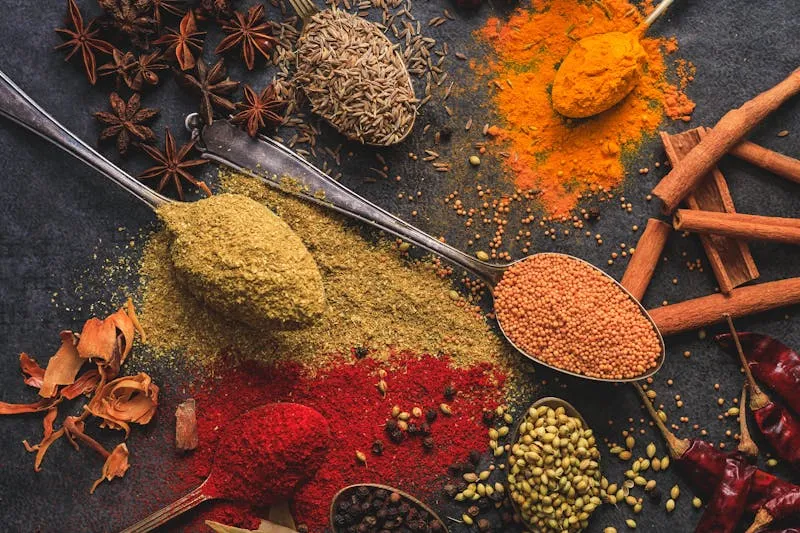
Starter spice kit:
- Fine salt — for cooking
- Black pepper (in a grinder, not the pre-ground dust) — for everything
- Smoked paprika — adds incredible depth to meat, veg, eggs
- Cumin — for Mediterranean, Mexican, Indian flavours
- Mixed dried herbs — for anything French or Mediterranean
- Curry powder — an all-in-one blend that works on rice, chicken, veg
With these six items, you cover 80% of the world's cuisines. The rest comes naturally as curiosity kicks in.
Classic mistakes — and why they're perfectly normal

Every person who cooks well has a graveyard of failed dishes behind them. Every single one. Here are the mistakes everyone makes — and how to fix them.
"It's burnt on the outside and raw inside"
The heat was too high. The surface cooked too fast; the inside didn't have time. Solution: lower the heat after searing the outside, or cover the pan so heat penetrates.
"It's bland"
You didn't add enough salt, or you only salted at the end. Salt added during cooking penetrates the food. Salt added at the table sits on the surface. They're not the same thing. ALWAYS taste while you cook.
"The vegetables are soggy and sad"
You cooked them too long or in too much water. Vegetables sautéed on high heat in a bit of oil stay crisp and colourful. Vegetables drowning in water turn grey and depressing.
"My sauce is too runny"
Let it reduce uncovered on medium heat. Water evaporates, sauce concentrates and thickens. If you're in a hurry: 1 tsp cornflour dissolved in 1 tbsp cold water, stirred into the hot sauce. Near-instant thickening.
"Everything sticks to my pan"
Either the pan wasn't hot enough, or you didn't use enough oil, or the non-stick coating is shot (happens after 1–2 years). Immediate fix: oil + heat BEFORE putting food in.
"I followed the recipe and it looks nothing like the photo"
Welcome to the club. Recipe photos are styled, professionally lit, and sometimes digitally enhanced. Your dish has the flavour that the photo doesn't. And that's what matters.
Kristina's tip — When you mess up a dish, identify ONE thing to change next time. Not seven. One. "Next time, I'll lower the heat after 3 minutes." That's how you improve — through micro-adjustments, not revolutions.
Your 5 first recipes — from simplest to "wait, I actually made that?"
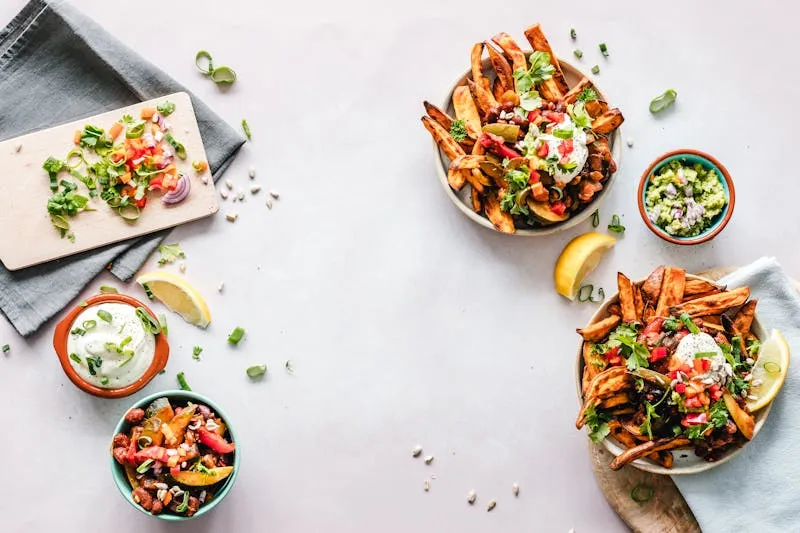
These five recipes are ranked by increasing difficulty. Start with the first. When you've got it down, move to the next. No pressure, no deadline.
Level 1: Express tomato pasta
Cook pasta. Meanwhile, in a pan: 2 tbsp olive oil, 1 garlic clove halved (you'll fish it out later), 1 tin of chopped tomatoes, salt, pepper, a pinch of sugar (cuts the acidity). Simmer 8 minutes. Remove the garlic. Toss the drained pasta in the sauce. A bit of Parmesan if you have it. Done. It's better than any jar sauce. Time: 12 minutes.
Level 2: Filled omelette
3 eggs beaten in a bowl with salt and pepper. Buttered pan on medium heat. Pour in the eggs. When the edges start setting, gently push them towards the centre with a spatula to let liquid egg flow underneath. When the top is still slightly wet, fill one half (cheese, ham, herbs — whatever you've got) and fold. 5 minutes.
Level 3: Pan-fried chicken and veg
Flatten a chicken breast. Salt, pepper, paprika. Hot pan, olive oil, 3–4 minutes per side. Remove the chicken. In the same pan: sliced courgette (or mushrooms, or peppers). 3–4 minutes, stirring. Return the chicken on top. Cover 2 minutes. You've just made a complete meal.
Level 4: Simplified risotto
This is NOT a true Italian risotto (don't tell an Italian). But it's a delicious risotto for a beginner. Sweat a sliced onion in butter. Add 150 g risotto rice (arborio). Stir 1 minute. Add a mugful of stock (cube + water is absolutely fine). When absorbed, add another mugful. Continue for 18–20 minutes, adding stock in small amounts. At the end: a knob of butter, Parmesan, stir. Creamy, comforting, impressive.
Level 5: Express chicken curry
Cut 2 chicken breasts into pieces. Brown them in oil for 4–5 minutes. Remove. In the same pan: 1 sliced onion, 3 minutes. Add 2 tbsp curry paste (yellow, green, or red — your call), stir 1 minute. Pour in 1 tin of coconut milk. Return the chicken. Add veg if you like (frozen peas, spinach). Simmer 10 minutes. Serve with rice. You've just made a curry. A real curry. Yes, you.
How to improve without pressure
Cooking isn't an exam. There's no mark, no jury, no single right answer. Here's how to get better at your own pace without it becoming a chore.
Try 1 new recipe per week. Not 5. One. The rest of the week, cook what you already know (even if "what you know" is buttered pasta). One new dish per week is 52 recipes in a year. That's enormous.
Eat at friends' homes and watch. When a mate cooks, don't stay in the lounge. Watch. Ask questions ("how do you chop your onions?"). The best cooking lessons are informal and free.
Videos > cookbooks. At the beginning, seeing the technique is infinitely more useful than reading about it. YouTube is full of beginner-friendly channels. Watch the hands, not the final result.
Accept eating "not great" occasionally. That's the price of learning. A failed dish isn't a personal failure. It's data. Your brain registers what didn't work, and next time it'll correct automatically. That's literally how learning works.
Don't compare yourself to Instagram. Food influencers have professional camera gear, studio lighting, and sometimes dishes that are beautiful but inedible (true story: some Instagram "recipes" use white PVA glue instead of milk for photos). Your dish is real, edible, and made by you. That's infinitely better.
Warning — There is ONE area where you must not improvise as a beginner: food safety. Wash your hands before cooking. Don't chop vegetables on the same board as raw meat without washing it in between. Refrigerate leftovers within 2 hours. Respect use-by dates (not best-before — read our food labels article). Creativity is for flavours — not hygiene.
Frequently asked questions
I mess up EVERYTHING I make — is that normal?
Absolutely. If you're starting from zero, you will mess things up. It's not only normal — it's necessary. Every failure teaches you something that reading a recipe can't. What matters isn't getting it right first time — it's understanding WHY it went wrong and adjusting ONE thing next time. After 3–4 attempts at the same recipe, you'll have it nailed.
I'm scared of cutting myself — is that silly?
Not silly at all — it's healthy. A knife is a sharp tool and respect is warranted. The good news: a sharp knife is SAFER than a dull one. A dull knife slips because you have to force it — a sharp knife cuts where you aim. Learn to position your fingers: curl the fingertips of the hand holding the food into a "claw" so the blade slides against your knuckles, not your fingertips.
Do I need to follow the recipe exactly?
Proportions are guides, not laws. If the recipe says "2 cloves of garlic" and you love garlic, use 3. If it says "chilli" and you hate spice, leave it out. The only exception: baking, where proportions are chemistry and need to be respected. In savoury cooking, adapt to your taste.
Is cooking cheaper than ordering in?
Considerably. A Deliveroo order costs £12–20 per person on average. A home-cooked meal costs £2–5. Over a month (30 dinners), that's a difference of £210–450. Over a year, you could save between £2,500 and £5,500. Even factoring in the initial equipment investment (£60–100), it pays for itself in 2 weeks.
I don't have time to cook during the week — any solutions?
1) 15-minute recipes (see our dedicated article). 2) Sunday batch cooking: 2–3 hours to prep the week's basics. 3) Frozen veg: frozen vegetables + protein + microwave rice = meal in 10 minutes. 4) Passive cooking: an oven dish needs only 5 minutes of prep — the oven does the rest while you get on with life.
Can you learn to cook at any age?
Yes. There's no age limit. I've met people who started at 50 and now cook better than people who've "always cooked" with the same 3 recipes. The advantage of starting later: you know what you like to eat, you're more patient, and you have greater motivation (eating well after years of ready meals is a revelation).
Which YouTube channels do you recommend for beginners?
Joshua Weissman (fun and technical), Babish (visually stunning), Sorted Food (relaxed vibe), Jamie Oliver's quick meals (accessible and encouraging), and Mob Kitchen (short, punchy, student-friendly). Start with short videos (under 10 min) and cook along with the video.