In this article
Friday evening, 6:02pm. My phone buzzes. It's Sophie: "Fancy if we pop round tonight with Nico and the others? About ten of us." Ten people. Tonight. My fridge contains precisely half a suspicious cucumber, an opened pack of Philadelphia, and three slices of ham that have seen better days.
Five years ago, this scenario would've sent me into a panic spiral, followed by a shameful Deliveroo order and a breezy "make yourselves at home, the driver will be here in 45 minutes." Today? I spent half an hour at the supermarket, 45 minutes in the kitchen, and when Sophie walked into the living room, her eyes went wide at the table and she whispered, "did you spend the whole weekend cooking?"
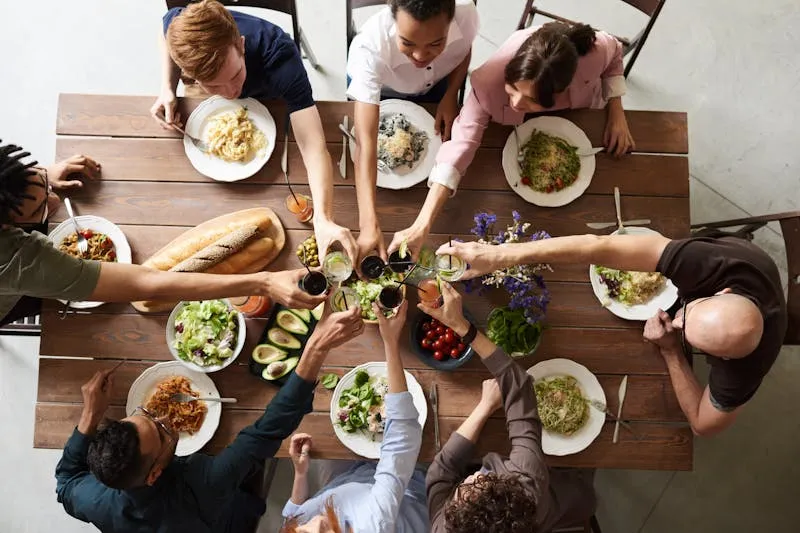
No. I cooked for 45 minutes. The secret to a brilliant cocktail spread isn't cooking a lot — it's cleverly combining quick homemade bits with well-presented shop-bought items. The visual effect does 60% of the work. The taste handles the rest. And the good news is that the simplest things are often the most impressive.
The philosophy of "doing a lot with little"
A successful cocktail spread rests on a principle professional caterers have used forever: diversity beats complexity. Ten simple little things impress infinitely more than two elaborate dishes.
The rule of thirds
- 1/3 bought ready-made: cheeses, charcuterie, olives, nuts, bread. Zero prep, just arranging
- 1/3 assembled: toasts, boards, antipasti. You combine quality ingredients without really "cooking"
- 1/3 quick-cooked: homemade dips, puff pastry bites, warm nibbles. This third makes the difference between a "nice" spread and an "incredible" one
The buffet effect
A cocktail spread is by nature a buffet. And a buffet has its own visual rules:
- At least 7-8 different offerings — even if some are as simple as olives in a pretty bowl
- Vary the textures: crunchy (breadsticks, crudités), creamy (dips, cheeses), soft (pastry bites), firm (charcuterie)
- Vary the temperatures: at least 2 hot elements among all the cold. The hot/cold contrast wakes up the palate and breaks monotony
- Vary the colours: green (herbs, crudités), red (cherry tomatoes, peppers), gold (pastries), white (cheeses) — the table should be a painting
The caterer's great illusion: At professional cocktail parties, 50-60% of what's offered isn't cooked at all. Cheese cubes on cocktail sticks, clusters of grapes, slices of artisan salami, cornichons, dried fruit. The caterer's talent isn't in the cooking — it's in the composition. Copy this approach and you save hours.
Exact quantities per person
This is THE topic that stresses everyone out. Too much: you cook for days and bin half of it. Not enough: the mood drops when the plates empty at 9:30pm and everyone's still hungry.
For a cocktail supper (REPLACING dinner)
Plan 15-18 pieces per person spread across the evening. Sounds enormous, but a "piece" is an olive, a cheese cube, a pastry bite, a toast — everything counts.
- Cheese: 80-100g per person
- Charcuterie: 50-70g per person
- Bread / crackers / breadsticks: 100-120g per person
- Crudités: 80-100g per person
- Dips: 60-80g per person (total across all dips)
- Hot bites: 3-4 pieces per person
- Sweet bites: 1-2 pieces per person
- Olives / dried fruit: 30-40g per person
The overproduction trap: WRAP estimates that around 30% of food at cocktail parties ends up in the bin. The main culprit: too many hot varieties that don't keep. Prioritise cold items (boards, dips, toasts) that last, and limit hot bites to 2-3 types max. Whatever's left gets eaten the next day.
The perfect grazing board
The board is the centrepiece of any cocktail spread. It's also the most "Instagrammable" element — and the one that requires the least cooking. Everything's in the composition and arrangement.
The 6 families of a complete board
- Cheeses (3-4 varieties): a mild (Brie, young Cheddar), a strong (blue, aged goat's cheese), a hard nibbler (Parmesan shards, Manchego). Vary texture and intensity
- Charcuterie (2-3 varieties): Parma ham, salami, coppa or bresaola. Roll, fold, or drape — presentation changes everything
- Crunch: breadsticks, crackers, toasted baguette slices, blinis. At least 2 types for variety
- Fruit: grapes, fresh figs (in season), sliced pears, pomegranate seeds. Fruit provides freshness and colour
- Condiments: honey (in a little pot with a dipper), wholegrain mustard, fig chutney, caramelised onion. They transform every mouthful
- Garnishes: walnuts, almonds, cornichons, olives, sun-dried tomatoes. They fill gaps and add texture
Arranging in 5 minutes
Start with the cheeses — place them in a triangle on the board (not centred, not lined up). Then fold or roll the charcuterie in the gaps. Next, the bowls (dips, olives, condiments) — they create height. Fill remaining space with crackers fanned out, fruit, garnishes. The principle: no empty space. The board should look like it's overflowing.
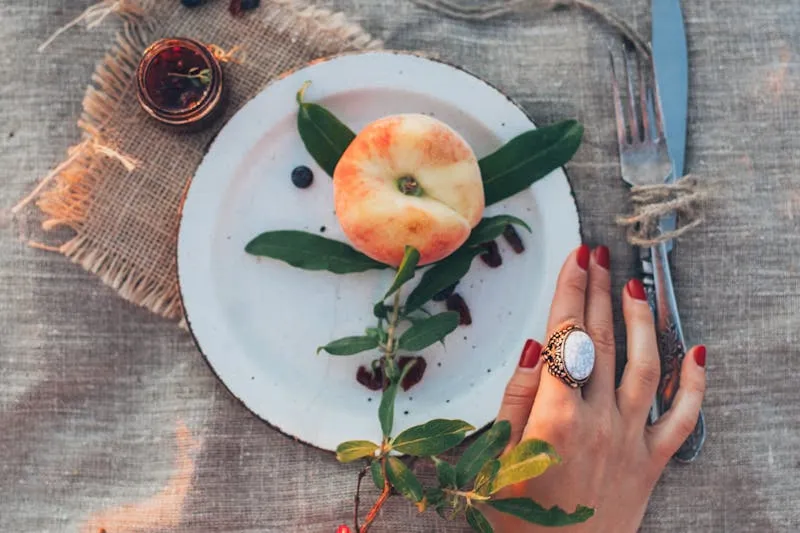
The surface: You don't need an £80 designer wooden board. A large wooden chopping board does the job. A decorative mirror turned flat, a slate platter from the homeware aisle, or even brown paper laid on the table with everything arranged directly on it (the "edible tablecloth" style) — the simplest alternatives are often the chicest.
5 express dips that change everything
Dips are the secret weapon of the cocktail spread. They take under 5 minutes each, they fill bowls that add volume to the table, and they transform the humblest carrot stick into a sophisticated canapé.
1. Classic houmous (5 min)
1 tin of chickpeas, drained + 2 tbsp tahini + juice of 1 lemon + 1 garlic clove + olive oil + salt + cumin. Blitz everything. Serve with a drizzle of olive oil, paprika, and sesame seeds on top. The most universally loved dip in existence.
2. Express guacamole (3 min)
2 ripe avocados, roughly mashed with a fork + juice of 1 lime + salt + fresh coriander + a hint of chilli flakes. Do NOT blitz — the texture should stay chunky. Make at the last possible moment (30 min max before serving).
3. Tzatziki (5 min)
200g Greek yoghurt + half a cucumber, grated and squeezed dry (press it in a tea towel to extract the water) + 1 crushed garlic clove + fresh mint, snipped + olive oil + salt. Fresh, light, and perfect with crudités or warm pitta.
4. Whipped feta cream (5 min)
200g feta + 100g cream cheese + 2 tbsp olive oil + juice of half a lemon. Blitz until ultra-smooth. Serve with honey drizzled on top and crushed walnuts. The "wow" dip that nobody expects to find at a friend's on a Friday night.
5. Homemade tapenade (3 min)
200g pitted black olives + 2 anchovies (optional but so much better) + 1 tbsp capers + olive oil + lemon juice. Blitz roughly — the texture should stay rustic. Provençal, simple, incomparable on a garlic-rubbed slice of toasted bread.
Dip presentation: Serve them in small bowls of different sizes and colours, grouped on a platter with crudités arranged around them. A sprig of mint on the tzatziki, paprika on the houmous, walnuts on the whipped feta — these micro-details take 10 seconds and make all the visual difference.
Hot bites in 15 minutes
These are the "premium" elements of your spread — the ones that make people say "you made all this?" And yet none of these recipes takes more than 15 minutes of active prep.
Pesto and Parmesan puff pastry spirals
1 sheet of ready-rolled puff pastry. Spread with pesto (from a jar). Scatter with grated Parmesan. Roll into a tight spiral. Slice into 1cm rounds. Place on a tray, bake at 200°C/400°F for 12-15 minutes. The smell alone is worth the effort.
Crustless mini quiches in a muffin tin
Butter the wells of a muffin tin. Mix 6 eggs + 100ml double cream + salt/pepper. Pour two-thirds full into each well. Add to each: a cube of cheese + one element (sun-dried tomato, olive, bacon lardons, spinach). Bake at 180°C/350°F for 15 minutes. You get 12 individual mini quiches — elegant and easy to eat standing up.
Oven-baked bruschetta
Baguette slices rubbed with garlic, drizzled with oil, baked at 180°C/350°F for 5 minutes (crisp but not hard). Top with: diced tomatoes + basil + olive oil, or ricotta + honey + walnuts, or tapenade + roasted peppers. Arrange on a large board — instant visual impact.
Chic toasts without the effort
Topped toasts are the most cost-effective format for a cocktail spread: good bread, a good topping, job done. The trick is to offer 3-4 varieties for visual diversity.
4 signature toasts
- Goat's cheese, honey & walnut: Toasted sourdough + round of soft goat's cheese + drizzle of honey + crushed walnuts + thyme. The timeless classic — and deservedly so
- Smoked salmon, cream & dill: Blini or rye bread + crème fraîche + smoked salmon + dill + pepper. Scandinavian elegance in 2 moves
- Fig & Parma ham: Fresh fig opened in a cross + Parma ham + Parmesan shard + rocket. Perfect sweet-savoury balance
- Houmous & grilled veg: Pitta triangles + houmous + grilled courgette or aubergine strip + pomegranate seeds. Vegetarian, colourful, and completely addictive
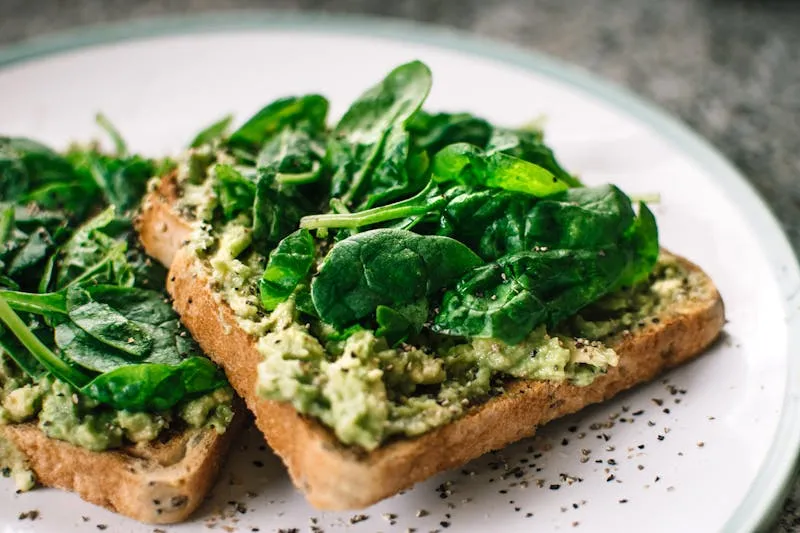
Toast timing: Topped toasts must be assembled no more than 30-45 minutes before serving. Beyond that, the bread goes soggy under wet toppings and the result is disappointing. Prep all the elements in advance (toast the bread, chop the toppings), but assemble at the last minute. This is the only constraint — and it's non-negotiable.
The sweet finish
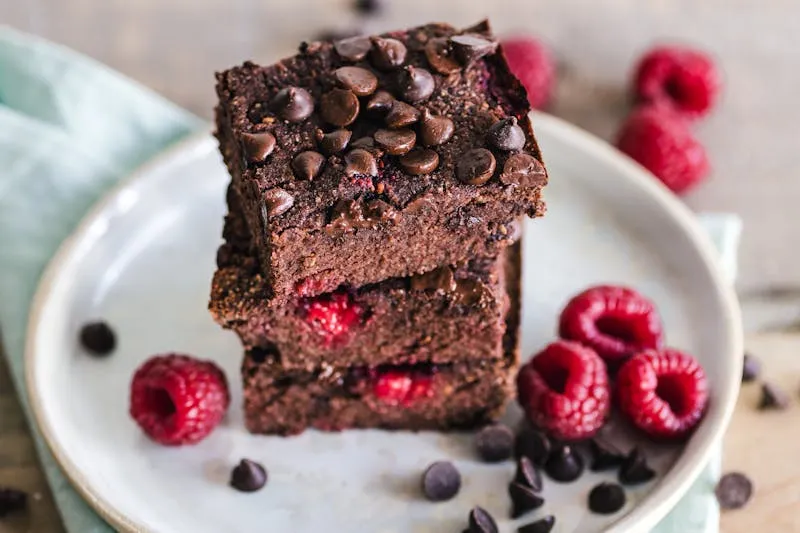
A cocktail spread isn't a formal dinner, so dessert isn't an event. It's a light touch that closes the evening gently. Two or three simple sweet offerings are all you need.
Panna cotta verrines with berry coulis (made the day before)
500ml double cream + 50g sugar + 2 gelatine leaves, softened in cold water. Heat the cream with sugar, add the squeezed gelatine, stir, pour into verrines. Fridge overnight. Next day: a berry coulis (frozen berries, blitzed with a little sugar) spooned on top. Active prep time: 8 minutes.
Chocolate-dipped fruit
200g dark chocolate, melted + skewers of strawberries, mandarin segments, banana pieces. Dip, let set on baking parchment. Prep: 10 minutes. Spectacular, childishly easy, and universally loved.
Mini financiers
Financiers are THE easiest cakes in existence: 100g ground almonds + 100g icing sugar + 40g flour + 3 egg whites + 75g brown butter. Mix, pour into a mini muffin tin, 180°C/350°F for 12 minutes. Can be made 2 days ahead — they're actually better the next day.
Zero-stress timing
Here's the complete battle plan — from earliest prep to the last minute.
2 days before
- Financiers or mini cakes → airtight container
- Tapenade → jar in fridge
The day before
- Panna cotta → verrines in fridge
- Houmous → bowl in fridge
- Shopping: cheeses, charcuterie, bread, crudités, fruit, olives
2 hours before
- Cheeses out of the fridge (they need to reach room temperature)
- Prepare crudités (wash, cut into batons)
- Make the guacamole and tzatziki
- Make the whipped feta
- Toast the bread for bruschetta
45 minutes before
- Prepare and bake the puff pastry spirals
- Prepare and bake the mini quiches
- Arrange the grazing board (cheeses, charcuterie, fruit, garnishes)
- Set out the dips with crudités
15 minutes before
- Assemble the topped toasts
- Garnish the bruschetta
- Take pastries and quiches out of the oven
- Pour the coulis over the panna cotta
- Put on music, light candles, open the first bottle
The oven door rule: During the party, you should open the oven only twice: to put things in (T-45min) and to take things out (T-15min). If you find yourself running 4-5 separate batches, your menu is too ambitious. 2 items in the oven at once, full stop.
Frequently asked questions
What budget for a cocktail spread for 10?
Generous version: £50-65 (smoked salmon, aged cheeses, artisan charcuterie, 3 homemade dips, puff pastry bites, mini quiches, panna cotta). Smart version: £30-40 (supermarket cheese, standard charcuterie, 2 dips, pesto pastries, seasonal fruit). Student version: £15-25 (large cheese-and-charcuterie board, houmous, crudités, toasts, skip the hot bites). That's £1.50-6.50 per person — unbeatable compared with a restaurant or caterer.
How do I manage the service when I'm the only one in the kitchen?
That's the entire point of the buffet format: you don't "serve." You put everything on the table and people help themselves. The only exception: the hot bites coming out of the oven — bring them out all at once at the start of the evening and don't go back. If items run out during the evening, quietly top up the boards with what's left in the kitchen. But don't spend the evening doing laps between kitchen and living room — that's the trap.
Summer vs winter cocktail spread: what changes?
Summer: lean into cold and fresh. More crudités, more fruit, gazpacho in shot glasses, tomato tartare. Limit hot bites to 1 variety max. Serve plenty of infused water and well-chilled rosé. Winter: increase the hot elements. Soup in espresso cups, puff pastry bites, mini quiches, warm bruschetta. Warm dips (cheese fondue, warm artichoke dip) make an appearance. Red wine and warm cocktails (mulled wine, hot cider).
Individual plates or shared boards?
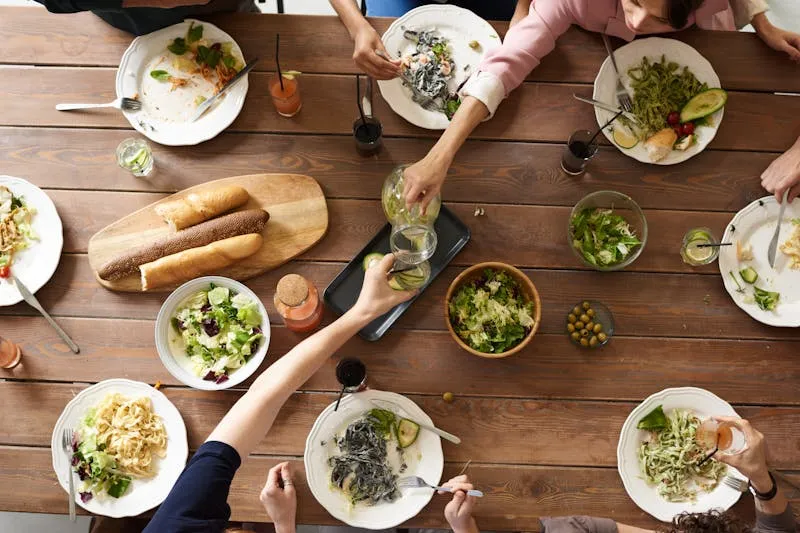
For a cocktail spread, shared boards and buffet style is always the best format. It creates conviviality (people gather around the table), reduces your serving work to zero, and creates an impression of abundance that's impossible to replicate on individual plates. Individual plates suit a formal dinner — not a cocktail evening. The only exceptions: mini quiches and verrines, which are individual portions by nature.
How do I make a brilliant vegetarian cocktail spread?
It's easier than you'd think. The cheese board works as-is. All 5 dips are vegetarian (except the tapenade with anchovies — swap for olives alone). The pesto pastries are vegetarian. The goat's cheese-honey toasts and houmous-grilled veg ones too. Add: falafel from a Lebanese deli (reheated in the oven), marinated grilled vegetables, beetroot houmous for colour. You don't even need to flag it as "vegetarian" — it's simply an excellent spread.
What drinks to serve with a cocktail spread?
Plan generously: half a bottle of wine per person for the evening (red + white, or rosé in summer). A simple signature cocktail makes an excellent impression: Spritz (Aperol + prosecco + sparkling water) or Kir Royale (crème de cassis + sparkling wine). Always offer still and sparkling water, and at least one non-alcoholic option. For beer: budget 2-3 per person. Overall, plan 1 litre of drinks (alcoholic or not) per person for a 3-4 hour evening.
How do I handle leftovers after a cocktail spread?
Dips keep 2-3 days in the fridge (except guacamole — eat same evening). Pastry bites and mini quiches reheat beautifully for the next day's lunch. Cheese and charcuterie keep normally. Panna cotta lasts 2-3 days. The real waste comes from bread going soggy and crudités drying out — don't over-prepare these. Also offer guests portions to take home — a pot of houmous and a few pastry bites in a bag is always appreciated.