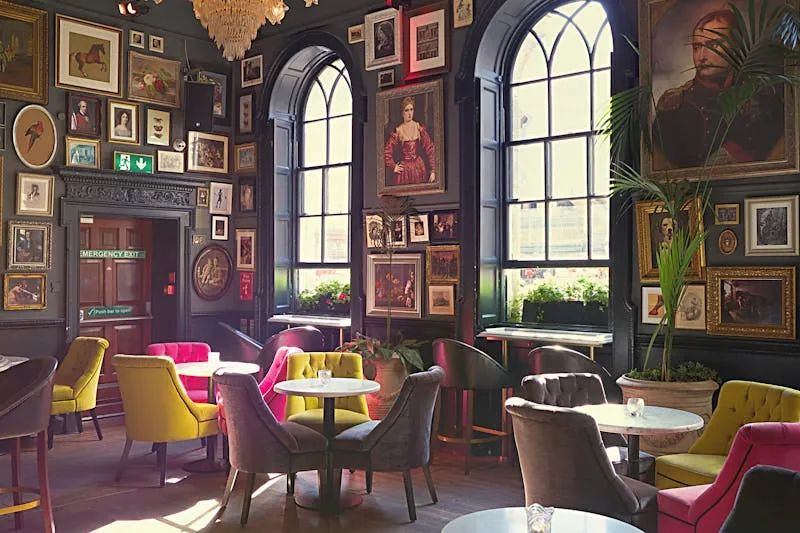
The first time I ate at what would now be called a bistronomie restaurant — though nobody used the word yet — was in 2009, at a tiny place in Paris's 11th arrondissement whose name I've forgotten but whose dish I haven't. Onglet steak, Jerusalem artichoke purée, a dark, concentrated jus. €14. And I thought — really thought, with that clarity you sometimes get in front of a plate — "This is as good as what I ate at a starred restaurant for €180 last week. How is that possible?"
The answer to that question is bistronomie. And behind this slightly peculiar word — half bistro, half gastronomie, a neologism that annoyed plenty of people before conquering the world — lies a revolution. Not a noisy revolution with manifestos and barricades. A quiet one, led by chefs who had three-star technical skills and a deep desire to feed normal people, at normal prices, in normal places.
It's the most compelling story in French gastronomy of the last thirty years. And it begins — like many good stories — with a man who'd had enough.
What you'll discover
- How bistronomie was born
- Yves Camdeborde: the first rebel
- The pioneer wave (1992-2005)
- The bistronomie philosophy
- Le Fooding and the media revolution
- The second wave: neo-bistros and natural wine
- The British parallel: casual fine dining
- Must-visit addresses
- Bistronomie in 2023: end of cycle or evolution?
- Frequently asked questions
The context: why French gastronomy was suffocating
To understand bistronomie, you need to understand what existed before — and why it wasn't working anymore.
In the early 1990s, French gastronomy was frozen in a model inherited from the 19th century. On one side, starred restaurants: white tablecloths, silver service, an army of waiters, menus starting at 500 francs (about £55 in today's money) — for an audience of senior executives, CEOs on expenses, and wealthy tourists. On the other side, bistros: home-style cooking, daily specials, popular atmosphere — but zero technical ambition.
Between the two? Nothing. A desert. If you wanted inventive, technically accomplished, carefully crafted cooking but couldn't (or wouldn't) spend the equivalent of a month's rent on a meal, you were stuck. It was either the gastronomic temple or the brasserie. The middle ground didn't exist.
Meanwhile, France's starred restaurants were losing their grip. The "nouvelle cuisine" of the 1970s-80s — Bocuse, Guérard, the Troisgros brothers — had been revolutionary, but it had calcified into dogma. Every plate looked the same: coulis, reductions, turned baby vegetables, microscopic portions, spun-sugar decorations. Form had overtaken substance. Chefs were cooking for Michelin inspectors, not for the people eating.
The killer statistic In 1990, a meal at a three-starred Parisian restaurant cost an average of 800 francs (roughly £140 adjusted for inflation). Meanwhile, the median French salary was 8,000 francs a month. A gastronomic dinner represented 10% of the median monthly income. Fine dining had cut itself off from 95% of the population.
Yves Camdeborde: the man who started it all
Yves Camdeborde. Béarnais, son of restaurateurs. Classical training at the Ritz — yes, the Ritz — under chef Christian Constant. At 26, he was sous chef at one of the most prestigious hotels in the world. Before him lay the royal road: a head chef position at a grand restaurant, stars within reach, glory.
And in 1992, he did something completely mad. He left the Ritz, bought a tired old bistro at 49 avenue Jean-Moulin in the 14th arrondissement — not exactly Mayfair — and opened La Régalade. Fixed menu at 160 francs (about £18). No à la carte. No choice. You eat what the chef decided to cook that day, with whatever he found at the market that morning.
The concept was simple — and radical. Camdeborde cooked with the technique he'd learned at the Ritz, but refused palace codes: no tablecloths, no valet parking, no sommelier in a three-piece suit. Wooden tables, mismatched chairs, relaxed service. And the portions were obscenely generous — help-yourself country terrines at the start, 300-gram cuts of meat, desserts spilling over the edges of plates.
The founding anecdote Camdeborde often tells the story of why he left the Ritz. One evening, he looked out at the dining room from the kitchen and realised the guests were the same ones who'd been coming for years — same faces, same suits, same expense accounts. "I thought: my parents are restaurateurs in the South-West. They'll never be able to eat my cooking. That's not right." The next day, he started looking for premises.
The pioneer wave: when the palaces emptied
La Régalade's success created a vacuum. And in the years that followed, other chefs from grande maison backgrounds made the same choice — leaving the gilded comfort of stars to open their own places, with the same philosophy: high-flying technique, relaxed setting, accessible prices.
Christian Constant — the mentor who led by example
Christian Constant, former chef of the Crillon (two stars), opened Le Violon d'Ingres in 1998 in the 7th. Then Les Cocottes, a concept based on food served in mini cast-iron cocottes. Then Café Constant. Three restaurants, zero claimed stars, permanent queues. Constant proved that Camdeborde's model wasn't a fluke — it was a movement.
Thierry Breton — the Breton who refuses stars
Chez Michel in the 10th is a case study. Thierry Breton produces extraordinary Breton cuisine — sublime kig ha farz, impeccably fresh fish, absurdly refined desserts — at bistro prices. When asked why he doesn't "aim" for a star, his response has become legendary: "A star means the bloke who eats at yours three times. I want the bloke who eats at mine three times a week."
The hidden cost The bistronomie model, however seductive, rests on an implicit deal: chefs work harder for less (per cover) than in a starred restaurant. Margins are tight, hours are gruelling, and front-of-house turnover is intense. Several pioneers have burned out, and the closure rate for neo-bistros remains high. Bistronomie democratised fine cooking — but it hasn't solved the structural problem of working conditions in hospitality.
The five pillars of the bistronomie philosophy
Beyond the anecdotes and personalities, bistronomie rests on clear principles — not always articulated, but always respected.
1. Product first, technique second
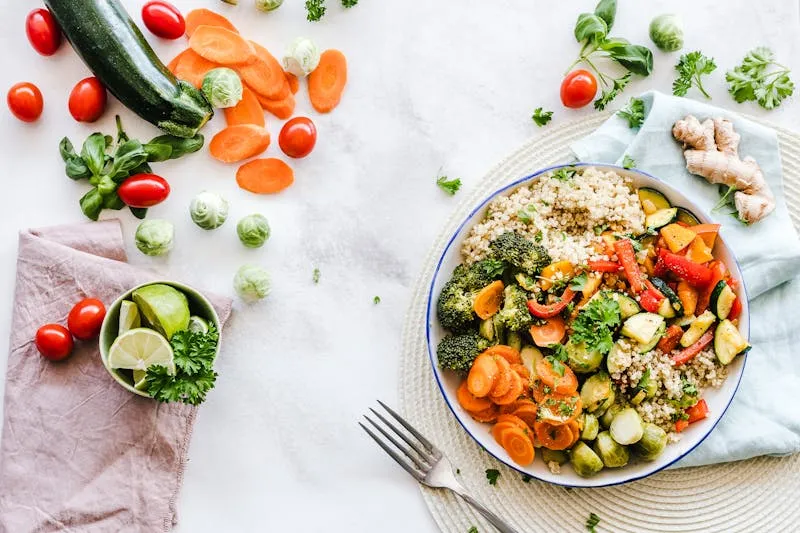
In a classical starred restaurant, technique is often the star — spectacular cooking methods, impossible textures, architectural presentations. In bistronomie, the product leads. The chef goes to the market in the morning, finds extraordinary wild asparagus, and builds the menu around it. Technique serves the product, not the other way round.
2. Generosity over minimalism
Nouvelle cuisine had established the reign of the controlled portion — 80 grams of protein, three dots of sauce, a micro-bouquet of herbs. Bistronomie put decent portions back at the centre of the table. Not excess — generosity. The difference between "I've eaten well" and "I've dined, but I'm hungry when I get home."
3. The uninhibited setting
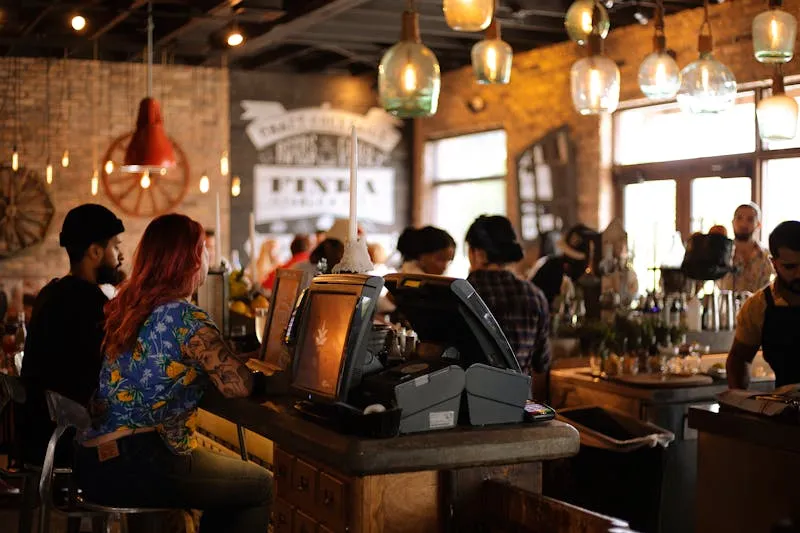
Wooden tables, servers in jeans, background music, no dress code, no condescending look if you order a carafe of house wine instead of a premier cru. Bistronomie broke the protocol that made gastronomy intimidating for 90% of people. Come as you are, eat like a king, pay an honest price.
4. Short supply chains and local sourcing
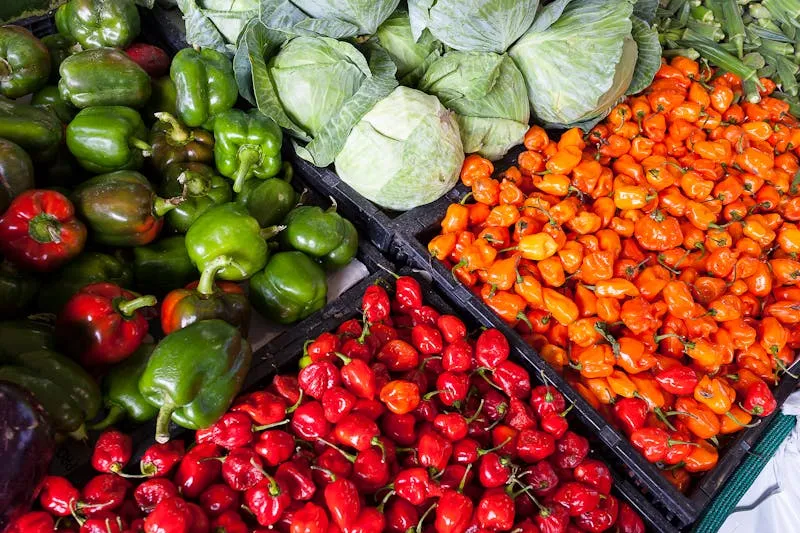
The bistronomie pioneers were among the first to work with short supply chains — local producers, small-scale farmers, organic market gardeners — before it was fashionable. Not for marketing, but out of necessity: to maintain gastronomic quality at tight prices, you need excellent ingredients bought without middlemen.
5. The fixed or limited menu
The set menu — or choice limited to three starters, three mains, three desserts — is a strong marker of bistronomie. Less choice means less waste, better cost control, maximum quality per dish. It's the exact opposite of the encyclopaedic-menu restaurant where you wonder how they can possibly have 45 fresh dishes simultaneously (spoiler: they can't).
My personal test Want to know if a restaurant is "really" bistronomie or just a slightly expensive bistro? Look at the number of dishes on the menu. If there are more than 6 per category, be suspicious. Real bistronomie places have a short menu that changes often — sometimes weekly, sometimes daily. Few choices + rapid rotation = fresh produce + technical mastery.
Le Fooding: when a guide became a movement
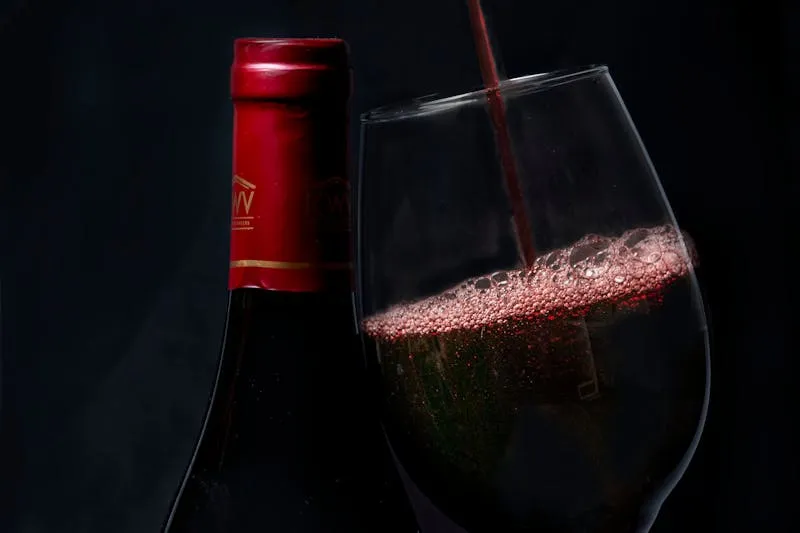
Bistronomie existed before it had a name. The name was popularised by Le Fooding — France's anti-Michelin guide, launched in 2000. Where Michelin judges the tablecloth and the wine glass, Le Fooding judges the plate and the atmosphere. Where Michelin values permanence, Le Fooding values surprise, energy, and the ephemeral.
Le Fooding gave bistronomie a voice. It put these restaurants on the map — literally. Fooding events became Parisian cultural happenings where young chefs, journalists, musicians, and food lovers mingled in unlikely venues. Gastronomy left the hushed salons and entered the street.
You can criticise Le Fooding for its Parisian-centrism, its occasionally exclusive "cool factor," its tendency to create trends and then abandon them. But it undeniably accelerated and amplified the bistronomie movement by making it culturally desirable — not just gastronomically good.
The second wave: neo-bistros, natural wine, and globalisation
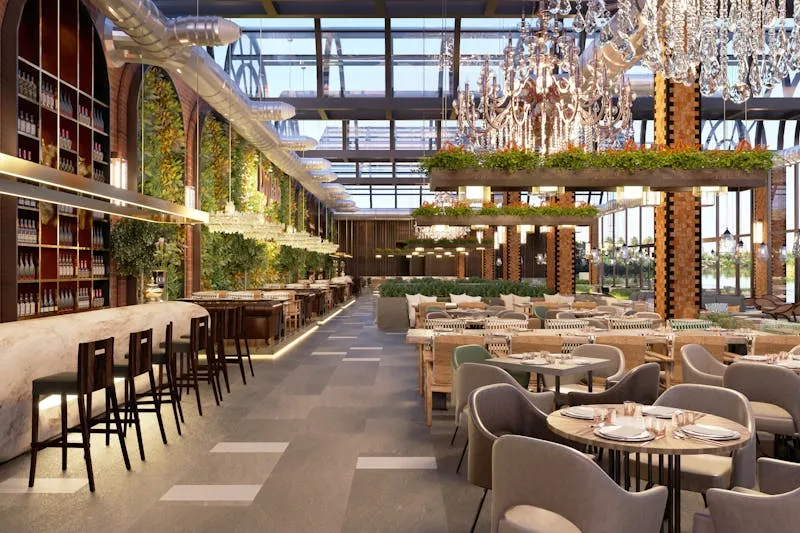
From 2010 onwards, bistronomie mutated. The first wave — Camdeborde, Constant, Breton — had laid the foundations. The second wave blew them open in every direction.
The cross-cultural fusion
The new bistronomiques were no longer exclusively French. They integrated Japanese influences (Yam'Tcha), Korean (Shim), Peruvian, Mexican, African. The technique remained French, but the flavour vocabulary expanded dramatically. This was world bistronomie — and Paris was its capital.
Natural wines: the revolution in the glass
Bistronomie and natural wines became inseparable from around 2012-2015. Both movements share the same philosophy: respect for the raw product, rejection of the artificial, short supply chains, and a certain deliberate nonchalance towards traditional hierarchies. You'll almost never find a classified Bordeaux on a neo-bistro wine list — but you will find cuvées from small-batch winemakers in the Jura, Auvergne, or Roussillon.
The flipside The second wave also generated bistronomie inflation. Restaurants claiming to be "bistronomique" with mains at £30-40 — far from Camdeborde's original £12 spirit. When a "neo-bistro" charges £18 for a starter and £32 for a main, you're closer to a classic gastro restaurant than to the original concept. The word "bistronomie" has sometimes become a marketing label drained of its substance.
The British parallel: casual fine dining
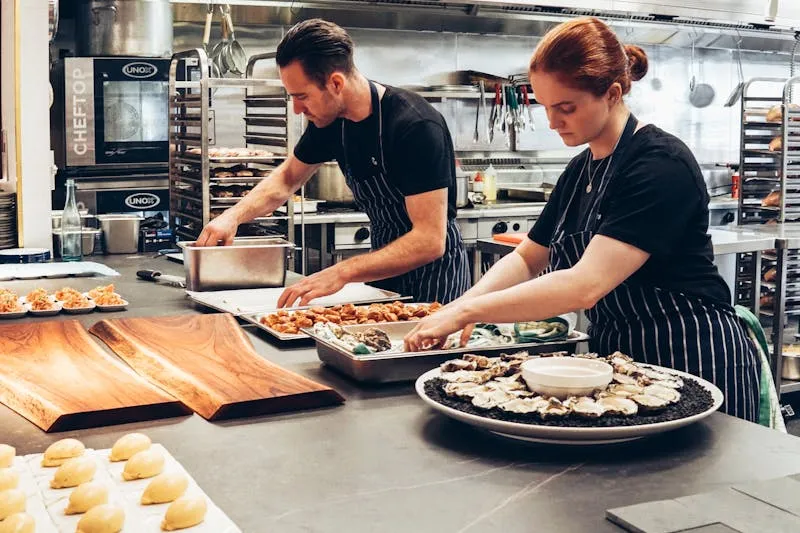
Britain didn't import bistronomie wholesale — it developed its own parallel movement, often called "casual fine dining," with remarkably similar principles but distinctly British flavour.
The St. JOHN effect cannot be overstated. When Fergus Henderson opened St. JOHN in Smithfield in 1994 — two years after Camdeborde's La Régalade — he created something that shared bistronomie's DNA: extraordinary technique (Henderson trained at the Architecture Association, but his cooking is deeply sophisticated), humble ingredients (bone marrow, tripe, tongue), no-frills setting, honest prices. The two movements arose independently but from the same frustration.
London then developed its own ecosystem: The Anchor & Hope in Waterloo (British bistronomie before the word existed), Brawn in Hackney (natural wine meets nose-to-tail), Bright in East London, Brat in Shoreditch. These restaurants share bistronomie's ethos — technical excellence, relaxed atmosphere, fair prices — while being unmistakably British.
Beyond London, cities like Bristol (where the Pony & Trap and Bravas are doing extraordinary things), Edinburgh (The Little Chartroom), and Manchester (Where The Light Gets In) have developed vibrant casual fine dining scenes. The British version tends to be even more ingredient-obsessed than the Parisian original — perhaps because British produce, when sourced well, is genuinely world-class, and chefs here feel they have something to prove.
Must-visit addresses (very personal)
An article about bistronomie without addresses is like a travel guide without destinations. Here are my favourites — tested, retested, trusted. With real budgets.
London
Brawn, Hackney — The quintessential London neo-bistro. Ingredient-led cooking, natural wines, industrial-chic setting. The menu changes daily — whatever's best that morning. Mains around £18-22. The kind of place where you go for one glass and stay for three courses.
Brat, Shoreditch — Tomos Parry's wood-fire cooking is technically extraordinary and viscerally satisfying. The turbot is legendary. Mains £20-35. Loud, buzzy, no reservations for the bar. Everything bistronomie should be.
The Anchor & Hope, Waterloo — A pioneer that hasn't lost its edge. No-booking policy, blackboard menu, generous portions, brilliant cooking. A main and a glass of wine for under £30. If you only go to one place on this list, make it this one.
Paris
Le Baratin, Belleville (20th) — An institution. Raquel Carena's radically simple cooking with outrageously good produce. The natural wine list is an adventure. Daily special around €18. Noisy, crowded, pure joy.
Septime, 11th — Paris's most celebrated neo-bistro. Bertrand Grébaut's vegetable-forward, inventive, sometimes startling cuisine is consistently brilliant. Tasting menu at €95. Book a month ahead.
Beyond
Kjolle, Lima — Pía León's celebration of Peruvian altitude ingredients. Technically French-influenced, spiritually Andean. Tasting menu around £70. Worth building a trip around.
Noma, Copenhagen — The ultimate expression of the bistronomie spirit at its most extreme: casual setting, radical ingredient focus, world-beating technique. René Redzepi proved you could have the best restaurant on earth in a converted warehouse with servers in jeans.
Bistronomie in 2023: end of cycle or evolution?
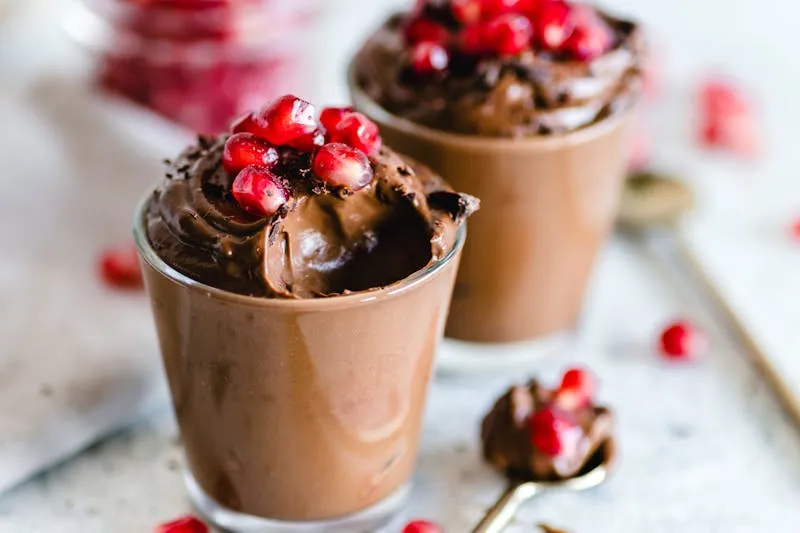
Thirty years after La Régalade, is bistronomie still a movement — or has it simply become the norm?
The answer is nuanced. On one hand, bistronomie won: it imposed its codes (short menu, local sourcing, relaxed setting) on the entire French restaurant industry. Even starred restaurants have shifted — the most acclaimed openings of the last decade have all "casualised" their service, simplified their décor, shortened their menus. Bistronomie didn't replace fine dining — it contaminated it.
On the other hand, the word "bistronomie" has become so elastic it barely means anything anymore. Between a genuine neo-bistro in the 11th charging €20 for a main and a trendy Marais restaurant at €45 a plate, both call themselves "bistronomique." The concept has been diluted by its own success.
What I observe is a mutation into something new — something that doesn't have a name yet. Third-wave chefs no longer define themselves against traditional fine dining (since it's no longer the dominant model). They're integrating concerns the pioneers didn't have: environmental responsibility, staff wellbeing, inclusivity. They're opening hybrid venues — café by morning, canteen at lunch, bistro in the evening. They refuse categories.
And perhaps that's Camdeborde's most beautiful legacy: having created a space of freedom where chefs can be excellent without being prisoners of a system. Bistronomie as a movement may be over. Bistronomie as a state of mind — serving honest, generous, technically impeccable cooking, at decent prices, in a warm setting — that's forever.
And honestly? It's the best thing that's happened to French gastronomy since Escoffier.
Frequently asked questions about bistronomie
Who invented the word "bistronomie"?
The exact origin is debated. The term is a portmanteau of "bistrot" and "gastronomie." It was popularised in the early 2000s, particularly by Le Fooding and Parisian food critics. What's certain is that Yves Camdeborde, with La Régalade (opened 1992), invented the concept long before the word existed. The term has since been adopted internationally, though the British equivalent is often "casual fine dining."
What's the difference between bistronomie and fine dining?
The culinary technique is comparable — bistronomie chefs often trained in starred restaurants. The difference lies in the setting (relaxed vs formal), the price (£15-30 a main vs £60-120), the service (simplified vs codified), and the philosophy (product > technique, generosity > preciousness). A bistronomie restaurant aims for excellence without the protocol.
How much does a meal at a bistronomie restaurant cost?
In London, a full meal (starter + main + dessert) at a genuine bistronomie restaurant typically costs £35-55. A main course alone is usually £16-25. That's 2-4 times less than a starred restaurant for an often comparable level of cooking. In Paris and French regional cities, prices are even gentler — expect €25-40 for a complete menu.
Does bistronomie exist outside France?
Absolutely. London (Brawn, Brat, The Anchor & Hope), Copenhagen (Noma and its satellites), New York (Momofuku, The Spotted Pig legacy), Tokyo (French-trained Japanese chefs), Melbourne — the model has been exported and adapted worldwide. Each city adds its own character while maintaining the core principle: technical excellence in a democratic, accessible format.
Why do bistronomie restaurants often serve natural wine?
Both movements share identical values: respect for the raw product, rejection of the artificial, short supply chains, and a deliberate scepticism towards traditional hierarchies (AOC for wine, Michelin for food). Natural winemakers and bistronomie chefs discovered each other around 2012-2015, and the alliance has become near-systematic in neo-bistros across Europe.
How can I spot a genuine bistronomie restaurant?
Five clues: (1) short menu that changes frequently (sign of fresh produce), (2) set menu or limited choice (3-4 options per course), (3) relaxed setting with no dress code, (4) the chef is often visible (open kitchen or visible pass), (5) prices are 2-3 times lower than a gastro restaurant for comparable technique. If the restaurant has 30 dishes on the menu and waiters in suits, it's probably not bistronomie.
What's the future of bistronomie?
The word "bistronomie" is probably reaching the end of its useful life — it's become too elastic to mean anything precise. But the bistronomie spirit (accessible excellence, human-scale setting, ingredient worship) has become the norm for quality dining. The next evolution integrates new dimensions: environmental responsibility, staff wellbeing, format hybridisation (café-canteen-bistro), and global culinary influences. The substance will outlive the label.