
Marine was 34, had a permanent marketing job and a flat her colleagues photographed at every dinner party. "You've got a gift," they'd say. What they didn't say was that turning that "gift" into a career would cost her two years of training, £5,000 in investment and sleepless nights wondering whether she was making the biggest mistake of her life. Today she invoices an average of £3,500 a month and doesn't regret a thing. But she wishes someone had told her the truth from the start.
Here is that truth. No filter, no "just follow your passion, life's too short" nonsense. Interior design is a beautiful, creative, rewarding profession — and it's also a business of project management, sales, bookkeeping and occasional couples therapy. This guide tells you everything, including what the courses don't.
The job day-to-day (real life)

On Instagram, the job looks like this: perfect moodboards, spectacular before-and-afters, days spent choosing fabrics in sunlit showrooms. In reality, a typical week looks more like this:
- Monday: 9am client meeting (couple who can't agree on the living-room colour — you're the mediator), chase three unsigned quotes, update your accounts
- Tuesday: site visit to check the painter hasn't used the wrong Farrow & Ball shade (he has), dash to the fabric supplier because the ordered sample is out of stock
- Wednesday: create a moodboard and layout plan for a new project, photograph a completed project for your portfolio
- Thursday: write three quotes, post on Instagram, reply to 12 DMs of which 8 are "how much?" without so much as a hello
- Friday: continuing education (trends, 3D software, materials), networking, prep for next week
The reality is that you spend roughly 30% of your time creating and 70% managing — project management, sales, admin, marketing. If you loathe admin, this career will frustrate you. If you're fine with the idea that a designer is also a business owner, you'll do brilliantly.
Kristina's tip: Before committing to a course, do a work-shadowing week with an established designer. You'll see the real job — not the filtered version. Contact pros via LinkedIn or the BIID; many welcome observers.
Decorator vs interior architect: the crucial distinction
This is THE question that comes up every time, and getting it wrong can have legal consequences.
The interior decorator / designer
- What they do: colour, materials, furniture, textiles, lighting, decorative layout. They enhance an existing space without touching the structure
- What they can't do: knock down or move walls, alter openings, touch plumbing or electrics, draw plans requiring planning permission
- Qualifications required: no mandatory qualification in the UK (the title is not protected)
- Insurance: professional indemnity insurance strongly recommended
The interior architect
- What they do: everything a decorator does plus structural work (partitions, openings, space redistribution), full project management
- Qualifications: typically a degree-level qualification plus professional membership (BIID or SBID)
- The title: while "interior designer" is not legally protected in the UK, using "architect" without RIBA registration is illegal
Watch out: Never call yourself an "interior architect" without the proper qualifications. In the UK, the title "architect" is legally protected by the Architects Registration Board. Use "interior designer," "interior decorator" or "home stylist" — it's honest and closes no doors.
Training: degrees, certifications, self-taught
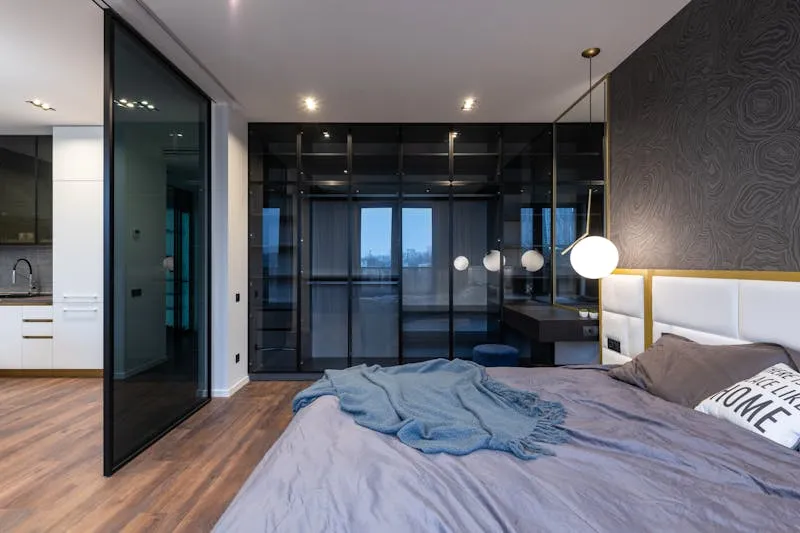
Since "interior designer" is not a protected title in the UK, you can technically start without any qualification. But in practice, training gives you three things: technical skills (3D software, scale drawings, design history), credibility (clients want to know you know what you're doing) and a network (alumni, tutors, industry contacts).
Degree-level courses
- BA (Hons) Interior Design: 3 years at university, the most comprehensive route. Available at institutions like University of the Arts London, Edinburgh, Glasgow School of Art
- BA Interior Architecture & Design: focuses more on spatial planning and structural elements — bridges decorator and architect roles
- Foundation Diploma in Art & Design: 1-year pre-degree course, useful if you're switching careers and need to build a portfolio
Short courses and certifications (for career changers)
This is the most popular route for 25-40 year-olds changing careers. Duration: 6-18 months. Cost: £1,500-£6,000.
- KLC School of Design: London-based, highly respected. Diploma courses from £3,000-£8,000. Strong industry connections
- The Interior Design Institute (online): self-paced, 6-12 months, around £1,500. Good foundational knowledge
- BIID Registered courses: check the BIID website for a list of accredited programmes
- Inchbald School of Design: Chelsea, London. Intensive courses from one term to one year
The pure self-taught route
It's possible but considerably harder. You'll need to compensate for the lack of credentials with a flawless portfolio, verifiable client results and a massive investment in continuing education (workshops, fairs, mentoring). Discerning clients will ask for references — and "I did up my own flat" won't cut it.
Kristina's tip: Before paying out of pocket, check whether the course can be funded through an Advanced Learner Loan or a professional development bursary. And for online courses, always ask to contact former students BEFORE enrolling — they're the best quality indicator.
Which business structure to choose
You've got the training (or not — your call). Now you need a business structure. This is where many aspiring designers panic — because nobody has explained the options simply.
Sole trader
For whom: 90% of starting designers. It's the simplest, cheapest and fastest structure to set up (register with HMRC in minutes).
- Advantages: minimal paperwork, you keep all profits after tax, no company accounts required, VAT registration optional below £85,000 turnover
- Limitations: you're personally liable for business debts, no separation between personal and business assets
Limited company (Ltd)
For whom: designers earning above the sole-trader sweet spot (roughly £40,000+ profit) or wanting liability protection.
- Advantages: limited personal liability, can be more tax-efficient at higher earnings (salary + dividends), looks more "established" to corporate clients
- Limitations: annual accounts (accountant fees £800-£2,000/year), Companies House filing, more admin
Watch out: Don't set up a Ltd straight away "because it looks more professional." The fixed costs (accountant, filing fees, insurance) can sink you before you've signed a single client. Start as a sole trader, switch when your turnover justifies it. That's what 95% of successful designers do.
How much to charge (and how)

This is THE taboo subject of the profession. Nobody wants to share their rates, everyone's terrified of charging too much (or too little). Here are realistic figures I've gathered from established designers across the UK in 2024-2025.
The three pricing models
1. Fixed project fee: you quote a flat price for the entire service (consultation, moodboard, shopping list, layout plan, follow-up). This is the most common model.
- Initial consultation (1-2h): £60-£120
- Single-room project (living room, bedroom): £600-£2,000
- Full-flat project: £2,000-£6,500
- Full-house project: £4,000-£12,000
2. Hourly rate: you bill your time. Less predictable for the client but useful for one-off consultations.
- Starter (0-2 years): £40-£55/h
- Established (2-5 years): £55-£80/h
- Expert / well known: £80-£120/h
3. Percentage on purchases: you take a commission (10-20%) on the furniture and materials you specify. Common in the US, growing in the UK.
The uncomfortable question: what's your time worth?
The simple formula: your hourly rate must cover your costs + your income + your non-billable time (admin, marketing, training). As a sole trader, if you want to take home £2,000 net per month, with ~30% tax and NI and ~30% non-billable time:
£2,000 ÷ 0.70 (after tax/NI) ÷ 0.70 (billable ratio) = ~£4,100 monthly turnover needed. At £65/hour, that's 63 billable hours per month — roughly 3 projects. Achievable from year two.
Kristina's tip: Display your prices on your website. Yes, it's terrifying. But it filters out the "just looking" crowd and leaves only clients with the budget. You save enormous amounts of time avoiding meetings that lead nowhere. Pros who hide their prices waste 30% of their time on unconverted quotes.
Finding your first clients

The question that keeps you up at night: "Who's going to pay me when I have zero experience?" The answer: your first three clients will probably be friends, friends of friends, or people who already know you. That's normal. Here's the realistic action plan.
Phase 1 — Foundation projects (months 1-6)
- Family and friends: offer them a project at a reduced rate (not free — never free). It gives you before-and-after photos, testimonials and real experience
- Your own space: design your flat as if it were a client project. Photograph it professionally. It's your shopfront
- The "showcase" project: offer a local café, restaurant or shop a redesign in exchange for visibility (social-media mention, business cards on the counter). It's B2B and it impresses
Phase 2 — Visibility (months 3-12)
- Instagram: it's THE design network. Post 3 times weekly: before/after, moodboards, behind-the-scenes site visits. Use targeted hashtags (#interiordesign, #interiordesigneruk, #hometour). Reels outperform static photos by 3x
- Pinterest: underrated but formidable. Create pins from your work with SEO-friendly descriptions. Pinterest is a search engine — your pins can drive traffic for years
- Houzz: the specialist platform. Create a pro profile, publish your projects, answer questions. Clients go there specifically to find designers
- Google Business Profile: essential for local search ("interior designer [your town]")
Phase 3 — Word of mouth (month 6+)
This is the number-one client source for established designers — and it builds over time, not with ads. Every satisfied client is a potential ambassador. Systematically ask for a Google review, a written testimonial and permission to photograph the result. This living portfolio is your best salesperson.
Building a portfolio that converts

Your portfolio isn't a photo album — it's a sales tool. It must demonstrate your method, your style and your results. Here's what portfolios that convert have in common:
Essential elements
- Before-and-afters: the top sellers. Same angle, same lighting, same framing. The contrast speaks for itself
- The process: show the initial moodboard, the plans, the material selection. It reassures clients about your method
- Details: close-ups on textures, colour combinations, styled vignettes. This is where your eye shows
- Testimonials: "Kristina transformed our living room" paired with a photo has more impact than any description
- Diversity: show different styles (modern, classic, boho) and different rooms. It widens your appeal
Where to host it
A personal website remains the benchmark (Squarespace, Wix, WordPress — £8-£25 per month). But if you can't afford one at launch, a well-filled Houzz profile plus a cohesive Instagram feed do the job. The key is having one single place to send potential clients.
Kristina's tip: Invest in a professional photographer for your first 2-3 completed projects. It costs £150-£300 per shoot and changes absolutely everything. Smartphone photos — even from the best phone — don't do your work justice. It's the single most worthwhile investment of your first year.
The mistakes that sink early careers
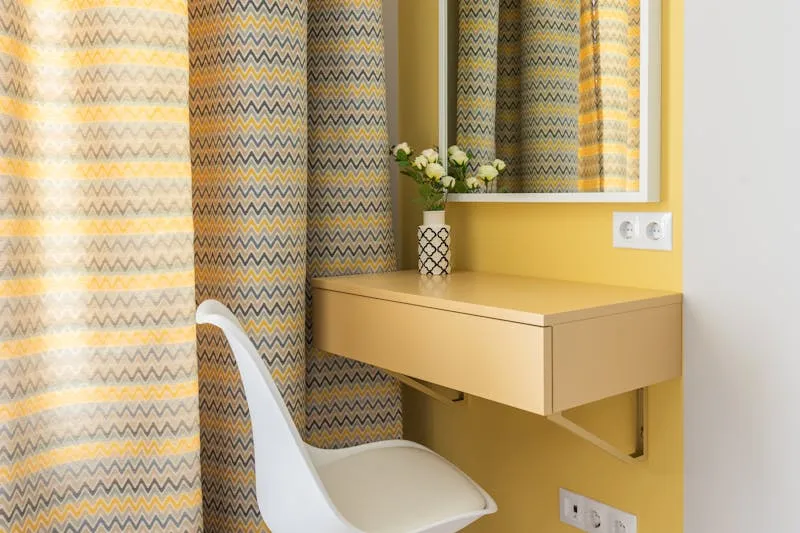
I've spoken with a dozen designers with 2 to 10 years' experience. Here are the mistakes they all made — and you can avoid.
- Working for free "for the experience": you never work free. Even for a first project, charge at minimum for materials plus a token fee. Freebies attract clients who don't respect your time — and they don't refer you, because they don't value what you do
- Getting a studio too early: a premises (showroom, office) costs £500-£1,200/month. At the start, work from home and see clients at theirs or in a café. Get a studio when your turnover allows it — not before
- Neglecting the commercial side: "my work speaks for itself" is what designers who close after 18 months say. Your work is excellent — and nobody will see it if you don't actively show it
- Underestimating project time: a "small" single-room project takes 15-30 hours all-in (meetings, research, moodboard, shopping list, follow-up). If you charge £600 as a flat fee and spend 25 hours, your real hourly rate is £24 — below minimum wage
- Taking every project: a client with a £150 budget to redo their entire living room will cost you more than they'll pay. Learn to say no — or offer a one-off consultation instead of full service
- Ignoring the books: even as a sole trader, track your turnover, expenses and cash flow monthly. Year-end tax surprises are the number-one cause of business closure among freelancers
Watch out: Professional indemnity insurance isn't legally mandatory for interior designers, but NOT having it is reckless. If furniture you recommended causes damage (a shelf falls, a finish deteriorates), you're personally liable. PI insurance costs £150-£350/year — that's the price of peace of mind.
Realistic earnings year by year
Here are the figures nobody gives you — based on testimonials I've collected and data from the BIID and Houzz UK.
Year 1 — Building
Average turnover: £6,000-£12,000. Net after tax: £4,500-£9,000. You rarely live on your design income alone in year one. Most designers maintain a parallel activity (part-time job, freelance marketing, teaching) during this phase. That's normal and it's smart.
Year 2 — Take-off
Average turnover: £15,000-£30,000. Word of mouth begins to work, your portfolio fills out, your rates increase. This is the year you shift from "will this work?" to "how do I manage all this?"
Years 3-5 — Cruising altitude
Average turnover: £28,000-£55,000. You have a steady flow of clients, a reliable network of tradespeople and a polished process. The most interesting projects arrive because your reputation precedes you. Some designers register as a Ltd at this stage and start hiring (intern, assistant).
Beyond — Diversification
The most prosperous designers diversify: online courses, e-books, brand partnerships, property-developer consulting, home staging. Turnover can reach £60,000-£100,000 — but that's the exception, not the rule.
Kristina's tip: Build a cash reserve of 3-6 months' expenses BEFORE leaving your salaried job. It's the safety net that lets you launch calmly instead of billing in panic. And look into the New Enterprise Allowance if you're on certain benefits — it provides mentoring and financial support for new businesses.
Frequently asked questions about a career in interior design
Can you become an interior designer without a degree?
Yes, legally. "Interior designer" is not a protected title in the UK (unlike "architect"). But in practice, training — even a short course — gives you essential technical skills (scale drawings, 3D software, materials knowledge) and credibility with clients.
How much does it cost to launch an interior design business?
As a sole trader, registration is free. A realistic start-up budget: training (£1,500-£4,000) + professional indemnity insurance (£250/year) + 3D software (£150-£500/year) + website (£150-£400/year) + first professional photoshoot (£250). Total: £2,300-£5,400 in year one.
Is the market saturated?
Yes and no. The number of designers has surged thanks to online courses. But demand has too — fuelled by design TV shows, Instagram and remote working (people invest more in their homes). The key: specialise (small spaces, eco-design, home staging, offices) and differentiate through a unique style or positioning.
Do I need to master 3D software?
Not essential at the start — well-executed 2D mood boards and flat-lays are enough for initial projects. But 3D tools (SketchUp, HomeByMe, Planner 5D) quickly become indispensable: clients want to "see" the result before committing. SketchUp Free is free and sufficient to begin.
Can you make a living outside London?
Yes, and it's sometimes easier. Competition is lower, property prices are more affordable (so homeowners are more willing to invest in décor), and word of mouth is more powerful in smaller cities. Designers in Bristol, Edinburgh, Manchester and Brighton live very well from their practice.
Is home staging the same thing?
No. Home staging prepares a property for sale — it's depersonalisation and quick enhancement on a tight budget. Interior design creates a personalised living space for the client. The skills overlap but the goals and budgets are very different. Many designers do both to diversify their income.