Your balcony is three metres square. Maybe four, if you count the corner where the washing drips dry.
And yet, by September, you could be picking cherry tomatoes, basil, rocket and enough strawberries for a Sunday morning breakfast in the sun.
This is not a promise from a seed catalogue. It is what thousands of urban gardeners produce each year once they learn to work with what they have — a small space, some sun exposure, a few well-chosen containers — rather than against the constraints. Container gardening on a balcony or terrace is not a reduced version of gardening. It is its own discipline, with its own rules, its own plant selections, its own logic.
This guide gives you everything you need: how to assess your space honestly, how to choose containers and compost, which plants thrive in containers, how to use vertical space, how to water and feed in a confined environment, and how to plan across the seasons. With verified information, concrete numbers, and my direct recommendations on what actually works in an urban setting.
UK note: many British flats have smaller balconies than continental equivalents — some only Juliet balconies or deep windowsills. Everything in this guide scales down accordingly. Window boxes, railing planters and a well-placed pot on a doorstep count.
Assessing your space: sun, wind, weight and water

Before you buy a single pot or packet of seeds, spend twenty minutes observing your space. Those twenty minutes are worth more than hours of misdirected effort.
Sun exposure: the single most important variable
The orientation of your balcony determines what you can grow. Track when sun arrives on your space and when it leaves, then count the hours of direct sunlight:
- South or south-west, 6+ hours: The ideal. Tomatoes, peppers, basil, strawberries, dwarf courgettes — almost anything is possible.
- East or west, 4–6 hours: Very good for herbs, salads, rocket, radishes, strawberries, peas. Avoid standard tomatoes (prefer cherry varieties) and peppers.
- North or fewer than 3 hours: Focus on shade-tolerant plants: rocket, mint, chives, parsley, alpine strawberries, some salads. Forget fruiting crops (tomatoes, peppers, courgettes).
💡 Diana's tip
Don't trust your intuition to assess sun exposure. Sit on your balcony at 9am, noon and 4pm on a clear day and note precisely which areas are in direct sun at each time. A balcony facing south-east may have morning sun (8am–1pm) but be in complete shade all afternoon — which completely changes the plant list. The Sun Seeker app (iOS/Android) allows you to simulate the sun's path throughout the year on your space, which is particularly useful in winter for planning the following season. In the UK, south-facing balconies are genuinely precious and worth maximising; east-facing is better than you might think for morning crops.
Wind: the forgotten factor in balcony gardening
At height, wind is stronger and more constant than at ground level. It desiccates compost two to three times faster than a sheltered garden, breaks stems of tall plants, and can knock over pots. In the UK, upper-floor balconies in coastal areas, exposed city blocks or hillside properties can experience sustained strong winds that make conventional pot gardening genuinely difficult. Assess your wind exposure:
- Very exposed balcony: Avoid tall plants (indeterminate tomatoes, climbing beans without solid support). Choose compact or dwarf varieties. Weight your containers with heavier compost or stones at the base. Position pots against walls rather than at the railing edge.
- Partially sheltered: Most plants and vertical growing systems work without problems.
Weight limits: a real structural constraint
This is the most frequently ignored constraint — and the most serious. Standard residential balconies are designed to support 150–300 kg/m² depending on build standard. A 60cm trough filled with damp compost can weigh 25–40kg. Ten troughs, a loaded vertical planter, and you may be approaching limits.
⚠️ UK leases and weight restrictions
Many UK rental and leasehold agreements contain explicit clauses about balcony use — including restrictions on heavy planters, fixed structures and anything that could affect drainage or structural integrity. Check your lease or speak to your landlord or managing agent before installing a large container garden. Some blocks specify a maximum weight per unit area; others prohibit drilling into balcony surfaces. This is particularly common in modern flat developments and housing association properties. If you rent, confirm that gardening on balconies is permitted before investing significantly. Growing in lightweight fabric pots and railing planters that don't require any drilling is the safest approach for renters.
Access to water: a critical practical point
Containers dry out far faster than garden soil. In July–August, a 20L pot in full sun may need watering every day. In the UK, periods of dry weather are less predictable than in France, but summer heatwaves have become more frequent. If your balcony has no water point, plan your supply system from the outset: an indoor tap with extended hose, a large water storage barrel, or a drip irrigation system connected to your kitchen tap. A balcony without water access quickly becomes unmanageable in hot weather.
Choosing containers: materials and sizes
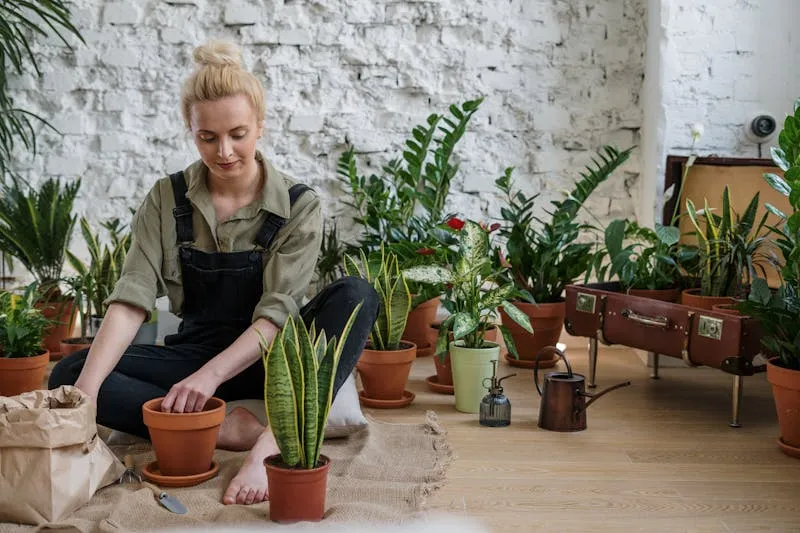
Container choice is one of the most important decisions in balcony gardening. The most important rule: always choose the largest size your space and balcony can accommodate. An undersized container is the primary cause of failure in urban growing.
Minimum volumes by plant type
| Plant | Minimum volume | Ideal volume |
|---|---|---|
| Herbs (basil, thyme, rosemary) | 2–3 L | 5–10 L |
| Salad, rocket, spinach | 10 L (20cm deep trough) | 20–30 L |
| Radishes, chives, spring onions | 10 L | 15–20 L |
| Strawberries | 3–5 L per plant | 10 L per plant |
| Cherry tomatoes | 20 L | 40–50 L |
| Standard tomatoes | 40 L | 60–80 L |
| Peppers, chillies | 15 L | 25–30 L |
| Dwarf courgettes | 30 L | 50 L |
| Peas, dwarf French beans | 20 L | 30–40 L |
Material comparison
Terracotta: Beautiful, natural, breathable for roots — terracotta's porosity regulates moisture. Disadvantages: heavy, can crack in frost (frost-resistant terracotta is available but more expensive; genuine Italian terracotta — from Impruneta — is the most reliable). Best for Mediterranean plants (thyme, rosemary, lavender) that like dry-wet cycles. Available at Crocus, Dobbies, and most good garden centres.
Plastic: The lightest and least expensive. Retains moisture well (advantage in summer, disadvantage for plants that like drainage). Lasts 5–10 years depending on quality and UV exposure. Look for recycled-content plastic. Dark colours retain heat (good for tomatoes and peppers); light colours keep roots cooler (better for salads and leafy crops). Widely available at B&Q, Wilko, Thompson & Morgan.
Fabric grow bags: The most effective solution for root health. The fabric's porosity creates natural air pruning: when a root reaches the wall, it desiccates and the plant develops fine lateral roots, highly efficient at nutrient uptake. Result: more productive, more robust plants. Light, fold flat when empty, inexpensive (£4–12 for a 25–40L bag). Slightly faster to dry out than plastic. Available from most online garden retailers and increasingly at B&Q and Dobbies.
Wood: Attractive, thermally insulating (protects roots from extreme heat), customisable in dimensions. Lifespan: 5–15 years depending on the wood and treatment. For food crops, use untreated or linseed oil-treated timber — avoid preservative-treated wood. Oak, cedar and larch are naturally more rot-resistant. Willow and standard pine need sealing or will decay within a few seasons.
Metal: Contemporary, very decorative. Major problem: thermal conductivity. A black metal pot in full sun can reach 60–70°C at the surface — literally cooking roots. If you choose metal, use double-walled containers, paint in a light colour, or line the inside with horticultural fleece.
Drainage holes: non-negotiable
Every growing container must have drainage holes. Without drainage, roots rot — no exceptions. If using decorative planters or pot covers without holes, place your functional inner pot inside and raise it to prevent water stagnation. Put saucers under your pots but empty them after each watering — a permanently full saucer is equivalent to no drainage at all.
💡 Diana's tip
Ignore the persistent myth that you should put a layer of gravel or crocks at the bottom of the pot for drainage. Research in horticultural science (including trials by the RHS) consistently shows this actually impedes drainage by creating a perched water table — water pools above the gravel layer rather than draining through it. What works: a well-draining compost throughout the full depth of the pot, and adequate drainage holes. If you want to prevent compost washing out through the holes, place a small piece of horticultural membrane or a broken pot crock over the hole — nothing more.
Compost for containers: never use garden soil

The absolute rule of container growing: never use garden soil in your pots. Ever. Garden soil in a container compacts, becomes impermeable, blocks air and water movement, and suffocates roots. It is the number one cause of failure for beginner balcony gardeners.
Why container-specific composts exist
In the ground, roots can explore vast volumes of soil for water and nutrients. In a 30L pot, they are confined. The growing medium must compensate by being:
- Free-draining: Water must move through quickly to prevent root asphyxiation
- Aerated: Roots need oxygen as much as they need water
- Structurally stable: The compost must hold its structure across a full growing season
- Nutritious: Or able to hold added fertilisers
- Light: To avoid overloading the balcony
What makes a good container compost
You can use a quality multipurpose or container-specific compost directly from the bag (avoid very cheap bags — pay for quality), or mix your own:
Multipurpose or tomato compost (base): 60–70% of the mix. Provides structure, initial nutrients, moisture retention. Peat-free versions are now widely available and perform comparably; the RHS has tested a number of peat-free composts and identified several that equal or exceed peat-based products for most vegetables.
Perlite (10–20%): Expanded volcanic rock, white, very light. Improves drainage and aeration. Essential for Mediterranean herbs and tomatoes. Available at Wilko, B&Q, and most garden centres for about £5–8 per 10L bag.
Vermiculite (10–15%): Expanded mineral, golden. Retains water and nutrients, releases them gradually. Particularly useful in small pots that dry out quickly, and for seed sowing.
Coir (10–20%): Coconut fibre, an excellent peat substitute. Retains moisture, improves structure, lightweight. A mix of compost + coir + perlite (60/20/20) works well for the majority of vegetables and herbs in containers.
⚠️ Peat: go peat-free where possible
The UK government committed to banning peat in amateur horticultural products from 2024 (professional horticulture has a longer transition). Peat extraction destroys ancient peat bogs — irreplaceable carbon sinks and biodiversity habitats. Peat-free composts have improved significantly in recent years. The RHS has published independent trial results showing several peat-free products performing comparably to peat for most food crops. Good peat-free options in the UK: New Horizon, Westland Jack's Magic, Dalefoot Composts (wool-based, excellent for containers), and own-brand peat-free ranges from Dobbies and B&Q. Look for the "peat-free" label on the bag.
Replacing compost: when and how
Container compost exhausts and compacts over one to two seasons. Each autumn or spring, fully replace the compost in annual vegetable containers. For perennial plants (shrubs, permanent herbs), repot into a slightly larger container every two to three years, or refresh: remove 30% of the existing compost and replace with fresh compost enriched with slow-release fertiliser.
The best plants for balconies and terraces
Not all plants are equal when it comes to container growing. Some adapt perfectly to pot life; others struggle regardless of your care. Here are the best, by category:
Herbs: the essentials
Basil: The star of the summer balcony. Loves heat and full sun. In the UK, sow indoors from April and only put outside after the last frost (typically mid-May in most of England). Basil hates cold nights below 10°C. Pinch out flower heads as they appear to keep leaves coming. Pot size: 3–5L minimum per plant, but 8–10L for abundant production. Buy from Marks & Spencer food halls (potted herbs) and pot on immediately — supermarket herb pots are severely root-bound.
Thyme, rosemary, sage: The Mediterranean trio. Love sun, heat and dry-wet cycles. Very good in terracotta. Genuinely hardy in most UK climates — rosemary tolerates to around -10°C in well-drained soil, thyme to similar. Do not overwater. Available everywhere, including supermarkets.
Mint: Productive, vigorous, sometimes too much so. Grow it alone in its own pot — it will out-compete everything else. Tolerates partial shade. Regular watering. UK varieties include spearmint, peppermint and apple mint, all useful in the kitchen and as insect repellents.
Chives, parsley, coriander: Excellent in partial shade to sun. Chives are the easiest: perennial, very hardy, harvest by cutting stems to 3cm from the base — they regrow within days. Flat-leaf parsley is easier to grow from plants than from seed (slow to germinate). Coriander bolts quickly in heat — sow successionally every three weeks and choose 'Leisure' or other slow-bolting varieties.
Cherry tomatoes: the star of the balcony food garden
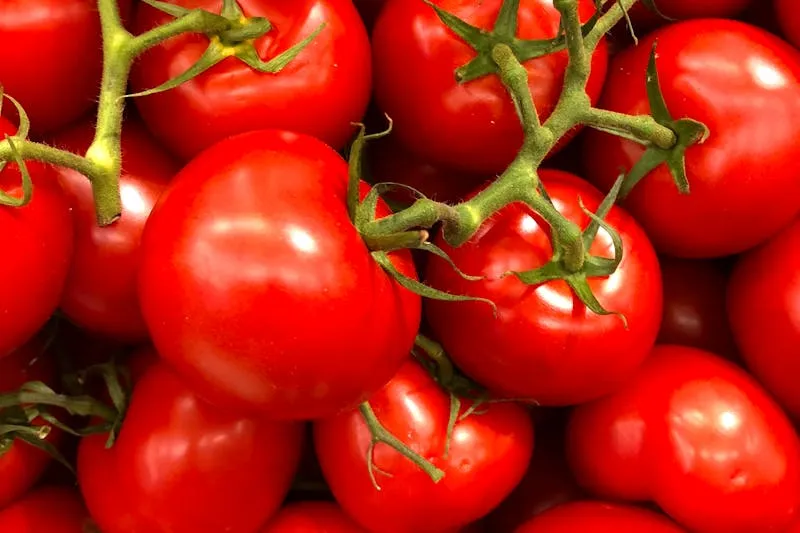
Cherry tomatoes are among the most productive plants you can grow in a container. A well-established plant in a 40–50L pot can produce 3–5kg of fruit across the season. Recommended varieties for UK balconies:
- Tumbling Tom: Developed specifically for hanging baskets and balconies. Trailing stems, no staking needed. Red and yellow varieties available. Available from Thompson & Morgan, Suttons.
- Hundreds and Thousands: Exceptionally prolific cherry variety, trailing habit, ideal for hanging baskets and railing planters.
- Gardener's Delight: Classic reliable cordon variety, very aromatic, excellent flavour. Standard upright training needed.
- Sweet Million F1: Very heavy cropper, extremely sweet. Thompson & Morgan, Dobies.
For tomatoes in pots: stake or tie from planting, mulch the surface with bark or garden compost to reduce evaporation, and water at the base — never on the leaves (blight risk, which is higher in UK conditions than further south).
Strawberries: ideal balcony crop
Strawberries are perfectly suited to containers: shallow root system (15–20cm of compost is sufficient), quick to produce after planting, and flavour incomparably better than shop-bought. Choose perpetual-fruiting (everbearing) varieties for production from June to October rather than a single June flush: Mara des Bois, Cambridge Favourite, Flamenco, or Albion. Available as plants from Crocus, Thompson & Morgan and Dobbies from spring.
Salads, rocket, spinach: fast fresh greenery
Ideal for partial shade exposures. Ready to harvest in 30–45 days. Use the cut-and-come-again technique: harvest outer leaves and let the centre regrow. Sow successionally every two to three weeks for continuous supply. Rocket is particularly easy in the UK, even on exposed balconies, and tolerates shade better than other salad crops. Spinach and chard also thrive in containers and give excellent winter crops if sown in August.
Radishes, spring onions, peas
Radishes: fastest crop (25–30 days, seed to harvest). Ideal to fill gaps between slower plants and to keep children engaged. Spring onions: sow densely in a trough, harvest by pulling. Peas: climbing but manageable — a 30L container with cane wiggle or trellis works well. Sow early (March–April) — they dislike summer heat and are done by July anyway. Varieties bred for containers: Hurst Green Shaft, Pea Delikata.
Vertical gardening: doubling your growing area
On a 3m² balcony, the floor area is fixed. The vertical surface is often completely unused. A 2m × 2m wall represents 4m² of additional growing surface — equivalent to the entire floor area.
Trellises and stretched wires
The least expensive and most effective solution for climbing plants. Stretch stainless steel wires between two anchor points (wall or railing) at 20–25cm intervals, or use a wooden or metal trellis. Ideal plants: indeterminate tomatoes, climbing French beans, cucumbers, peas, climbing squash. Fix the corresponding pots at floor level and guide stems toward the trellis. Available as kits from Crocus, B&Q and most DIY stores.
💡 Diana's tip
For balcony tomatoes, the vertical cordon method is the most effective: maintain a single main stem by removing all side shoots (laterals), guide this stem up a cane, stake or vertical wire. This maximises production from a limited pot volume and improves air circulation around the foliage — critical for reducing blight risk in UK conditions. A cherry tomato grown as a vertical cordon can reach 1.5–2m in height on a balcony, using all available vertical space. Nip out the growing tip when it reaches the top of your support — typically late July or early August in the UK, which encourages the plant to ripen existing fruit rather than producing more leaves.
Pocket planters and living walls
Fabric or treated felt pocket planters fixed vertically allow you to grow herbs, strawberries or salads directly on a wall or partition — zero floor space consumed. Constraints: individual pockets hold very little compost (1–3L each) and dry out very quickly. Reserve them for small, drought-tolerant plants (thyme, rosemary, strawberries, rocket), and install a drip irrigation system if possible. Available from Amazon, Crocus and garden centres.
Shelving and vertical palettes
A purpose-built balcony shelf unit with several tiers multiplies the number of pots in the same floor space. A reclaimed wooden pallet fixed vertically, lined with hessian or geotextile between the slats, creates a surprisingly dense planting surface. Place the most sun-hungry plants on top (closer to direct light and not shaded by upper tiers) and shade-tolerant plants (mint, parsley, chives) at the bottom. Purpose-made balcony shelf units are available from IKEA (outdoor range), B&Q and Dobbies.
Railing planters
Hook-on railing planters exploit unused space above the railing edge. Typical capacity: 5–15L. Ideal for herbs, small flowers, rocket and salads. Check the load capacity of your railing before loading them — and never install planters on the outward-facing side of a railing above a public footpath, a garden, or a neighbour's property without secure fixings.
Watering and feeding in containers

Container growing demands more attention to watering than garden growing. The surface area exposed to evaporation is proportionally much greater, roots cannot reach down for moisture, and the sun heats pot walls — accelerating surface evaporation. In the UK, rainy weeks can be followed immediately by unexpectedly hot dry spells; balcony containers will need watering even after light rain if the pot surfaces dry out quickly.
When and how to water
In the morning where possible: Morning watering allows plants to absorb water before the hottest hours, reduces immediate evaporation, and leaves foliage to dry before nightfall (reducing fungal risk). Evening watering is acceptable in the UK where mornings are often cool and cloudy. Avoid watering in full afternoon sun.
At the base, never on the leaves: Water directly at the base of plants. Wet foliage encourages fungal problems — particularly relevant for tomatoes in the UK, where blight pressure is significant in wet summers. Use a long-spouted watering can or a soft-flow hose attachment.
Check moisture before watering: Push your finger 2–3cm into the compost. If it still feels cool and moist, don't water. If dry, water thoroughly until water flows from the drainage holes. A shallow watering that only wets the surface is worse than no watering at all — the plant develops shallow roots and becomes more drought-sensitive, not less.
Self-watering containers
Containers with a built-in water reservoir (double-base design) are an excellent solution for balcony growing. The compost draws water from the reservoir by capillarity according to need. Advantages: two to three times less frequent watering needed, no overwatering, less stressed plants. Ideal for herbs, salads and strawberries. Less suited to tomatoes (which need larger, more precise water inputs). Available from Crocus, IKEA (the Socker and Husaro ranges), and specialist container garden suppliers.
Automated watering and holidays
A drip irrigation system with a tap timer (programmable tap connector + fine tubing + adjustable drippers) is the most cost-effective balcony gardening investment. Budget: £25–60 depending on complexity. It waters accurately in your absence — the only real solution for summer holidays without sacrificing your tomato plants. Gardena, Hozelock and generic systems all work well and require no plumber. Set up and test at least a week before you leave.
Feeding: nutrients are depleted quickly in pots
Repeated watering progressively leaches nutrients from container compost — they exit through the drainage holes. Unlike garden soil where micro-organisms help regenerate nutrients, a container needs active feeding.
Liquid feed every two weeks: From mid-season (6–8 weeks after planting), apply a liquid fertiliser at every second watering. Use a balanced liquid feed or a tomato-specific feed (high in potassium, marked 'tomato feed') for fruiting plants. Tomato feed — Tomorite, Chempak, or organic alternatives like Vitax — is widely available at garden centres and B&Q at £5–10 for a concentrate lasting a full season.
Slow-release granules: Incorporated into compost at potting time, slow-release granule fertilisers (Osmocote, Growmore, or organic alternatives like Bonemeal + Calcified Seaweed) feed plants over 3–6 months. Practical, economical, lower overfeeding risk than liquid feeds. Combine with occasional liquid feeding for the heaviest feeders.
Worm castings: The best natural container fertiliser. A few tablespoons of worm castings (vermicompost) mixed into compost or applied as a top dressing each month feed plants gently and improve soil biology. A small kitchen wormery produces enough for an entire balcony food garden. Available pre-packaged from growing suppliers if you don't make your own.
Seasonal calendar and winter care
A productive balcony all year requires seasonal planning. This calendar is adapted to UK conditions, broadly England and Wales; Scotland and northern regions should add two to three weeks to outdoor sowing dates:
February — March: starting under cover
- Indoor sowing of tomatoes (8–10 weeks before hardening off and planting out), peppers and chillies (10–12 weeks)
- Order plants if you prefer to buy rather than sow: Thompson & Morgan, Crocus, Suttons all sell good plugs
- Hardy herbs can go out from March if nights stay above 5°C: thyme, rosemary, chives
- Order strawberry plants for April delivery
April — May: the main installation
- Plant strawberries from April
- Direct sow outdoors in containers: rocket, mixed salad, radishes, peas (early April)
- After last frost (mid-May in most of England): plant out tomatoes, peppers, basil outdoors
- Install irrigation system if planned
- Repot overwintered plants if needed
June — August: the productive season
- Regular harvests of salads, rocket, radishes (resow every three weeks)
- Daily watering in hot periods for large containers
- Fortnightly liquid feeding
- Remove tomato side shoots regularly
- First cherry tomatoes from July, full production in August
- Harvest basil regularly (pinch before flowering)
September — October: end of season and transition
- Harvest final tomatoes and peppers before first frosts
- Autumn container sowings: lamb's lettuce, spinach, hardy chard for winter
- Clean and empty annual vegetable pots
- Bring basil inside (cold-sensitive) — it will last another few weeks in a sunny window
- Plant garlic in containers from mid-October (a large trough works well)
November — January: winter on the balcony
Hardy Mediterranean herbs (thyme, rosemary, sage, oregano) overwinter outdoors in the UK without problems — they are native to climates with harder frosts than most of England experiences. Protect pots from prolonged wet rather than cold: ensure drainage holes are clear, raise pots off the ground in extended freezing periods to prevent water-ice damage to the pot base. Mint dies back naturally and regrows from rhizomes in spring — do not discard. Chives are fully hardy.
Use winter for: cleaning and storing equipment, ordering seeds for the following season (the best varieties sell out — order by January), and planning new additions.
Common mistakes and how to avoid them
These errors appear consistently among beginner balcony growers. Identifying them in advance saves a full season of frustration.
Mistake 1: overcrowding plants
The enthusiasm of spring leads to putting too many plants in too little space. Result: competition for light and nutrients, reduced air circulation (encourages fungal problems), difficulty watering and harvesting. Rule: respect recommended spacings. Two tomatoes in a 40L pot will produce less than two tomatoes in two separate 40L pots. One pot, one hungry plant.
Mistake 2: using garden soil in containers
Covered in detail in the compost section — but worth repeating. Garden soil in a pot = guaranteed failure. Always a purpose-made container compost.
Mistake 3: wrong plants for your exposure
Putting tomatoes on a north-facing balcony, or thyme in a sunless spot. Before buying any plant, check its sun requirements and compare them honestly with what your balcony actually provides. Section 1 of this guide helps you assess this.
Mistake 4: shallow and frequent watering
Giving a small amount of water every day is less effective than giving 2L every two days. Shallow watering develops surface roots that are more vulnerable to heat and drought. Water deeply and less often, until water flows from the drainage holes.
⚠️ Forgetting to feed in mid-season
This is the most common mid-season error. A tomato planted in May in fresh compost performs well in June — the compost is rich. But by July, nutrients have been leached by repeated watering. Without regular liquid feeding from mid-June onwards, leaves yellow, growth stalls, and fruits remain small. Fortnightly feeding is not optional for hungry plants in containers — it is what separates a disappointing harvest from an abundant one. Set a recurring calendar reminder: every second weekend, feed your plants.
Mistake 5: neglecting drainage
No drainage holes, or saucers permanently filled with standing water. Asphyxiated roots die — the plant slowly declines and you cannot understand why despite regular watering. Always verify drainage holes are clear, and empty saucers after each significant watering.
FAQ: your questions, my direct answers
Can you really grow food on a small 3–4m² balcony?
Absolutely. A well-oriented 3m² balcony (south or east-facing) can accommodate 4–6 large pots of 30–40L, 2–3 railing planters, and a vertical shelf unit. In practical terms: 2 cherry tomato plants, a herb trough (basil, chives, thyme), a salad and rocket trough, a pot of everbearing strawberries, and a few individual herb pots. That is enough to meaningfully improve your summer meals with fresh herbs, home-grown cherry tomatoes picked in the morning, and continuous rocket. The key: choose plants suited to your actual exposure, and resist the urge to overfill.
What are the best plants for a north-facing balcony with little sun?
A north-facing balcony (or fewer than 3 hours of direct sun) is not a lost cause. Focus on: rocket and mixed salad leaves (tolerate partial shade well), lamb's lettuce and winter purslane, spinach and chard, mint (loves cool and shady environments), chives and flat-leaf parsley, alpine strawberries (not standard strawberries). Avoid: tomatoes, peppers, basil, courgettes, cucumbers — all need warmth and direct light to produce fruit. A north-facing balcony can become a productive herbs and leafy greens garden. It just won't be a Mediterranean food garden.
How do I solve the watering problem when I'm on holiday?
Three solutions depending on budget: (1) A drip irrigation system with a tap timer (£25–60) is the most reliable for balconies with accessible outdoor tap or long indoor hose — set up and test at least a week before departure. Gardena and Hozelock offer reliable systems. (2) Self-watering containers with built-in reservoirs can last 3–7 days depending on temperature and pot size. (3) For short absences: slow-release watering cones or upturned bottle drippers bought from garden centres. For long summer absences in a dry spell, nothing replaces an automatic system — a week without water in July can kill all your plants.
Do I need permission to garden on my balcony in a UK flat?
In most cases, no permission is needed for pots and planters on a private balcony. However, your lease may contain restrictions on: maximum weights (relevant for large planters), items fixed to the railing or outside the balcony perimeter, and structural additions like pergolas or trellis attached to the building fabric. Many modern flat leases and housing association tenancies explicitly limit what can be placed on balconies. Check your lease before installing heavy container gardens or any fixed structures. If you rent: confirm gardening is permitted and document any agreement in writing. Lightweight fabric grow bags and railing planters that require no drilling are the safest option for renters.
Are cherry tomatoes in pots as productive as in the ground?
Not quite, but very close if conditions are right. A cherry tomato plant in a 40–50L pot on a south-facing balcony, well fed and watered, can produce 3–5kg across the season — remarkable for a balcony. Standard (large) tomatoes in pots produce less than in the ground (open soil allows much greater root development), but they are viable with 60–80L minimum. The real differentiator is not the container but feeding regularity: a container tomato under-fed in July–August produces almost nothing. Tomorite or equivalent tomato feed every two weeks from June onwards is not optional.
How do I deal with blight on balcony tomatoes?
Late blight (Phytophthora infestans) is the most serious tomato problem in the UK, particularly in wet summers. On a balcony, some natural protection comes from being under an overhang or canopy. Preventive measures: always water at the base (never on leaves), ensure good air circulation around plants (don't overcrowd), grow varieties with documented blight resistance: Crimson Crush F1, Lizzano F1, Mountain Magic F1 (all RHS Award of Garden Merit holders with proven blight tolerance). If you see the distinctive brown patches with pale yellow margins on lower leaves, remove affected leaves immediately, stop watering on foliage, and consider a copper-based fungicide (the only one approved for organic use). Destroy affected plant material in the bin — never compost it.
How do I protect plants from frost in winter on a UK balcony?
Hardy Mediterranean herbs (thyme, rosemary, sage) survive UK winters without special protection in most regions. The greater risk to pots is waterlogged, freezing compost rather than air temperature — ensure drainage holes are clear and pots are raised off the ground in prolonged cold spells to avoid freeze-thaw damage to terracotta. Wrap pots in hessian or bubble wrap insulation if you have tender plants (bay trees, lemon verbena). Bay tolerates light frost but not a hard freeze — either move it under cover or wrap the pot and the aerial growth with horticultural fleece in forecast hard frosts. Mint and chives die back and regrow naturally. Basil is killed by any frost — bring it inside before the first cold night.