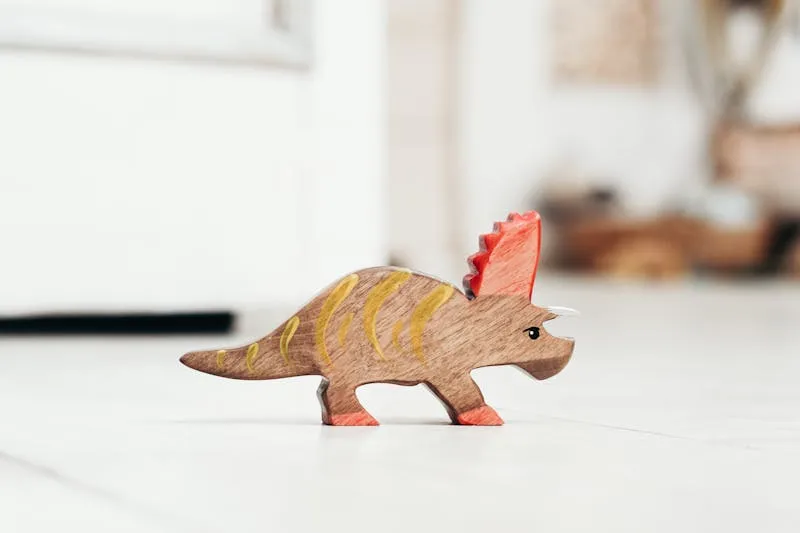
Saturday afternoon, 3pm. Emma, four years old, sits on the living room floor surrounded by dried leaves, sticks, three pebbles and a roll of sticky tape. She's building "a house for the ants." She's been at it for forty minutes. In silence. Her mum, sitting nearby, resists the urge to intervene — to correct the structure, suggest better glue, offer a plan. She watches. And what she's watching is exactly what neuroscience describes as the most structuring activity for a four-year-old's brain: free, autonomous, concentrated play.
Play is not a break between learning sessions. It is the learning. The American Academy of Pediatrics confirmed this in a landmark 2018 report: play is the primary vehicle for a child's cognitive, emotional, social and motor development. Not a supplement. Not a bonus. The core of the process.
This guide offers concrete activities sorted by age group, with each one listing: materials needed, skills developed and pitfalls to avoid. No miracle recipes — just proposals matched to what science tells us about child development.
Why play is essential — what the science says
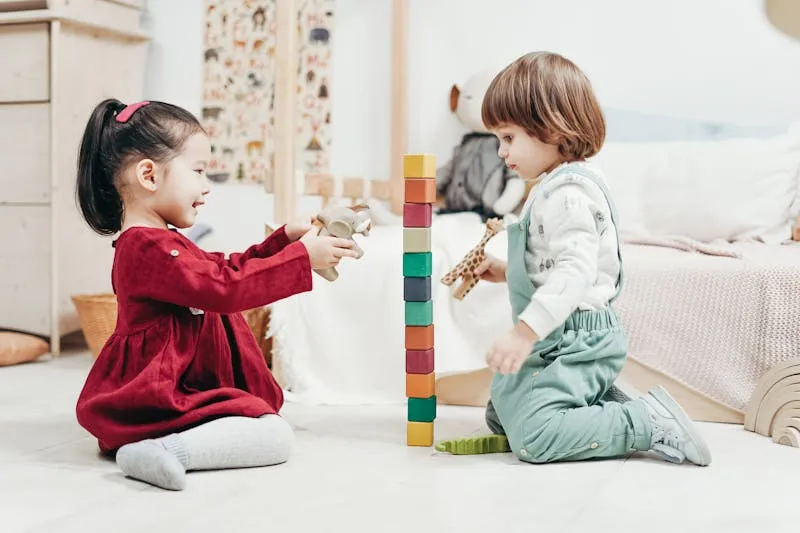
A child's brain creates 700 to 1,000 new neural connections per second during the first five years of life. That's a staggering figure — and play is the primary catalyst of this brain construction. Every object manipulated, every social interaction, every sensory exploration creates and strengthens neural circuits that will become the foundations of all future skills.
The four dimensions of development through play
- Motor skills: gross motor (running, climbing, jumping) and fine motor (drawing, cutting, threading). Physical control is the foundation of autonomy.
- Cognition: problem-solving, logic, memory, attention, understanding cause and effect. Play builds the operational intelligence described by Piaget.
- Language: vocabulary, syntax, narrative, communication. Children who play with verbalising adults develop a vocabulary 2 to 3 times richer by school entry.
- Socialisation: sharing, turn-taking, empathy, conflict management, cooperation. Peer play is the school of social life.
Piaget's stages — a compass
Jean Piaget identified four stages of cognitive development that remain the reference in developmental psychology:
- Sensorimotor (0-2 years): the child discovers the world through senses and movement. Object permanence, cause-effect, exploration.
- Preoperational (2-7 years): emergence of language, symbolic play ("pretend") and egocentrism. The child cannot yet take another's perspective.
- Concrete operational (7-11 years): logical thinking applied to concrete objects. Classification, seriation, conservation.
- Formal operational (11+ years): abstract thinking, hypothetico-deductive reasoning, scientific logic.
The activities in this guide respect these stages — not to box the child in, but to offer challenges matched to their cognitive maturity.
The early stimulation trap: offering activities too advanced for a child's age doesn't "accelerate" them — it frustrates them. A 2-year-old asked to colour inside the lines isn't learning fine motor skills: they're learning failure. Respecting developmental pace isn't "falling behind" — it's pedagogical rigour.
0-12 months: sensory awakening
Babies discover the world through their five senses. Every texture touched, every sound heard, every object mouthed builds essential neural connections.
Key activities
The sensory play mat (from 2 months)
Materials: mat with different textures (velvet, felt, cotton, crinkle paper). Skills: tactile exploration, hand-eye coordination, texture discrimination. Duration: 10-15 supervised minutes.
The treasure basket (6-12 months)
Materials: a basket containing 8-10 everyday objects of varied textures, shapes and weights (wooden spoon, pine cone, ribbon, tennis ball, flannel). Skills: multimodal sensory exploration, grasping, concentration. The baby chooses, explores, compares — without adult intervention.
Peekaboo (6-10 months)
Materials: your hands or a cloth. Skills: object permanence (the face still exists when hidden), anticipation, social bonding. This seemingly simple game is a major cognitive exercise at this age.
Action rhymes (from 4 months)
Materials: your voice and hands. Skills: language prosody, gesture-word association, joint attention. "Incy Wincy Spider" isn't an anachronism — it's a validated developmental tool.
The "follow the gaze" rule: observe what captures your baby's attention and follow their interest, rather than redirecting towards the activity you'd planned. This approach — which specialists call joint attention — is the single best predictor of language development in the first year.
1-2 years: motor exploration
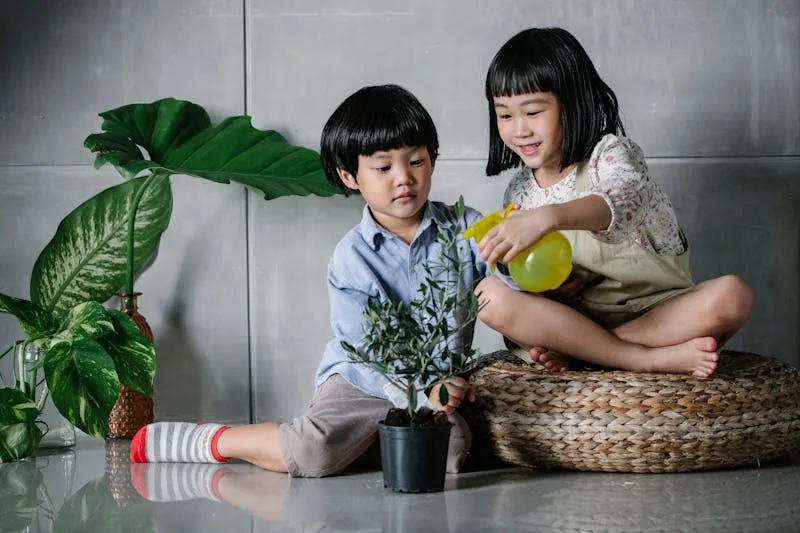
The child walks (or is about to) and the conquest of space becomes obsessive. This is the age of "touching everything" — and that's precisely what they need.
Key activities
The motor course (from 12 months)
Materials: cushions, fabric tunnel, small ramp, cardboard boxes. Skills: gross motor, balance, motor planning, body awareness. Set up a course in the living room and let the child explore at their own pace — no demonstration, no "right way" to do it.
Pouring and transferring (12-24 months)
Materials: bowls, spoons, dried beans (supervised), sand, water, pasta. Skills: fine motor, bimanual coordination, concentration, understanding volumes. The child fills, empties, spills, starts again — they're a scientist in action.
Mess-free painting (12-18 months)
Materials: ziplock bag containing paint, taped to a table or window. Skills: visual exploration, cause-effect, sensory creativity. Zero cleanup, 100% exploration.
Shape sorters and stacking (12-24 months)
Materials: wooden shape sorter, simple puzzles (2-4 pieces). Skills: shape recognition, hand-eye coordination, elementary problem-solving, perseverance.
Childproof rather than prohibit: rather than saying "don't touch" 50 times a day, make the environment safe for free exploration. Cover sockets, put fragile objects away, create a "yes space" where everything is accessible and handleable. A child who explores freely develops more skills than one who constantly hears "no."
2-3 years: language and imitation
The language explosion is the defining phenomenon of this age: the child goes from a handful of words to 300-500 words in a single year. Simultaneously, imitative play (copying grown-ups) becomes central.
Key activities
Cooking together (from 2 years)
Materials: apron, sturdy step stool, child-safe utensils (wooden knife, plastic bowl). Skills: fine motor (pouring, stirring, spreading), sensory vocabulary (hot, cold, soft, hard), sequencing (recipe steps), autonomy. Start with no-cook recipes: fruit salad, playdough, smoothies.
Themed sensory bins (2-3 years)
Materials: plastic tub, base (coloured rice, sand, water), figurines, containers, tools (spoons, funnels, tongs). Skills: symbolic play, vocabulary, fine motor, imagination. A "farm" bin with rice, animals and a tractor keeps a 2-year-old engaged for 30-45 minutes.
Touch-and-feel books (2-3 years)
Materials: books with flaps, textures, sounds. Skills: vocabulary, anticipation, fine motor, joint attention with the reading adult. Read the same book 10 times in a row if the child asks — repetition is a learning tool, not a sign of boredom.
Domestic pretend play (2-3 years)
Materials: toy kitchen, child-sized broom, doll, doctor's kit. Skills: symbolic play, narrative language, understanding social roles, emotional regulation (replaying experienced situations). This play is literally the child's natural psychotherapy.
3-5 years: creativity and symbolic play

The golden age of "let's pretend." The child builds imaginary worlds, invents scenarios, transforms a stick into a sword and a box into a rocket. This symbolic play is one of the most complex cognitive exercises a human brain can perform at this age.
Key activities
Free painting (3-5 years)
Materials: poster paint, brushes of varying sizes, large-format paper (or a roll of paper tablecloth). Skills: emotional expression, fine motor, creativity, colour exploration. Golden rule: don't comment on the result. No automatic "that's lovely!" Instead, describe: "I can see lots of blue and a big red circle. Can you tell me about your painting?"
Elaborate role play (3-5 years)
Materials: dressing-up clothes, simple props (hat, cape, bag). Skills: complex language (invented dialogues), theory of mind (stepping into a character's shoes), emotional regulation, negotiation (when play is shared). Let the child direct the scenario — your role is to follow, not lead.
Playdough and construction (3-5 years)
Materials: playdough, tools (rolling pin, cutters, plastic scissors), or construction blocks (Duplo, Kapla, wooden blocks). Skills: planning, 3D problem-solving, advanced fine motor, perseverance.
Gardening (3-5 years)
Materials: pot, compost, fast-germinating seeds (radishes, beans, nasturtiums). Skills: scientific observation, patience, responsibility (watering), understanding natural cycles. Keeping a "garden journal" (drawings) enriches the activity.
Resist the urge to direct: when a child builds a "wonky" tower or draws a horse with six legs, they're not getting it wrong — they're exploring. Correcting their work teaches them that their creativity must match adult expectations. Creative play has no "right answer." The goal is the process, never the finished product.
5-7 years: logic and cooperation
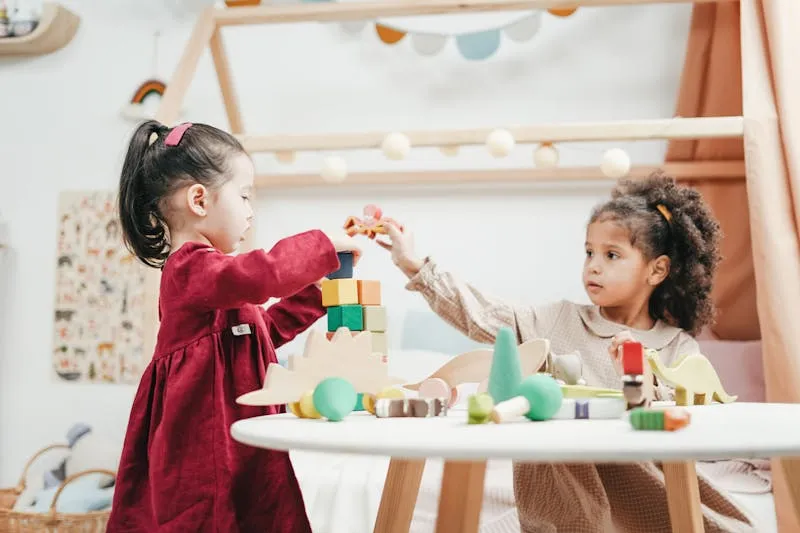
Starting school coincides with the emergence of logical thinking. The child understands rules, can wait their turn, and begins to cooperate genuinely with peers.
Key activities
Cooperative board games (5-7 years)
Materials: games like Orchard, Outfoxed, Forbidden Island Junior. Skills: cooperation (win or lose together), basic strategy, frustration management, rule-following. Favour cooperative over competitive games at this age — learning to lose comes later.
Simple science experiments (5-7 years)
Materials: vinegar, bicarbonate of soda, food colouring, transparent containers. Skills: observation, hypothesis ("what do you think will happen?"), cause-effect, scientific vocabulary. The baking soda volcano is a classic because it works: wonder is the first engine of learning.
Independent reading (5-7 years)
Materials: books matched to reading level, a comfortable reading corner. Skills: decoding, comprehension, vocabulary, imagination, autonomy. Never force reading — suggest, read together, take turns reading aloud. Pleasure is the only sustainable gateway.
Junk modelling (5-7 years)
Materials: cardboard, loo rolls, bottle caps, glue, scissors, paint. Skills: project planning, technical problem-solving, creativity under constraint, advanced fine motor. Set an open challenge: "Build a vehicle that rolls" or "Make a house for a toy figure."
The magic question: instead of asking "What is it?" (which evaluates), ask "Can you tell me about it?" (which invites). This nuance transforms the interaction: the child deploys narrative language, internal logic and pride — instead of searching for the "right answer" in your expression.
7-9 years: autonomy and projects
The child enters the concrete operational stage: they can classify, plan and carry out a project over several days. Their need for autonomy surges — they want to "do it for real."
Key activities
The long-term project (7-9 years)
Examples: building a den in the garden, creating a family newspaper, organising a show, keeping a nature journal. Skills: multi-day planning, step management, autonomy, perseverance. The parent accompanies without directing — they're a resource, not a project manager.
Independent cooking (7-9 years)
Materials: a real written recipe, real utensils (supervised for knife and oven). Skills: functional reading, applied maths (measurements, proportions), sequencing, practical autonomy. By 8, a child can prepare a simple meal solo — pancakes, a composed salad, a yoghurt cake.
Strategy games (7-9 years)
Materials: chess, draughts, Connect 4, Quarto, Blokus. Skills: anticipation, planning, managing defeat, sustained concentration. Chess in particular is associated with improved maths performance and attention capacity.
Nature exploration (7-9 years)
Materials: magnifying glass, notebook, pencils, identification guide (birds, insects, plants). Skills: scientific observation, classification, patience, wonder. Organise "naturalist missions": identify 5 bird species in the park, find 3 different leaf types, draw an insect.
Unplugged coding (7-9 years)
Materials: paper, pencils, games like Code Master or Robot Turtles. Skills: algorithmic thinking, sequencing, logical problem-solving. No screen needed — computational logic is best understood first with a pencil and paper.
9-12 years: abstract thinking and challenge
The pre-teen gradually enters abstract thinking. They can formulate hypotheses, reason about concepts, and their need for challenge — intellectual and physical — is intense.
Key activities
Book/writing club (9-12 years)
Materials: books chosen together, writing journal. Skills: critical thinking, argumentation, written expression, empathy (stepping into a character's shoes). Create a ritual: one book a month, a discussion, a written review. Or encourage creative writing — short stories, poems, comics.
Home escape rooms (9-12 years)
Materials: printed puzzles, padlocks, boxes. Skills: complex problem-solving, cooperation, stress management, lateral thinking. Websites offer printable kits — or create one together (the child designs the escape room for their friends: design skills + leadership).
Structured physical activity (9-12 years)
WHO recommends 60 minutes of moderate to vigorous activity daily for 5-17-year-olds. At this age, club sports (judo, swimming, athletics, dance, climbing) develop discipline, team spirit and body confidence. But non-competitive activity (hiking, cycling, yoga) is equally beneficial.
Volunteering and engagement (10-12 years)
Materials: a neighbourhood project, a collection drive, a community garden. Skills: active empathy, citizenship, project management, social responsibility. Studies show that children engaged in prosocial actions develop better self-esteem and a more structured moral compass.
Productive boredom: resist the urge to "fill" every idle moment. Boredom triggers creativity — it forces the child to draw on their own resources. A University of East Anglia study (2019) shows children who experience regular boredom develop richer imaginations than those whose time is entirely structured. "I'm bored" isn't a problem to solve — it's an invitation to invent.
Free play vs structured play: the essential balance

A debate runs through modern parenting: should children play freely or have their activities structured? The research answer is clear: both, in a ratio that evolves with age.
Free play
Definition: play chosen by the child, with rules invented by the child, that can stop when the child decides. No expected outcome, no evaluation, no instructions. Specific benefits: creativity, self-regulation, intrinsic motivation, boredom management.
Guided play
Definition: play where the adult provides materials or a framework, but the child remains in charge. Example: offering paint and paper with no instructions. The adult prepares the environment; the child decides what to do with it.
Directed play
Definition: play with rules set by the adult — board games, coached sport, music lessons. Specific benefits: rule-following, cooperation, technical skills. Risk: if the ratio of directed to free play is unbalanced, the child loses their capacity for initiative.
The ideal ratio (approximate)
- 0-3 years: 80% free play / 20% guided play
- 3-6 years: 60% free / 25% guided / 15% directed
- 6-12 years: 40% free / 30% guided / 30% directed
The overscheduled syndrome: a child who chains extracurricular activities (music, sport, languages, drama) with no free time isn't "stimulated" — they're exhausted. Neuroscience shows the brain needs downtime to consolidate learning. Two extracurricular activities maximum before 7, three maximum after — and always with protected free play windows.
FAQ — activities and child development
My child only wants to play one game — is this a problem?
Not unless the fixation is accompanied by signs of excessive rigidity (meltdowns if play is interrupted, inability to accept any variation). Repetition is a normal learning mechanism — the child progressively masters the skills linked to that activity before moving on. Offer gentle variations rather than forcing a change.
Should I limit the number of toys?
Yes. Research shows that children with fewer toys play longer and more creatively with each one (University of Toledo study, 2018). Overabundance dilutes attention and encourages flitting. A rotation system (putting some toys away and bringing them back after a few weeks) is more effective than constant buying.
At what age can a child play alone?
Independent play capacity develops very gradually: a few minutes at 1, 10-15 minutes at 2, 20-30 minutes at 3, and up to 45-60 minutes at 5-6. This capacity is built — not imposed. A child who learns to play alone at their own pace develops better autonomy than one forced to "keep themselves busy."
Do screens replace play?
No. Active play (manipulating, building, running, inventing) engages different and complementary neural circuits to passive screen consumption. WHO recommends zero screen time before 2 and a maximum of 1 hour/day between 2 and 5. Screens aren't forbidden — but they don't replace real play, which remains irreplaceable for sensorimotor and social development.
How do I play with my child when I'm exhausted?
Parental play doesn't need to be acrobatic. Ten minutes of full presence (no phone, on the floor, following the child's lead) is worth more than an hour of distracted presence. "Tired-friendly" games: reading a story, playing restaurant (the child serves you), drawing together, doing a puzzle. And remember: free play doesn't require your participation — just your kind presence nearby.
My child prefers screens to toys — what can I do?
This is normal — screens are designed to be addictive. The solution isn't an abrupt ban but gradual framing: defined screen time, an alternative activity offered (not imposed) after screen time, and above all — shared play moments that rival screens for enjoyment. A child who discovers the excitement of a cardboard den with an enthusiastic parent doesn't necessarily prefer the tablet.
Are "educational" toys better than classic toys?
Not necessarily. An empty cardboard box is more "educational" than an electronic toy that talks instead of the child. The best toys are open-ended (no "right" way to play): building blocks, dolls, dressing-up clothes, art materials, sand, water. A toy that does everything by itself teaches nothing — a toy that does nothing without the child teaches everything.
Sources and references
- WHO, "Guidelines on physical activity, sedentary behaviour and sleep for children under 5," 2019
- AAP, "The Power of Play: A Pediatric Role in Enhancing Development in Young Children," Pediatrics, 2018
- Piaget, J., The Origins of Intelligence in Children, International Universities Press, 1952
- Dauch, C. et al., "The influence of the number of toys in the environment on toddlers' play," Infant Behavior and Development, 2018
- Montessori, M., The Absorbent Mind, Holt Paperbacks, 1967